555-555-5555

Built-Up Roofing

Built-up roofing is the legacy membrane of older commercial buildings, the multi-ply tar-and-gravel or cap-sheet roof that older campus buildings, storefront blocks, schools and light industrial space in San Marcos, TX may still carry. The one thing that class does to a roof is outlast the people who specified it: the system was designed to be redundant, so many of these roofs are decades old and still holding water, and the facility director has to decide how much more service the layers can give before the budget year closes.

A built-up roof, usually shortened to BUR, is made on the roof by alternating layers of bitumen and reinforcing fabric, then topping them with gravel, a cap sheet or a coating. Each ply adds redundancy, which is why a worn BUR can look bad and still keep out the rain. Our work is to tell the difference between a roof that looks tired and a roof that is finished.
What the system is

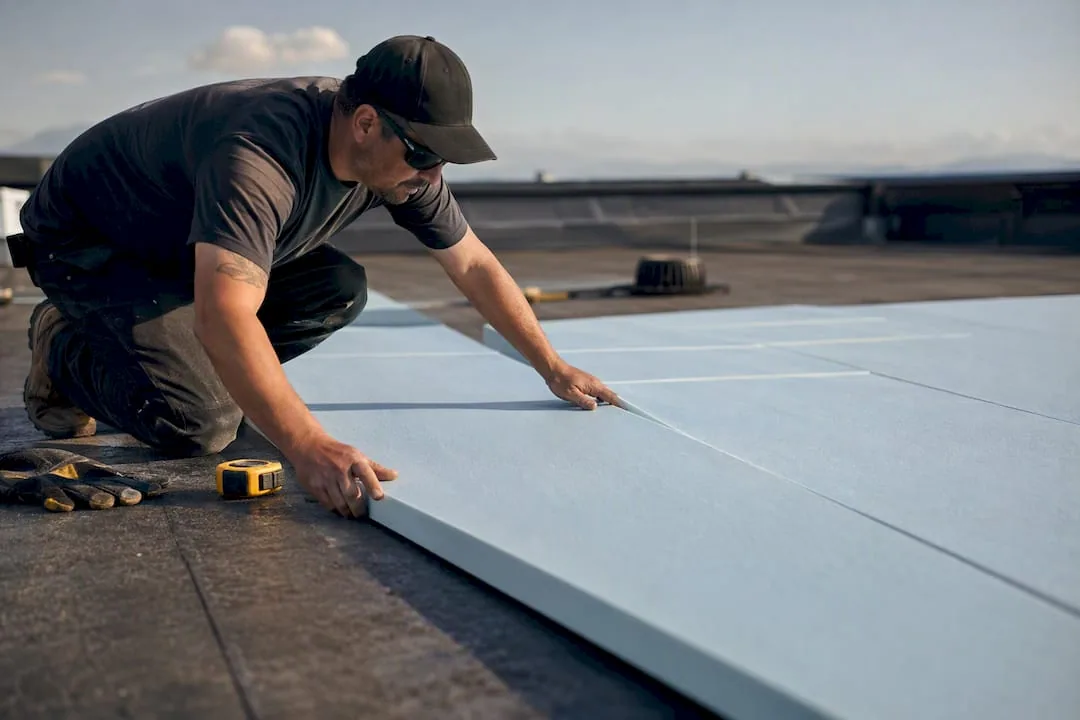
Plies of felt or fiberglass are laid in hot asphalt or cold adhesive, three or four deep on many older roofs. The top surface is either a layer of gravel embedded in bitumen, which shields the asphalt from sun and foot traffic, or a smooth or granule-surfaced cap sheet. The assembly is heavy, and it rests on a deck and insulation designed to carry that weight.

Because the roof is built in place, quality depends on the crew that laid it. Thin spots between plies, dry areas in the mopping and trapped moisture all become blisters and weak laps later. Hot asphalt also brings fire risk, so modern work uses controlled kettles, fire watches and, increasingly, cold-applied adhesives, especially near occupied spaces.

Weight is the owner's quiet constraint. A gravel-surfaced BUR adds load to the deck, and any replacement design must respect the structure's limit. A lighter successor, such as a single-ply sheet or a spray foam system, is sometimes chosen for that reason alone, and the choice should be made with the structural facts in hand.

Built-Up Roofing
Built-Up Roofing

What wears first

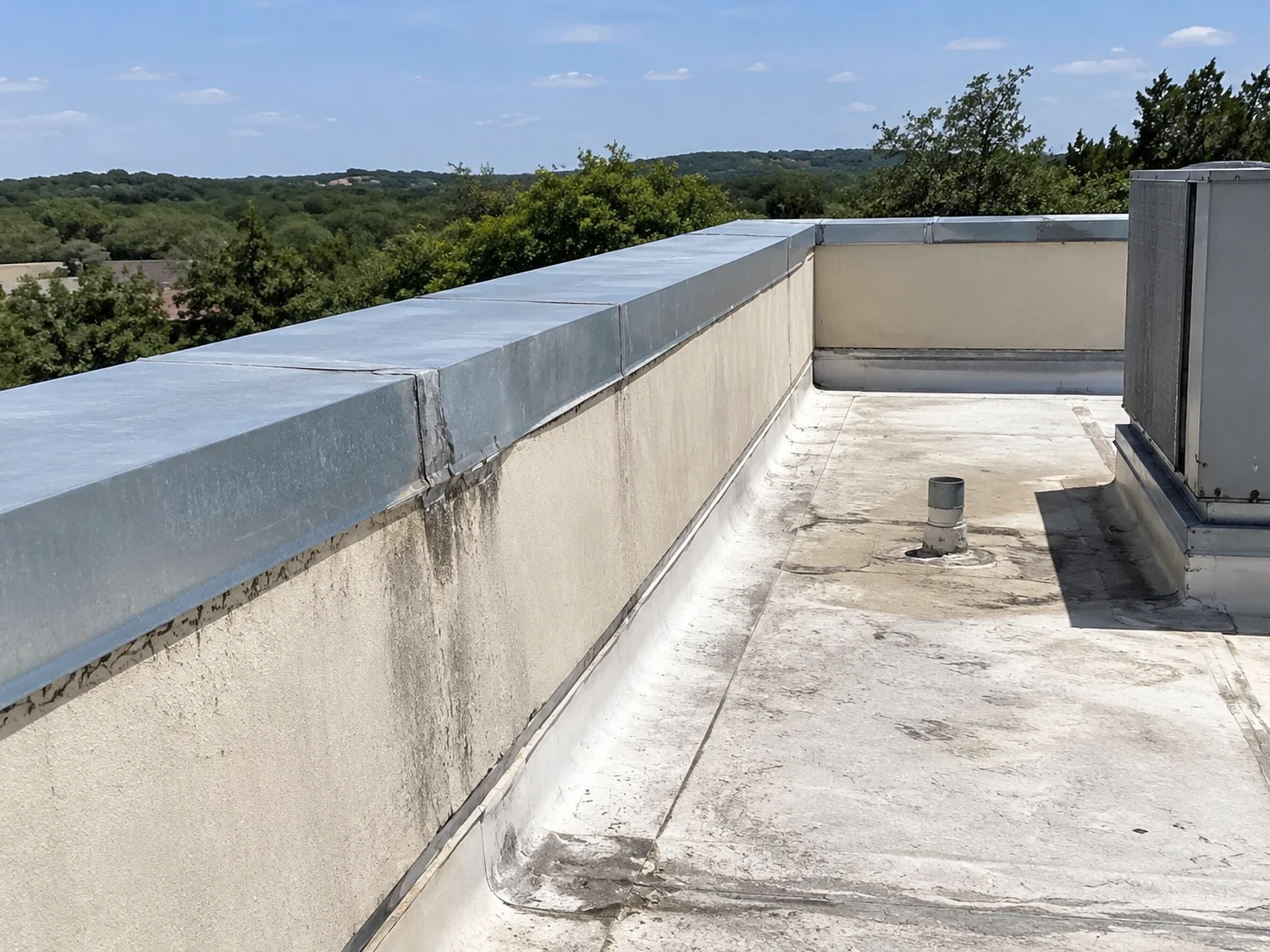
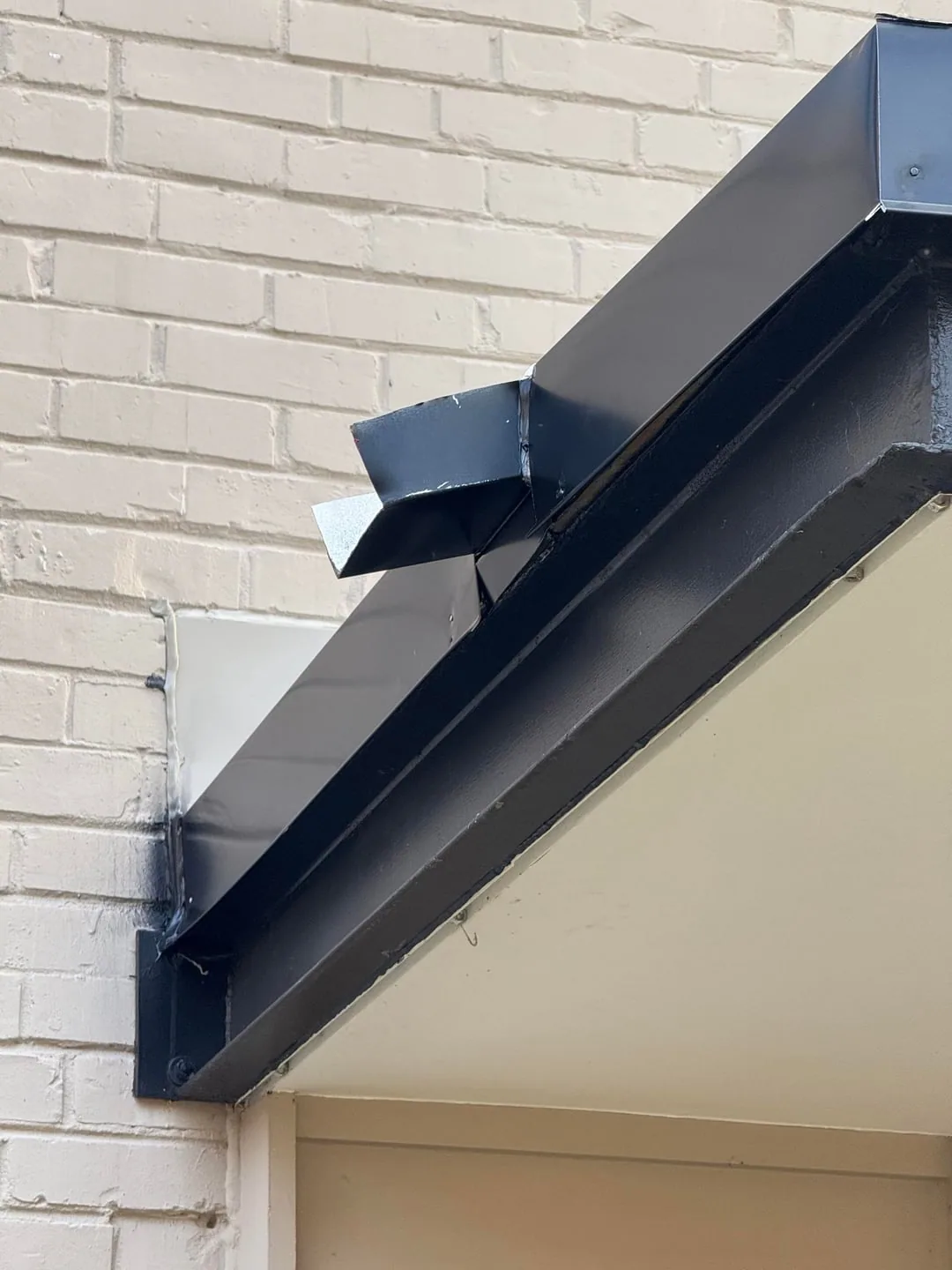
Gravel moves. Wind and drains carry it to the edges and into scupper lines, which leaves bare patches of asphalt that crack under sun. Blisters form where moisture trapped between plies expands in heat. Alligatoring, a crazed pattern in the asphalt surface, appears as the binder oxidizes. Flashings at walls and curbs split as the roof moves.

The Central Texas heat accelerates this process, and the August normal near 98 F at Austin Camp Mabry is the regional measure of the summer load. Dark asphalt runs hotter than the air above it, and each cycle of heating and cooling works at the flashings and the laps. Scupper lines choke with gravel, and we clear and record them on each visit.

Drainage ties it together. Roof drains and scuppers on a BUR collect gravel and granules, and a clogged outlet turns a sound roof into a ponding roof within a season. We clear sumps, check strainers, measure standing water after rain and mark the low spots so the next walk can compare them. A BUR with good drainage often outlives one with the same plies and poor drainage by years.

Hail and the weight of the roof

A thick BUR absorbs hail better than a thin sheet, but gravel can be thrown by wind and storms, and large stones can crush the plies beneath. Hail reported up to six inches across in Johnson City came ahead of the May 9, 2024 storm that reached San Marcos, and the county judge signed a disaster declaration afterward. That is regional context, not a finding for any one roof.

We therefore scan before we judge. A moisture scan finds wet insulation, and core samples show how many plies remain and whether they remain bonded. Heavy ballast also complicates inspection, since the gravel must be swept aside to see the plies, so we work in sections and restore the ballast afterward. A hail-bruised field can be repaired in place if the lower plies are intact.

Repair, restore or replace

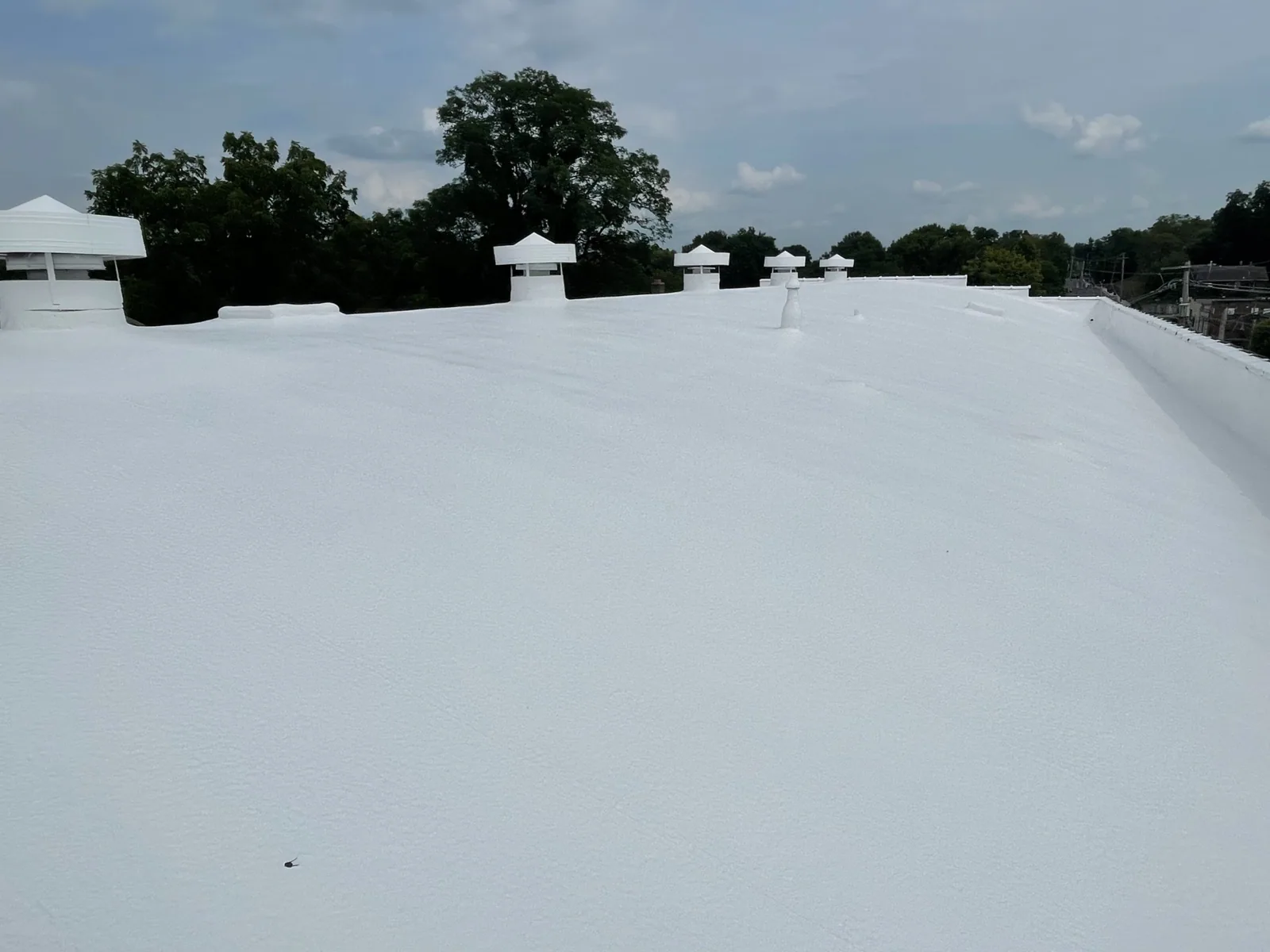
BUR repairs are well understood. Blisters are cut, dried and patched with new plies. Open laps are reheated or reinforced. Flashings are rebuilt with compatible material. A sound BUR with dry insulation can be restored with a reflective coating that protects the asphalt and extends service, and roof coating restoration is often the most economical step on a roof that is still performing.

When the plies are saturated, the insulation is wet across the field or repairs have accumulated, replacement is the right path. Many owners move from BUR to a modified bitumen or single-ply system. Before any tear-off of an older roof, we raise the question of testing for regulated materials, because old roofing products can contain them and the answer changes the safety plan and the cost.

Hot work is scheduled with the building's operations in mind. On school, campus and healthcare roofs, we agree on hours, fire watch and ventilation before the first day, and we protect air intakes so fumes and odors stay out of occupied space. A staged plan allows a section to be closed in each day, so rain never finds an open roof. Documentation of each stage goes into the building file for later warranty and claim use.

Built-Up Roofing

Where BUR sits here

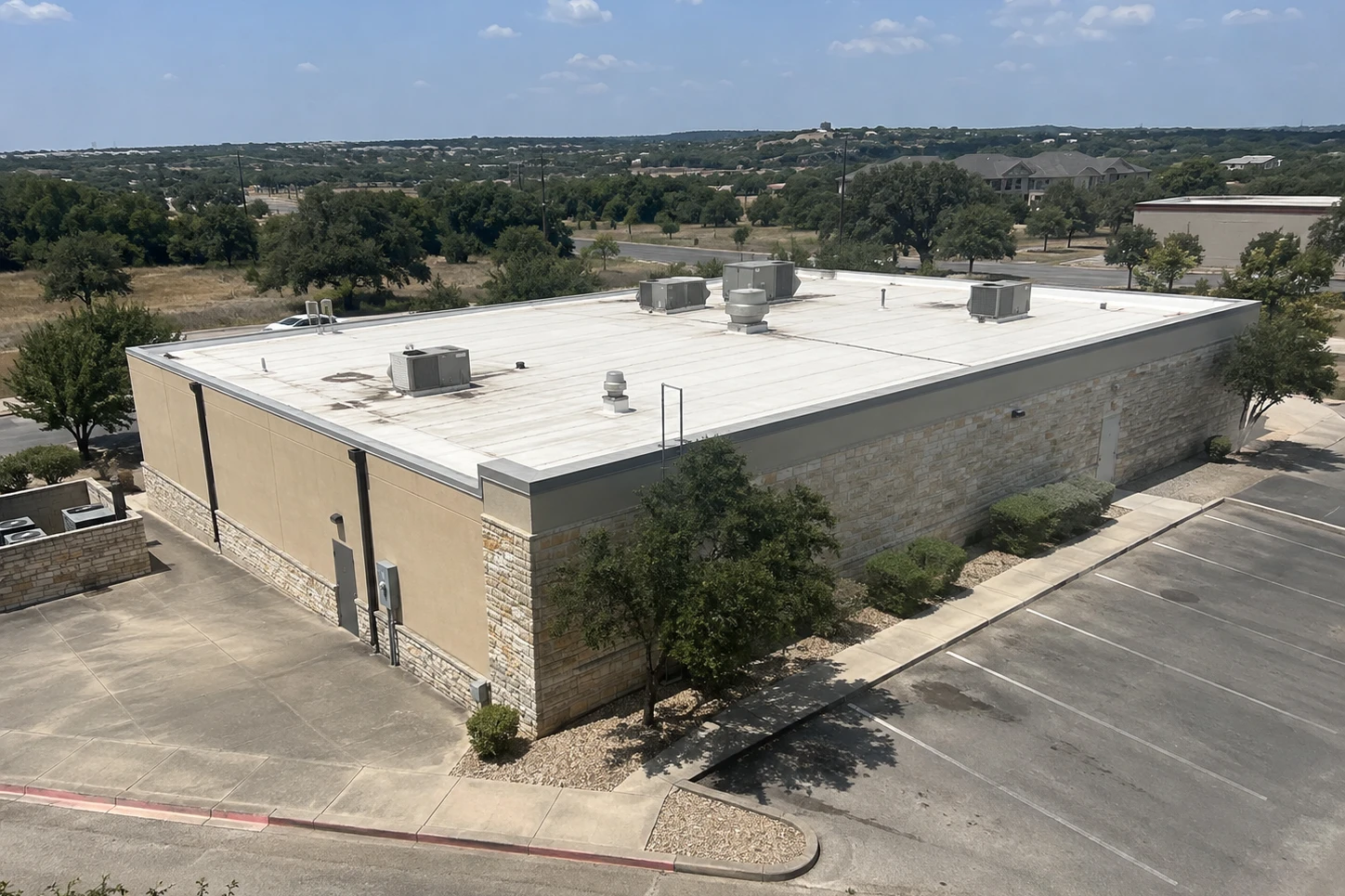
Older buildings are where BUR turns up. Around the Downtown San Marcos Square, the Hays County Courthouse was built in 1908 and a historic district was designated in 1992, and a campus with roughly 250 buildings, as Texas State has, will hold roofs from several decades. In the college and university class, the older halls are the ones worth checking for BUR or its successors.

We keep a roof plan for each, noting ply count, ballast type, drain locations and last repair. That record turns a decades-old roof into a manageable item on the roof inventory.

Built-Up Roofing

The budget-year decision

The result is a replacement queue ranked by remaining service. Saturated plies, widespread blistering, wet board and failed flashing push a roof up the queue; sound plies, dry readings and sealed details hold it down. We record deferred areas with notes on what to recheck. Costs depend on tear-off volume, ballast removal, deck condition, weight limits and building use. We price after the readings and set the schedule around operations.

Deferred areas matter on a BUR portfolio. A roof with long remaining service can be coated and monitored while a failing neighbor takes the capital dollars. The queue shows the sequence, and each year's walk updates it. A director who can point to a dated record has a much easier conversation with a budget committee than one who can only say a roof looks old.

Commercial Roofing Questions

Why do BUR roofs last so long?

Multiple plies give redundancy. A worn surface can still sit over sound layers that keep water out.

What are blisters and are they serious?

Blisters are trapped moisture or air between plies. Small ones can be repaired. Many close together suggest wet insulation.

Can a BUR be coated instead of replaced?

Yes, if the plies are bonded and the insulation is dry. A coating protects exposed asphalt and extends service.

What happens to the gravel?

It is swept aside for inspection and restored, or removed during replacement.

Do old roofs need testing before tear-off?

Often yes. Older roofing products can contain regulated materials, and testing guides the safety plan.

Send the building list

Send the building list and any past reports, and we will sort the roofs into replace, repair and watch groups before your next budget year.

Request a Roof Assessment

Related Roofing Work

ServicesRoof SystemsIndustriesProperty TypesService AreasRoof Damage RepairCapabilitiesManufacturersAboutContactRequest a Roof Assessment555-555-5555
Call555-555-5555