555-555-5555

EPDM Roofing

EPDM is the quiet inventory item on older commercial buildings in San Marcos, TX, the black rubber membrane that turns up on school wings, campus buildings, storefront blocks and light industrial space built before white thermoplastics became the default. The one thing that class does to a roof is age it in place: the sheet is often decades into its service, the details around it have been repaired several times, and the owner has to decide how much longer the roof earns its keep. For a facility director, that decision belongs in a budget year, not in the week after a leak.

An ethylene propylene diene monomer roof is a cured rubber sheet, so it cannot be welded the way TPO or PVC can. Its laps are joined with splice tape or adhesive, and that single fact shapes every inspection, repair and replacement decision we make on it.
What the system is

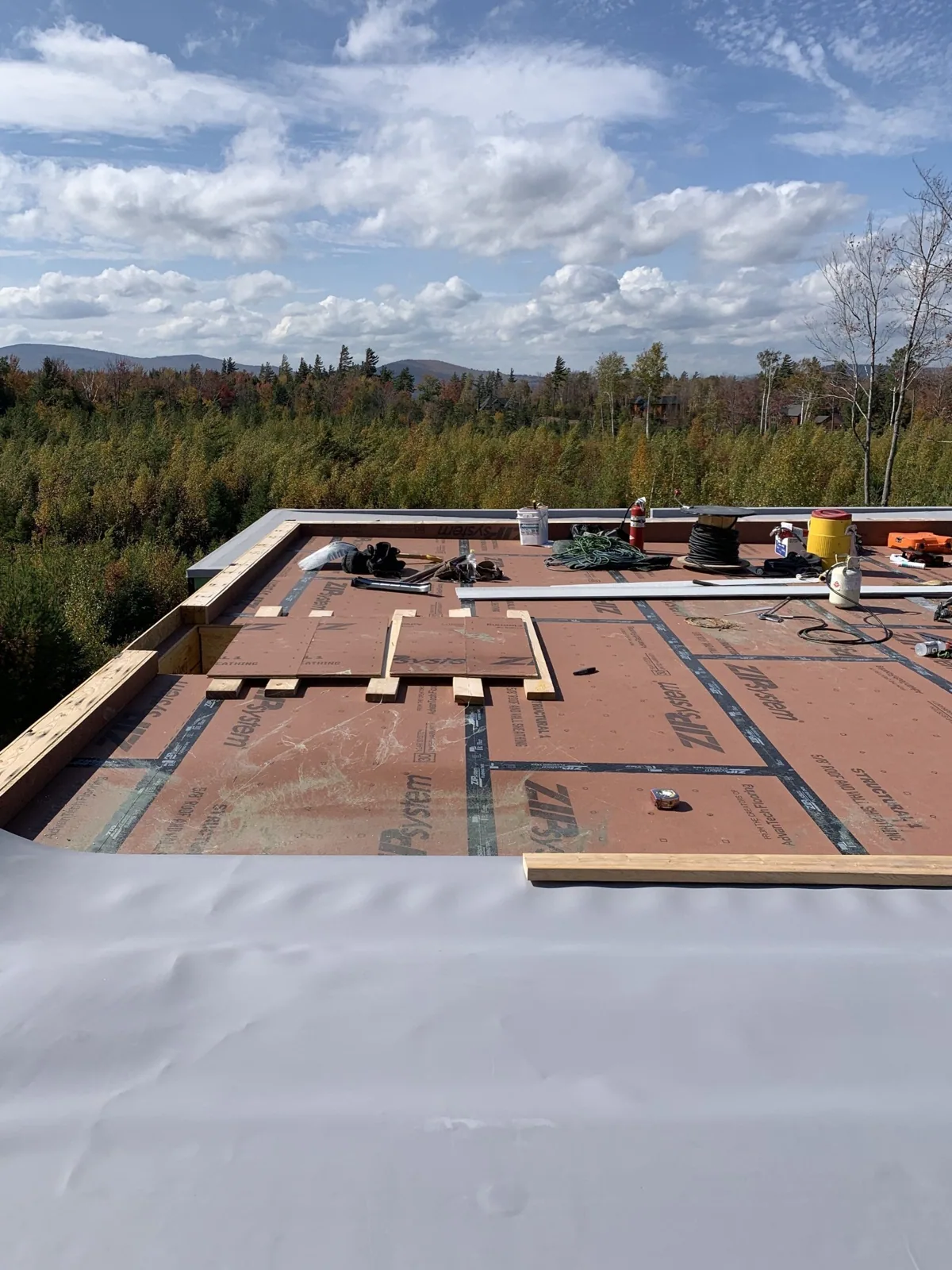
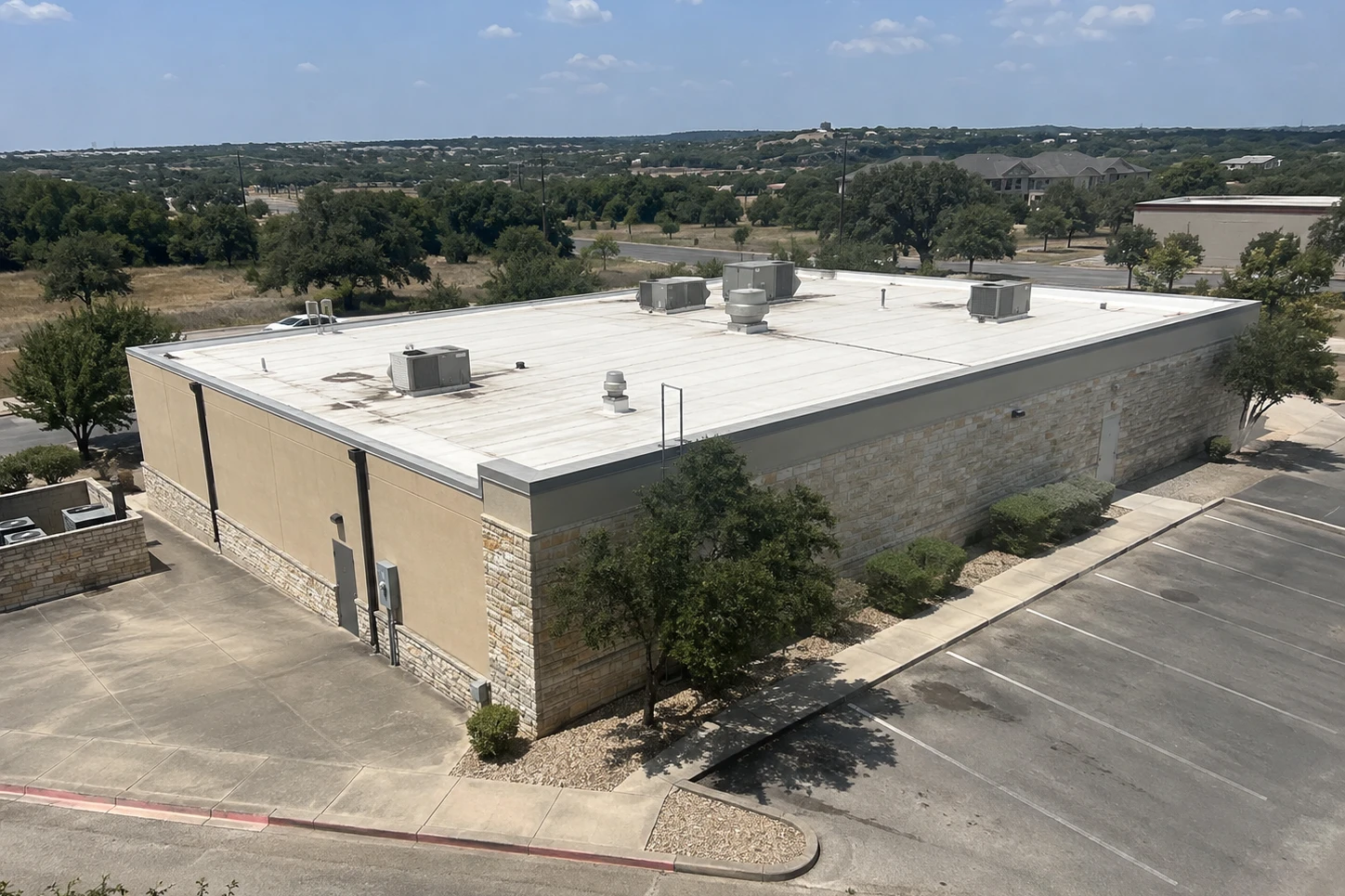
EPDM arrives in wide rolls, often cut to cover large spans with few seams. It is laid fully adhered to the insulation below, mechanically attached with battens, or loose-laid under river stone or pavers as ballast. Adhered systems rely on bond strength across the whole surface. Ballasted systems rely on the weight of the stone, which also protects the sheet from sun and foot traffic but hides the surface from view.

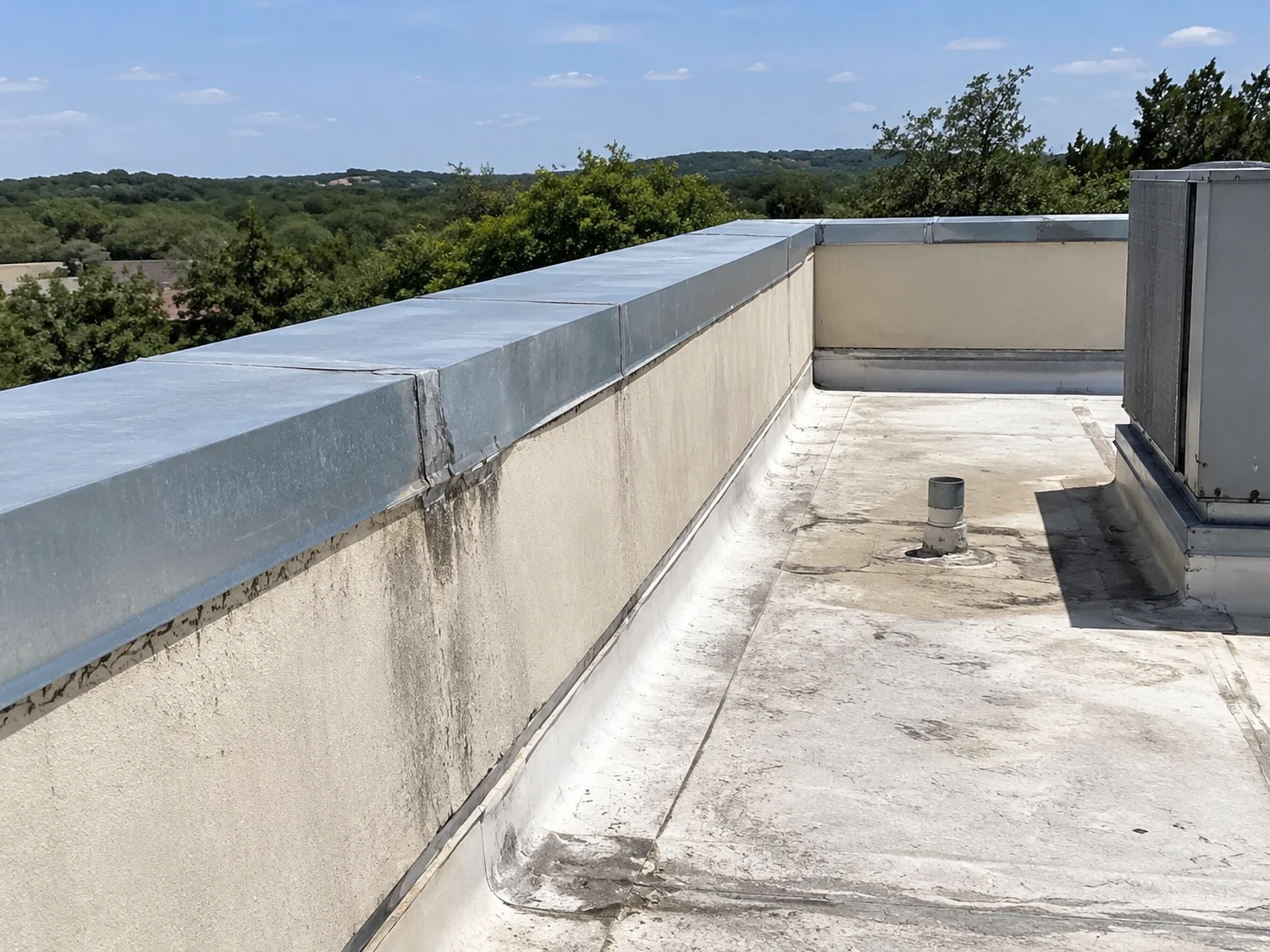
Details are made from the same rubber, or from pre-molded boots at pipes, with flashing tape and sealant at terminations. A rubber roof therefore has more bonded joints than a welded one, and each joint is a place where we look for lifted edges, shrinkage and failed tape.

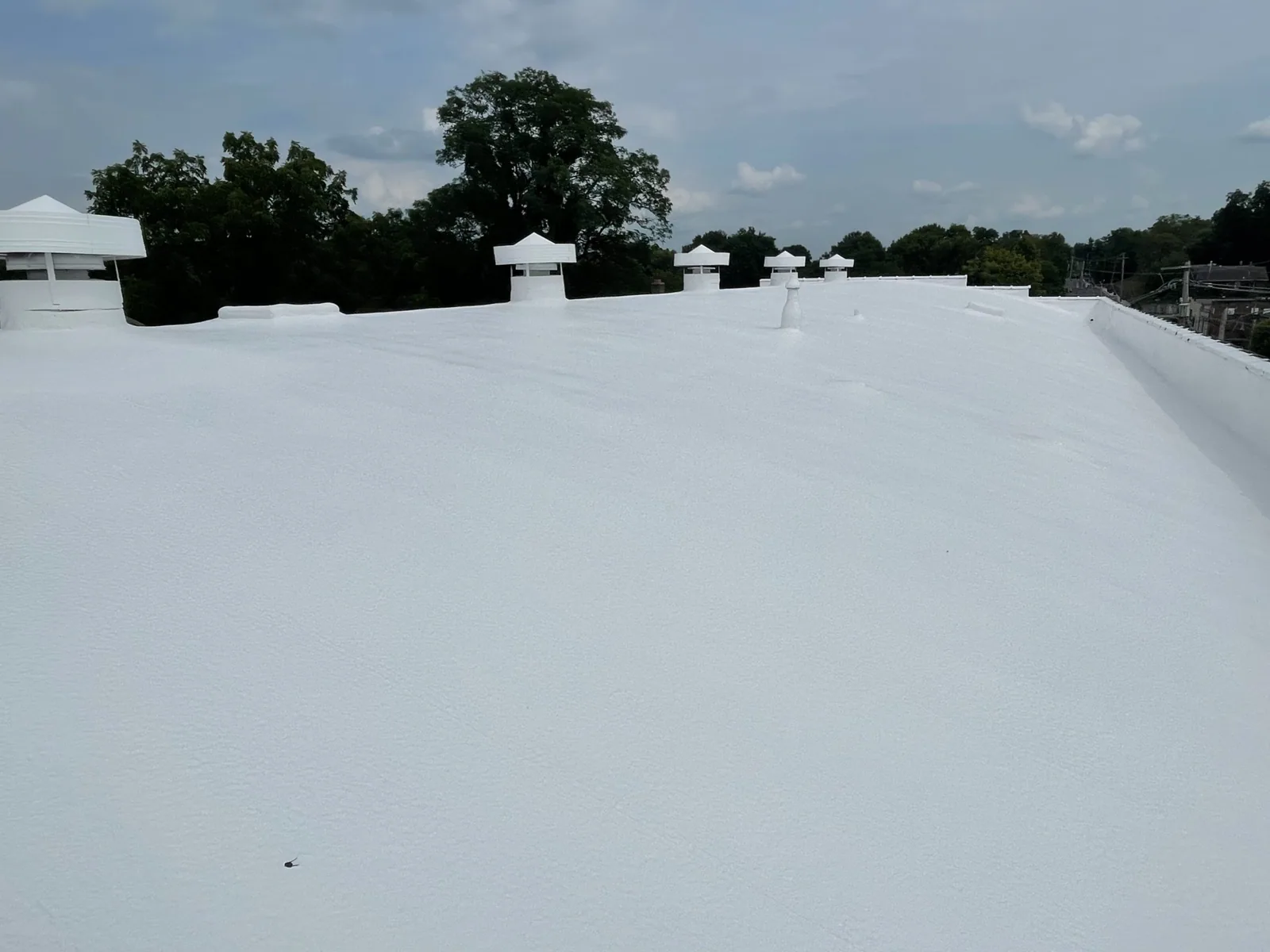
Thickness and color vary. Heavier sheets tolerate more repair and more foot traffic, and white-surfaced EPDM exists for owners who want less heat gain without changing the joining method. Older black sheets, which are the ones we see most, are identified by a core cut and a look at the underside of a lifted edge, since paperwork for roofs of that age is often missing from the building file.

EPDM Roofing
EPDM Roofing

What wears first

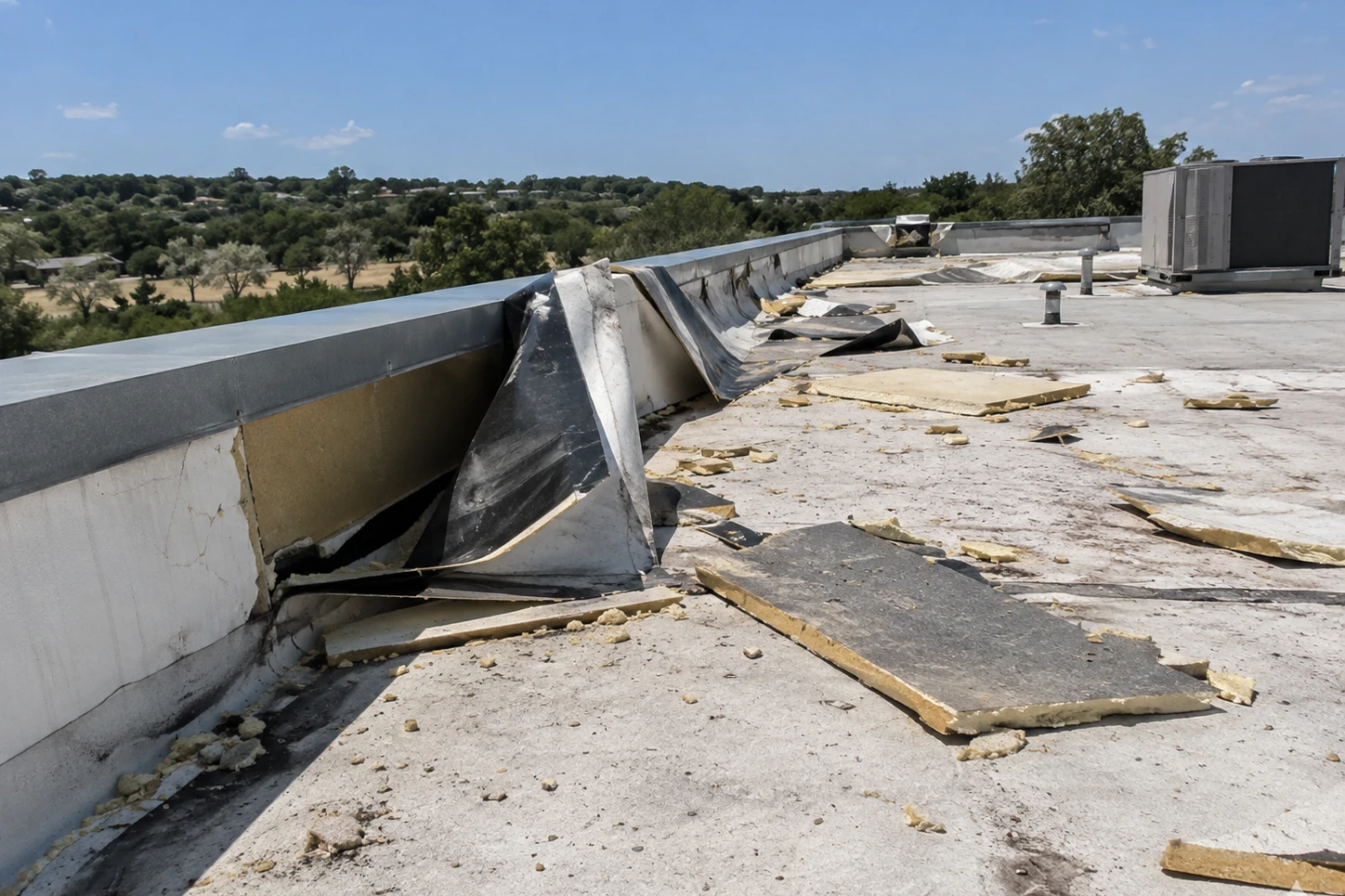
The first signs of age on EPDM are at the laps and at the details. Splice tape loses adhesion, edges lift, and the cured sheet slowly shrinks, which pulls on flashings and corners. Shrinkage shows as a tight, drum-like surface and as flashing that has pulled off a wall by an inch or two.

Black rubber also absorbs heat. Austin Camp Mabry averages near 98 F in August, a regional gauge of the heat a dark roof must carry, and the membrane surface runs hotter than the air. That heat accelerates the shrinkage and dries out the sealants around curbs, scuppers and penetrations. A scupper line along a parapet wall is a frequent trouble spot, because the sleeve, the sheet and the sealant all meet in a few inches.

Ponding and debris add to the list. Rubber tolerates standing water better than some sheets, but a pool that stays for days carries dirt and algae that attack sealants at the edge of the pool. Roof drains that serve a ballasted field also clog with stone, so we check the strainers and the sumps and record the depth of any standing water on the plan.

Hail and the hail-bruised field

Rubber handles hail better than many hard membranes because it flexes under impact. The same flexibility can hide damage: a stone can crush the insulation beneath an intact sheet. A hailstorm on May 9, 2024 left reports of six-inch stones at Johnson City, and it arrived in San Marcos afterward.

That regional event does not prove damage to a given roof. We scan for wet insulation, probe the bruised areas and take core samples where the readings are high. A rubber field with dry board beneath it may carry on for years, while a field with crushed board and tape failures moves up the replacement queue.

Wind is the companion risk on ballasted roofs. That evening high winds also put trees down across several blocks of northwest San Marcos, and downtown was under a tornado warning. Loose stone becomes a projectile in strong wind, so edges with thin ballast and corners with displaced stone are rechecked after storms.

Repair, restore or replace

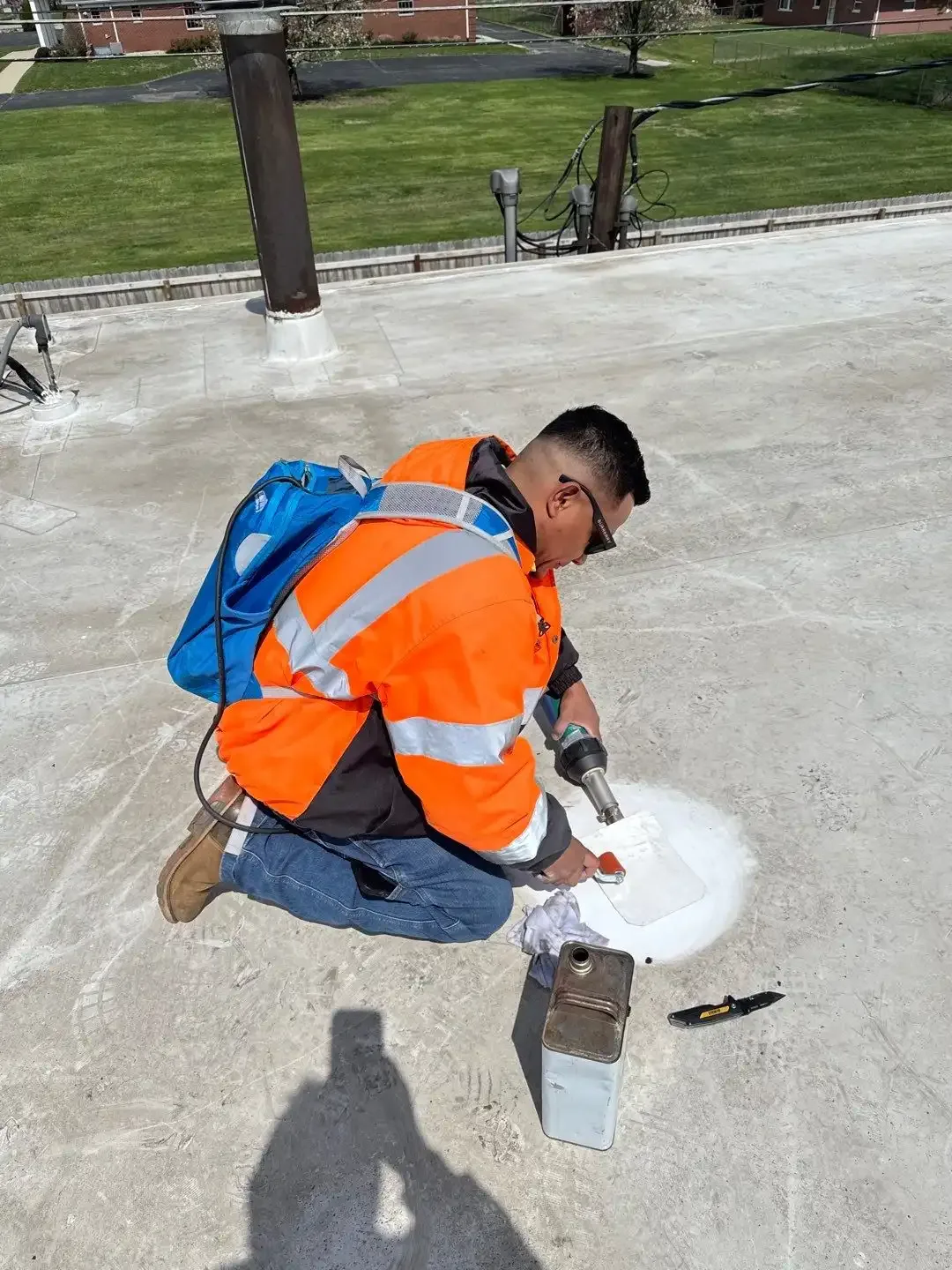
Most EPDM repairs begin with cleaning and priming the rubber, because the splice tape or adhesive bonds only to a clean, prepared surface. A small tear is patched with cured rubber and tape. A failed lap is reopened, cleaned and rejoined with fresh splice tape. A pipe boot is replaced as a unit, and a failed flashing is rebuilt.

Restoration is possible on a sound sheet: liquid-applied products can be placed over a clean, dry rubber surface after an adhesion test, though not every coating bonds to cured rubber and the test is not optional. When the sheet has shrunk, cracked or lost laps across wide areas, replacement is the practical path, and a TPO or PVC system is often the successor, since its welded seams remove the tape-joint weakness.

Documentation closes each repair. We photograph the area before and after, mark the repair on the plan with a number and note the materials used. If the owner later files a claim after a storm, those records separate old wear from new damage, which protects the budget. For storm events, the storm damage roof repair process begins with the same photographs and scans.

A word on adhesives belongs here: seam primers and splice adhesives have temperature and surface limits, and a repair made in the wrong window can peel by the next season. Repairs are timed to the weather accordingly, and the date and conditions go into the roof file.

EPDM Roofing

Where EPDM sits in the portfolio

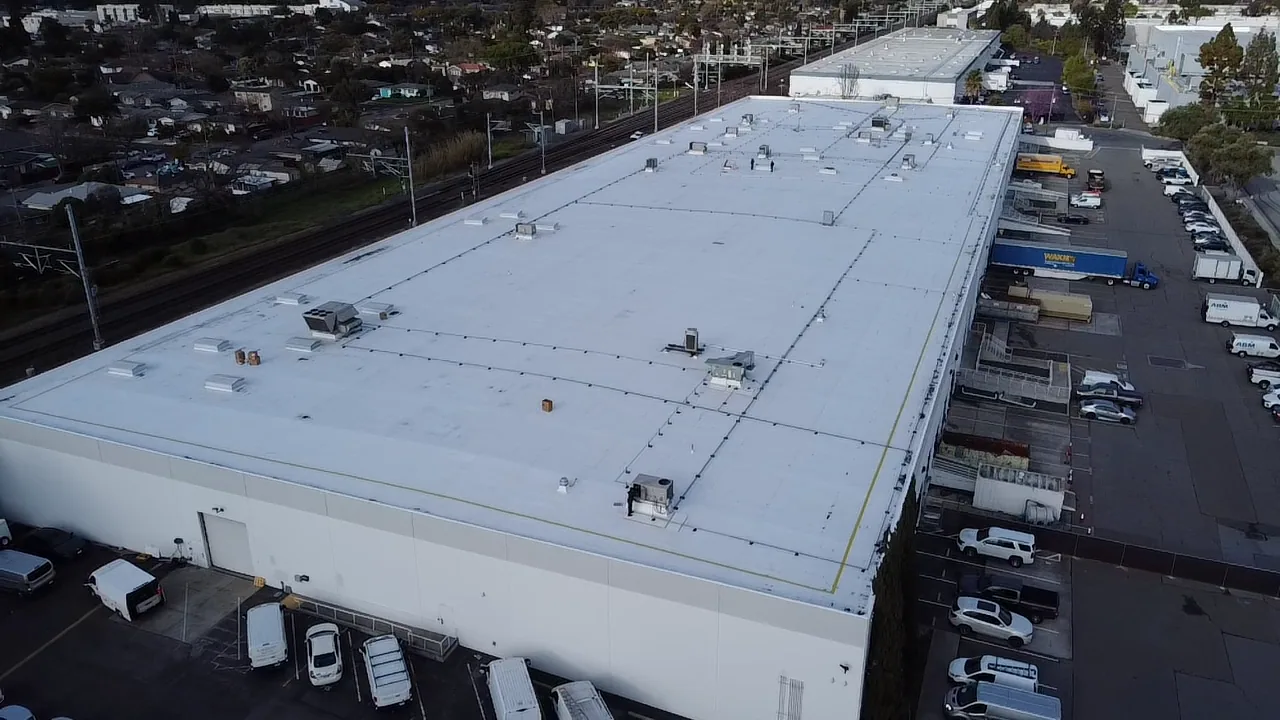
The Texas State University district takes in a campus of about 517 acres and roughly 250 buildings, too many for any one membrane type to cover. Older roofs on the Downtown San Marcos Square add another class, where the Hays County Courthouse, built in 1908, stands at the center of a historic district and surrounding storefronts have their own roof histories.

For each building we record the membrane type, attachment method and last repair, so a campus phase can be planned without surprises. The office building roofing work in the area follows the same sorting.

EPDM Roofing

The budget-year decision

The result of an EPDM review is a replacement queue ranked by remaining service. Shrinkage, lap failure, wet board and flashing pull-off push a roof up the queue. Clean laps, dry readings and intact boots hold it down. We note deferred areas, with what to recheck and when, so a director can see which dollars can safely wait. Costs depend on the amount of wet insulation, the number of details, the attachment method and building use, and we price the work after the readings are in.

Commercial Roofing Questions

Can EPDM seams be welded like TPO?

No. Cured rubber is joined with splice tape or adhesive, and the surface must be cleaned and primed first.

Why does an EPDM roof shrink?

Heat and age tighten the cured sheet over time. Shrinkage pulls on corners and flashings and opens details.

Is a ballasted EPDM roof harder to inspect?

Yes. Stone or pavers hide the surface, so sections must be moved aside to check laps and moisture.

Can I coat an EPDM roof instead of replacing it?

Sometimes, if the sheet is sound, the insulation is dry and an adhesion test passes.

What replaces EPDM when it ages out?

Often a welded single-ply such as TPO or PVC, chosen by building class, equipment and exposure.

Send the building list

Send the building list and any past reports, and we will sort the roofs into replace, repair and watch groups before your next budget year.

Request a Roof Assessment

Related Roofing Work

ServicesRoof SystemsIndustriesProperty TypesService AreasRoof Damage RepairCapabilitiesManufacturersAboutContactRequest a Roof Assessment555-555-5555
Call555-555-5555