555-555-5555

Emergency Roof Repair

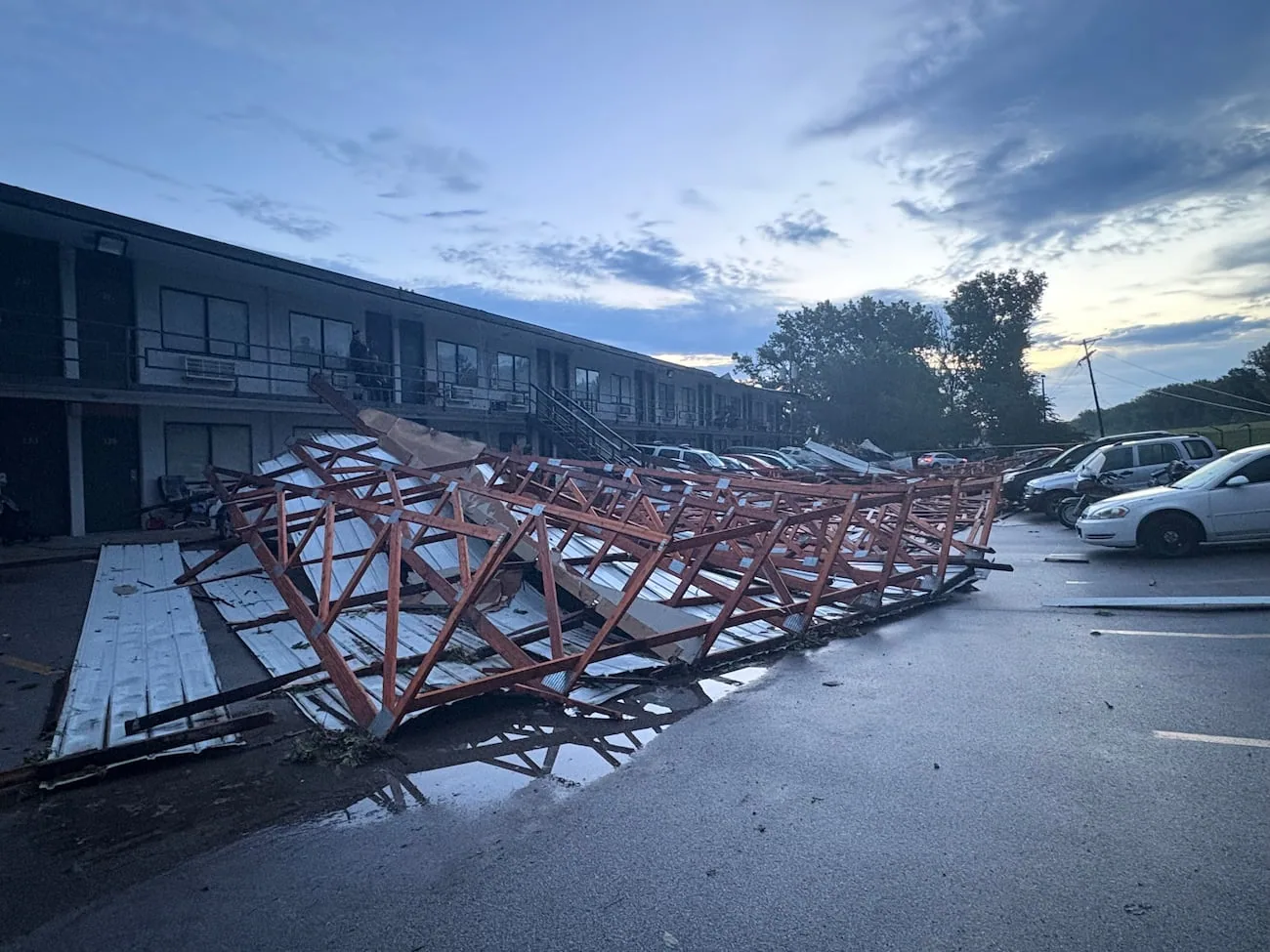
Emergency roof work in San Marcos, TX usually starts after a storm, and the one on May 9, 2024 shows the pattern: six-inch hail fell at Johnson City ahead of a system that later came through San Marcos, and the Hays County judge signed a disaster declaration. For a facility director, the first hour decides how much of the loss is the roof and how much is everything the roof was protecting. We answer calls at any hour, every day of the year, and we treat the first visit as triage: stop the water, protect the interior, record the damage and leave the building safe.

Permanent repair or replacement comes after that, planned with a dry building and a clear head.
What to Tell Us on the Call

A short call moves things quickly. We need the address and the building use, the location of the water inside, what sits below it, whether anyone is at risk and whether the roof can be reached safely. Photos from the ground or the interior help us decide what to bring: tarps and sheeting for an open section, membrane patches for a punctured field, sealants and temporary flashing for a damaged curb, or lumber for a displaced deck.

We also ask whether the building has a roof access plan, a contact who can open the hatch and a record of prior roof work. Those answers shorten the first visit.

If the building has more than one roof level, tell us which levels are affected, since access and protection differ from one to the next.

Emergency Roof Repair

Stop the Water First

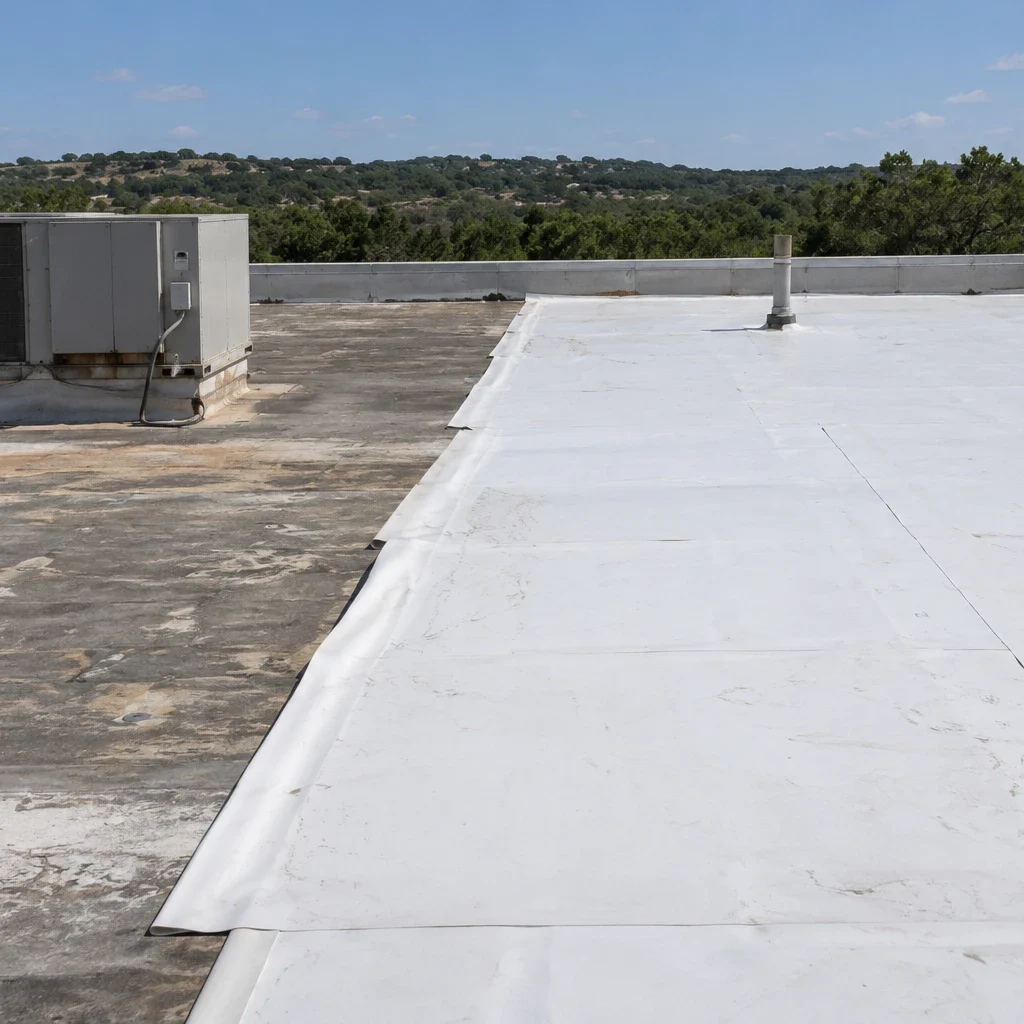
On arrival we walk the roof for hazards, mark damaged areas and set temporary protection. That may be a heavy tarp secured with battens and ballast, a temporary membrane adhered over the damaged area or a sealed patch over a puncture. If the deck has been breached, we cover the opening and shore up the area as needed. We pull wet insulation near the opening when we can, since leaving it in place keeps water moving.

The goal is a building that stays dry through the next rain. We say plainly which parts are temporary and set a follow-up date, because a tarp buys days or weeks and not years.

Protect What Is Underneath

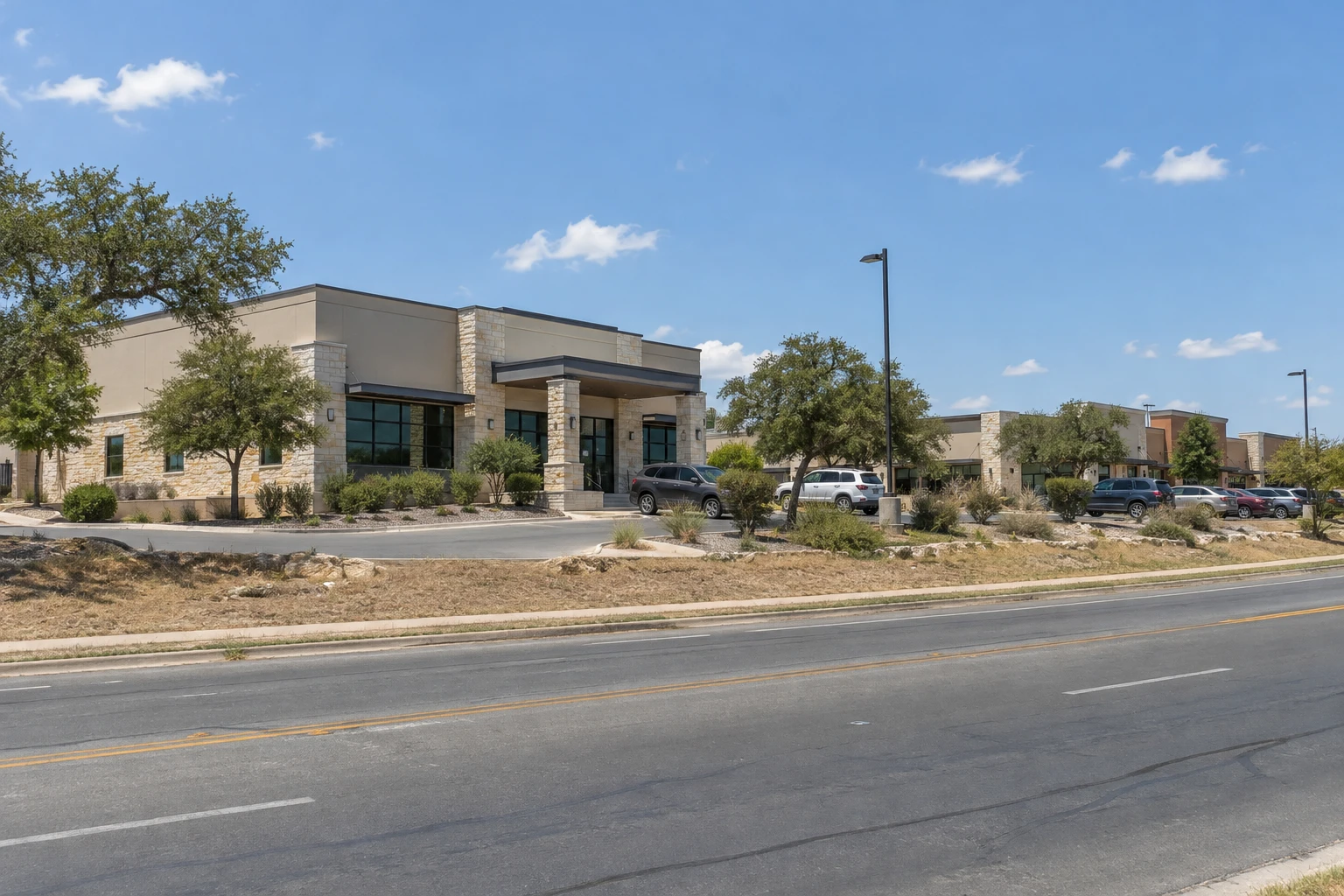
Water damage under a roof is often worse than the roof damage itself. We coordinate with the facility team on moving stock, covering equipment and diverting water with sheeting and catch systems inside the building. In a fulfillment or delivery building of the kind Amazon runs in San Marcos, the stakes include inventory and conveyor equipment, while in a medical building along FM 1626 in Kyle they include sensitive rooms and air intakes.

Interior drying belongs to a restoration contractor, so we hand the owner the roof documentation that contractor and the insurer will ask for.

Document Before You Disturb

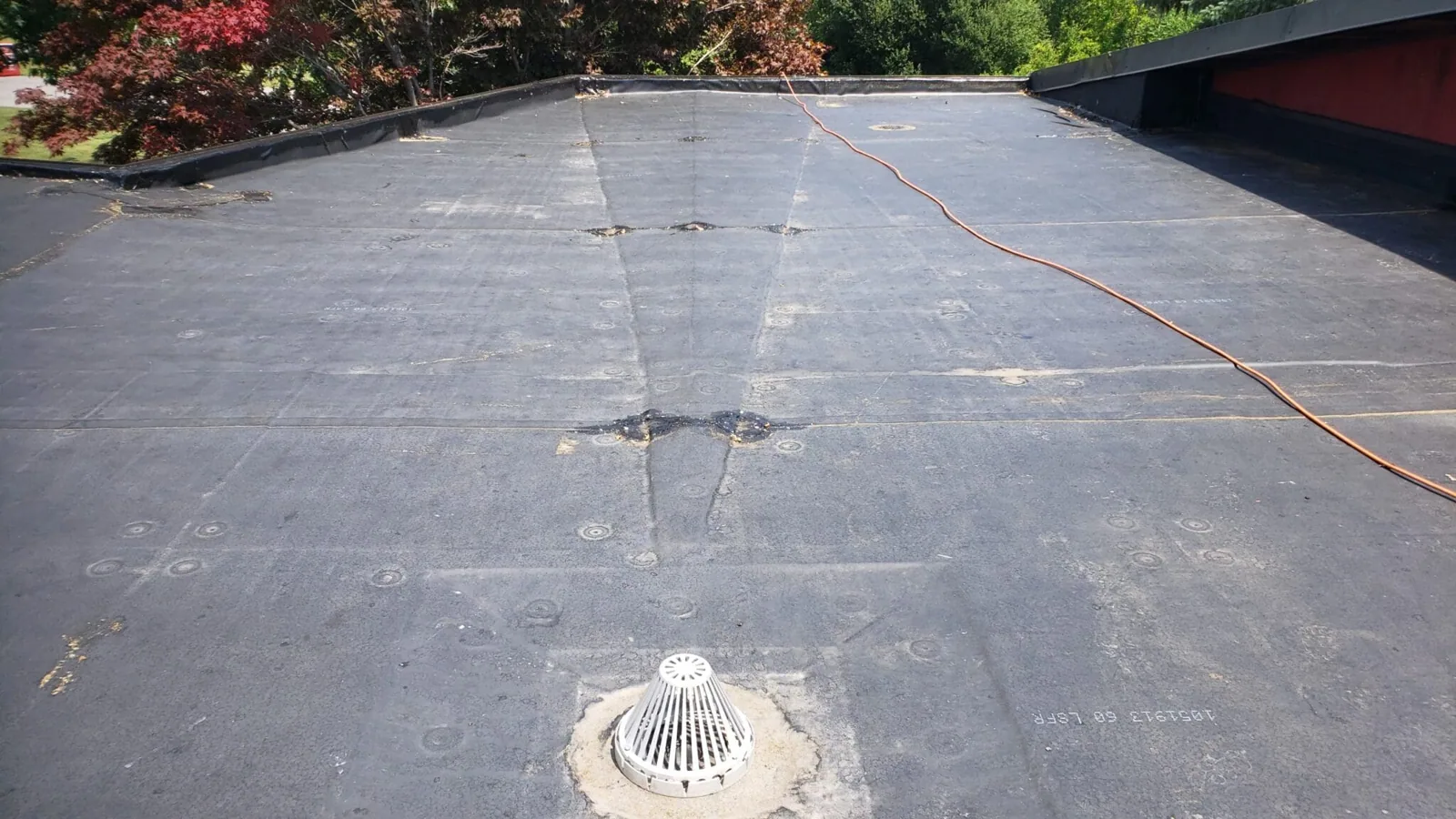
Insurance claims depend on the record. Before we cut, patch or remove anything, we photograph the damage, note its location on a roof sketch and record the date, the weather and the visible cause. When the cause is storm related, we separate new damage from wear that was already there, and we keep the removed material when the insurer may want to see it.

That record supports a claim and also tells the owner whether the damage is repairable or whether the roof should be replaced. After wind, the wind damage pattern at edges and corners is often the clearest evidence.

Emergency Roof Repair

Safety Comes Before Speed

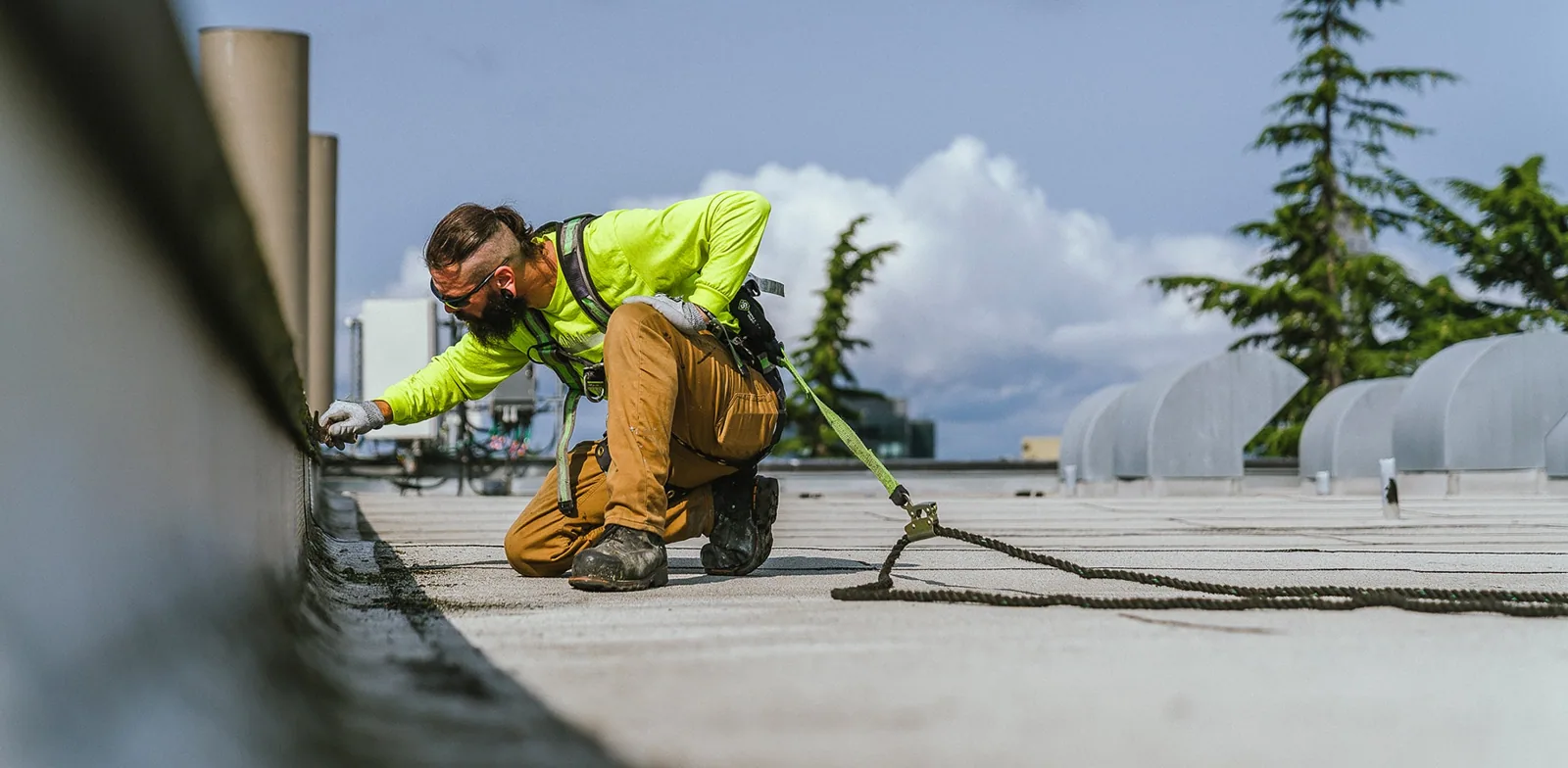
A storm-damaged roof is not a normal roof. Wet membrane is slippery, torn sheets hide soft deck, and wind-loosened metal can move without warning. Before anyone steps on a damaged area we check deck stability, locate openings and skylights, set fall protection and keep the crew away from edges that have lost their coping. If the damage suggests a structural problem, we ask the owner to bring in an engineer before the roof is loaded with materials.

Power lines, rooftop equipment and gas lines add their own hazards. We coordinate with the building engineer to shut down equipment near the work and to confirm that no one will start it while the crew is on the roof. On occupied sites we also route the crew and materials so that pedestrians and vehicles stay clear of the staging area.

Emergency Roof Repair

From Emergency to Permanent Repair

Once the building is dry, we return with a scope for permanent work. That may be a straightforward repair of the damaged section, a replacement of a storm-affected area or a full reroof if the damage is widespread. We schedule the permanent work around the building's operations and the insurer's inspection, and we replace temporary protection with durable materials.

Owners with several buildings can treat any hail event as the cue to inspect the rest of the portfolio. A routine inspection after a regional event finds damage that has not yet produced a leak.

Plan Before the Storm Season

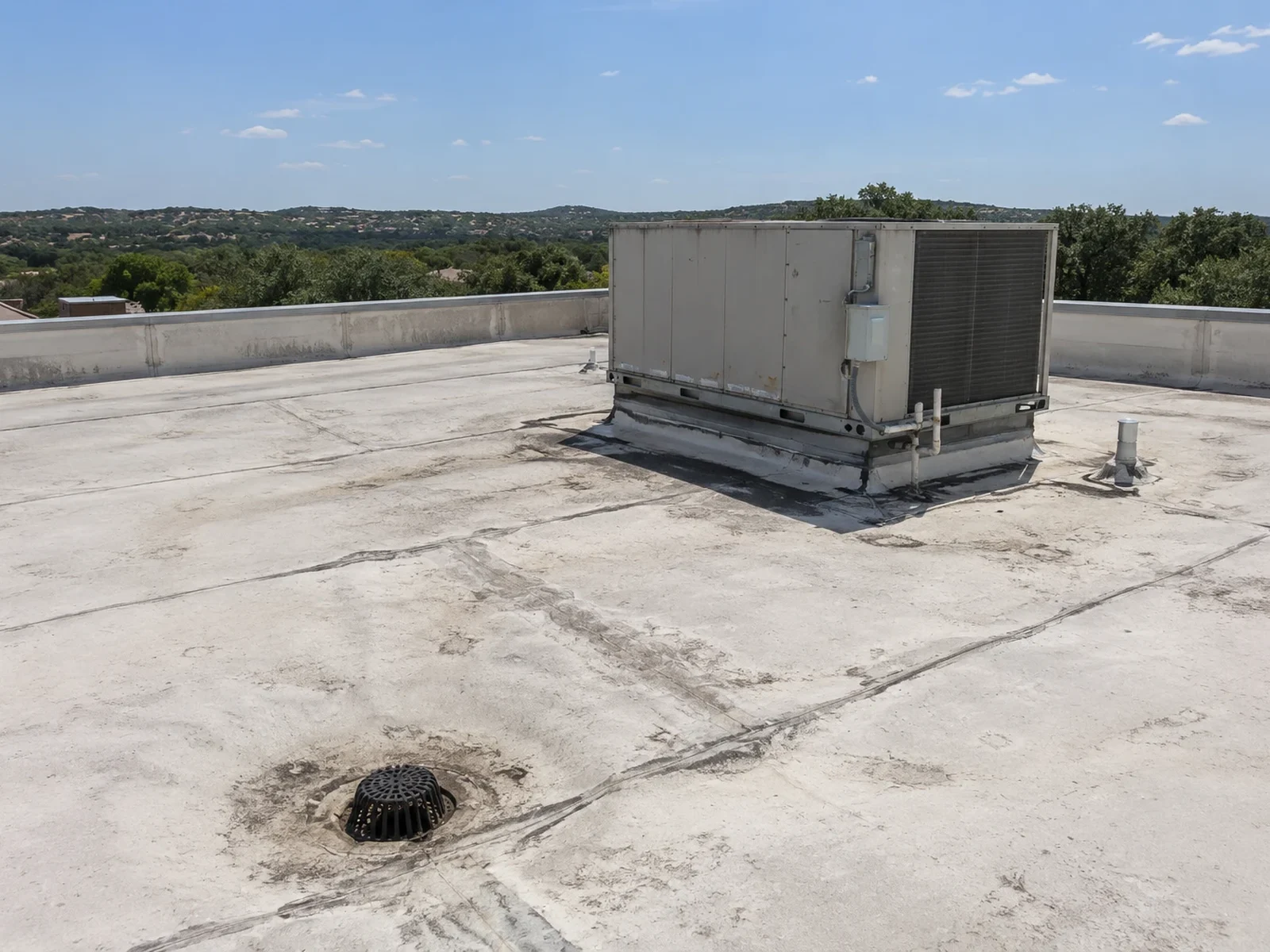
The best emergency is one with a plan. A director can keep roof access information, hatch keys, a current roof plan and the names of people who can authorize work on file before the season starts. Buildings with known weak points, such as old flashings, loose edge metal and clogged drains, can be corrected in advance. Central Texas summer heat adds stress and ages sealants and membranes quickly.

We help owners build that plan, and we keep it current as roofs change.

A short written plan helps in practice: who calls us, who can approve temporary work up to a stated limit, where the roof access is, which tenants must be warned and which equipment must be shut down. Facilities with multiple buildings along I-35 or on a campus can keep one plan for the portfolio, with a page for each roof. When the call comes at night, the plan saves the first thirty minutes of phone tag and lets the crew start with the water.

Commercial Roofing Questions

How fast can a crew reach a building after a storm?

Response time depends on how many buildings are affected and where the crew is, and we give an arrival window on the first call. When several buildings are hit at once, we triage by the risk to occupants, equipment and inventory. Owners who have a plan on file, with access details and an authorizing contact, shorten the first visit considerably.

Is a tarp a permanent fix?

No. A tarp or temporary membrane is meant to last days or weeks and keep the building dry until permanent work is scheduled. We note the follow-up date in the report and move to permanent repair as soon as the roof is dry and materials are available.

Do I need an inspection before the insurer visits?

A documented inspection helps because it records condition before anything is changed. We photograph the damage, sketch the locations and separate storm damage from older wear, then give the owner a report the adjuster can use. Keep the removed material aside when the insurer may want to see it.

What if the deck itself is damaged?

A damaged deck can be a safety problem, so we cover the opening, keep people off the area and shore up the structure as needed. Permanent deck repair or replacement follows once the area is dry and the extent is known.

Will the emergency work affect my warranty?

Temporary measures generally do not, but permanent repairs may need to follow the manufacturer's requirements. We use compatible materials and tell the owner which steps preserve the existing terms.

Call Any Hour

Give us the address, what is below the leak and what you can see, and we will set a crew arrival time and start with the water.

Request a Roof Assessment

Related Roofing Work

ServicesRoof SystemsIndustriesProperty TypesService AreasRoof Damage RepairCapabilitiesManufacturersAboutContactRequest a Roof Assessment555-555-5555
Call555-555-5555