555-555-5555

Modified Bitumen Roofing

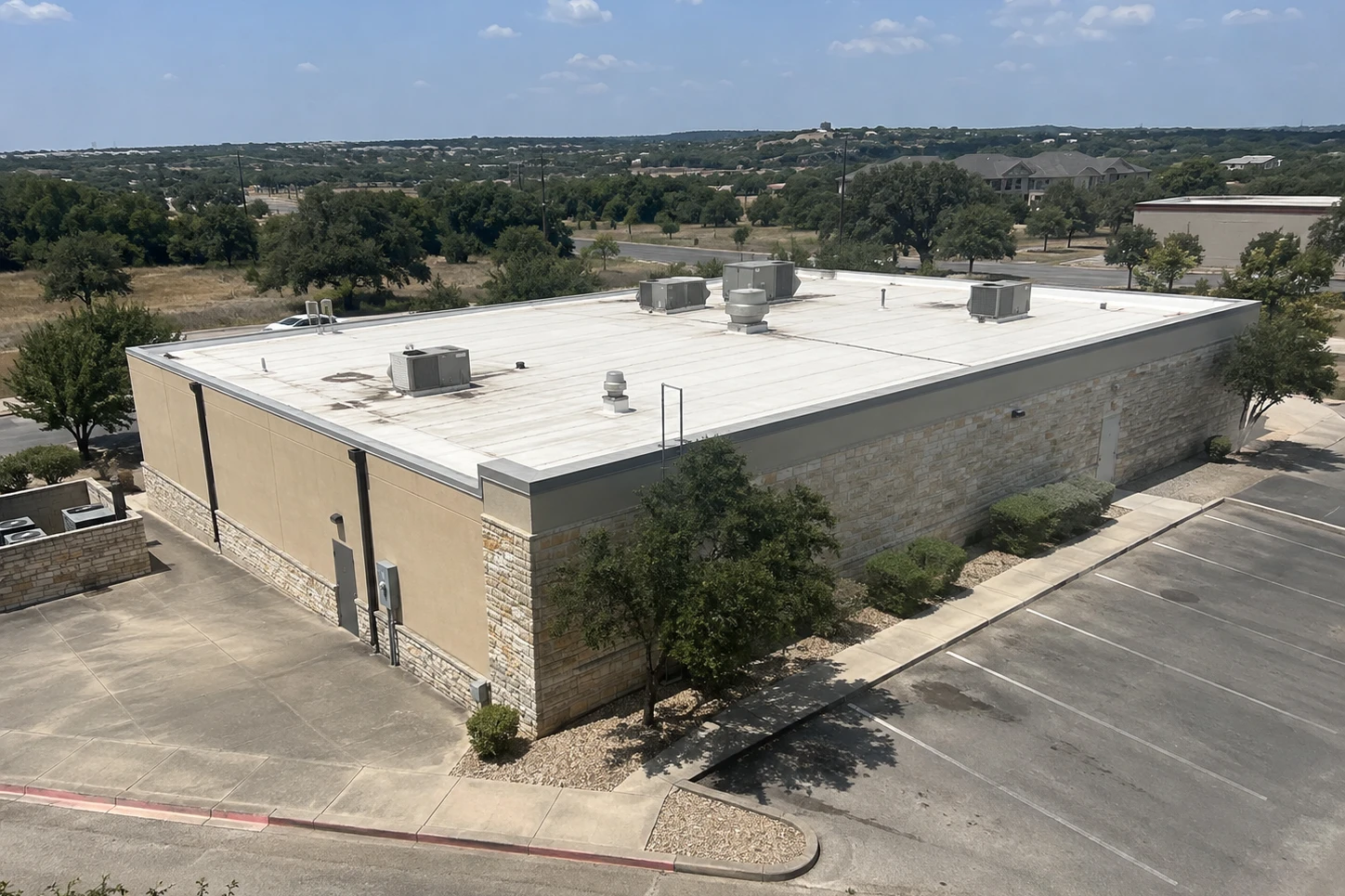
Modified bitumen is the membrane of institutional and downtown buildings, the roof class that is walked on often, repaired often and expected to last through several budget years. In San Marcos, TX that is the class of school wings, campus buildings, hospital roofs with heavy equipment traffic and the older storefronts around a courthouse square. That class wears a roof from underneath and above at once, since people, equipment and weather all load it, and a thick, redundant surface is worth more than a thin one.

A modified bitumen roof is asphalt blended with a polymer, then reinforced with fabric and delivered in rolls. Two polymers dominate, SBS for flexibility and APP for heat stability, and each calls for its own attachment method. Our job is to read the layers and tell a facility director how many seasons the roof has left.
What the system is

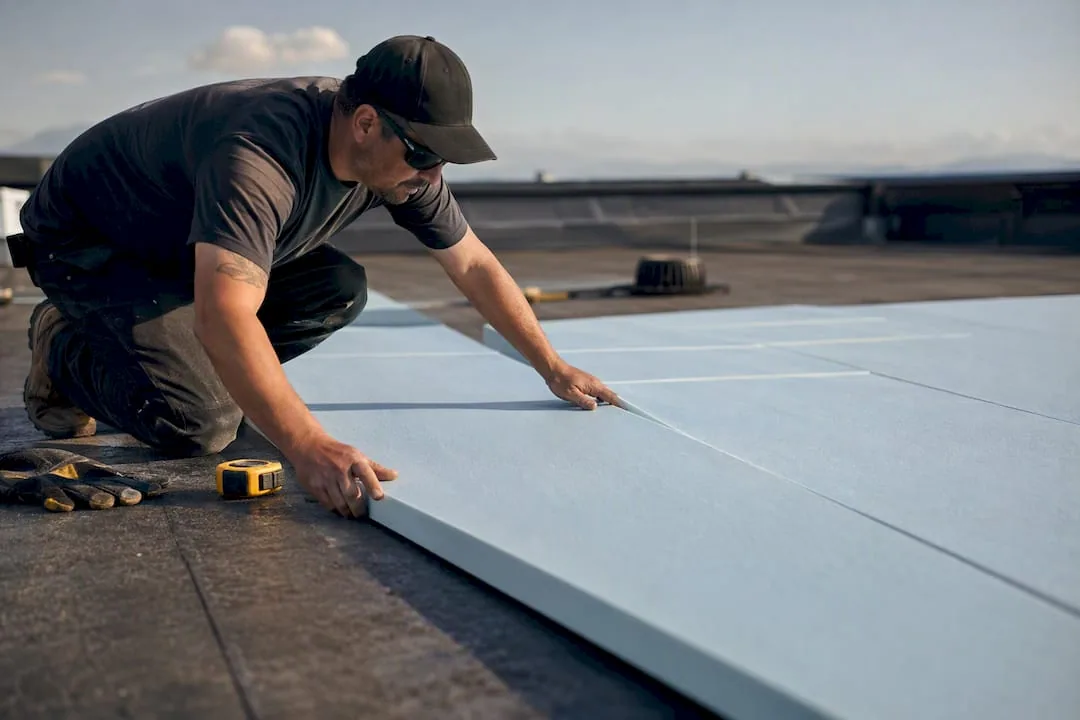
The system stacks a deck, insulation and usually a cover board, then a base sheet and a cap sheet. Some roofs use two or three plies, and the cap carries a mineral granule surface that shields the asphalt from sun. The plies can be heat-welded with a torch, mopped in hot asphalt, applied with cold adhesive or, in the case of self-adhered sheets, rolled down from a peel-and-stick backing.

Torch application brings open flame to a roof, which creates a fire risk. The method is controlled with permits, fire watches and careful detailing at edges and penetrations, and many owners choose cold-applied or self-adhered sheets near occupied spaces or combustible materials. We confirm the method with the building owner before the work is scheduled and write the fire plan into the scope.

Cover boards matter under these sheets. A firm board between the insulation and the base sheet spreads foot traffic, resists hail and gives the adhesive or torch a stable surface. Where an old roof lacks one, a repair or recover is a chance to add it, and the cost is small compared with the extra protection it provides over the next decade.

Modified Bitumen Roofing

What wears first

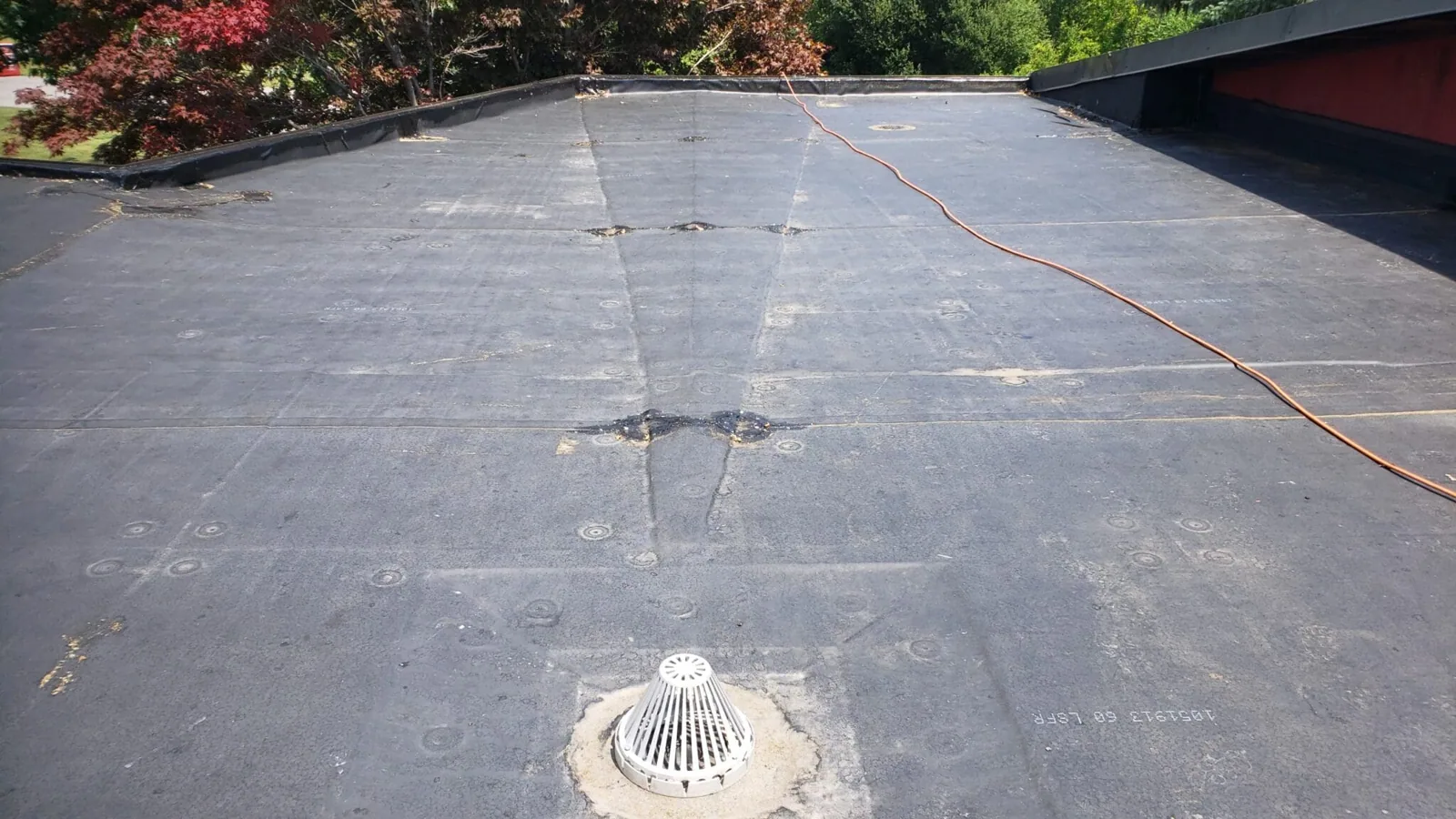
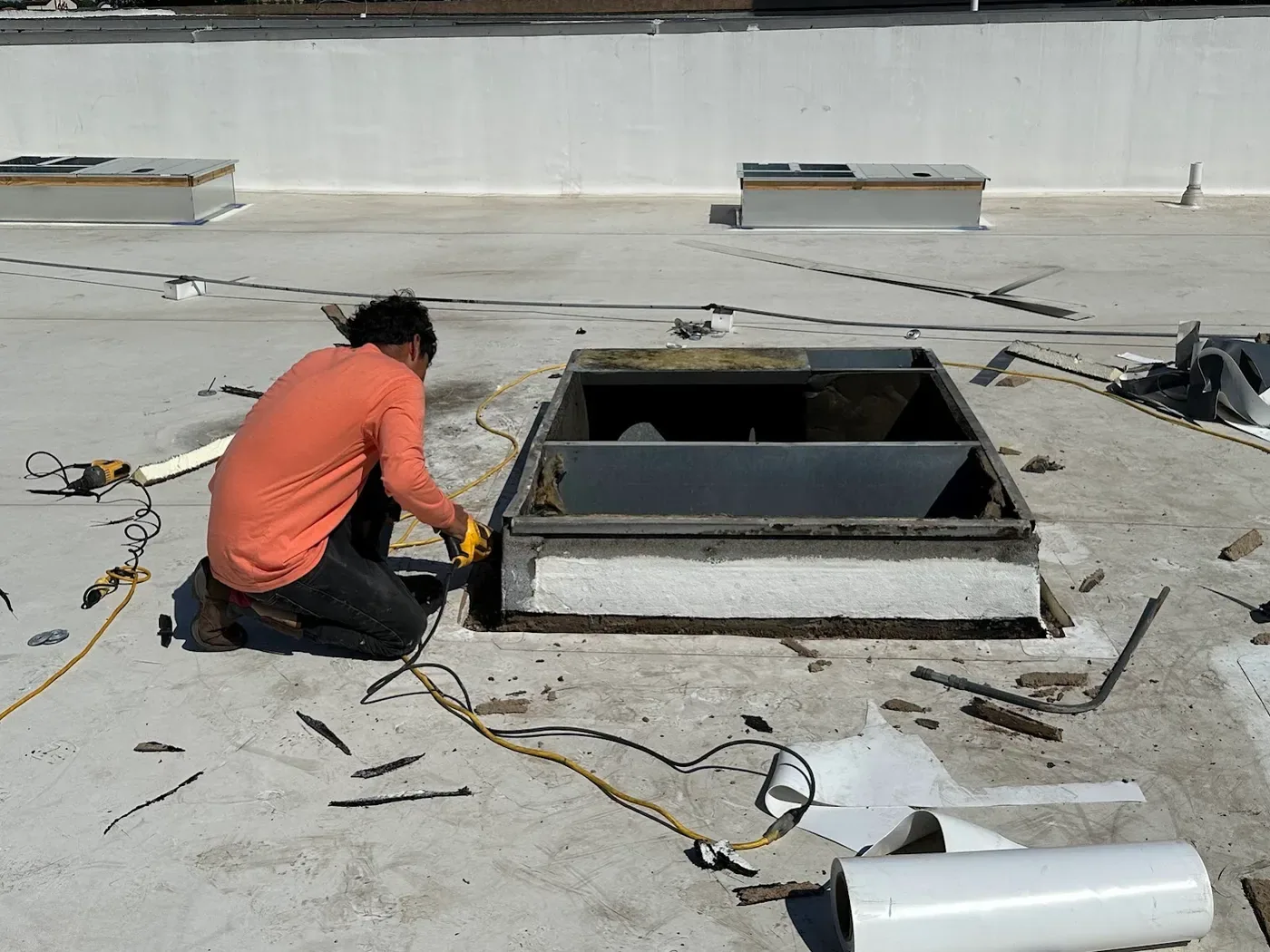
The cap sheet takes the first damage. Granules loosen and wash into the drains, which exposes the asphalt to sunlight, and exposed asphalt oxidizes and cracks. Laps open where the heat-welded bead was thin. Heat expands moisture trapped between plies, and the blisters that result push the sheet upward. Flashings pull away from walls as the roof shifts.

San Marcos summers add to the load. The August normal high at Austin Camp Mabry sits near 98 F, which is the heat a dark roof here must carry. In that heat, asphalt softens and surface scars deepen, and foot traffic leaves ruts along the paths to equipment. We note each path on the roof plan and recommend protection where the ruts are forming.

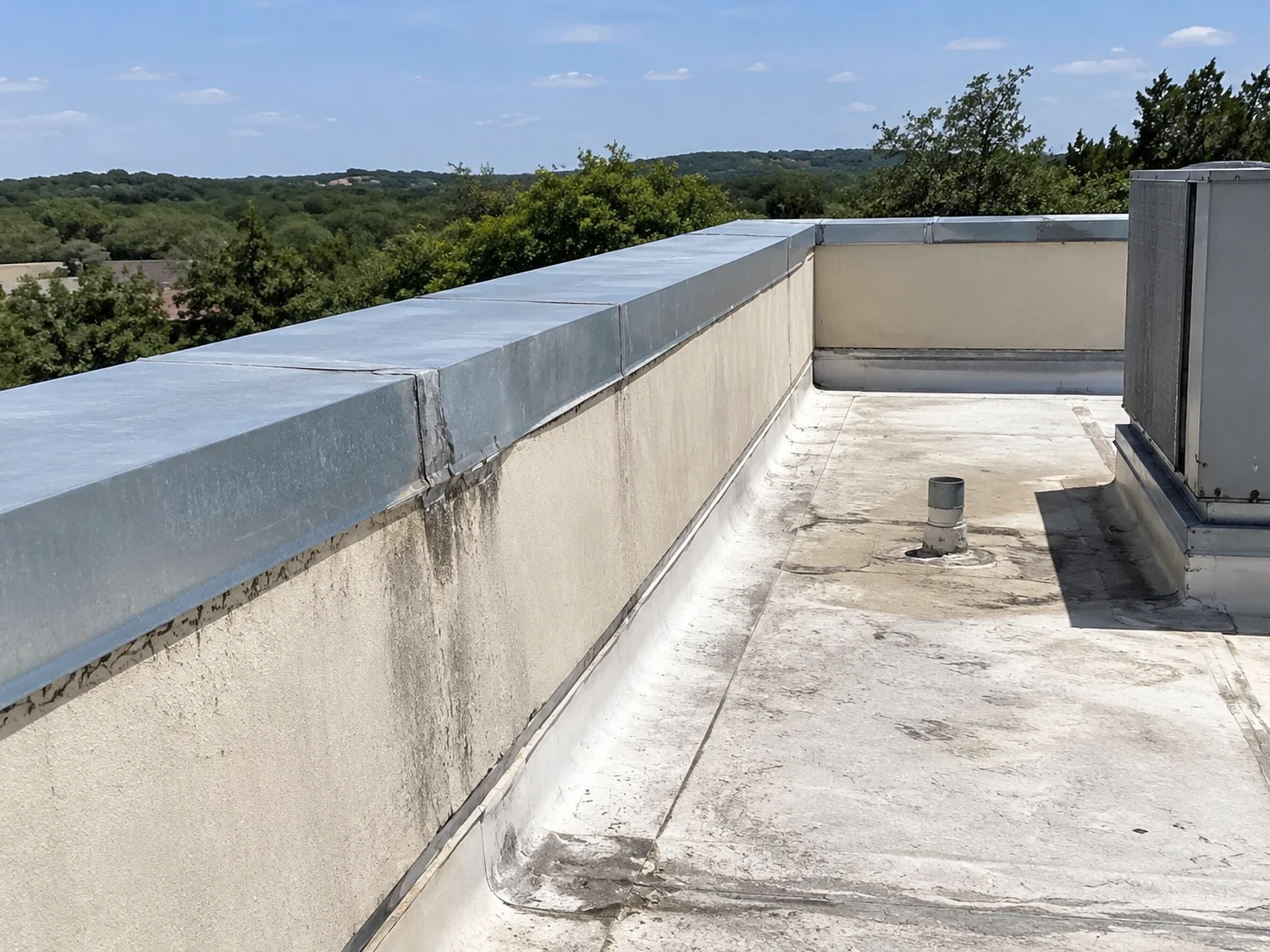
Edges deserve their own check. Metal edge flashing and the cap sheet that tucks under it take the most wind and the most thermal movement, and a loose metal edge allows water behind the membrane. EPDM and other single-ply roofs fail at their edges for the same reason, so the perimeter is checked on every walk. Drains and scupper lines are next, since granules and debris collect there and slow the water.

Hail and the granule surface

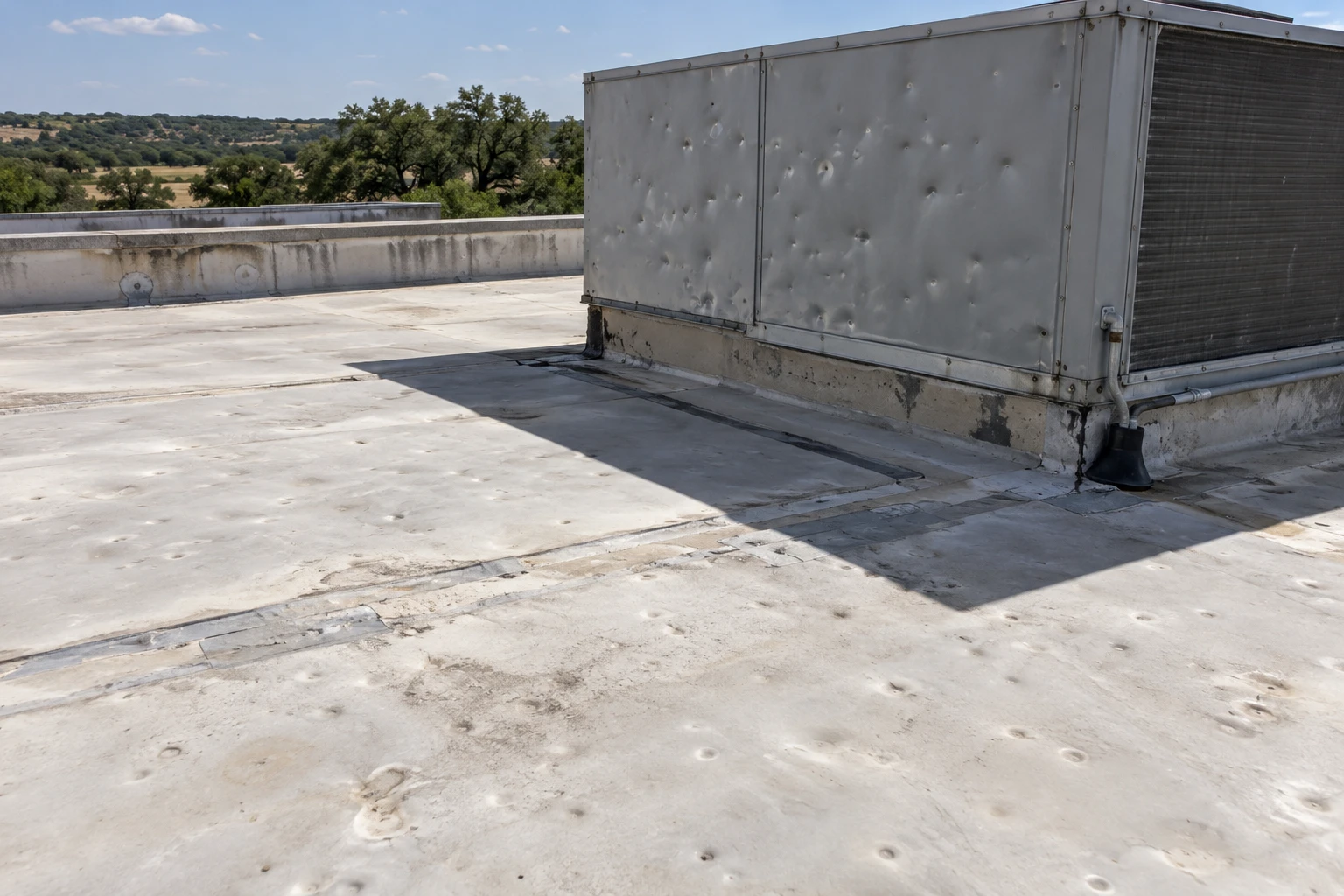
Modified bitumen resists hail better than many thinner sheets because the multiple plies spread the impact. It still loses granules to large stones, and the bruised cap can crack. The weather service described hail up to six inches across at Johnson City during the May 9, 2024 storm, which then reached San Marcos. That is regional context, not a finding about any deck.

We look for scuffed granules, fractured cap sheet and mats of granules in the gutters and scupper lines. Wet insulation shows up on a moisture scan, and core samples reveal the ply count and whether the plies are still bonded. A hail-bruised field with dry insulation can stay in service, while one with cracked plies and wet board enters the replacement queue.

Wind rounds out the storm picture. Trees came down onto fences and homes across several blocks of northwest San Marcos in that storm. A torch-applied or fully adhered roof resists lift well, but edge metal and counterflashing are checked after any severe storm because wind finds the loose edge first.

Repair, restore or replace

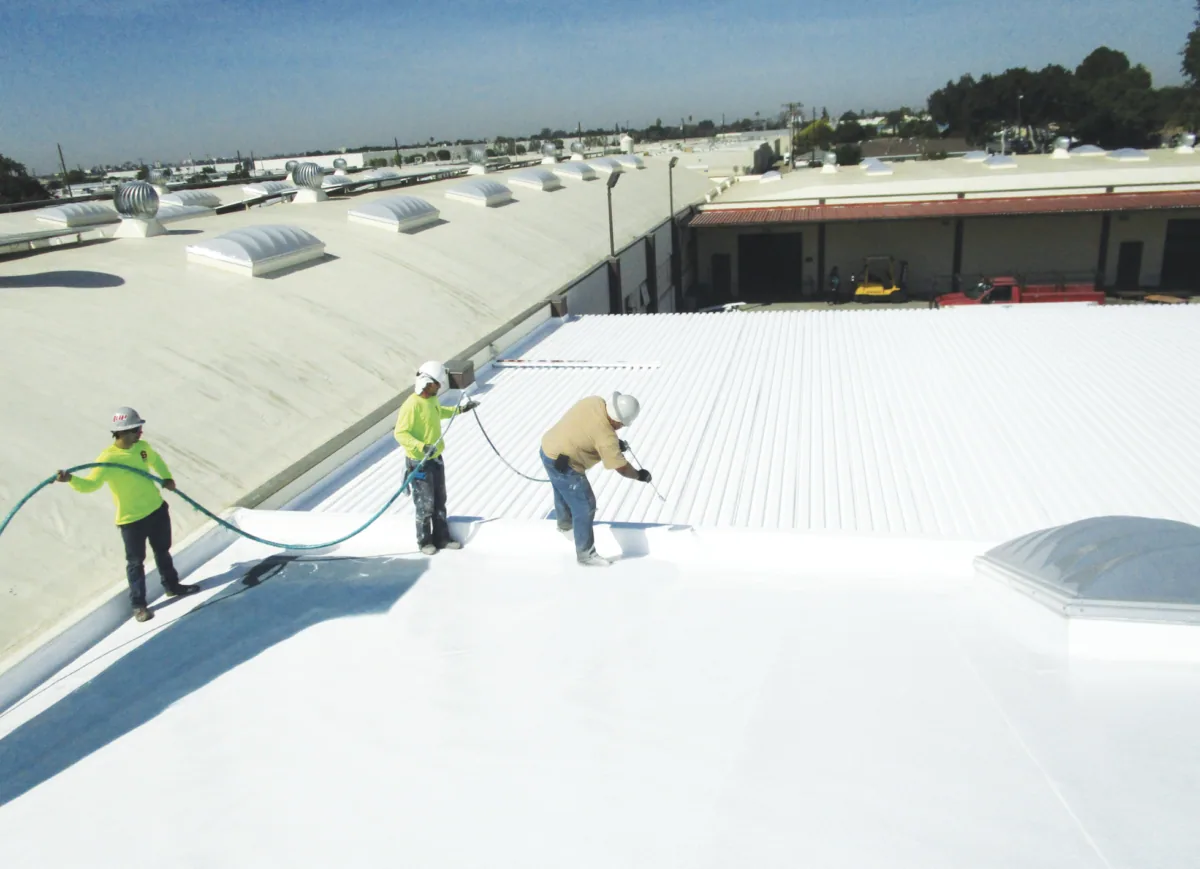
Repair is practical on a sound roof. Open laps are reheated or sealed, blisters are cut and dried before patching, and flashings are rebuilt with compatible membrane. Granule loss over a wide area can be addressed with a reflective coating, and roof coating restoration is possible when the plies are bonded and the insulation is dry.

A roof with multiple repairs in the same area, widespread blistering or wet insulation across the field belongs on the replacement side. A built-up roof is a related multi-ply assembly with similar failure modes, and the same reading applies. We compare the cost of continued repair with the cost of a new system and let the numbers sit next to each other for the director.

Documentation supports each choice. We photograph every repair, mark it on the roof plan and note the material and method. Over a few years the record shows how fast a roof is declining, which turns an argument about whether the roof is old into a discussion of how many seasons remain. For owners handling a storm claim, those photographs separate older wear from storm loss, and the commercial roof repair scope states the difference.

Seasonal timing matters on asphalt roofs. Cold-applied adhesives cure slowly on cool mornings, and torch-free methods keep the work possible in more weather, so the schedule leans on the method chosen and on the forecast for the week.

Modified Bitumen Roofing

Where it sits in San Marcos

The Downtown San Marcos Square includes storefronts around the 1908 Hays County Courthouse, a historic district designated in 1992, where roofs must be repaired without harming old walls. Hospital and clinic roofs, such as those in the Kyle medical corridor, tend to carry heavy equipment and need cautious hot-work planning, and hospital roofing schedules around patient areas. A campus like Texas State adds scale and a calendar of classes and events.

Each building gets a record of ply count, attachment method and last repair, because that record decides whether the next repair is a patch or a plan.

Modified Bitumen Roofing

The budget-year decision

What the owner gets is a replacement queue in order of remaining service. Cap-sheet cracking, open laps, blistering and wet insulation push a roof up; sound plies, dry readings and intact flashings hold it down. Costs depend on the number of plies to remove, the condition of the insulation and deck, the attachment method and building use. We price after the readings and write the schedule around operations.

Commercial Roofing Questions

What is the difference between SBS and APP?

SBS is rubber-modified for flexibility. APP is plastic-modified for heat stability. Each uses its own attachment method.

Is torch application safe near occupied space?

It requires permits and a fire watch, and cold-applied or self-adhered sheets are often chosen near occupied areas.

What causes blisters?

Moisture or air trapped between plies expands in heat and lifts the sheet. Blisters are cut and dried before repair.

Can granule loss be fixed?

Yes, when the plies are bonded and the insulation is dry, because a reflective coating shields the exposed asphalt.

How many plies does my roof have?

A core cut shows it. Ply count helps decide whether repair or replacement fits.

Send the building list

Send the building list and any past reports, and we will sort the roofs into replace, repair and watch groups before your next budget year.

Request a Roof Assessment

Related Roofing Work

ServicesRoof SystemsIndustriesProperty TypesService AreasRoof Damage RepairCapabilitiesManufacturersAboutContactRequest a Roof Assessment555-555-5555
Call555-555-5555