555-555-5555

Hays Commerce Center and I-35 Logistics Corridor, Kyle

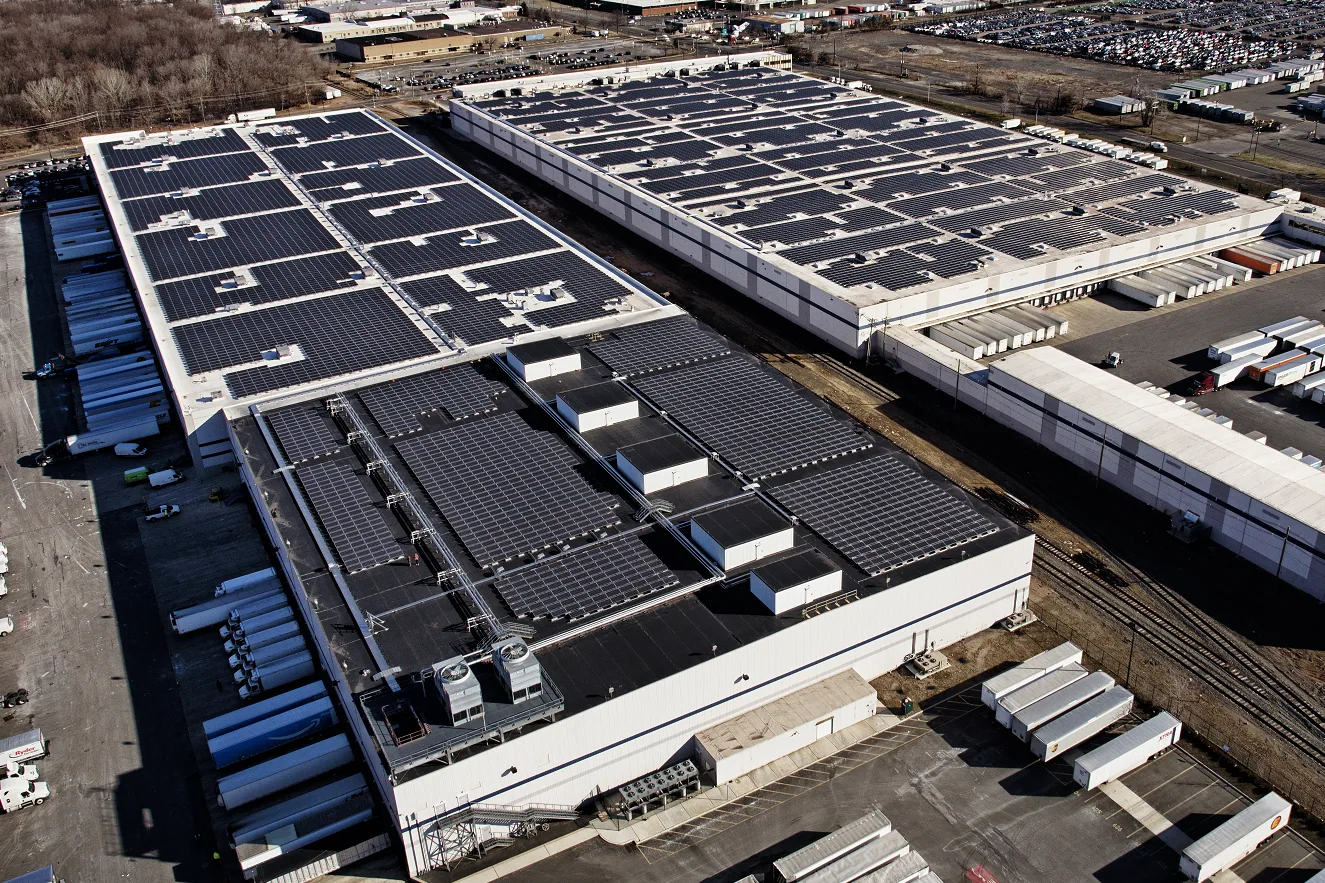
Subdividable distribution space makes the roof a shared asset with separate users. One deck, several tenants, each with its own rooftop units, its own penetrations and its own hours. What that class does to a roof is multiply the number of hands that touch it, and the budget year for an owner depends on tracking who did what, where.

Hays Commerce Center is a 108-acre mixed-use development on the west side of I-35 between Loop 4 and Kyle Crossing in Kyle, TX. Within it, Hays Logistics Center consists of two distribution buildings, one of them (Building 1) at 220,000 square feet, and together they exceed 400,000 leasable square feet. Kyle Business Park holds Amazon's 370,840 square foot sortation center, and Lowe's is to open a 120,000 square foot distribution facility at Kyle Crossing. The corridor is a distribution class, and we inspect it as one.
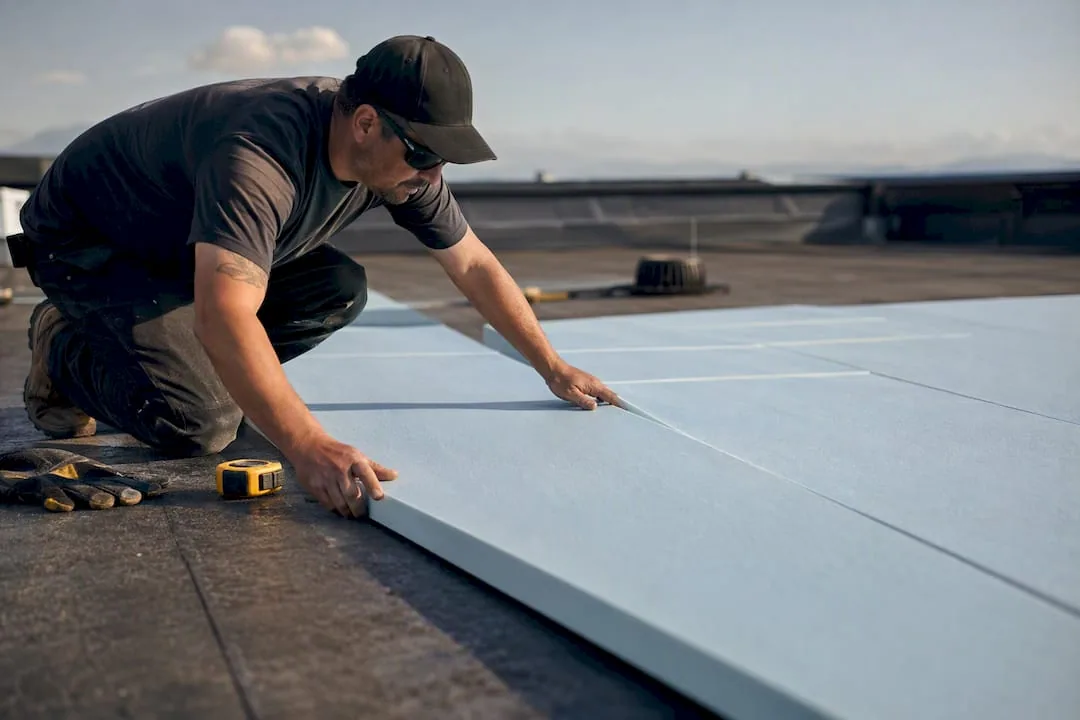
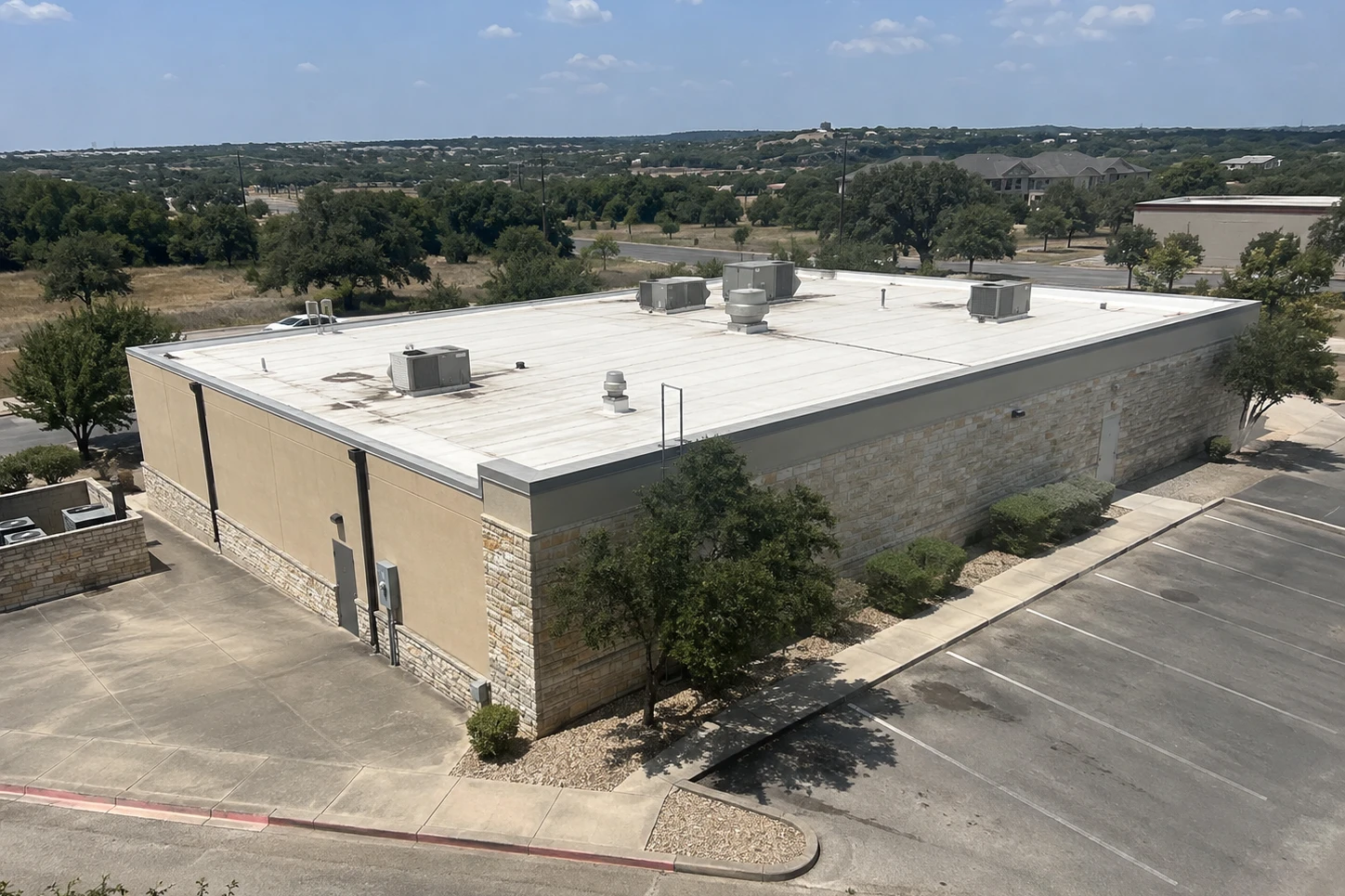
Zone the Roof by Bay

A multi-bay building needs a roof plan that mirrors its floor plan. We divide the deck into zones that match the demising walls and number each one. Every zone gets its own penetration list, its own scan and its own repair log. When a tenant leaves or changes, the zone record tells the owner what condition the roof is in at the line.

The zone approach solves a common dispute. A leak appears in one bay, and the tenant blames the roof while the landlord blames a unit. With zone records, the scan, the photos and the penetration list answer the question. A warehouse roofing program for a multi-tenant building should start with the zone plan, because everything else hangs on it.

Hays Commerce Center and I-35 Logistics Corridor, Kyle

Control the Penetrations

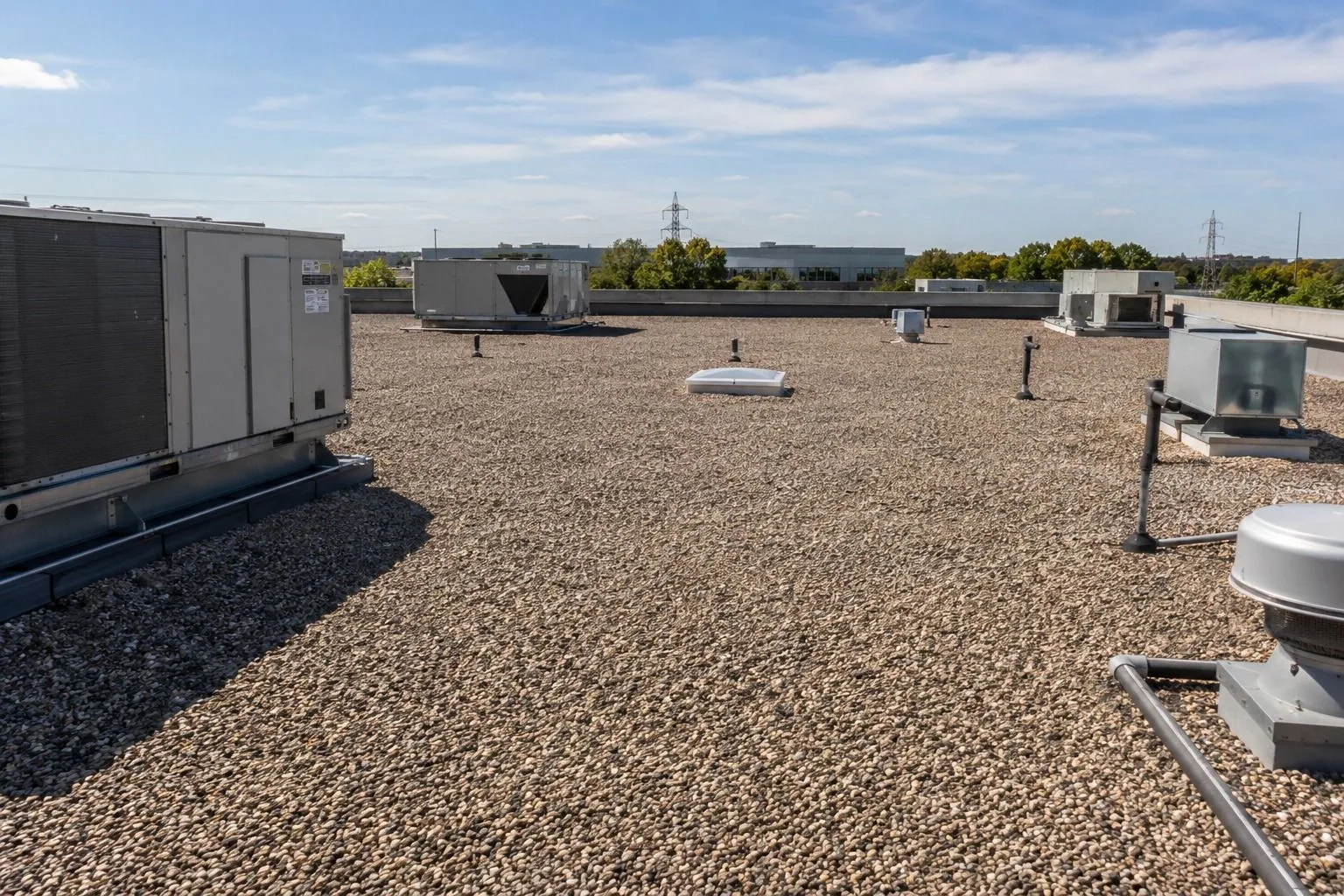
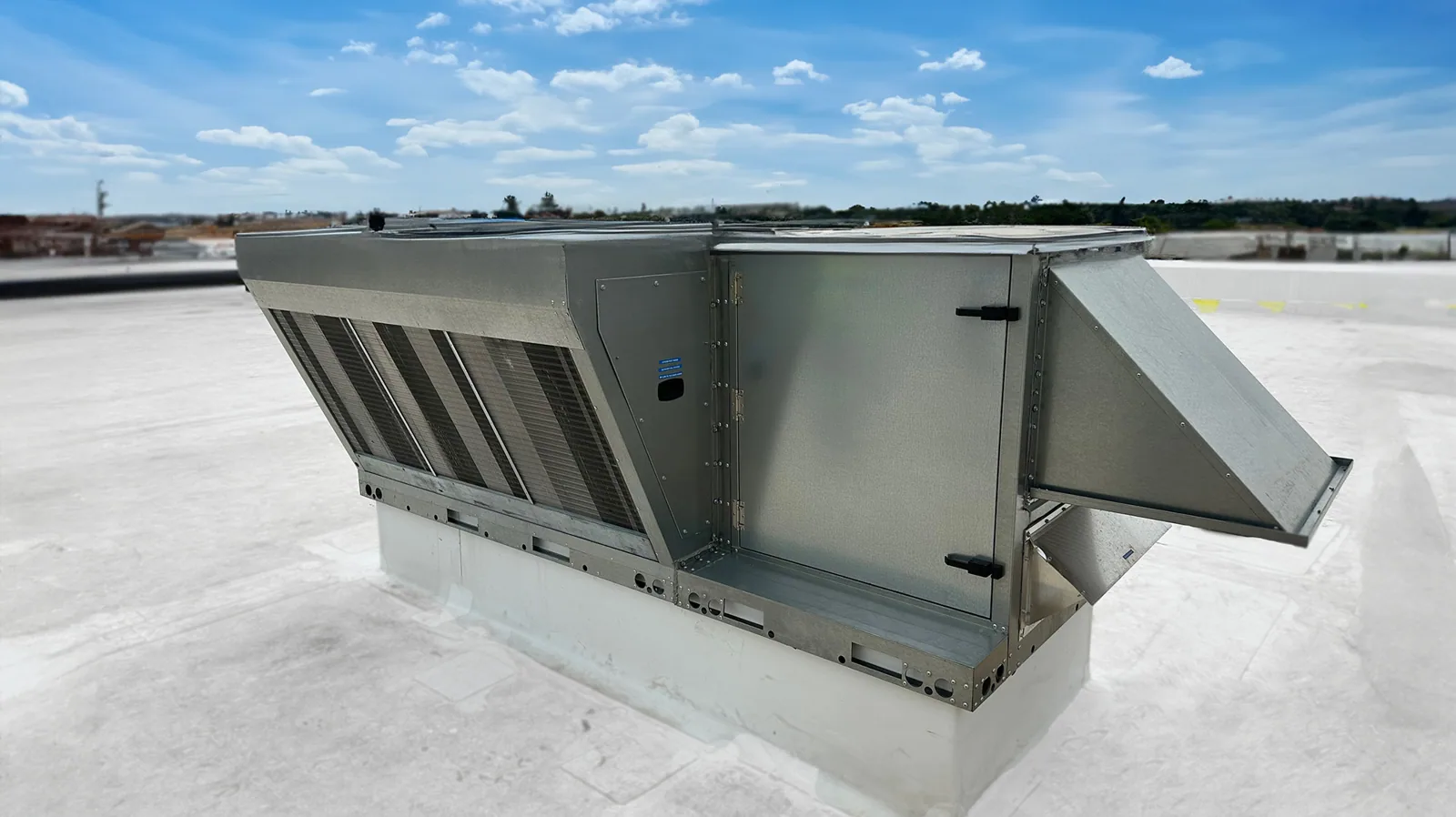
Distribution tenants add equipment. Make-up air units, exhaust fans, heaters, antenna mounts and conduit all cut the membrane. Each cut should have a curb or boot that matches the system, and each should be logged with the date, the tenant and the crew that made it. A hole made by the wrong crew with the wrong flashing is a future leak.

We walk each zone and list every penetration with a photo. We check curb height, flashing termination and sealant. We note which items are original and which were added. Added items get the closest look, since a crew that works fast on a tenant deadline may skip a step. Abandoned openings are patched with a proper detail, and the patch is water tested before we leave. A rooftop equipment curbs and supports inspection every year catches the cracked boots and shifted curbs that make up much of a tenant-era leak history.

A walk after each tenant's fit-out confirms the zone record still matches the roof, and any new unit is added to the zone plan with its curb type.

Read the Dock-Side Edge

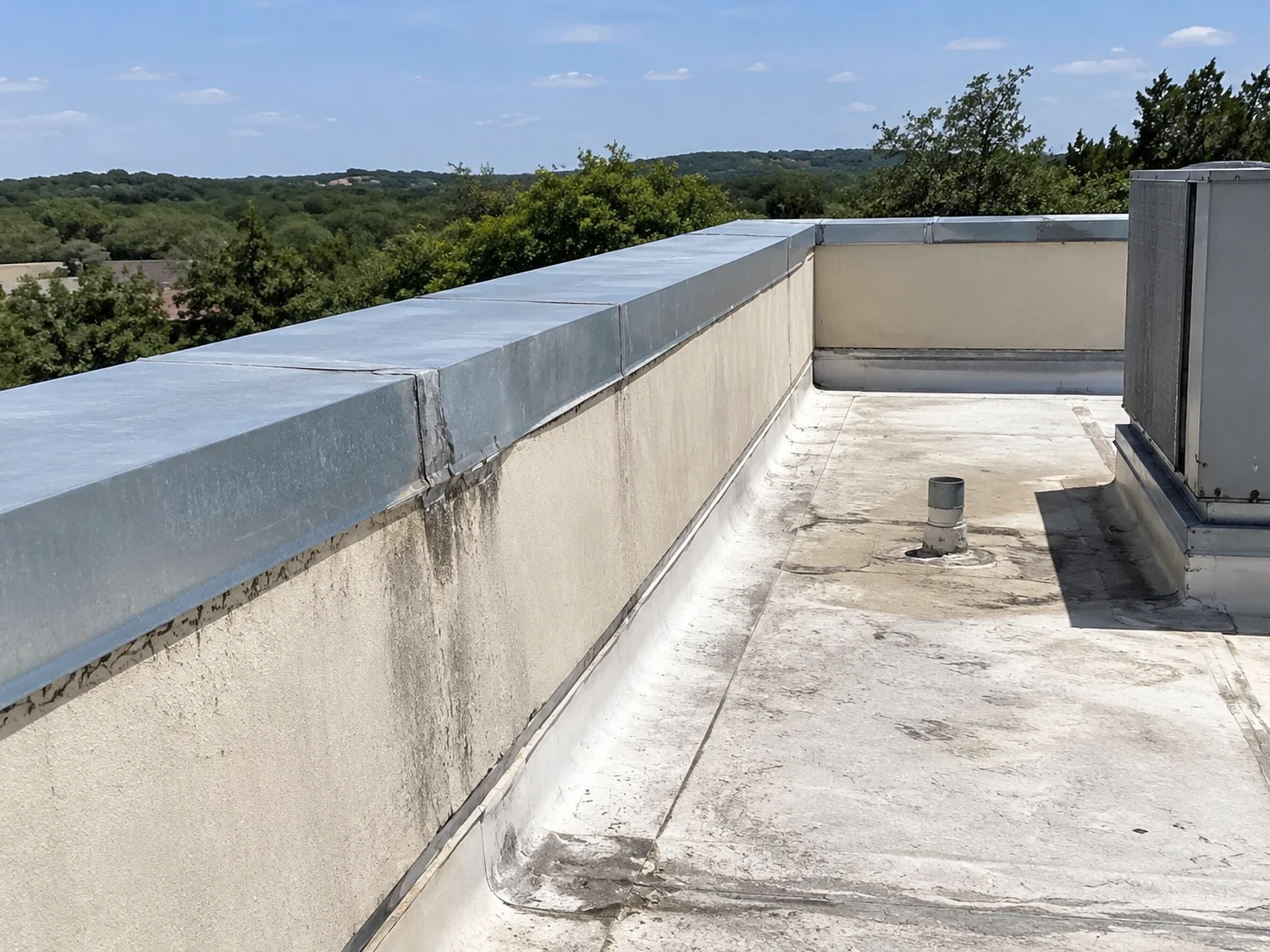
The loading side takes the harshest use. Trucks back in, doors cycle, canopies carry weight and the wall vibrates. The coping, wall flashing and sealant on that edge age faster than the field. A loose cap piece lets wind under the metal, and the sheet below it starts to flutter.

We press the coping joint by joint, tug the fasteners and probe the termination bars. We look at the first few feet of the membrane from the edge, where suction is highest and where fasteners are densest. Edge repairs are small when found early. Our edge metal, coping and gutters work is the first line of defense for the perimeter, and it protects the interior racks and goods below. A wet corner above a rack line can ruin product in a single storm, so the edge walk comes before the cosmetic items on any list.

Test Drainage and Overflow

Wide distribution roofs depend on a few drains. If one clogs, a large area ponds. Overflow scuppers are the backup, and they must be clear and set at the right height. A scupper that sits above the deck surface holds a permanent pool, and one that is blocked offers no relief.

We clear and test every drain, pour water through each leader and measure scupper heights. We map pools the day after rain. Where a pool persists, we trace the cause: a blocked drain, a sagging deck or crushed insulation. The fix follows the cause: a cleared strainer, a rebuilt sump, tapered insulation to add slope or a new drain where water has no path. Each option has a different cost, and the report lists them side by side. A roof drains and scuppers program with two visits a year, one before spring storms and one before winter, keeps most of that trouble from starting.

Hays Commerce Center and I-35 Logistics Corridor, Kyle

Review Storms by the Field

The regional storm record frames the risk for corridor owners. Johnson City, on May 9, 2024, reported hail up to six inches wide, and San Marcos then took the storm. The evening brought a tornado warning for downtown San Marcos.

Those events are regional context. Each roof gets the membrane pressed, wet insulation scanned for and bruises mapped. A hail damage repair scope covers what changed and leaves the rest. August highs near 98 F at Austin Camp Mabry mark the sustained heat a dark deck carries through summer.

Hays Commerce Center and I-35 Logistics Corridor, Kyle

Set the Budget Year

For a corridor owner, the budget year decision is to fund scans, drain work and tenant-era repairs now and to schedule replacements by remaining service. Replace means wet insulation across a zone or a failed membrane. Repair means a defined problem. Watch means a sound zone with a scan next year.

A roof condition report holds the grades and the zone maps, and a roof capital planning file turns them into a multi-year schedule. Nearby work includes the city of Kyle and the Buda industrial and logistics corridor.

Coordinate Turnover and Sale

Tenant turnover is the moment a roof file earns its keep. A tenant leaves, a space is re-let and a new unit may go on the roof. Before the handover, we scan the zone and walk the penetrations. The result tells the owner whether the roof is where the log says it is, and it protects the owner if a dispute follows.

The same record helps at a sale or refinance. A buyer's lender asks about the roof, and a file with zone maps, scans and a repair log answers in an afternoon. A seller who can hand over one clean document tends to close faster than one who cannot. We keep the file current as part of the yearly visit, so it is ready when someone asks.

Safety is part of the record too. We note skylights, soft spots and unguarded edges on the plan, and we mark the safe walking routes between access hatches and equipment. Anyone who goes up, whether a service tech or an inspector, can see where to step.

Commercial Roofing Questions

What decides whether a leak is a roof or a unit problem?

The scan pattern decides it. Wet insulation around a curb points to the unit, and wet insulation along a seam or at a drain points to the roof.

Why zone the roof by bay?

Because tenants change. A zone record shows the roof's condition at each change.

Can tenant work be controlled?

Yes. A short rule set on curbs, protection and notice, plus a yearly audit, keeps the log current.

How often should drains be cleared?

Twice a year at minimum, and after heavy rain or nearby construction.

What should I send first?

The building list, the tenant plan and any earlier reports. We will build the zone plan from there.

Send the building list and past reports

Share the addresses and any earlier reports, and we will sort the roofs into replace, repair and watch groups before your next budget year.

Request a Roof Assessment

Related Roofing Work

ServicesRoof SystemsIndustriesProperty TypesService AreasRoof Damage RepairCapabilitiesManufacturersAboutContactRequest a Roof Assessment555-555-5555
Call555-555-5555