555-555-5555

Insurance and Restoration

A commercial roof claim turns on one question that the storm itself cannot answer: what did this event do to this deck? A hail report covers a county, a warning covers a city, and neither says whether a given membrane was bruised. For an adjuster or restoration contractor working a claim in San Marcos, TX, the roof file has to supply that answer, with dated photographs, test results and a clear line between new damage and ordinary wear. We build that file on the roof itself, section by section, and write it so it can be read without us in the room.

A claim file that separates storm from age moves faster and holds up better.
Keep the Event as Context

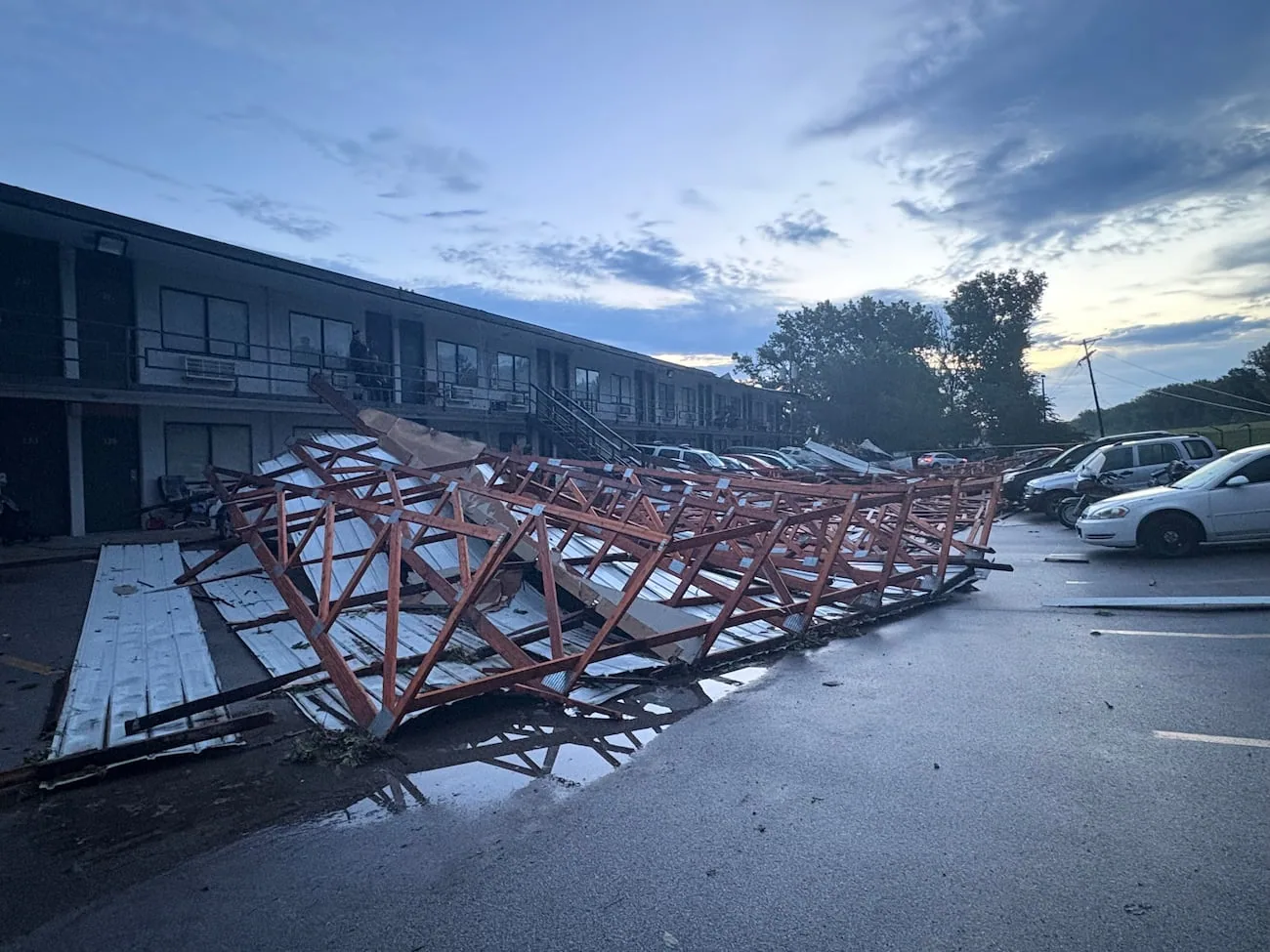
Regional storm facts frame a claim but do not prove it. The May 9, 2024 storm is a good example. Up to six inches across was the hail size reported for Johnson City on May 9, 2024, preceding the same storm's arrival in San Marcos. In northwest San Marcos, winds put trees onto fences and homes across several blocks, the Hays County judge signed a disaster declaration and downtown San Marcos, including the downtown square area, was under a tornado warning that evening. Those are real events with real effects, and they say nothing about a particular roof.

The March 21, 2022 outbreak shows why. The National Weather Service issued a severe thunderstorm warning for Hays County and a tornado warning for central Hays County, but surveyed no tornado touchdown in the county, and the six tornadoes that day occurred along and east of the I-35 corridor. A warning is not damage. We treat every event as context and let the roof tell us what happened.

Insurance and Restoration

Document the Findings Before Anything Moves

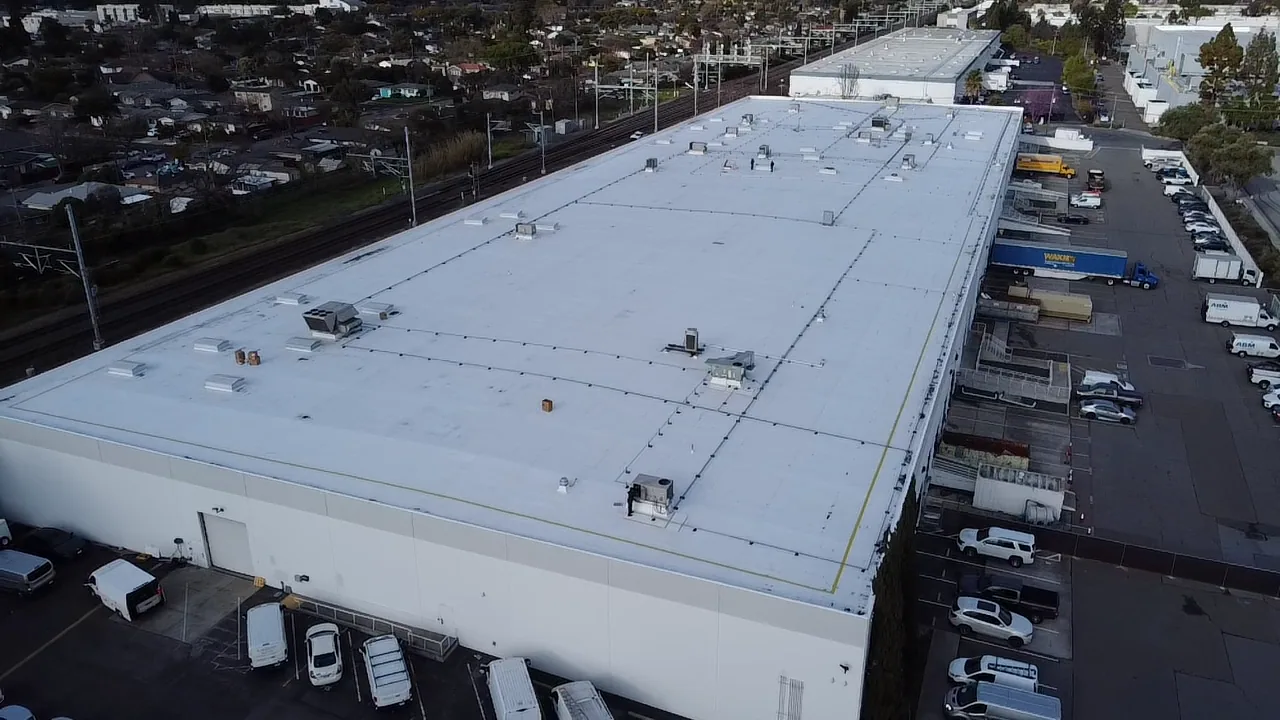
The first visit records the roof as it stands. We photograph each section from set positions, mark every observation on the roof plan, and number each photo. Debris stays where it fell until it is photographed. Displaced materials are noted before they are cleared. The date and time go on every image.

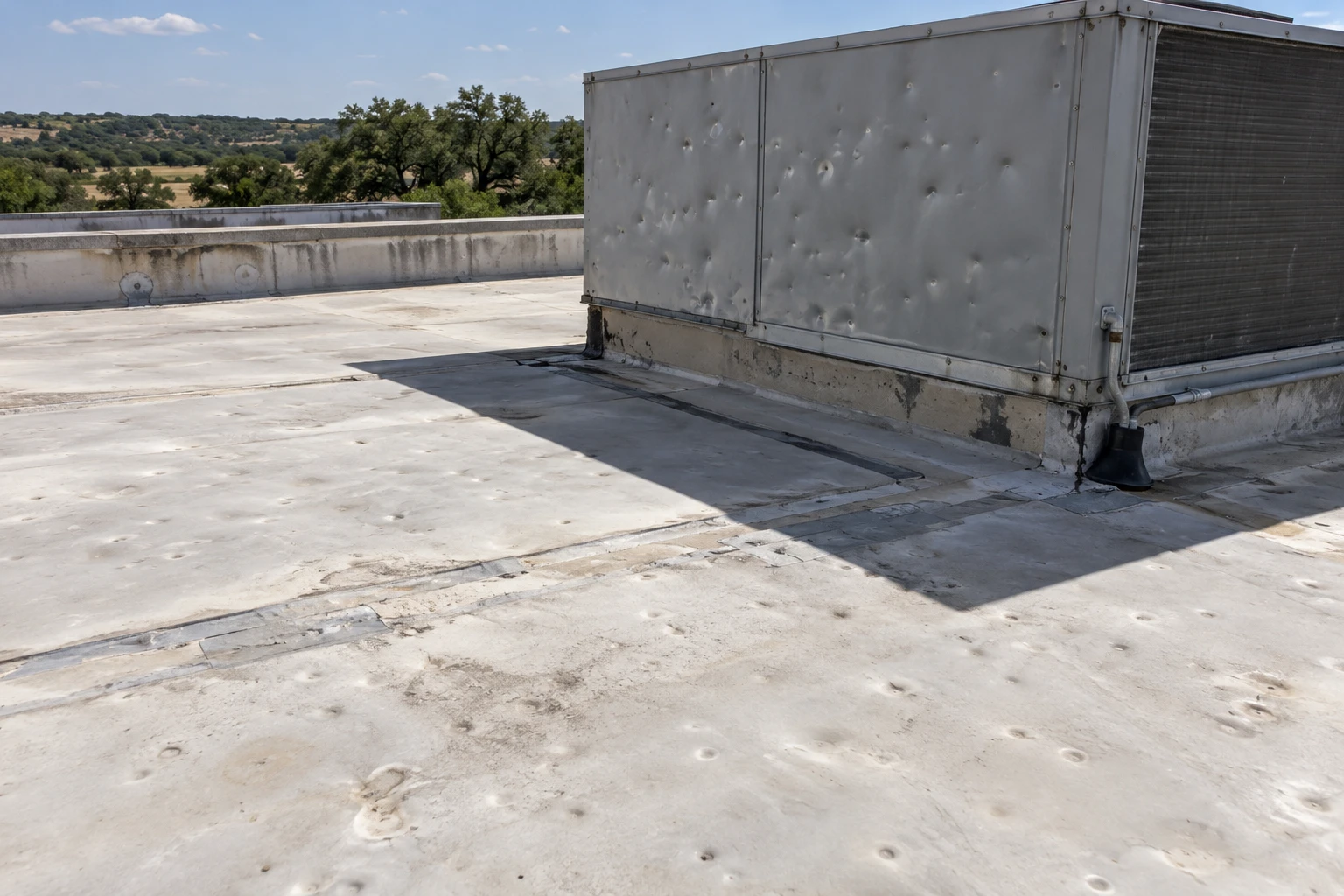
The findings cover the field, the edges and the penetrations. We look for hail-bruised field areas, fractures, punctures, torn seams, lifted edge metal, displaced flashing and impact marks on equipment. Each item is described in plain terms, with a location and a size. Our hail damage and wind damage reviews follow the same structure, so an adjuster reading one finds the same headings in the next.

Photos are only as useful as their labels. Every image carries the section number, the item number and a short caption, and the plan shows where each was taken and which way the camera faced. An adjuster who wants to see item 22 finds it on the plan in seconds. Close-ups are paired with a wide shot so the size and position of the damage are clear, and a scale reference sits in the frame.

Test What the Eye Cannot See

Hail can crush insulation under a membrane that looks whole, and water can travel far from the point of entry. A visual walk misses both. We use an infrared moisture survey to find wet insulation, confirm with core samples, and record the results on the plan. A drone inspection covers areas that are unsafe or slow to walk.

The tests produce evidence that is hard to dispute: a moisture map with core locations, photographs of the cut layers and a note on what each core showed. When cores show dry insulation under a bruised surface, the report says so. When they show wet insulation under a fresh puncture, the report ties them together. Neither result is shaded. The goal is a record that reads the same way to the insured, the carrier and a restoration contractor.

Test limits are stated plainly. A moisture scan works best under certain conditions, and cores sample a small area of a large roof. The report says how many cores were taken, where, and what the results can and cannot show. When access or weather limited the work, the report says that too. Stated limits make the findings that remain more credible.

Separate Storm Damage From Age

Not every defect on a storm-hit roof came from the storm. Old repairs, worn surfaces, ponding stains and aged sealants predate any event. We record those too, with their own category, so the claim covers what the storm did and the owner understands what remains.

Evidence of age includes weathered edges on cuts, dirt in cracks, staining and growth in old breaks, and layers that show multiple repair generations. Evidence of a fresh event includes clean fracture faces, debris on the break, recent displacement and impact marks with consistent direction. We write these observations down next to the photos. Where a dated pre-storm report exists, we compare, and a dated commercial roof inspection from before the event is the best evidence of the starting condition.

Insurance and Restoration

Record Emergency Dry-In

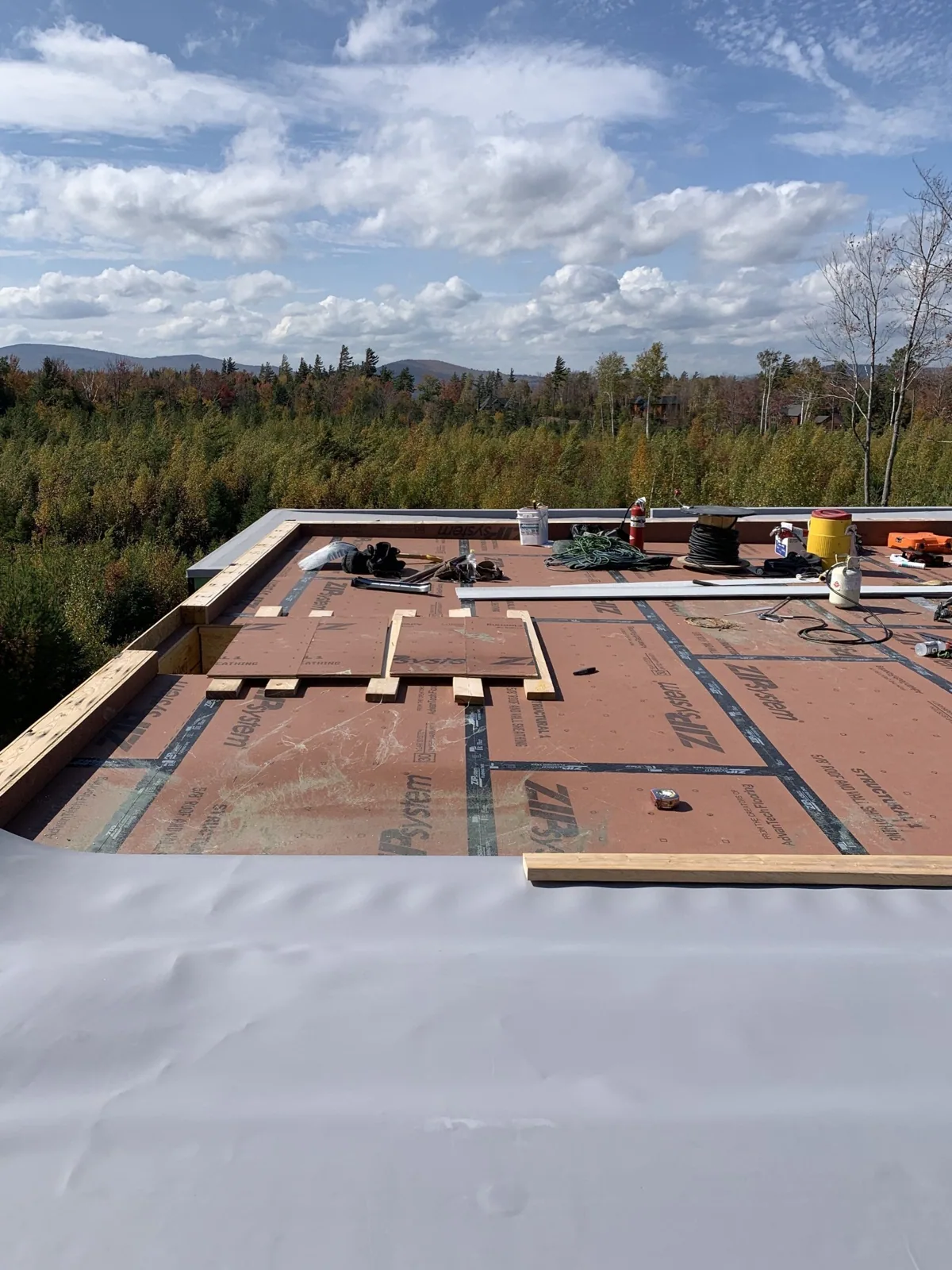
Policies expect the owner to protect the property from further damage, and the dry-in is part of the record. We photograph the roof before and after temporary work, list materials and labor, and note the time. A storm damage roof repair visit starts with this record, so the carrier sees what was done and why.

Temporary work should not destroy evidence. We tarp over damaged areas after photographing them, we cut as little as needed and we keep removed samples labeled and available. If a carrier wants to inspect before permanent repairs, we hold them back and document how the temporary cover is performing. The log shows each visit to the roof, so the file covers the whole period between the event and the permanent work.

Restoration contractors who work from our file can see exactly where temporary covers sit and what lies under them. That avoids duplicate removals and lost evidence. When permanent work begins, we update the log with each phase, so the carrier can verify progress against the approved scope and release payments with confidence.

Insurance and Restoration

Write the Scope in Line Items

A scope that an adjuster can price is a scope that moves. We list work by roof section, with quantities, materials and methods, and note what the code requires. Roofing scopes inside San Marcos have to satisfy the 2021 International Building Code and the matching energy code.

Where code requires upgrades, such as insulation levels, we list the item separately and cite the requirement. This helps the carrier and the owner see which costs come from damage and which come from compliance. We also give alternatives where they exist, such as repair versus replacement of a section, with the cost of each. For multi-building losses, the same format applies to every roof, which suits a property management company or general contractor running a restoration program.

Commercial Roofing Questions

Why is a hail report not enough for a claim?

It covers an area. The claim needs evidence from the roof itself, such as bruising, fractures and moisture results.

What decides whether a section is repaired or replaced?

The extent of damage, the condition of the insulation and the cost comparison. Both options are priced.

Do you hold temporary work if a carrier wants to inspect?

Yes, as long as the roof stays protected. We document the cover and its performance.

How do you handle old damage on a storm roof?

We record it in its own category with evidence of age, so it is not mixed into the storm findings.

Can one report cover several buildings?

Yes. Each roof gets its own section list, and the totals roll up for the loss.

Send the Loss Notice and the Roof List

Send the building list, the date of loss and any past roof reports, and we will return dated findings and a line-item scope for each roof. Start from the contact form.

Request a Roof Assessment

Related Roofing Work

ServicesRoof SystemsIndustriesProperty TypesService AreasRoof Damage RepairCapabilitiesManufacturersAboutContactRequest a Roof Assessment555-555-5555
Call555-555-5555