555-555-5555

Wind Damage Roof Repair

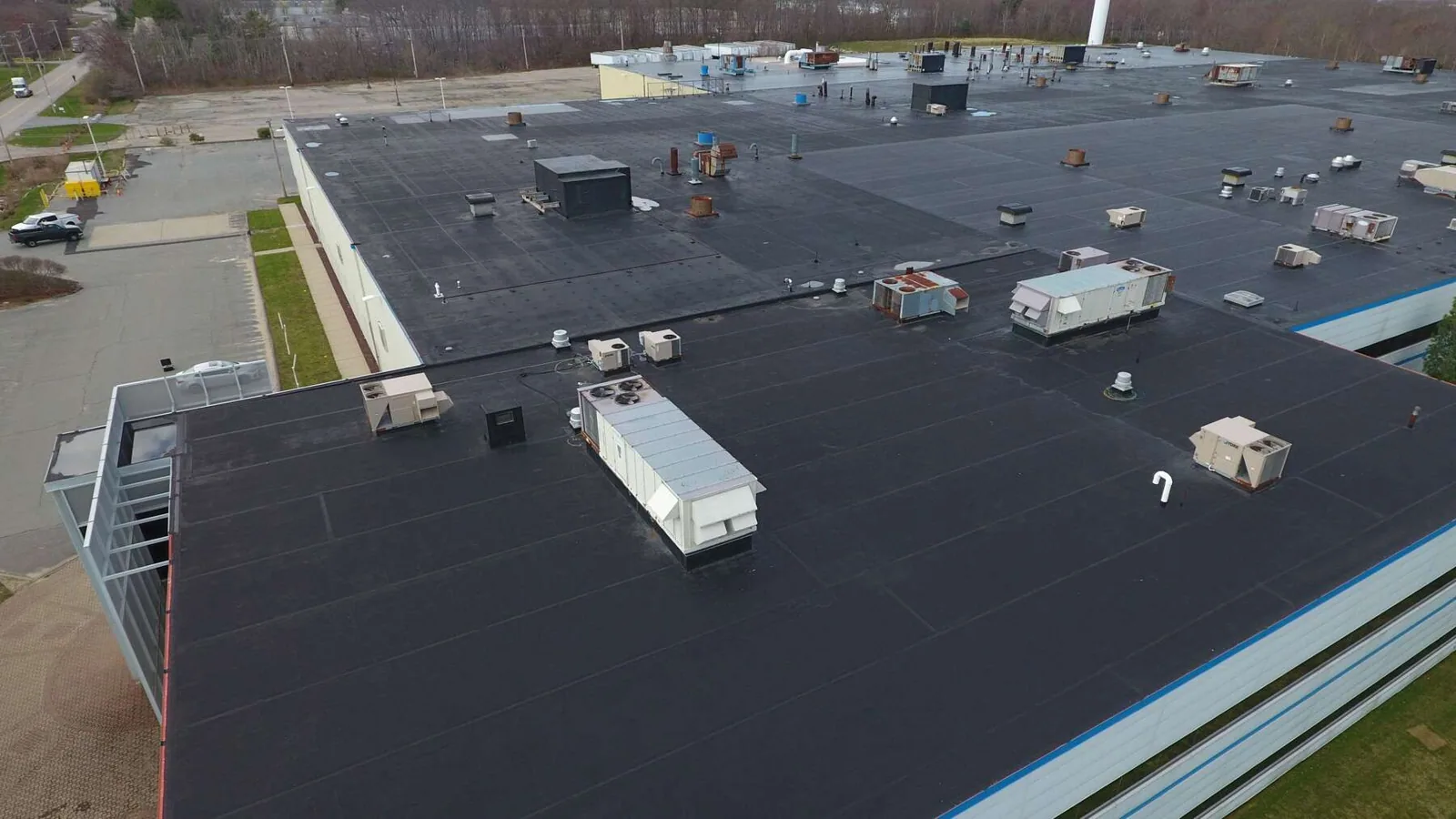
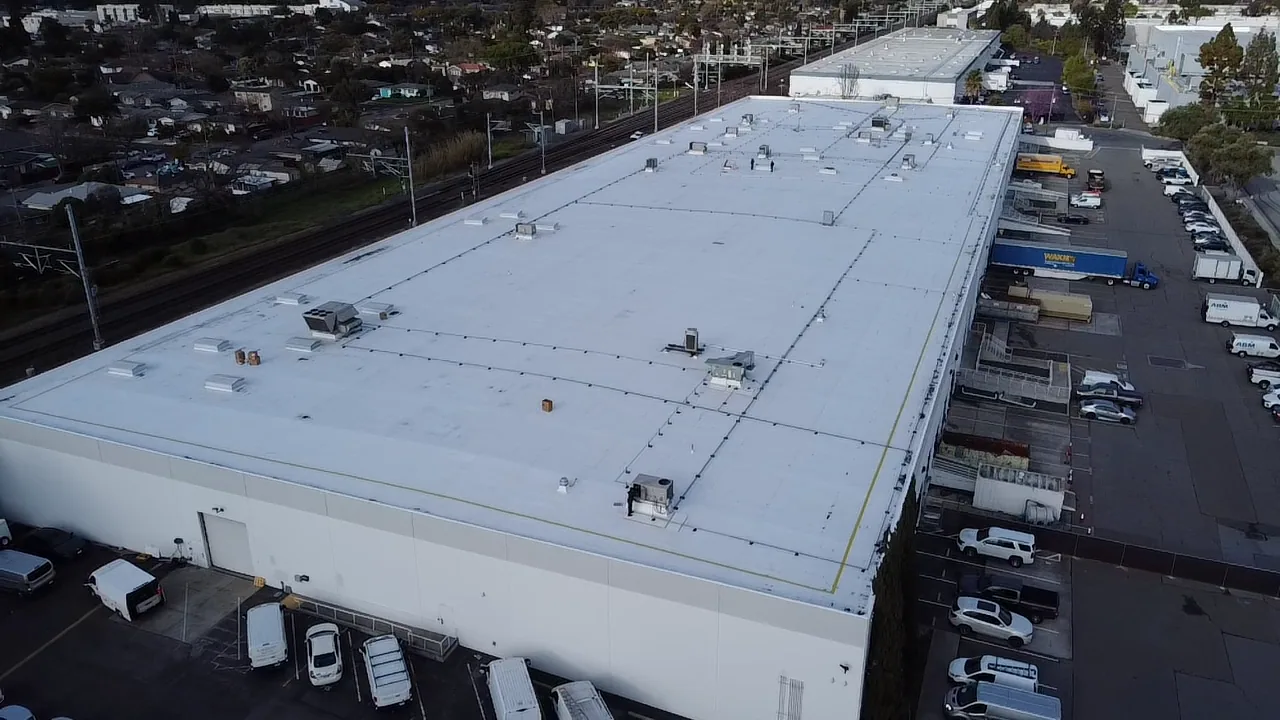
A wide, low-slope distribution or big-box building gives wind a very large surface and a very long edge, and the edge is where the roof loses the argument. Air that crosses a flat roof speeds up, pressure above the membrane drops, and the sheet is drawn upward from the perimeter inward. For an owner with several such buildings along I-35 in San Marcos, TX, that makes wind damage a question about edges and attachment first, field second, and the budget year follows from what the walk finds. We repair what the wind moved and rank the buildings by what is still loose.

The first look is always at the perimeter, because a roof that loses its edge loses its field soon after.
Check the Edge Metal First

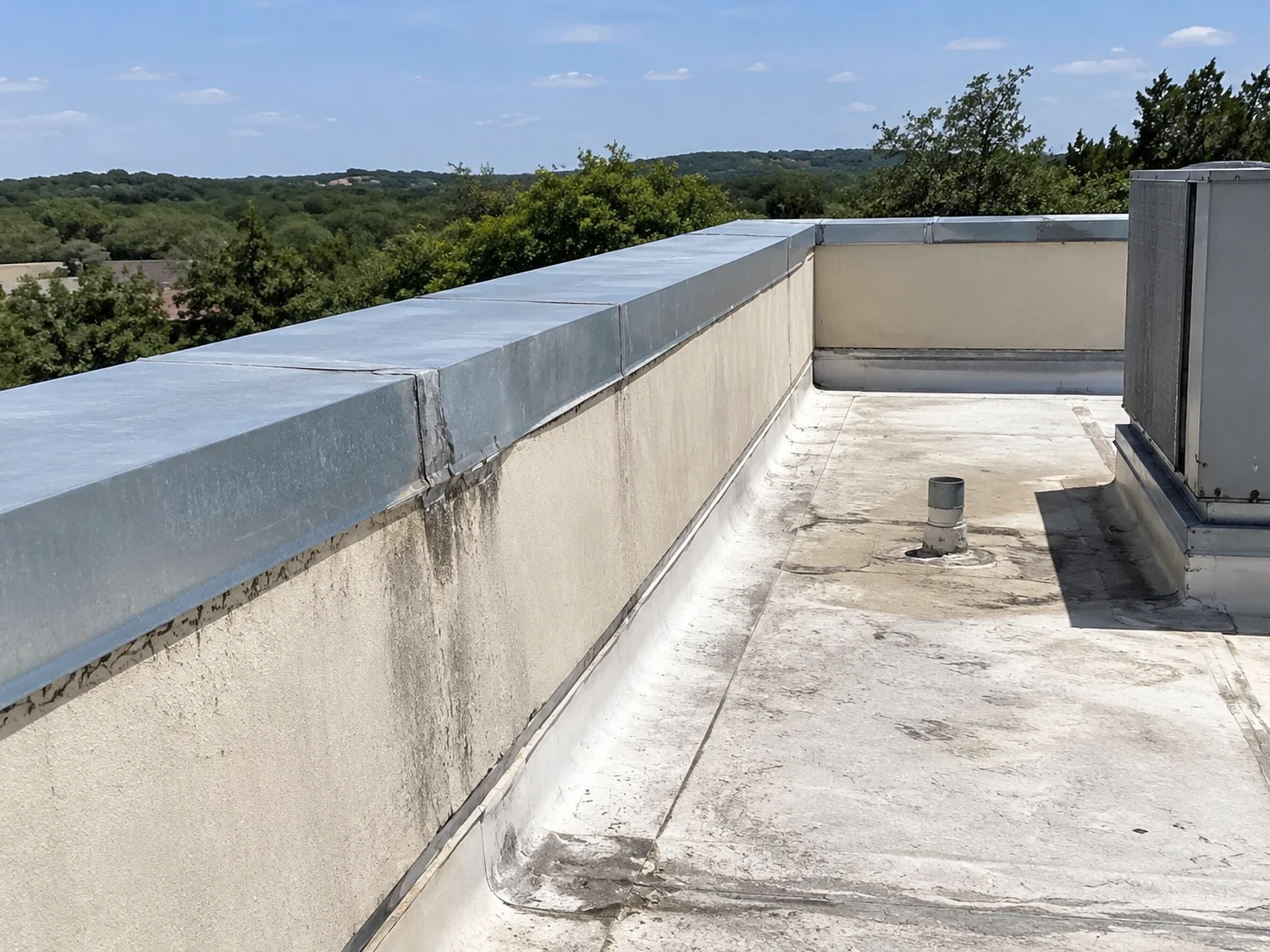
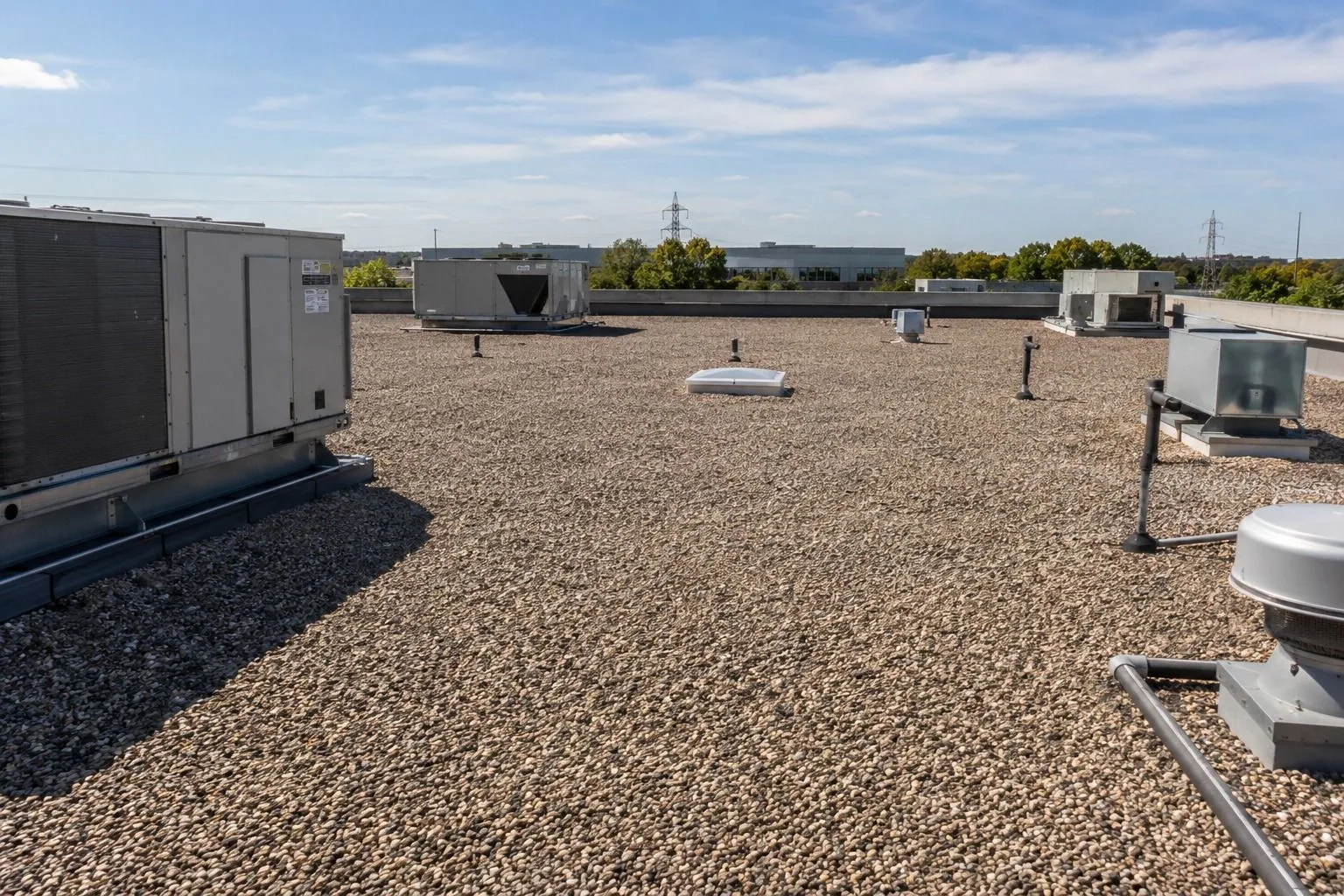
Edge metal, coping and gravel stop hold the membrane's outer termination, and wind works on every joint. We walk each run and look for gaps, bent sections, missing fasteners and sealant that has split. A bowed coping cap gives wind a lip to grab, and a short fastener can pull out under load.

Cleats are the part most often missed. The cleat is the continuous strip that locks the edge metal to the wall, and when it is bent or short-fastened, a whole run can release in one gust. We check spacing and fastener condition along the full length, not only at the visible damage. Our edge metal, coping and gutter work replaces failed runs with attachment matched to the roof's uplift needs and records every run by number.

Gravel stops and parapet caps get the same scrutiny on roofs that have them. A parapet wall takes wind from the side, and a loose cap lets rain run into the wall and down behind the flashing. We probe the wall flashing under each cap and look for staining on the wall face below. Repairs begin at the wall, because a patch on the field leaves the real entry point untouched.

Wind Damage Roof Repair

Test the Fasteners and the Deck

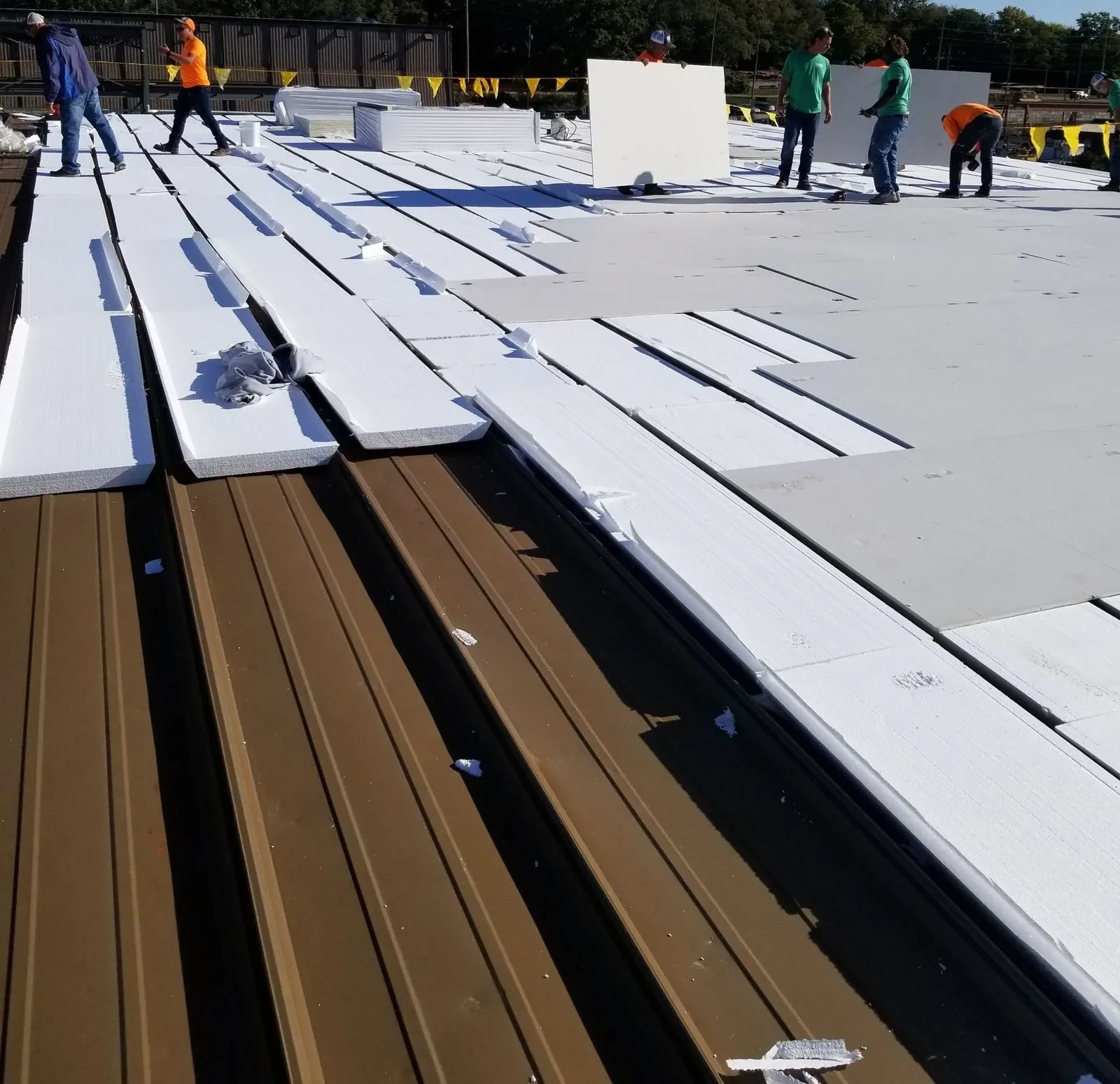
A flapping corner is usually the last thing to fail, not the first. Beneath it, plates may have pulled through the sheet, fasteners may have backed out of the deck, and the insulation boards may have shifted. We probe the laps near the damage, tap along fastener lines and pull-test a sample of fasteners to see how well the deck is holding them.

Deck condition decides the repair. A steel deck with corroded flutes holds fasteners poorly, and a pull test shows it quickly. A weak result widens the review from the damaged corner to the surrounding field. The result goes into the file with the pull values, locations and photos, so the evidence behind a decision to refasten a section or replace it is on paper. Where the attachment pattern is lighter than the code now calls for, the scope says so.

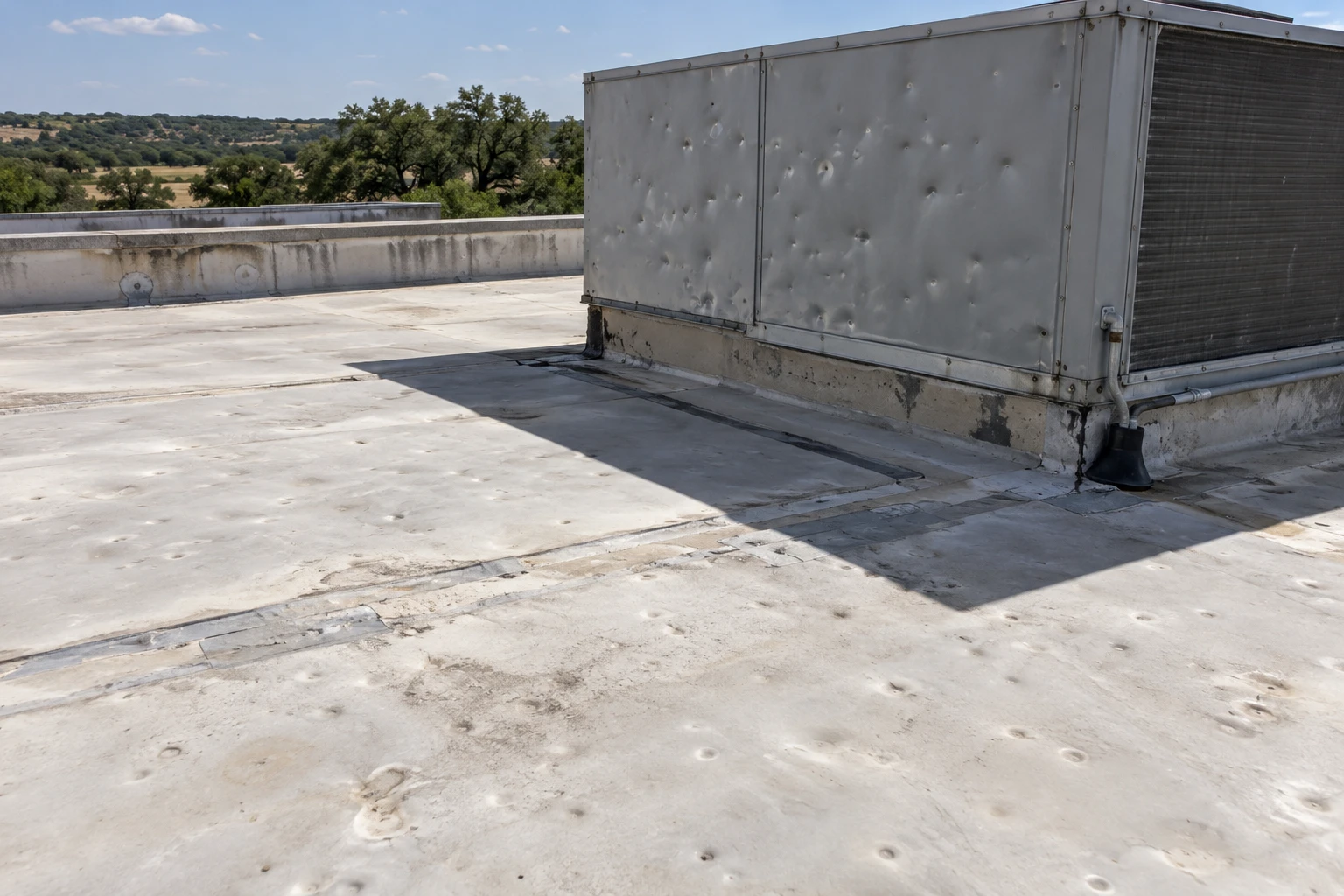
Wind and hail often arrive together, and the two leave different marks. Wind shows at edges, laps and fastener lines. Hail shows as bruises scattered across the field. When both are present, the hail damage review and the wind review are written side by side, so a repair that fixes one does not hide the other.

Clear Debris and Check for Impact

Wind turns loose material into projectiles. Branches, sheet metal, pieces of fencing and roof components from nearby buildings land on membranes and cause punctures, gouges and dents in equipment. The winds that came with the storm felled trees across several northwest San Marcos blocks, landing on fences and homes. That shows how a storm in this market can behave. What any one roof took comes from the walk.

We photograph debris before moving it, clear it section by section and probe the membrane beneath each piece. A membrane puncture repair follows where holes are found, and a scan for moisture checks whether water entered the insulation. Rooftop units and curbs get a close look, since a displaced panel or a bent curb can let water in even when the sheet is intact.

Treat Warnings as Context

A warning is a forecast, not a finding. Downtown San Marcos was under a tornado warning on the evening of May 9, 2024, and the March 21, 2022 outbreak produced a tornado warning for central Hays County but no surveyed touchdown in the county. Owners still ask for reviews after warnings, and the right answer is a walk that records what the roof shows.

The walk covers the perimeter, the field and the penetrations in that order, and the file separates new damage from old wear. Where an owner holds a dated pre-event report, we compare. Where none exists, we record the starting point now, so the next event has a baseline. For buildings in the I-35 business park corridor, a baseline taken early in a roof's life is especially useful.

Wind Damage Roof Repair

Make Safe, Then Fix Properly

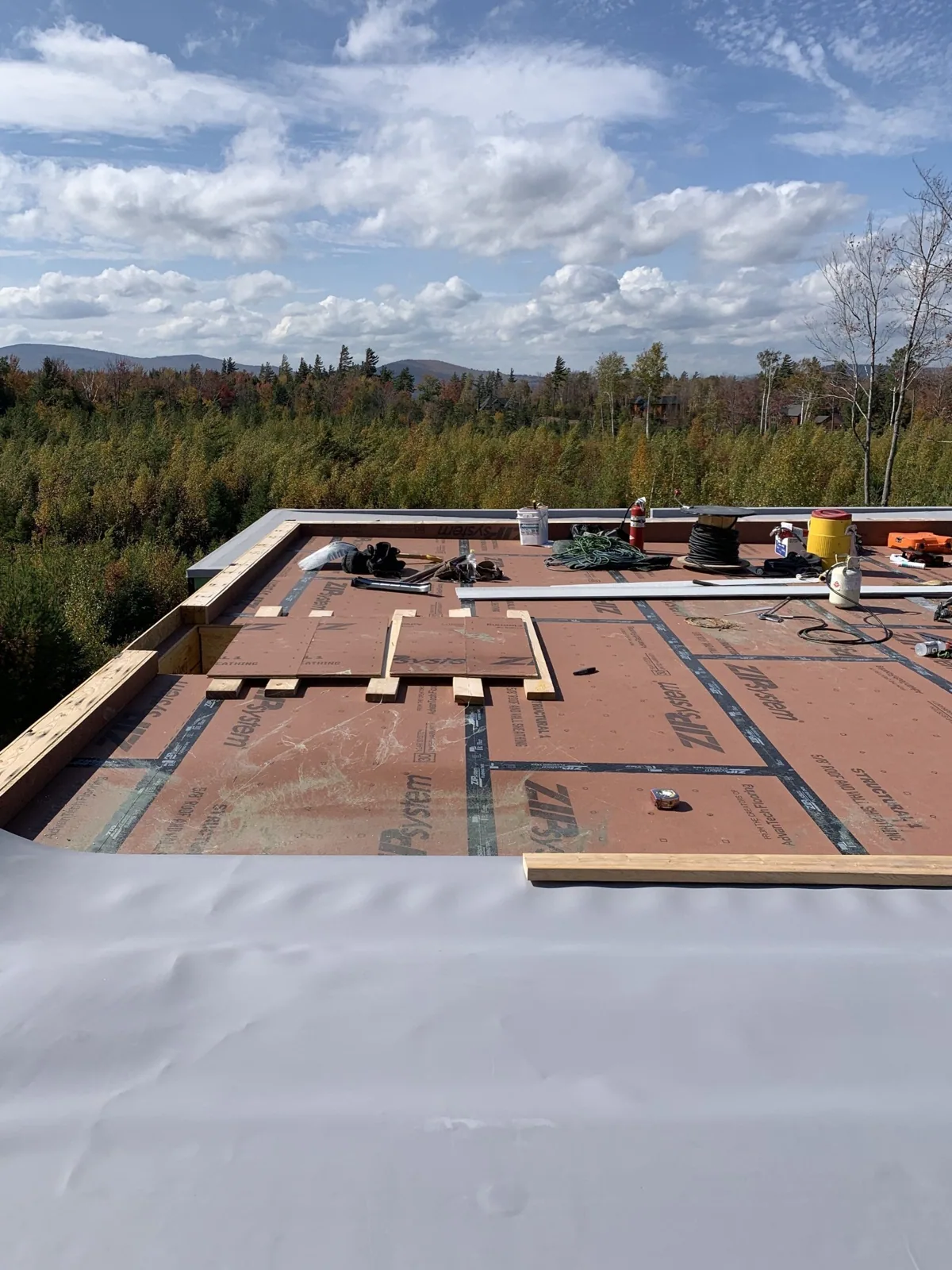
Temporary repairs come first when a roof is open. We secure lifted membrane with battens or tape, cover exposed insulation, refasten loose edge metal and tarp areas where the deck is exposed. Each measure is photographed, labeled temporary and entered in the log. The emergency roof repair visit aims to stop water and prevent further peeling within hours.

The permanent repair follows once the roof is dry and the scope is set. Edge metal is replaced with proper cleats, membrane is re-adhered or re-fastened, and flashings are rebuilt. We confirm attachment with pull tests after the repair, not just before. If the damage is widespread, a storm damage roof repair scope compares patching with section replacement and prices both.

Access sets the pace. A roof reached by a single ladder cannot take a crane pick of material, and a roof with rooftop equipment on every side has few clear staging spots. We note the access routes during the first walk, along with any overhead lines, nearby trees and lot constraints, so the permanent repair crew arrives with the right equipment and does not lose a day to logistics.

Wind Damage Roof Repair

Decide Repair or Replacement for the Budget Year

The decision rests on how much of the attachment can be trusted. If the damage is limited to a corner and the pull tests are sound, repair is the answer. If tests fail across the field, or if the membrane is torn along many lines, the section moves into the replacement queue. We price both and show the cost of waiting.

In San Marcos the roof code of record is the 2021 International Building Code, paired with the 2021 energy code. Wind-uplift ratings, perimeter attachment and edge metal are specified section by section. A distribution center roof in Kyle or any other building gets a ranked list, so the budget year funds the buildings with the loosest attachment first.

The queue also tracks what the wind revealed. A storm that opens one weak corner often shows other corners with the same attachment. We add those to the watch list with a date for the next check, so the owner is not surprised by the next event. Over a few seasons the list shows which buildings keep losing ground and which hold steady.

Commercial Roofing Questions

What fails first on a wind-damaged roof?

The perimeter. Edge metal and cleats release, then the membrane peels inward.

Is a lifted corner a repair or a replacement?

Pull tests decide. Sound fasteners point to repair; weak ones widen the scope.

How fast can an open roof be made watertight?

Within hours for a temporary cover, depending on access and weather.

Do tornado warnings mean my roof is damaged?

No. A warning is a forecast. Only a walk shows what the roof took.

Why pull-test after the repair?

To confirm the new attachment holds. The values go into the file.

Send the Building List and the Storm Date

Send the building list, the roof plans and the date of the storm, and a superintendent will walk the highest-risk sections first and return a ranked condition summary. Start from the contact form.

Request a Roof Assessment

Related Roofing Work

ServicesRoof SystemsIndustriesProperty TypesService AreasRoof Damage RepairCapabilitiesManufacturersAboutContactRequest a Roof Assessment555-555-5555
Call555-555-5555