555-555-5555

Commercial Roof Leak Repair

Three things decide how a leak call goes: what kind of building it is, what the roof is made of and what sits below the wet spot. A leak over a dry-storage aisle in a distribution building is a different problem from a leak over a clinic hallway or a retail sales floor, even when the roof is the same age. In San Marcos, TX the buildings vary enough that we ask about the occupancy before we ask about the roof, and we trace the water through the assembly before we put any material on the surface.

The aim is a repair that holds, with a record showing where the water got in, so the facility director can decide whether the roof is still worth patching.

The Building Decides the Urgency

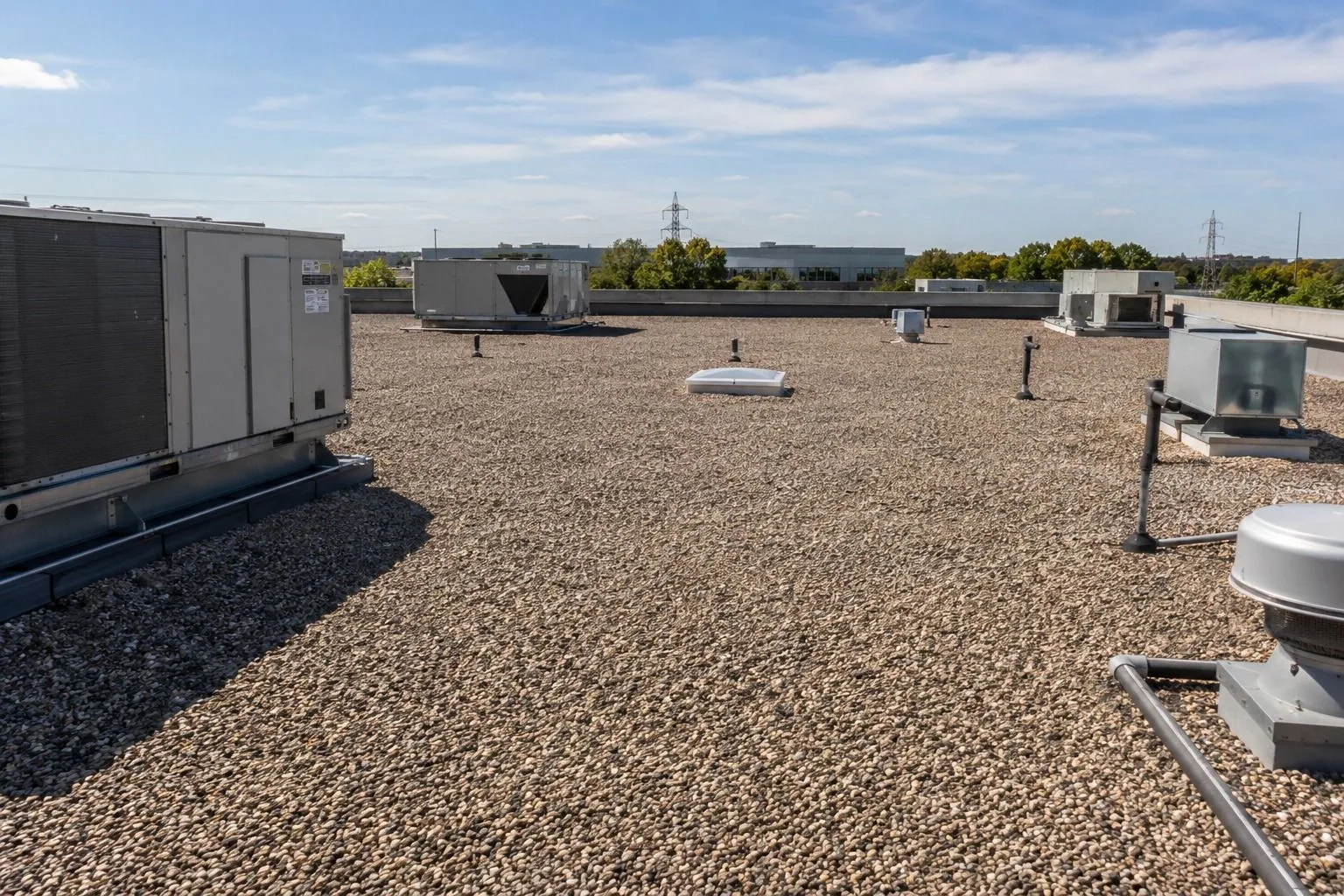
Water on a warehouse slab is a cleanup and a safety issue. Water on racked inventory is a loss. Water over electrical gear, an operating room or a computer room is an emergency. We ask what is below the leak, who needs to be kept out of the area and whether anything must be moved, and then we plan the roof visit around those answers. For a tenant-occupied retail strip, we also coordinate with the property manager so the tenant is not surprised by a crew on the roof.

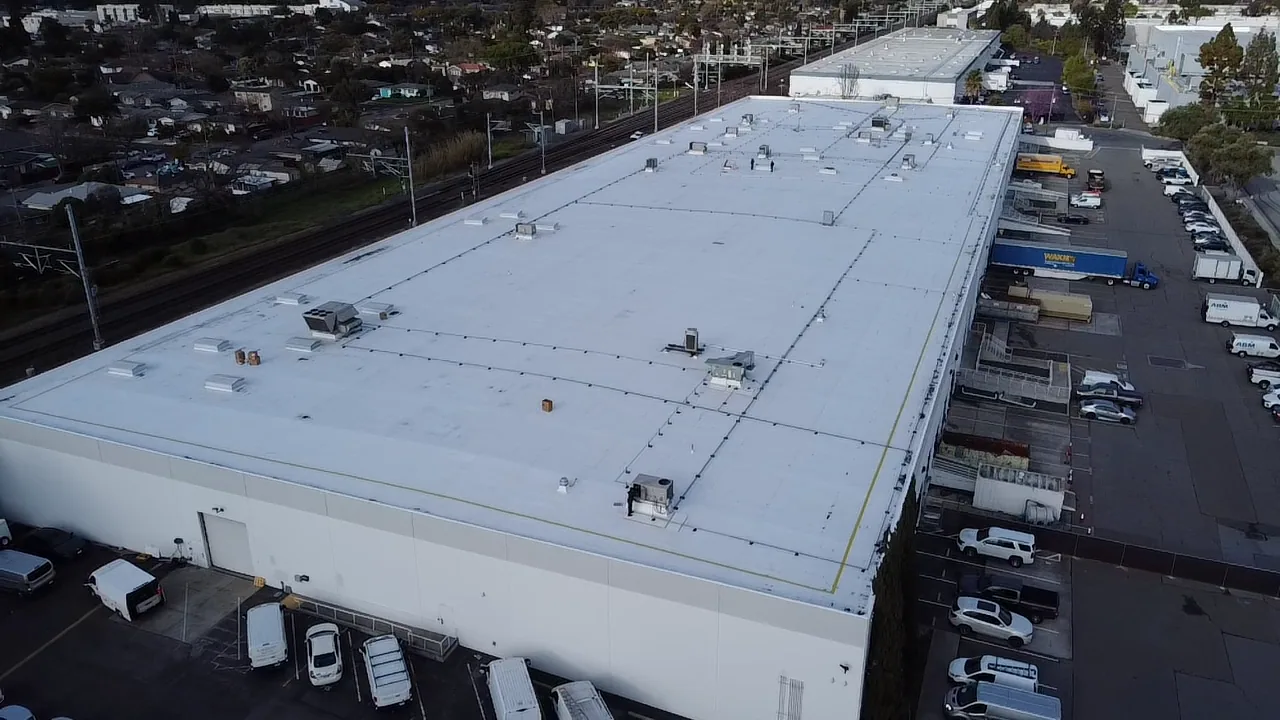
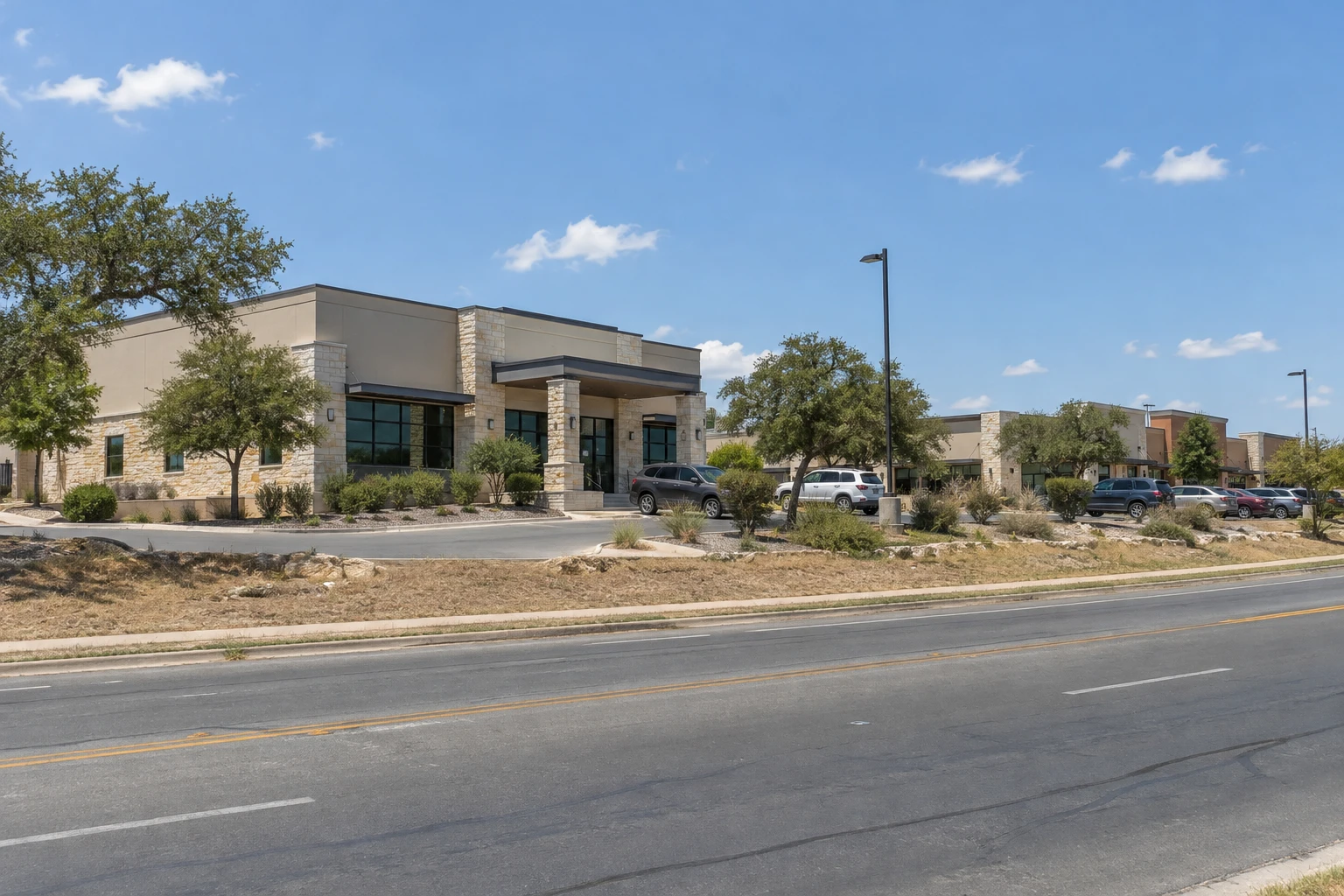
That triage matters in a market with buildings as different as a large Amazon fulfillment building in San Marcos, outlet retail east of I-35 and the medical buildings along FM 1626 in Kyle.

Commercial Roof Leak Repair

Trace the Path Before Touching the Roof

Water enters a roof at one point and travels along insulation, deck flutes, fastener lines or ducts before it appears inside. A stain on a ceiling tile may sit twenty feet or more from the opening. We start inside, noting where the water appears and when it appears, and then go up and walk the roof with that information in hand. We look at the nearest penetrations, flashings, seams, drains and edge metal, and we check upslope from the stain, since water runs downhill along the underside of the membrane.

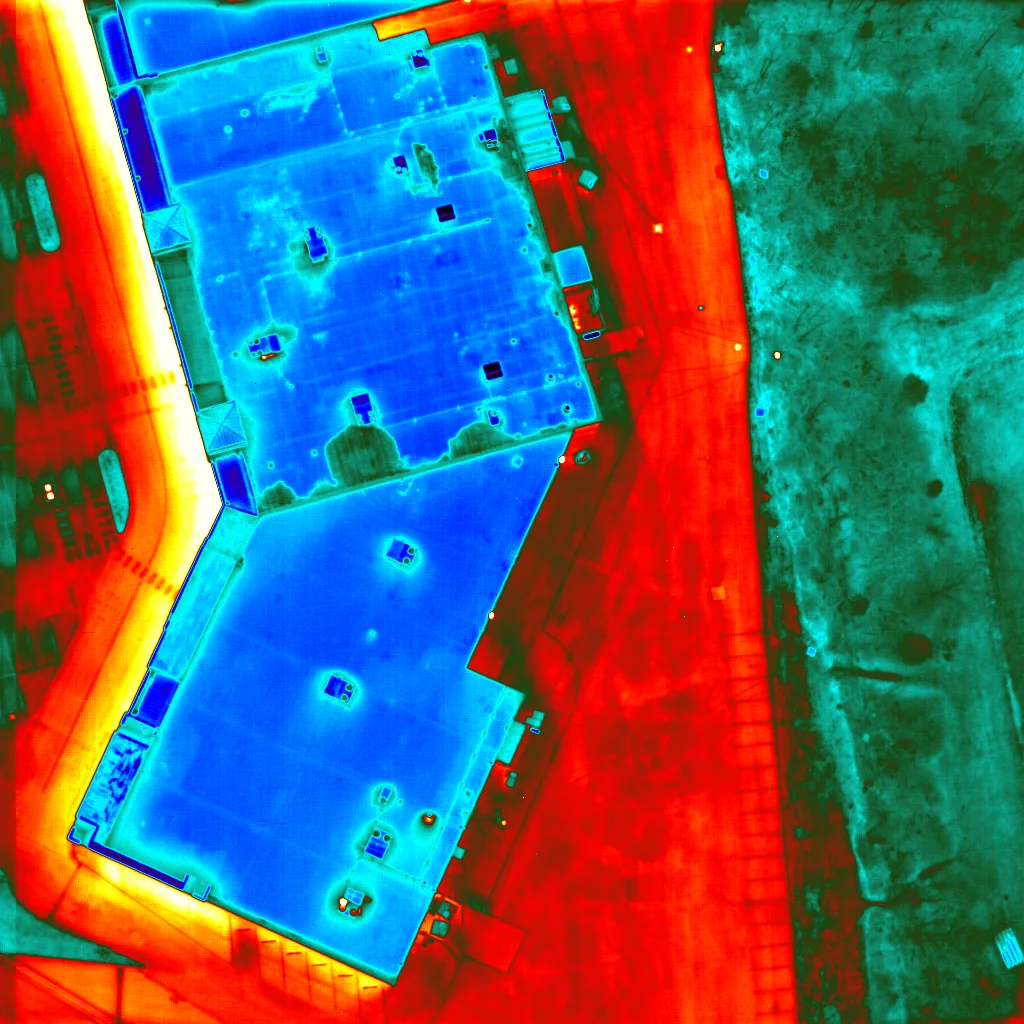
When the path is not obvious, a moisture survey or a controlled water test, run one section at a time, separates the real source from the candidates.

Where Commercial Roofs Usually Open Up

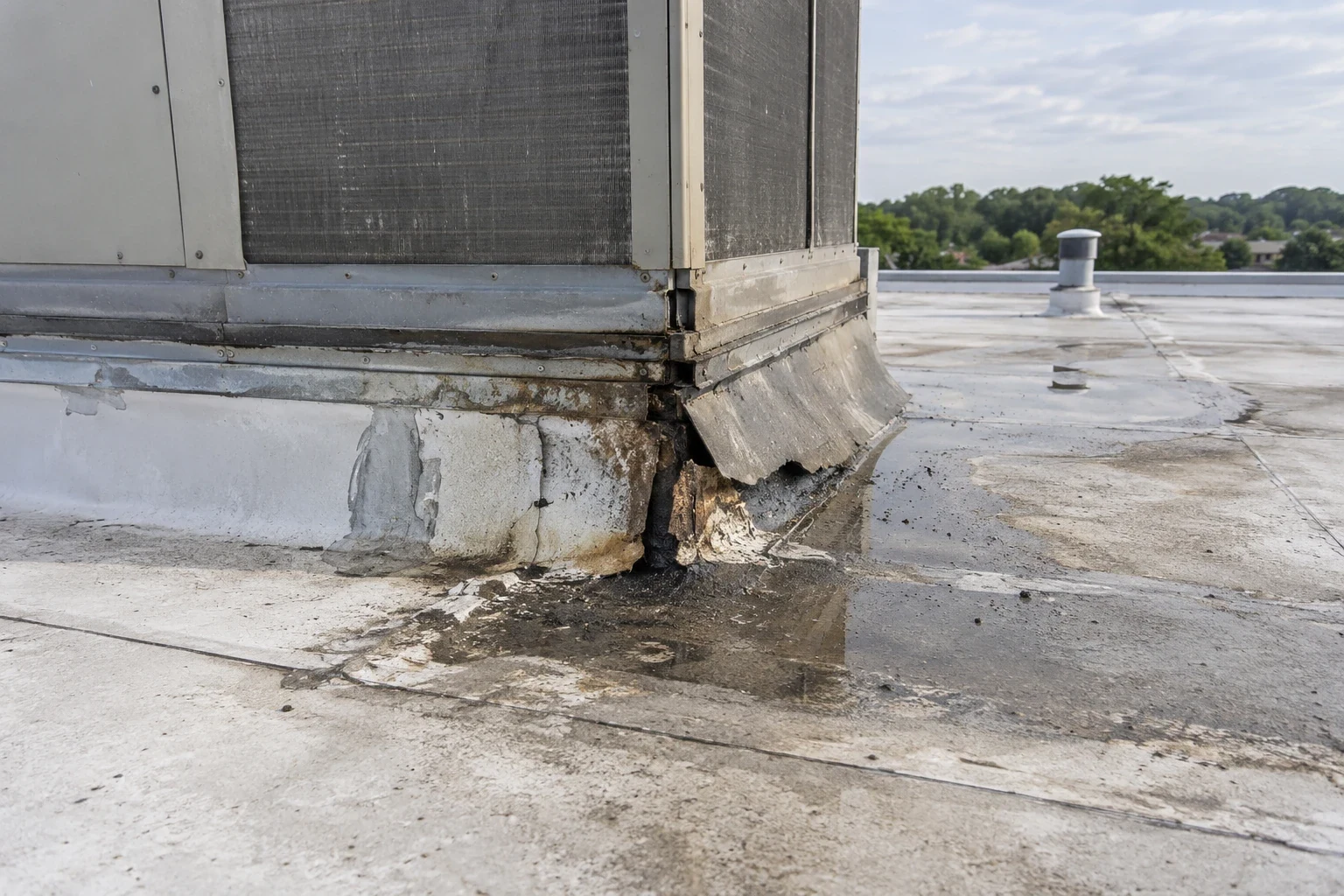
Most leaks come from a short list of locations. Flashings at walls and curbs split or pull away. Seams open on aged single-ply membranes. Drain bowls and clamping rings loosen. Penetrations for pipes, conduit and equipment supports lose their sealant. Edge metal separates from the deck and lets water behind it. Fastener heads back out of a metal panel and puncture the sealant under them.

Each of those has its own repair, and each tells us something about the roof. A single failed flashing says nothing about the field. A pattern of opened seams across several sections says the membrane is nearing the end of its life.

Hail Leaves Delayed Leaks

Not every storm leak shows up during the storm. After the May 9, 2024 storm, the Hays County judge signed a disaster declaration, hail was reported up to six inches across in Johnson City, and high winds put trees onto fences and homes in northwest San Marcos. Fractured membrane and crushed insulation can take weeks to produce a leak, usually after the next hard rain.

When a leak follows a storm, we look for hail marks and displaced metal as well as ordinary wear, and we photograph both. The distinction matters for a hail damage claim and for deciding whether the leak is an isolated event or the first sign of a broader problem.

Commercial Roof Leak Repair

Repair, Then Prove It

A good leak repair removes the cause, not just the symptom. We cut out wet insulation near the opening, replace it with dry material, rebuild the failed detail with new reinforcement and proper terminations, and weld or adhere the surrounding membrane. Surface coatings and sealants have their place on small cracks and fasteners, but a flashing that is moving needs mechanical correction.

After the repair we retest the area where practical, and we record the location, the cause and the materials used by roof section. If the roof keeps producing leaks in different places, that record is the evidence for moving the building from repair to a replacement plan.

Commercial Roof Leak Repair

Keep a Leak Log by Roof Section

Leak calls are the cheapest data a facility director collects, if someone writes them down. We log each call by roof section with the date, the interior location, the cause we found and what we did. After a year, the log shows which sections generate repeat calls and which have been quiet, and that pattern is more reliable than a general impression of the roof.

Repeat calls from the same section are the signal to change course. Two or three leaks from different details on one section usually mean the membrane or the insulation under it has reached a condition where continued spot repair costs more than the section is worth. We bring that summary to the budget conversation so the decision rests on records and not on the last unpleasant phone call.

For owners with several buildings along I-35, the same log lets one building be compared against another, so repair money goes where it prevents the most interior damage and replacement money goes where the roof has stopped responding to repair.

Temporary Measures When Weather Will Not Wait

Some leaks have to be controlled before they can be repaired. If heavy rain is coming or a section cannot be dried, we place a temporary membrane, tarp or sealant patch over the opening and secure it against wind. A temporary fix is documented as temporary, with a follow-up date, because a tarp is a delay and not a repair. For overnight or weekend problems the emergency response path applies.

We keep records of the visit for the owner's insurer when storm damage may be involved.

Commercial Roofing Questions

Why does the leak show up far from the damaged spot?

Water follows the insulation, deck flutes and fastener lines before it drops into the building, so the entry point can sit well upslope from the stain. We trace from the interior pattern to the roof and test the likely sources instead of repairing the area above the stain.

Is a coating enough to stop a leak?

Only for small cracks, fastener heads and surface wear. A split flashing or an open seam moves with the building and needs reinforcement and a mechanical correction. A coating over a moving detail usually fails within a season.

How long does a leak repair last?

That depends on the cause and on the remaining service of the surrounding membrane. A repaired flashing on a sound roof can last for years, while a repair on a membrane at the end of its life may be followed by another leak a few feet away. We tell the owner which of those situations applies before the repair is approved.

Do leaks after a hailstorm mean the roof is damaged?

They can. Hail may fracture the membrane or crush the insulation, and the leak can appear weeks later. An inspection after the leak separates storm damage from ordinary wear and documents it for any claim.

What should I tell you when I call about a leak?

The location and what lies below it, when it started, whether it follows rain or wind direction, and any recent roof or equipment work. That helps us pick the first areas to check and decide whether a temporary measure is needed.

Call With the Interior Pattern

Tell us where the water appears and what sits below it, and we will plan the trace, the temporary protection and the repair around the occupancy.

Request a Roof Assessment

Related Roofing Work

ServicesRoof SystemsIndustriesProperty TypesService AreasRoof Damage RepairCapabilitiesManufacturersAboutContactRequest a Roof Assessment555-555-5555
Call555-555-5555