555-555-5555

Flashing Failure Repair

A masonry office or retail building with a parapet on every side asks its flashings to do more than its field membrane ever will. Where the roof turns up a wall, goes around a curb or passes a pipe, a thin strip of material and a bead of sealant carry the whole weatherproofing job, and they do it while the building moves. For an owner in San Marcos, TX, the flashing is therefore the first thing to wear and the cheapest thing to repair, and the budget year benefits from finding it early. We walk every termination, curb and penetration, repair what has opened and rank the buildings by how many details are failing.

The field of a roof can be sound for years while its flashings are already letting water in.

Walls, Terminations and Counterflashing

At a wall, the membrane turns up and is held under a termination bar or behind counterflashing set into the masonry or siding. Water gets in when the termination loosens, the sealant cracks, the counterflashing lifts or the wall itself lets water run behind. We press along each termination, look for gaps at the top edge and check the sealant bead for cracks and pull-back.

Repair starts with the cause. If a bar has loosened because fasteners pulled out of soft masonry, resetting it with new masonry fasteners fixes it. If the counterflashing has rusted through, it is replaced. If the wall face above is letting water behind the flashing, the wall needs attention before the roof detail is redone. Staining on the wall below a termination tells us how long the problem has been present, and we photograph it with a scale reference.

Reglets deserve a separate look. A reglet is the slot cut into masonry to receive counterflashing, and when it fills with debris or the mortar crumbles, the metal loses its seat. We clean the slot, repair the masonry and reset the flashing with a flexible sealant, then check the wall face above for open joints that would feed water in behind.

Photographs make flashing repairs easier to approve. A close image of the failed termination, a wide image showing its place on the wall and a note of the length affected let an owner or insurer see the problem without a site visit. We number each detail on the roof sketch and tie every photograph to its number, so the repair list can be priced line by line and checked after the work.

Flashing Failure Repair

Penetrations, Curbs and Equipment

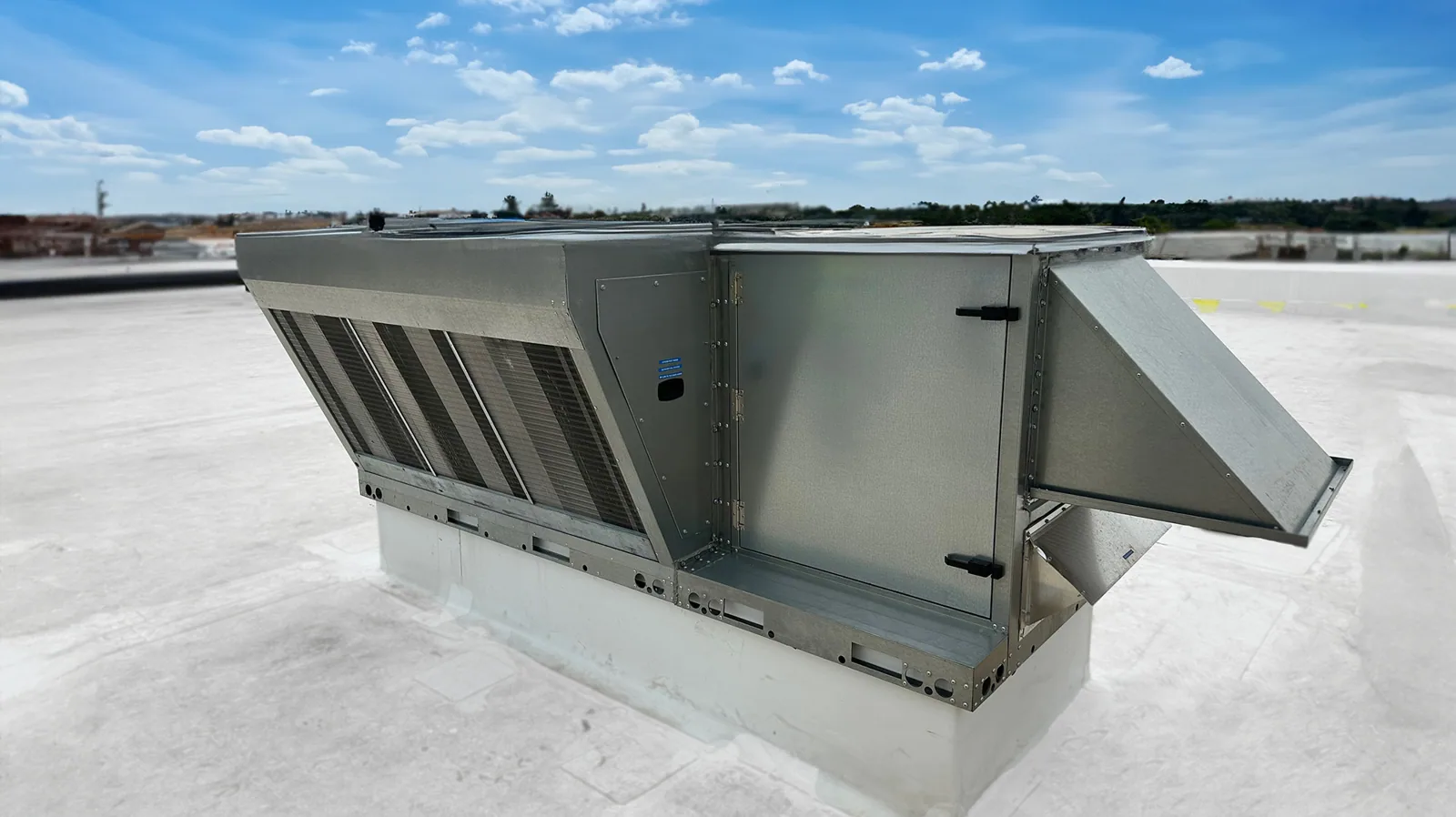
Every pipe, vent, conduit and curb is a hole in the roof with a flashing around it. Rooftop units sit on curbs whose flashing sees vibration and foot traffic from technicians. Pipe boots crack in sun. Pitch pans dry out. Each is small, and each is a leak path that adds up across a building.

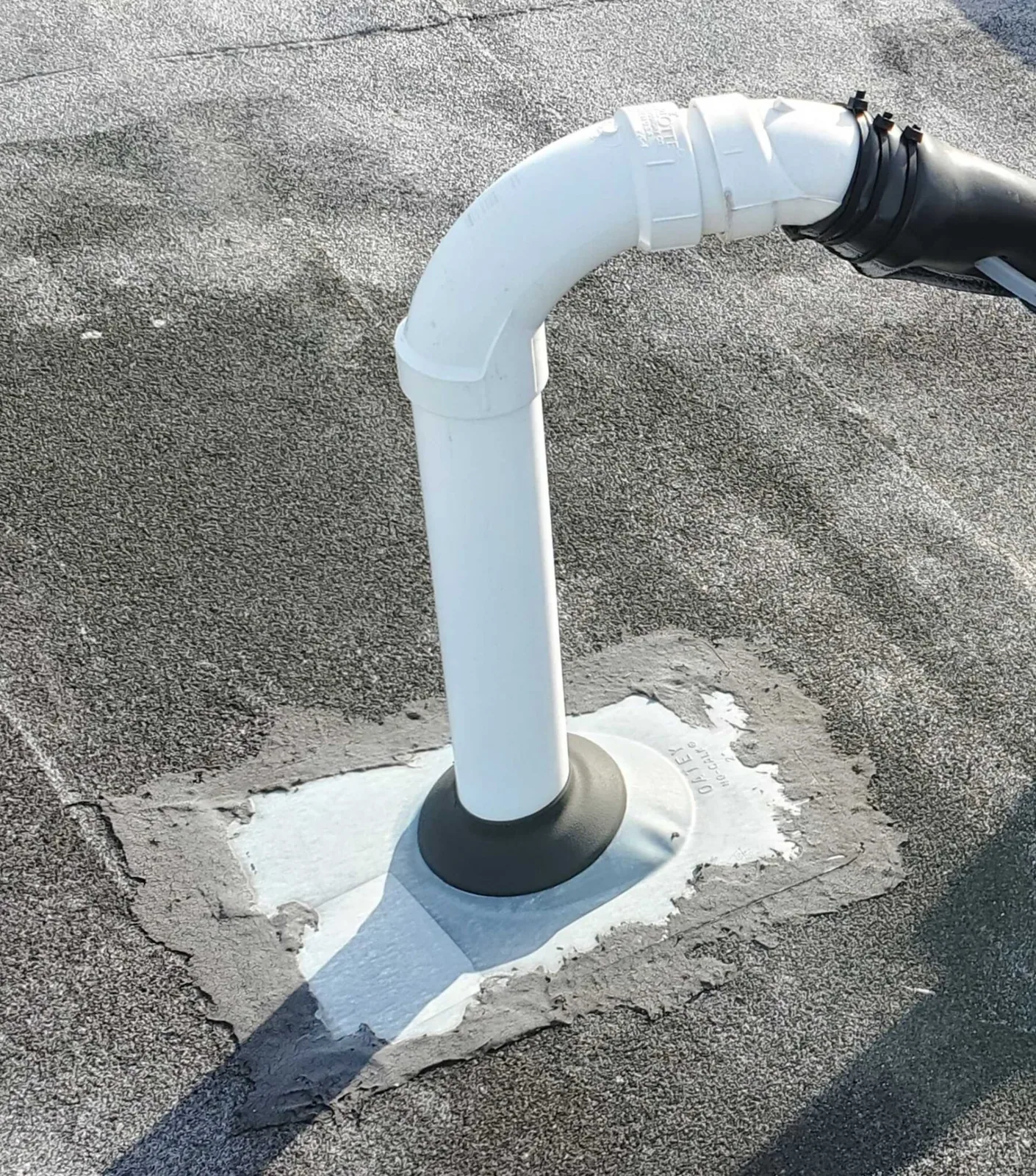
We inspect every one on a numbered list. Cracked boots are replaced with compatible parts. Failed pitch pans are rebuilt or replaced with a boot. Curb flashing is re-adhered, re-fastened or rebuilt, and the corners are reinforced, since corners fail first. Our rooftop equipment curb and support work covers raising a curb that is too low, and skylight and penetration flashing covers curbs and openings that were detailed with too little height or too little overlap.

Retail roofs show the effect of volume. With roughly 14 million visitors a year coming to the I-35 outlet malls, tenant units and vents multiply, and the membrane puncture repair that follows careless service visits often begins at a curb corner. A walk with a numbered detail list keeps every one accounted for.

Sealant Is a Maintenance Item, Not a Repair

Sealant cracks in sun and heat, and a bead of it is the usual first response. It is also a short-term answer. A bead over a failed flashing hides the failure for a season, then lets go. Using sealant as the only repair puts the building on a loop of annual patches.

We use sealant where it belongs: at terminations, at laps and at edges, as the final seal over a sound flashing. When the flashing under it has failed, we replace the flashing. Roofing cement smeared over a crack is the weakest version of the same habit, and we remove it when we find it, because it traps water and hides the real defect. The log notes which details were resealed and which were rebuilt, so the pattern across a building is visible.

Heat Movement Wears the Details

Flashings move. The sheet expands in the afternoon and contracts overnight, and the movement concentrates at fixed points: corners, curbs and wall lines. August highs average near 98 F at Austin Camp Mabry, and a roof surface runs hotter than that. Repeated cycling pulls flashings away from their terminations and fatigues metal.

We check for signs of that movement: gaps opening at corners, sealant stretched thin, metal buckled at joints and membrane bridged over a wall with no relief. Repairs allow for movement, with expansion joints in long metal runs, relief at the wall and flexible sealant joints. A seam failure repair often follows a flashing repair on the same roof, since the same movement that opens a corner can open the lap beside it.

Flashing Failure Repair

Edge Flashing and Wind

At the perimeter, flashing and edge metal hold the membrane against wind. When they loosen, wind gets under the sheet and the repair becomes a larger job. We inspect cleats, fasteners and joints along every edge, and we repair gaps before the next storm.

High winds from the storm dropped trees onto fences and homes along several blocks in the northwest part of San Marcos. That evening is why owners ask for edge checks after storms. The check itself looks at the roof in front of us: metal that is bent, short-fastened or open, and sealant that has failed. The downtown San Marcos square area has older buildings whose parapets and edges deserve a careful walk, with preservation concerns taken into account where they apply.

Flashing Failure Repair

Rank the Buildings by Failing Details

The ranking counts failed details per building, weighs them by consequence and adds the cost of repair. A strip center with dozens of cracked boots goes ahead of an office with two. A building with wall flashing failures over occupied space moves up. The list shows where a day's work by a small crew prevents the most leaks.

In a replacement inside the city, flashing heights, attachment and edge details follow the 2021 International Building Code. For an office building roof or a shopping center roof, we price detail repair and a full flashing replacement side by side, so the owner can see when patching stops paying. The file keeps each detail's history, and the cost of waiting is shown next to each line.

Commercial Roofing Questions

Why do flashings fail before the field of the roof?

They sit at fixed points where movement concentrates, and they are built by hand from small parts.

Is roofing cement a legitimate repair?

As a permanent fix, no. It hides the failure and traps water. We remove it and rebuild the detail.

Can a failed pipe boot be repaired in place?

Often it is replaced with a compatible boot welded or adhered to the sheet.

What does a termination bar do?

It clamps the top edge of the membrane to the wall so water cannot run behind it.

How long does a flashing repair take?

A single detail takes under an hour. A building full of them takes days.

Send the Building List and the Last Roof Report

Send the building list and the last roof report, and a superintendent will walk the highest-risk details first and return a ranked condition summary. Start from the contact form.

Request a Roof Assessment

Related Roofing Work

ServicesRoof SystemsIndustriesProperty TypesService AreasRoof Damage RepairCapabilitiesManufacturersAboutContactRequest a Roof Assessment555-555-5555
Call555-555-5555