555-555-5555

Standing Seam Metal Roofing

Standing seam metal belongs to the building classes that value a long service life and a clean line: churches, event venues, wineries and breweries in the Hill Country, institutional buildings, offices with a sloped roof and light industrial space. In the communities west of San Marcos, TX, such as Wimberley, Dripping Springs and Driftwood, limestone-faced storefronts on Wimberley Square and event venues around Driftwood sit within a short drive of one another. The one thing that class does to a roof is ask it to look right for decades, and the owner's budget year turns on whether the panels, clips and seams will still be tight when the next cycle begins.

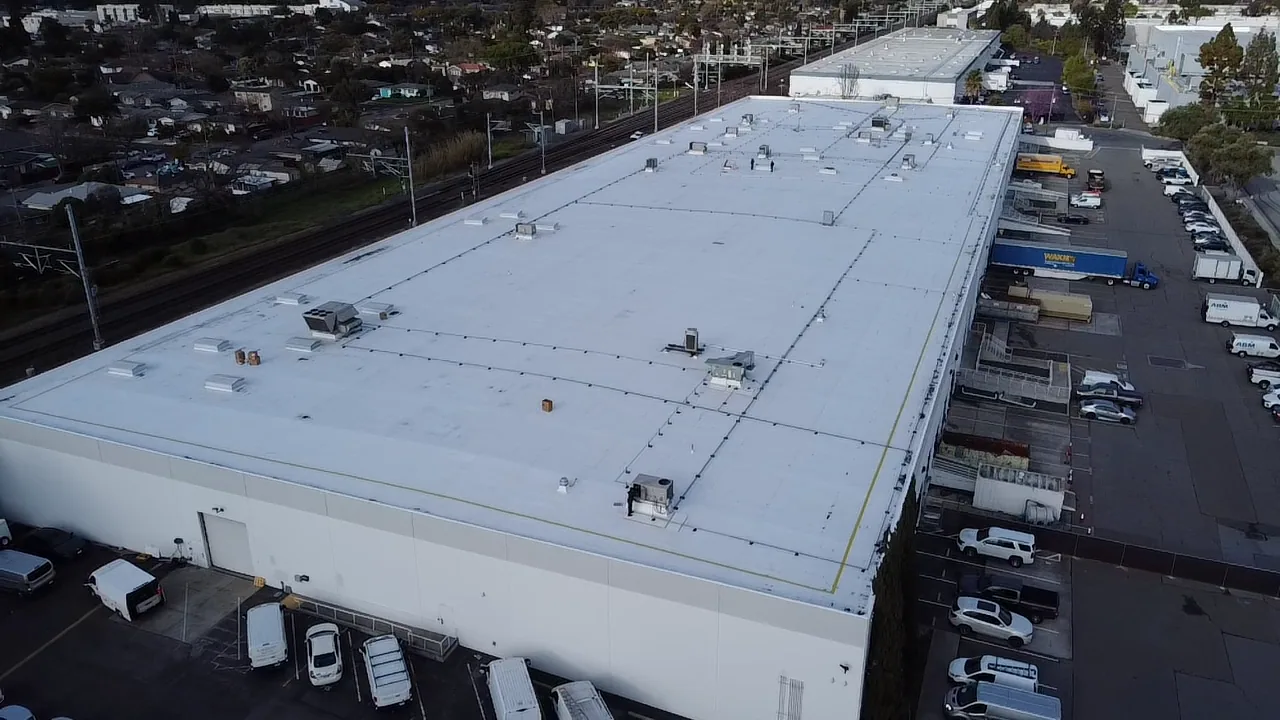
A standing seam roof is made of long metal panels whose edges rise and lock together, with fasteners hidden beneath. We install, repair and restore these roofs as a system type, describing them by their parts and by what each part does under weather.
What the system is

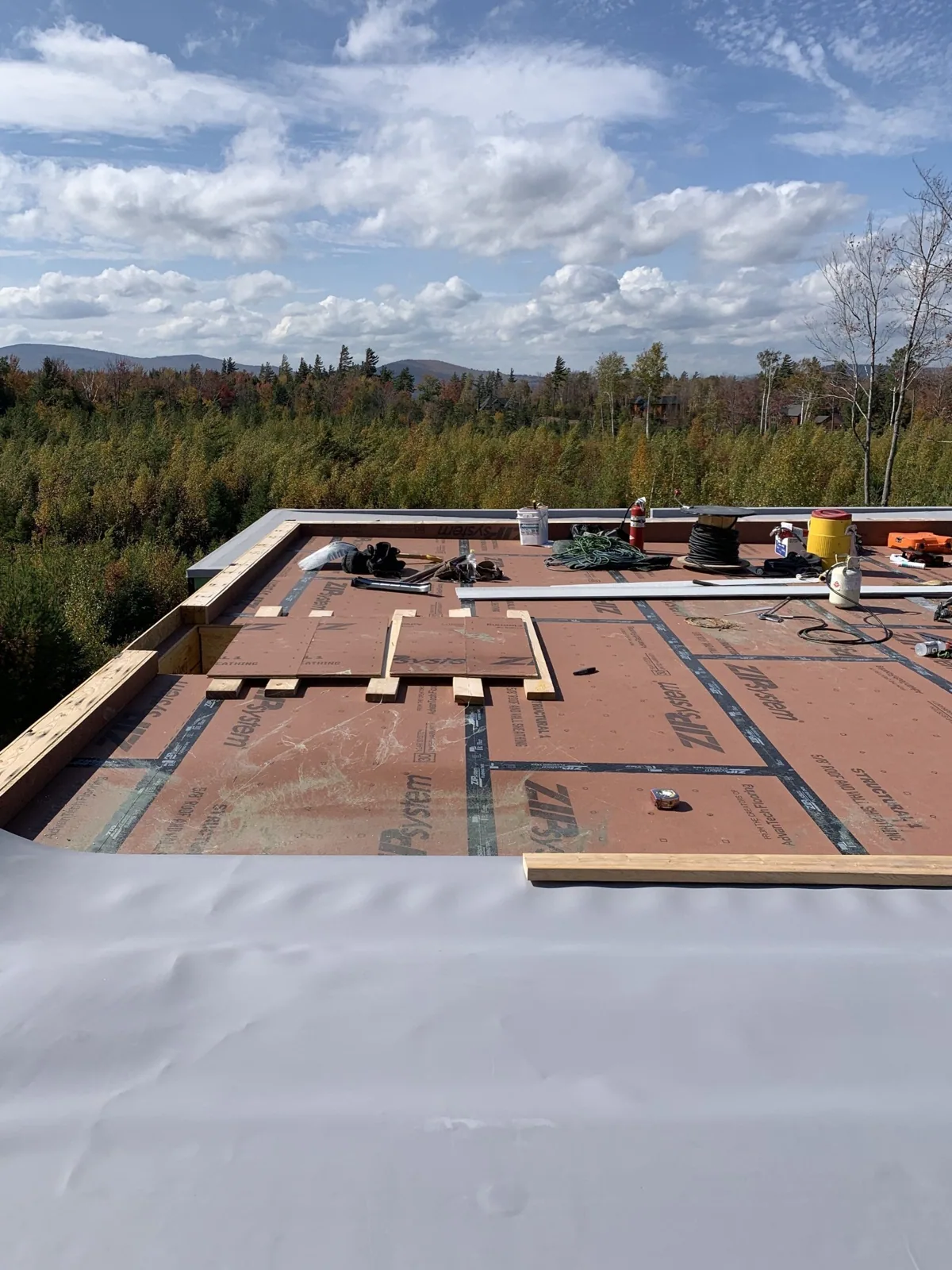
The system has four parts: the panel, the clip, the seam and the trim. Panels run from eave to ridge. Clips fasten to the deck beneath and hold the panel edges while letting the panel slide as it expands and contracts. Seams are formed by folding or mechanically crimping adjacent panels together. Trim and flashing close the roof at the ridge, eave, walls and penetrations.

Because the fasteners are concealed, the roof has few holes in the field, which is its main advantage over exposed-fastener panels. The cost of that advantage is attention to movement. Long panels move with heat, and the clips and trim must be designed for it. A roof that cannot move will buckle, tear at its fasteners or open at its seams.

Gauge and profile vary. Heavier panels resist denting and flutter, and taller ribs shed water faster and carry more load. The substrate also varies: some roofs have a solid deck with underlayment, and others span purlins with insulation draped beneath. Each configuration changes how condensation forms and how a leak travels, so the first visit identifies which one is under the panels before any repair is priced.

Standing Seam Metal Roofing

What wears first

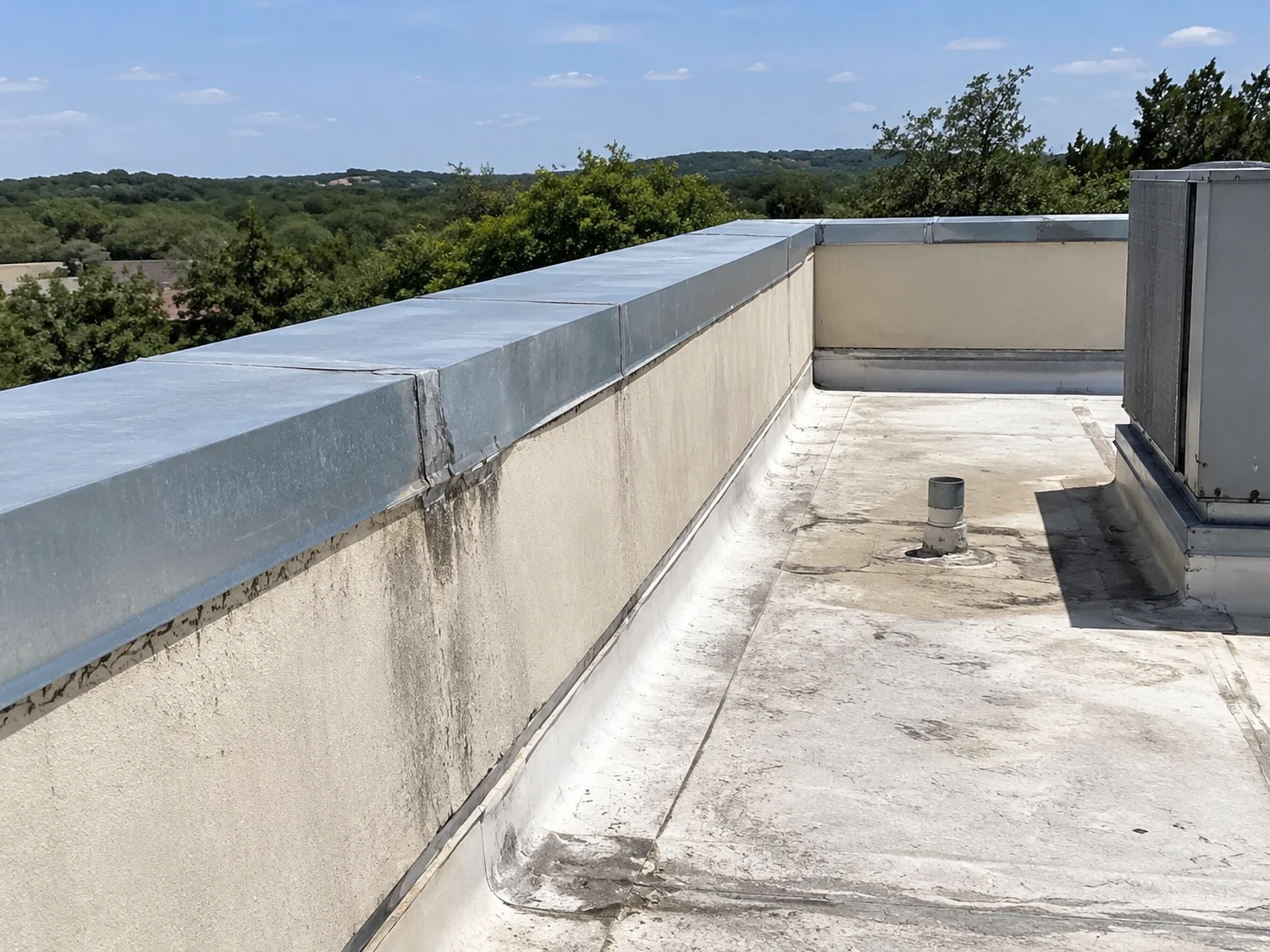
On a standing seam roof, wear starts at the details, not in the field. Sealant at ridge caps, wall terminations and penetrations dries and cracks. Trim fasteners back out. Penetration flashings, such as pipe boots and curb wraps, open as the panel moves. Coatings fade or chalk, and scratches in the finish expose the metal to rust.

Heat is a constant partner. August highs average near 98 F at Austin Camp Mabry. Metal panels move noticeably in that range, and sliding clips that have corroded or been over-tightened stop the movement and create stress. We check clip function, panel alignment and seam closure on a sample of panels at each visit.

Condensation deserves its own note. Metal cools quickly at night, and warm humid air inside a building can condense on the underside of the panels, producing drips that look like leaks. A moisture scan and a close look at the insulation and vapor barrier separate a true leak from condensation, and the fix differs. We record the time of day and weather when a drip appears, since that pattern often gives the answer.

Hail, wind and the cosmetic question

Hail dents metal, and the dents raise a cosmetic question as well as a functional one. Half-foot hail at Johnson City on May 9, 2024 led the way for a storm that then crossed into San Marcos. Dents in the flat of a panel often do not affect water shedding. Dents at seams, ribs and trim can break the lock or the coating, and broken coating invites corrosion.

We separate cosmetic dents from functional damage. A seam probe, a coating check and a look at the trim tell us whether water can enter. Wind is the other test, and uplift begins at eaves, rakes and corners, so edge trim and the first clips are rechecked after severe storms.

Edge details need the most attention after wind. The edge metal and gutters on a standing seam roof take the first uplift, and gutters full of debris can overflow behind the trim. We clear, refasten and reseal as part of every storm response, and we photograph each corner so the file shows the roof before and after.

Repair, restore or replace

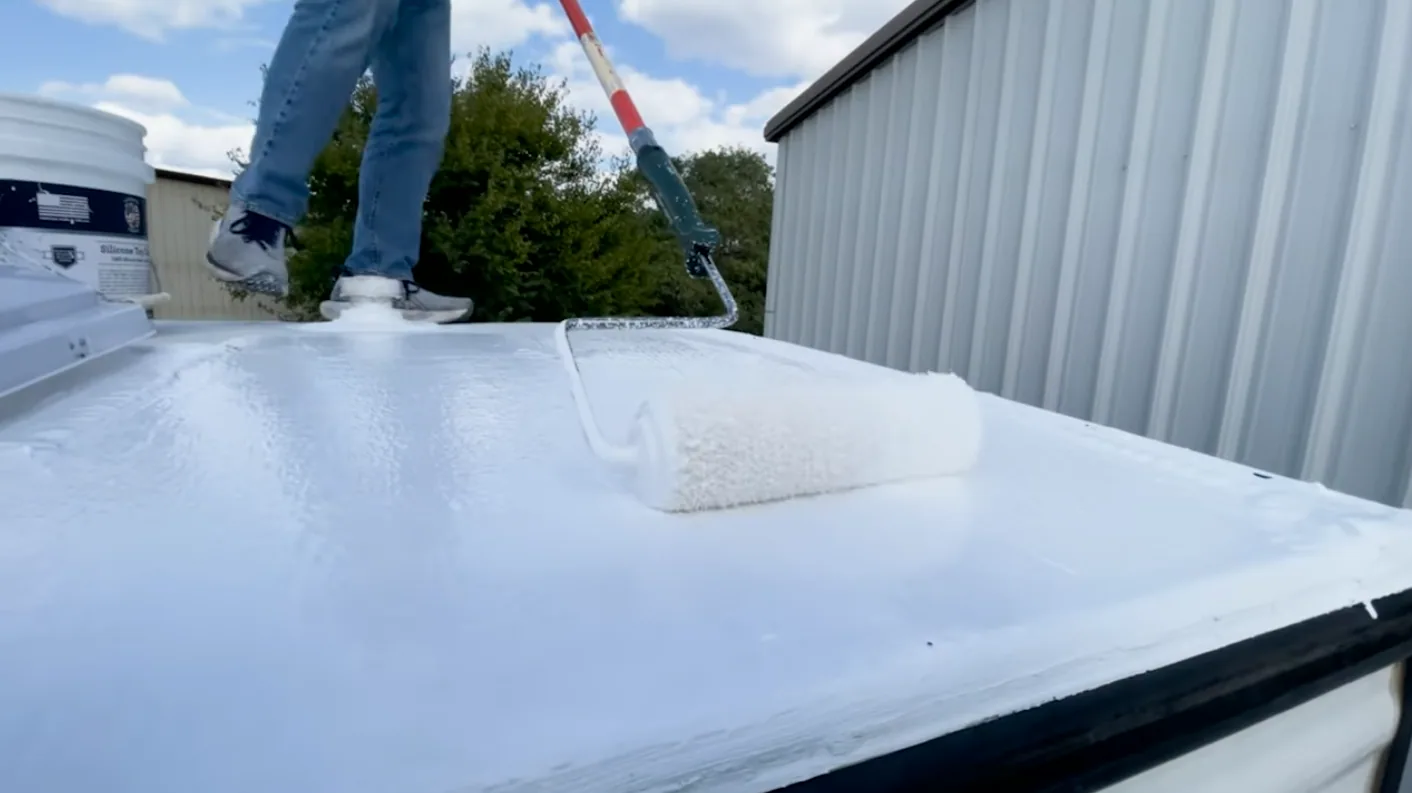
Repairs on standing seam are targeted. A failed sealant joint is cleaned and resealed. A loose trim piece is refastened with the right fastener and gasket. A punctured panel is patched or replaced. An open seam is re-crimped or covered. Coatings can be touched up where scratched, and silicone coatings are sometimes used to restore a tired surface on a sound metal roof after an adhesion test.

Replacement of individual panels is possible when the profile is still available, though matching an older profile can be hard. When corrosion, widespread seam failure or structural movement appears, replacement of larger areas follows. For older exposed-fastener roofs, the better choice may be a metal roof retrofit that adds a new standing seam surface over the old.

Access shapes cost on these roofs. Steep panels need fall protection, snow guards are rare here but gutters and valleys need clearing, and long panel runs mean a repair on one panel can touch several courses of trim. We note the access method in the scope so that tenants, event schedules and neighboring uses are not surprised by lifts, ladders or staging in a parking area.

Standing Seam Metal Roofing

Where it fits here

West of the city, Wimberley and Dripping Springs combine boutiques, wineries, breweries and event spaces, and Driftwood has a barbecue restaurant, a winery and an event barn. Owners of buildings like these may want a metal roof that suits the setting. Church roofing is another common standing seam class, where sloped roofs and tall naves need panels that last and flash cleanly.

Each building gets a roof plan with panel runs, clip spacing where known, trim lines and penetration locations marked, so a later repair finds the right part quickly.

Standing Seam Metal Roofing

The budget-year decision

The result is a ranked list by remaining service. Corrosion, open seams, failed trim and clip problems move a roof up; tight seams, intact coating and sound clips hold it down. Costs depend on panel gauge, profile, roof height, access, the number of penetrations and building use. We price after the walk and write the schedule around the building's events and operations.

Records finish the job. Photos of each seam, clip sample and trim line go into the building file with the panel profile and finish, so a later owner or contractor can match parts instead of guessing.

Commercial Roofing Questions

Do dents mean the roof is damaged?

Not always. Dents in the flat of a panel are often cosmetic. Dents at seams or trim can break the lock or coating.

Why do panels need sliding clips?

Metal expands and contracts with heat. Clips let panels move without tearing at fasteners.

Can a leaking standing seam roof be fixed in place?

Usually yes. Sealant, trim and penetration flashings are the common sources, and each is repairable.

Does wind threaten a metal roof?

Uplift starts at eaves, rakes and corners, so edge trim and clip spacing there are rechecked after storms.

Can standing seam go over an old roof?

Often, as a retrofit, if the structure can carry it and the old roof is dry or removed.

Send the building list

Send the building list and any past reports, and we will sort the roofs into replace, repair and watch groups before your next budget year.

Request a Roof Assessment

Related Roofing Work

ServicesRoof SystemsIndustriesProperty TypesService AreasRoof Damage RepairCapabilitiesManufacturersAboutContactRequest a Roof Assessment555-555-5555
Call555-555-5555