555-555-5555

Roof Drains, Scuppers and Ponding Correction

Wide, low-slope buildings are drainage systems before they are roofs. A fulfillment building, a big-box store or a business park shell sheds its water to a small number of outlets across a very large field, so one blocked drain carries the whole load of the area around it. What that does to the budget year is quiet and expensive: ponding water adds weight, ages the membrane faster and finds the first weak seam. The roofs that last longest are not always the ones with the best membrane. They are the ones whose water has a clear path out. We treat drains, scuppers and slope as the first line of the repair, and we fix them before anything is coated or replaced.
The building class and its outlets

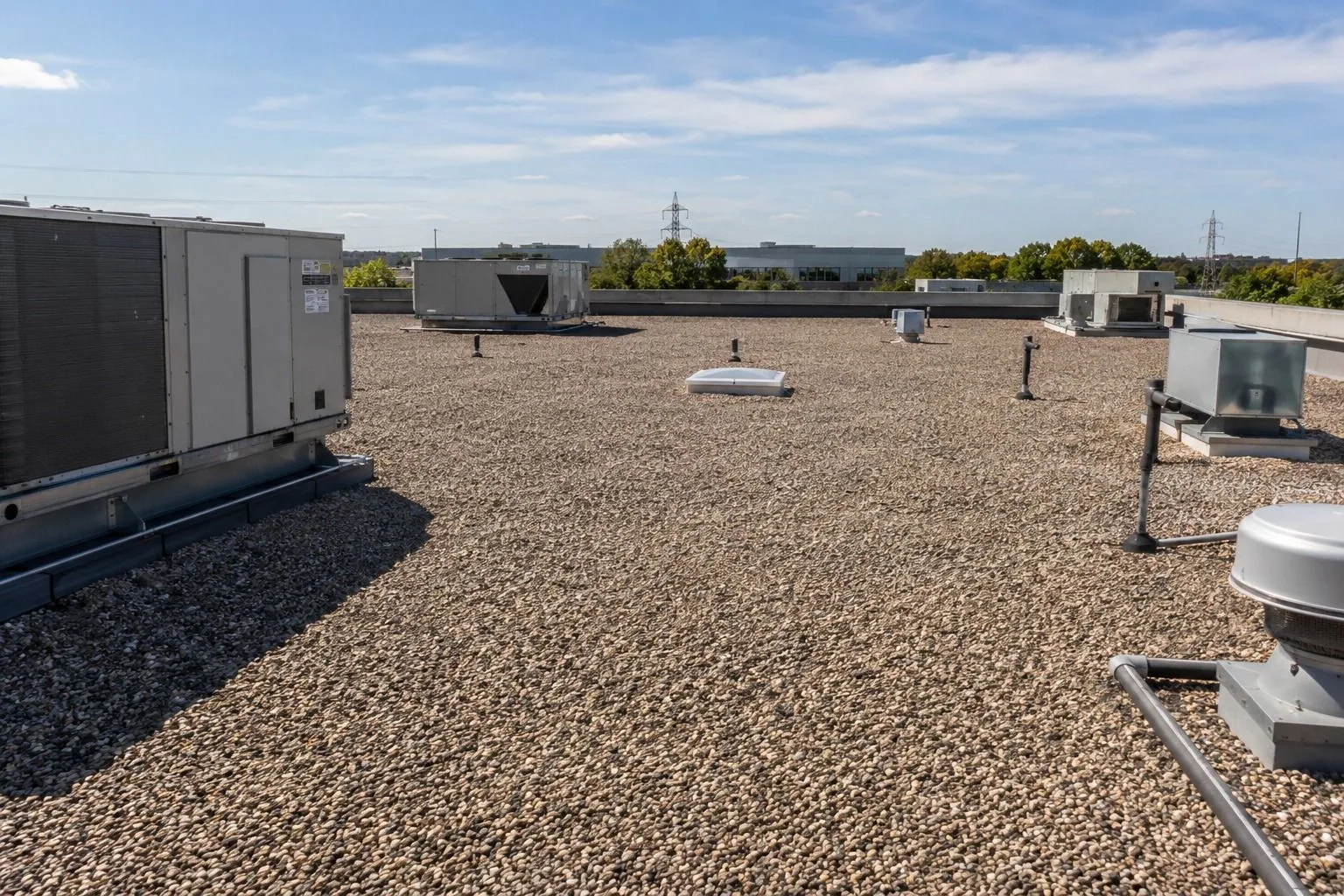
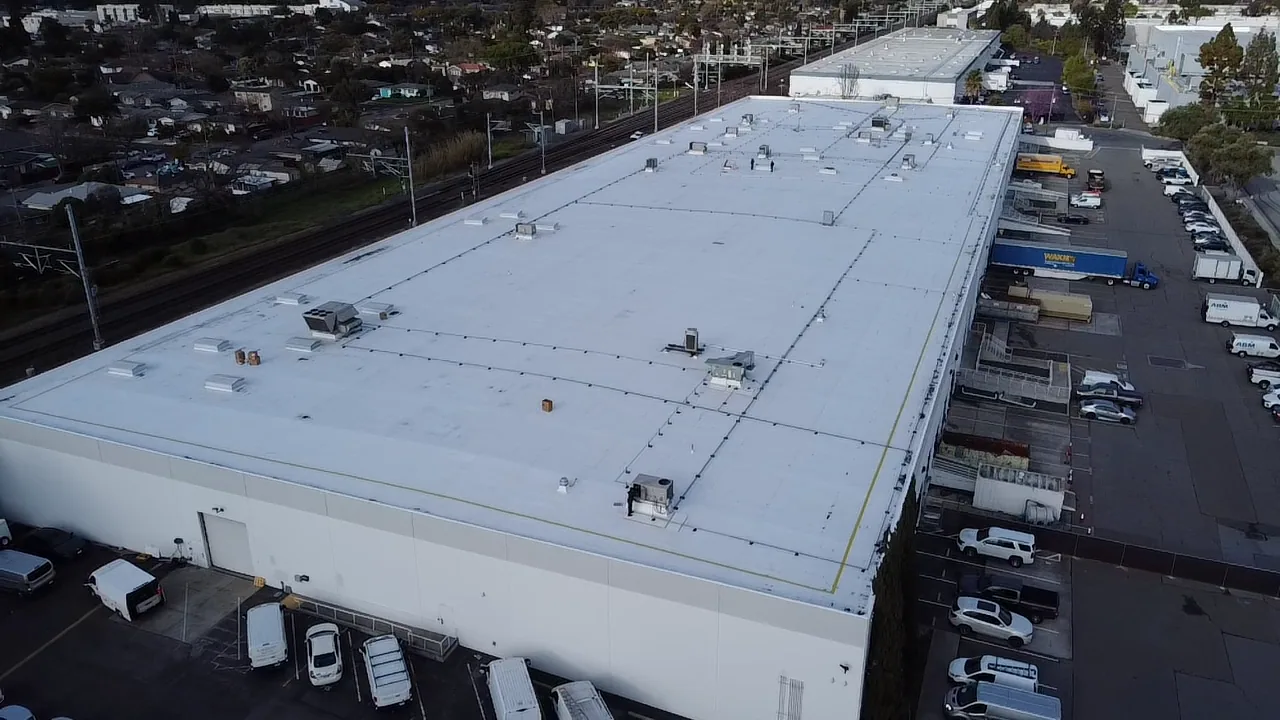
Drain layout follows the building. Distribution and warehouse buildings often carry interior drains set in the field with scuppers through the parapet as overflow. Retail and outlet buildings may drain to the sides through scuppers and downspouts. Older institutional roofs may rely on internal piping that runs through the walls. The San Marcos Business Park along I-35 is planned as three buildings of 204,460, 84,000 and 377,000 square feet, and Amazon runs an 855,000 square foot fulfillment center across town. Buildings with that footprint depend on the count, size and placement of their outlets. We start with the plan, mark each drain and scupper on the roof and test the flow with water.

Parapet height matters too. A tall parapet turns the roof into a shallow tray, and the scuppers become the only exits for water. A short parapet or open edge lets water leave but exposes the edge to wind. We record parapet height along with every opening so the repair and any later edge work fit together, and so a director comparing two buildings in the same park can see why one drains better than the other.

Roof Drains, Scuppers and Ponding Correction

What clogs and what fails

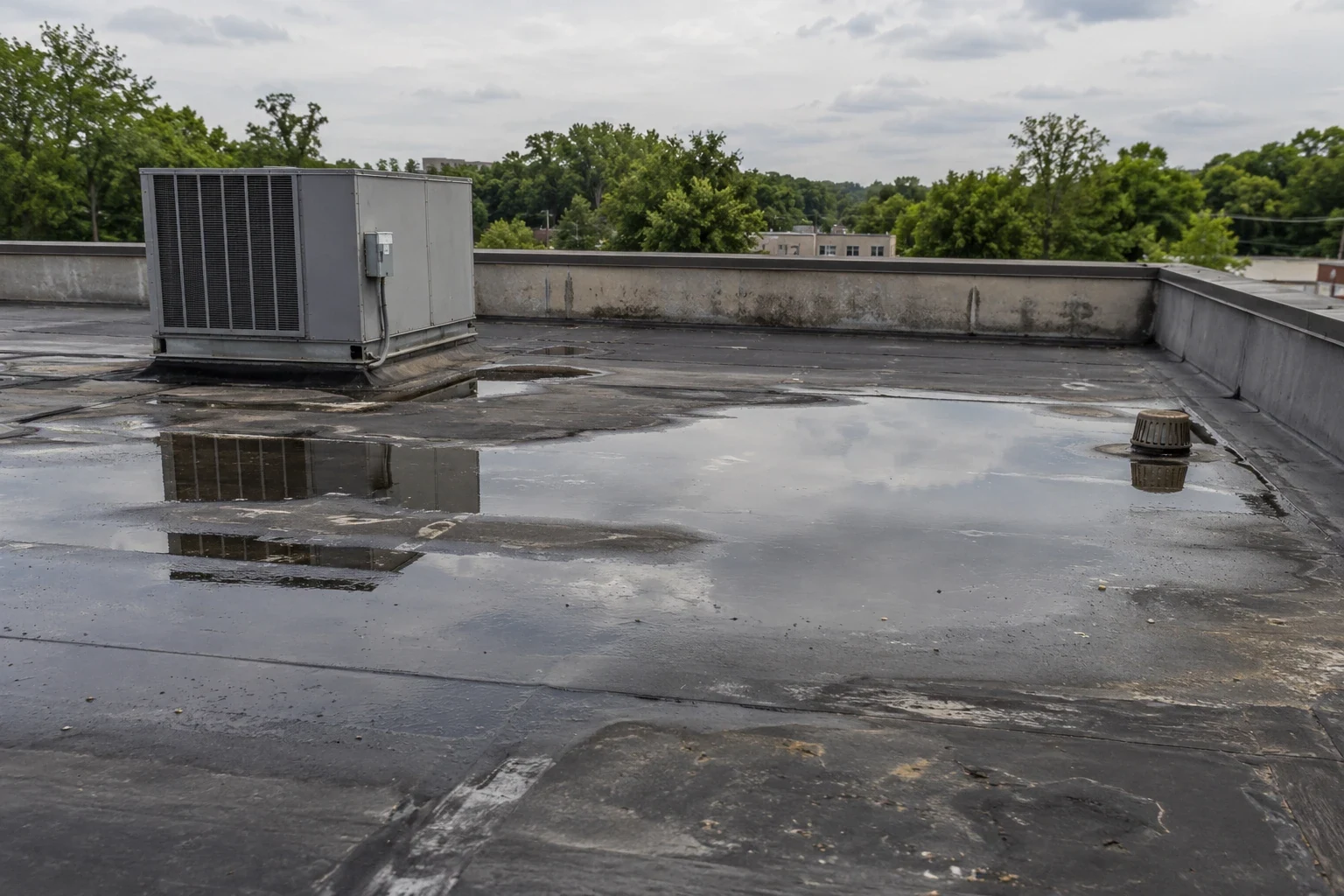
Debris is the usual cause. Leaves, windblown trash, packaging, gravel from ballasted areas and construction scraps all end up at the outlets. A strainer that is crushed or missing lets larger debris into the pipe. Below the roof, interior leaders can be blocked, cracked or poorly pitched. Drain bowls lift when the surrounding insulation settles, leaving a lip that holds water. Scuppers fail from a different cause. Their openings sit too high for the roof's actual slope, or they are clogged with debris and sealant. The result is the same: water stands, and standing water over a seam is a leak waiting for a hot afternoon.

Winter is mild and snow is effectively absent in San Marcos, so ice dams are rarely the story. Summer storms are. A thunderstorm can drop a heavy load of rain in a short time, and the roof has to shed it before the pond reaches the weak seam. That is why we test with water rather than assuming a drain works because the strainer looks clear.

Ponding and what it costs

A pond is not always a drainage failure. Some designs allow brief ponding after rain. The trouble starts when water stays for more than a day or two, because it softens seams, grows algae, stresses the deck and magnifies heat cycling at the pond edge. Measuring comes first. We note the depth, the area and how long the water stays after a storm, and we check whether the deck has deflected or the drain sits high. Then we correct the cause. Once the pond is measured, drain work is usually the first remedy, because it costs the least and removes the water fastest. Membrane that has already suffered from ponding water gets repaired after the outlet is fixed, not before.

Clear, reset, add or reshape

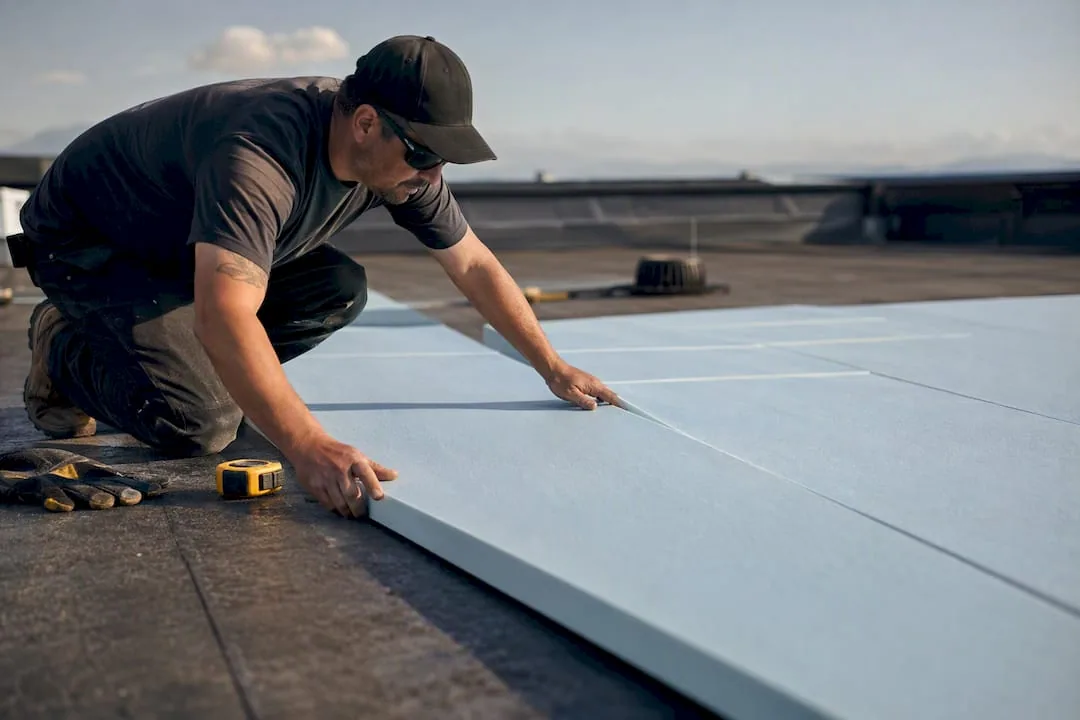
Corrections run from simple to substantial. Clearing and flushing restores flow where the system is sound. Resetting a drain bowl to the right height removes a lip. Replacing a crushed strainer or a cracked clamping ring stops leaks at the penetration. Adding a drain where the pond sits is a bigger step that involves plumbing and a core through the deck. Where slope is the problem, we build crickets behind curbs and tapered insulation to carry water to the outlet, working with the insulation and cover board scope when the roof is open. A scupper may need to be lowered, widened or lined with new flashing. Each fix is priced separately, so the director can choose.

Records follow the fix. Each corrected drain and scupper gets a before-and-after photograph, a note on the work and the date. After the next storm we check the roof again, because one rain event is the best test of whether the correction worked. If a pond remains, we measure again and adjust the plan.

Roof Drains, Scuppers and Ponding Correction

Overflow and the code

Every low-slope roof needs a secondary path for water when the primary drains fail. Overflow scuppers or secondary drains handle that, and the design must meet the plumbing and building codes that apply. San Marcos works from the 2021 International Building Code, so overflow sizing and placement are checked against that edition. Our work on edge metal and parapets touches the same openings, so the edge metal, coping and gutters scope is coordinated with scupper lines. We check that overflow openings are clear, correctly sized and set at the right height, because an overflow scupper that sits too high does nothing until the roof is already heavily loaded.

Inspectors and insurers both look at overflow. A roof with no working secondary path is a structural risk in a heavy rain, because a deep pond adds load the framing was never sized for. We photograph each overflow opening from the roof and from the ground so the record shows where the water would leave.

Roof Drains, Scuppers and Ponding Correction

Scheduling and the budget year

Drain work is quick, so it fits around operations. On a site in the Fortuna Road and Yarrington Road industrial area, where an H-E-B distribution center ranks among the largest employers, dock schedules and trailer positions set when lifts can work. We clear drains twice a year as part of preventive roof maintenance, and once more after any storm that drops heavy debris. San Marcos receives about 36.55 inches of annual precipitation, and nearly all of it falls on roofs that must shed it. The cost of a clear outlet is small beside the cost of a wet ceiling. Where a failed drain has already damaged the membrane, a commercial roof repair at the pond brings the surface back, and a TPO patch is a typical fix.

Commercial Roofing Questions

How long can water sit on a roof before it causes harm?

Water that stays more than a day or two after rain begins to soften seams, grow algae and load the deck. Repeated ponding in the same spot is a sign the drainage needs correction.

Can ponding be fixed without replacing the roof?

In many cases. Clearing drains, resetting bowls and adding tapered insulation or crickets can remove the pond. If the deck has sagged badly, a larger scope is needed.

What is the difference between a drain and a scupper?

A drain is an outlet in the field that sends water through interior pipes. A scupper is an opening through the wall or parapet that lets water exit the side of the building.

How often should drains be cleaned?

Twice a year suits most roofs, with an extra visit after storms that bring debris. Roofs under trees or near construction need more.

Do overflow scuppers need to be in the plan?

Yes. If the main drains clog, the overflow is the only path for water, and the roof structure was not designed to hold a deep pond.

Send the Building List and Ponding Photos

Send the building list and any past reports or photographs of standing water, and we will sort the roofs into clear, correct and replace groups before the next budget year. Use the contact form.

Request a Roof Assessment

Related Roofing Work

ServicesRoof SystemsIndustriesProperty TypesService AreasRoof Damage RepairCapabilitiesManufacturersAboutContactRequest a Roof Assessment555-555-5555
Call555-555-5555