555-555-5555

PVC Roofing

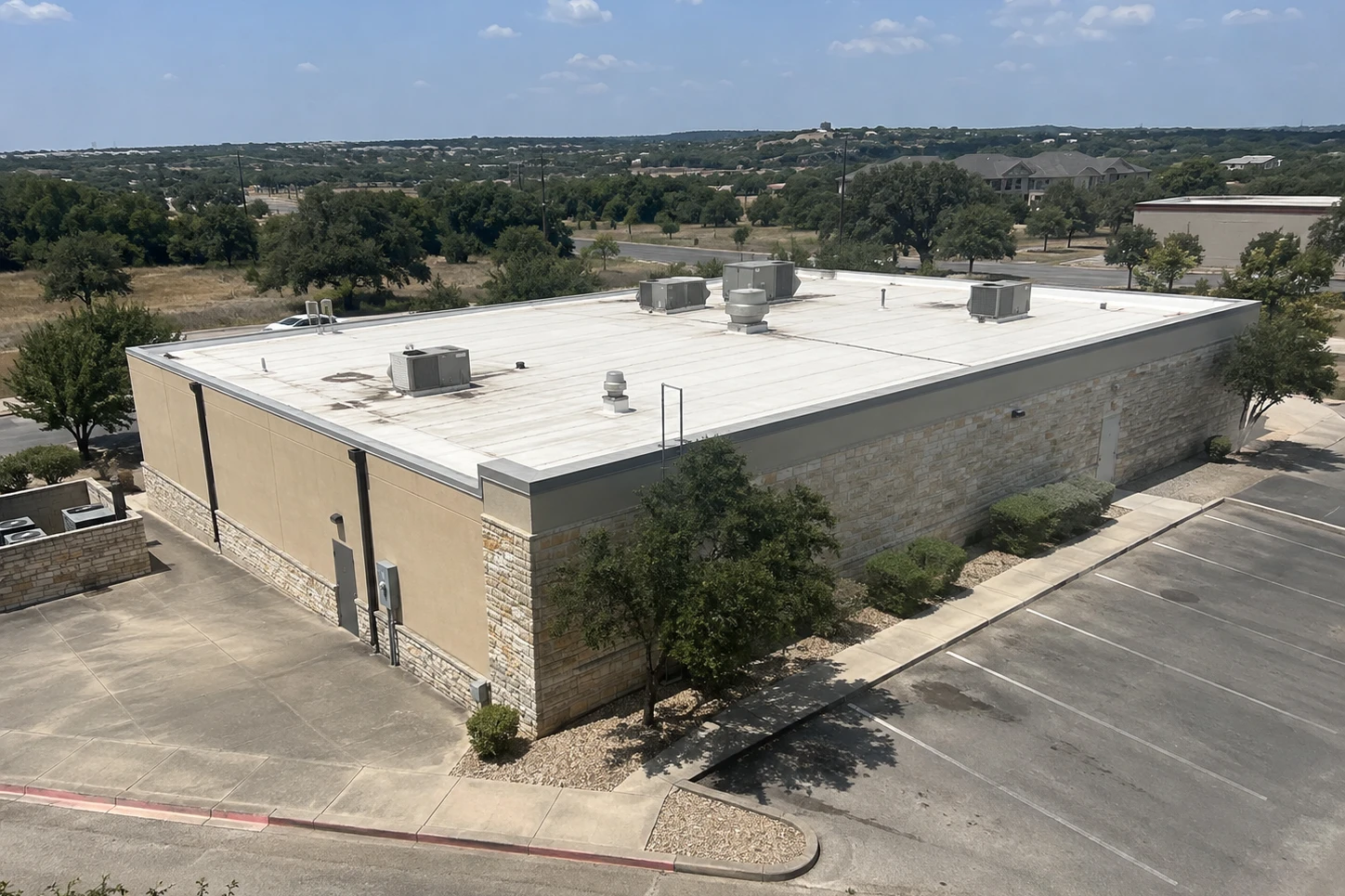
PVC membranes belong to the building classes that put something on the roof besides weather, and in San Marcos, TX that means restaurants, retail with food service, distribution buildings and clinics whose exhaust equipment sends grease, oils and chemical vapor across the sheet. A polyvinyl chloride roof is a welded thermoplastic membrane, like TPO, but with a formulation that tolerates those contaminants far better. That class contaminates the sheet, and the owner's budget year depends on whether the sheet resists it or slowly absorbs it.

Our job is to read the roof inventory by building class, find where the sheet is still doing that work and where it has begun to fail, and give the facility director a list that sorts spending before the money is committed.
What the system is

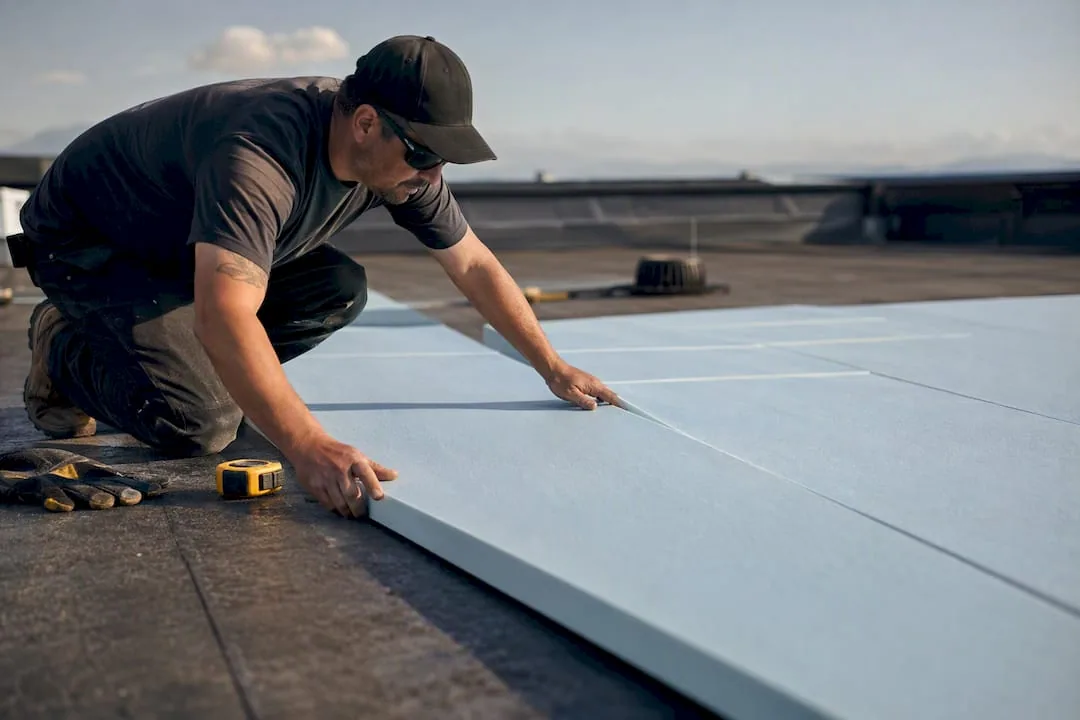
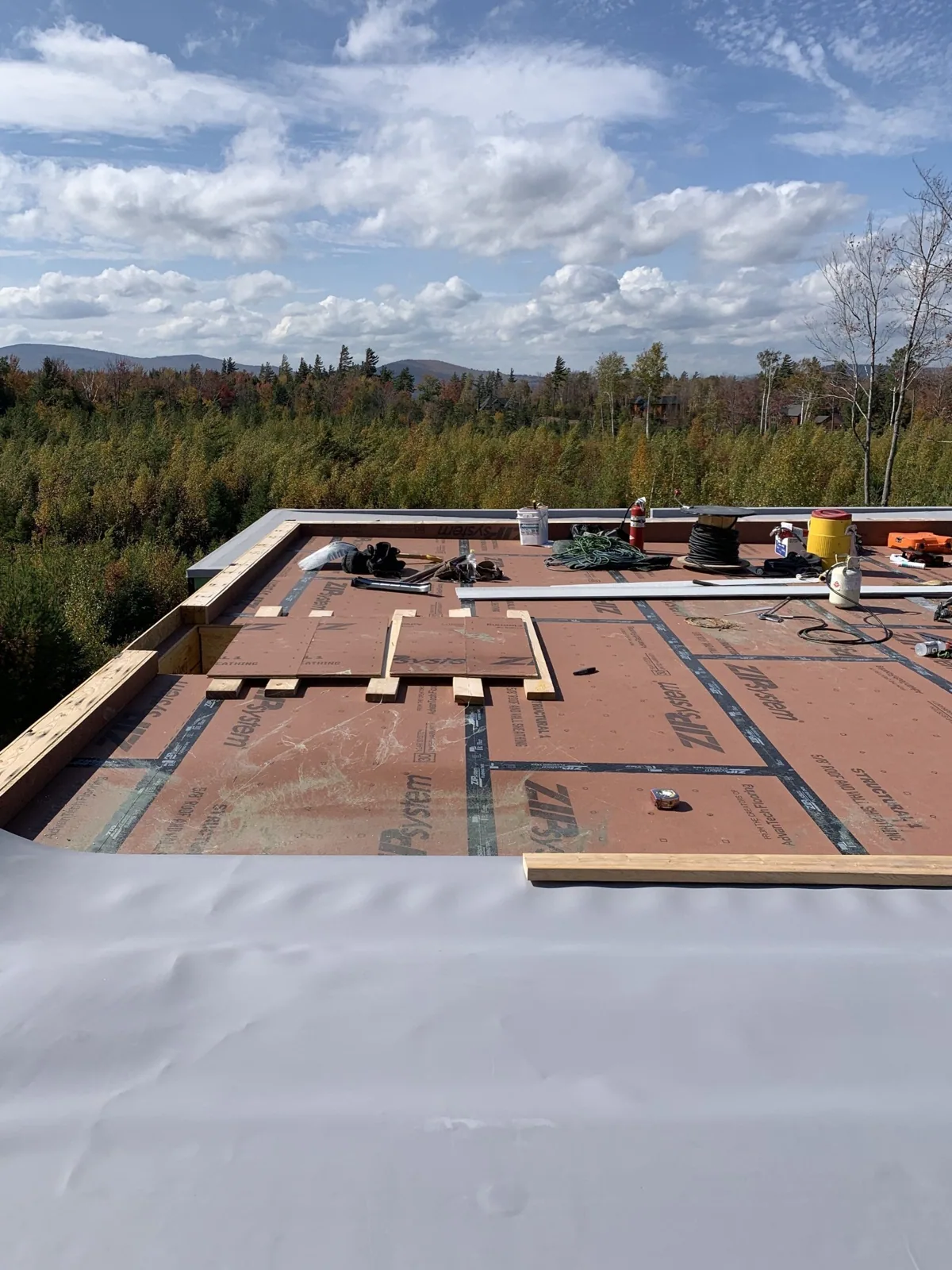
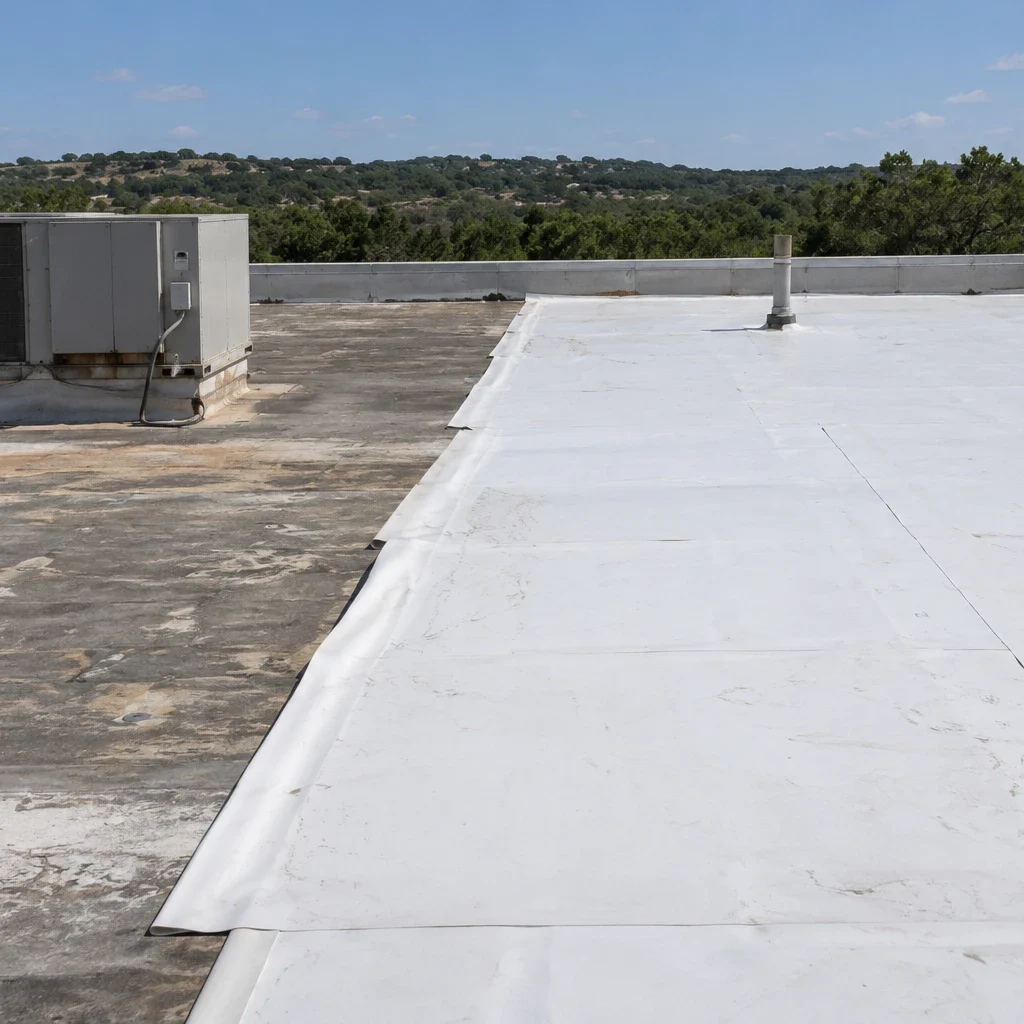
A PVC assembly stacks a deck, insulation and a reinforced PVC sheet, typically white or light gray. Seams are hot-air welded, details are hand-welded from the same sheet, and the surface is smooth enough to shed dirt. The sheet can be mechanically attached, fully adhered or ballasted, and the attachment choice follows the wind exposure and the structure beneath it.

PVC contains plasticizers that keep the sheet flexible. Over many years some of those plasticizers migrate out, and the sheet becomes stiffer and more prone to cracking at folds and corners. Good formulations slow that process, but no sheet is immune, which is why we test flexibility at corners and edges on older roofs rather than relying on the age printed on a warranty.

The same welded-seam logic applies to TPO, and the two sheets are often compared on the same building. The practical difference is how the surface behaves over time. TPO is usually the lower first cost for a clean exposure, while PVC earns its higher price where the roof will see oils, fats and cleaning agents. Thickness also matters, and a heavier sheet gives more margin for the reinforcement and for repeated repair welds.

PVC Roofing
PVC Roofing

Why grease matters

Kitchen exhaust is the clearest example. A vent that discharges onto the roof leaves a film of grease that softens some membranes, collects dirt and gives mold a place to grow. PVC resists that attack better than most single-ply sheets, which is why it appears on restaurants and on retail buildings with food service. Even so, the film should be cleaned on a schedule, and the area under an exhaust gets a close look at each visit.

Chemical vapor from clinics, labs and light manufacturing deserves the same attention. We ask what the building vents, where it vents and how often the units are serviced. The answers shape the walkway layout, the cleaning plan and the choice between PVC and a related sheet such as KEE, whose alloy formulation retains its flexibility longer in harsh exposures.

What wears first

On PVC roofs the early signs are at seams, corners and detail work. Cold welds can look closed and still lift when probed. Corners made from folded sheet crack as plasticizer is lost. Flashing at curbs shrinks slightly and pulls away from the base, which opens a path for water.

Heat cycling drives all of this. August highs average near 98 F at Austin Camp Mabry, the regional gauge of summer load. A roof in that climate expands and contracts every day, and a rooftop unit with a vibrating base adds its own wear. We note the condition of each unit curb and the sealant around it, since the curb is where small movements concentrate.

Foot traffic is the other everyday cause of wear. Service technicians walk the same path to the same unit, and a worn track in the sheet shows where. Walkway pads welded along that path spread the load and keep grit off the surface. We mark the paths on the roof plan during the first walk and recommend pads where the track crosses a lap or a flashing.

Hail and the hail-bruised field

Hill Country hail threatens every sheet. May 9, 2024 produced six-inch hail at Johnson City, and the storm that carried it went on to San Marcos. PVC is firm under impact, and a stone can fracture the sheet at the reinforcement scrim without making a visible hole.

The scan comes before any verdict. Wet insulation appears on a moisture scan, and core cuts at the worst readings show whether the sheet, the insulation or both were damaged. A hail-bruised field with dry insulation may only need monitoring, while a field with fractured scrim and wet board belongs in the replacement queue.

PVC Roofing

Repair, restore or replace

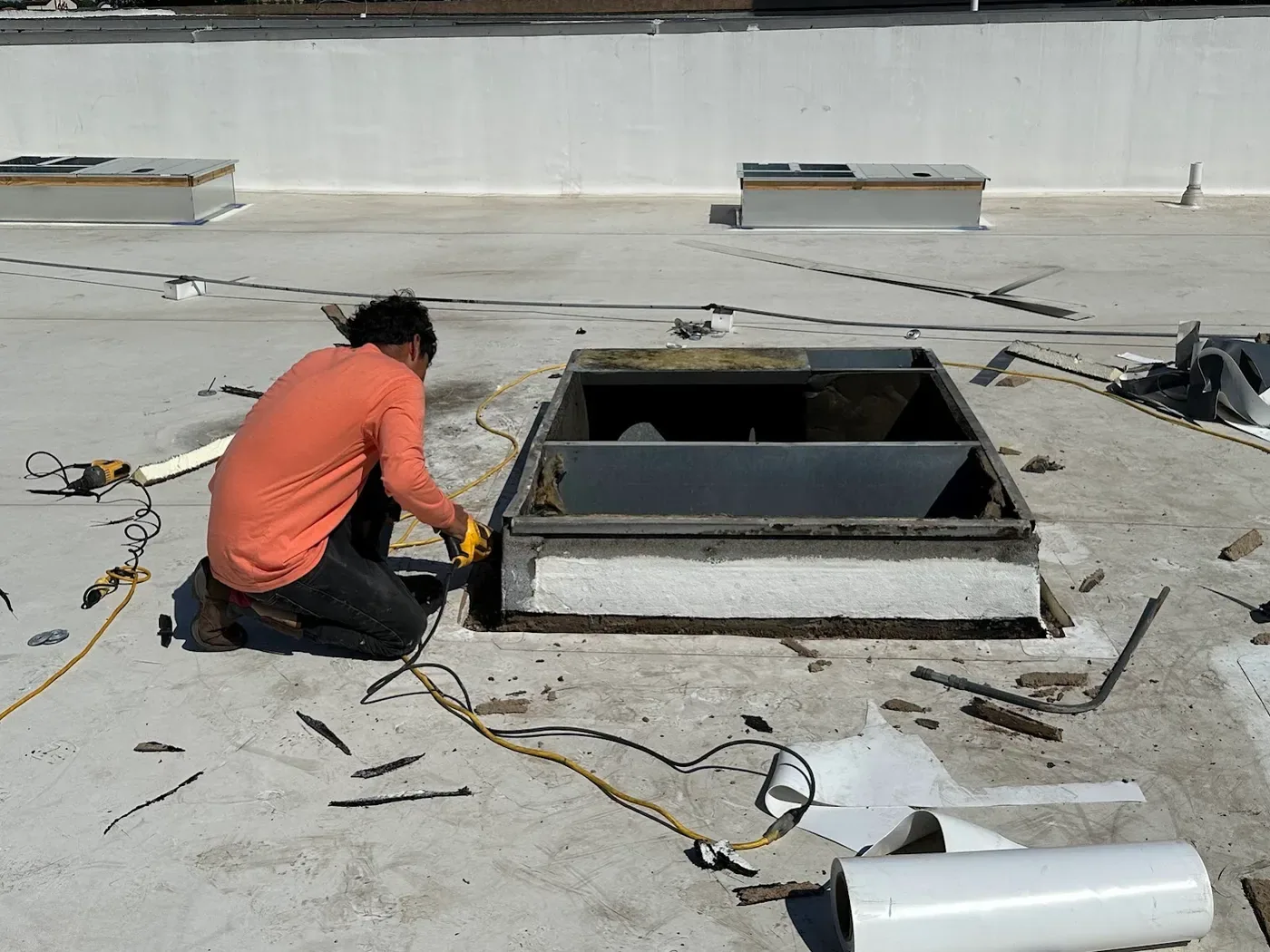
Most PVC repairs are straightforward when the sheet is still weldable. Aged sheet can be harder to weld, because the surface has been contaminated or has lost plasticizer, so we test a small weld before committing to a large repair. Open seams are reworked, cracked corners are capped and failed flashing is rebuilt.

When widespread cracking, shrinkage or wet insulation appears, repair gives way to a recover or a full replacement. A recover is only possible over a dry roof, and some older PVC sheets contain plasticizers that react with certain insulation types, so a separation layer may be needed. We lay out the choices with their cost drivers so the director can rank them against other buildings in the portfolio.

A commercial roof inspection comes before any of these choices. The inspection records the weld condition, flexibility, contamination and moisture, and it gives the director a baseline that later visits can be compared against. A baseline also helps with warranty questions, since it shows what the roof looked like before any repair.

PVC Roofing

Where PVC fits here

The outlet and retail corridor draws about 14 million visitors a year, and any food-service tenant there makes PVC worth pricing. Distribution buildings with kitchens or vented process equipment also fit. Medical buildings in Kyle often bring exhaust-heavy equipment that benefits from a contamination-tolerant sheet, and our work on medical office roofing follows the same sorting method.

For each building we record the roof plan, the vent locations and the walkway paths, and the record goes into the building file so the next technician starts from facts.

Texas State University's roughly 250 campus buildings add another class, with each roof reviewed on its own. Those roofs are reviewed building by building, in campus phases that respect classes and events such as stadium days.

The budget-year decision

The deliverable is a replacement queue ranked by remaining service. Items that move a PVC roof up the queue are cracked corners, repeated seam failures, contamination that cannot be cleaned and wet insulation. Items that keep it down are tight welds, sound flashing and dry readings. Costs depend on those conditions and on access, schedule and building use, and we price the work after the readings, not before.

Commercial Roofing Questions

Why choose PVC over TPO for a restaurant roof?

Grease and chemical tolerance decides it. PVC resists contamination better, so it suits roofs under kitchen exhaust.

Does PVC get brittle?

Older sheets can stiffen as plasticizers migrate out. We test flexibility at corners and edges before recommending repair.

How are PVC seams repaired?

The lap is cleaned and rewelded with hot air, or capped with a welded strip. We probe the finished weld.

Can PVC be recovered with a new sheet?

Sometimes. The insulation must be dry, and a separation layer may be needed to protect the new sheet.

How do I protect a PVC roof from exhaust grease?

Keep a cleaning schedule, add walkway pads at service paths and review the area under each exhaust at every visit.

Send the building list

Send the building list and any past reports, and we will sort the roofs into replace, repair and watch groups before your next budget year.

Request a Roof Assessment

Related Roofing Work

ServicesRoof SystemsIndustriesProperty TypesService AreasRoof Damage RepairCapabilitiesManufacturersAboutContactRequest a Roof Assessment555-555-5555
Call555-555-5555