555-555-5555

Edge Metal, Coping and Gutters

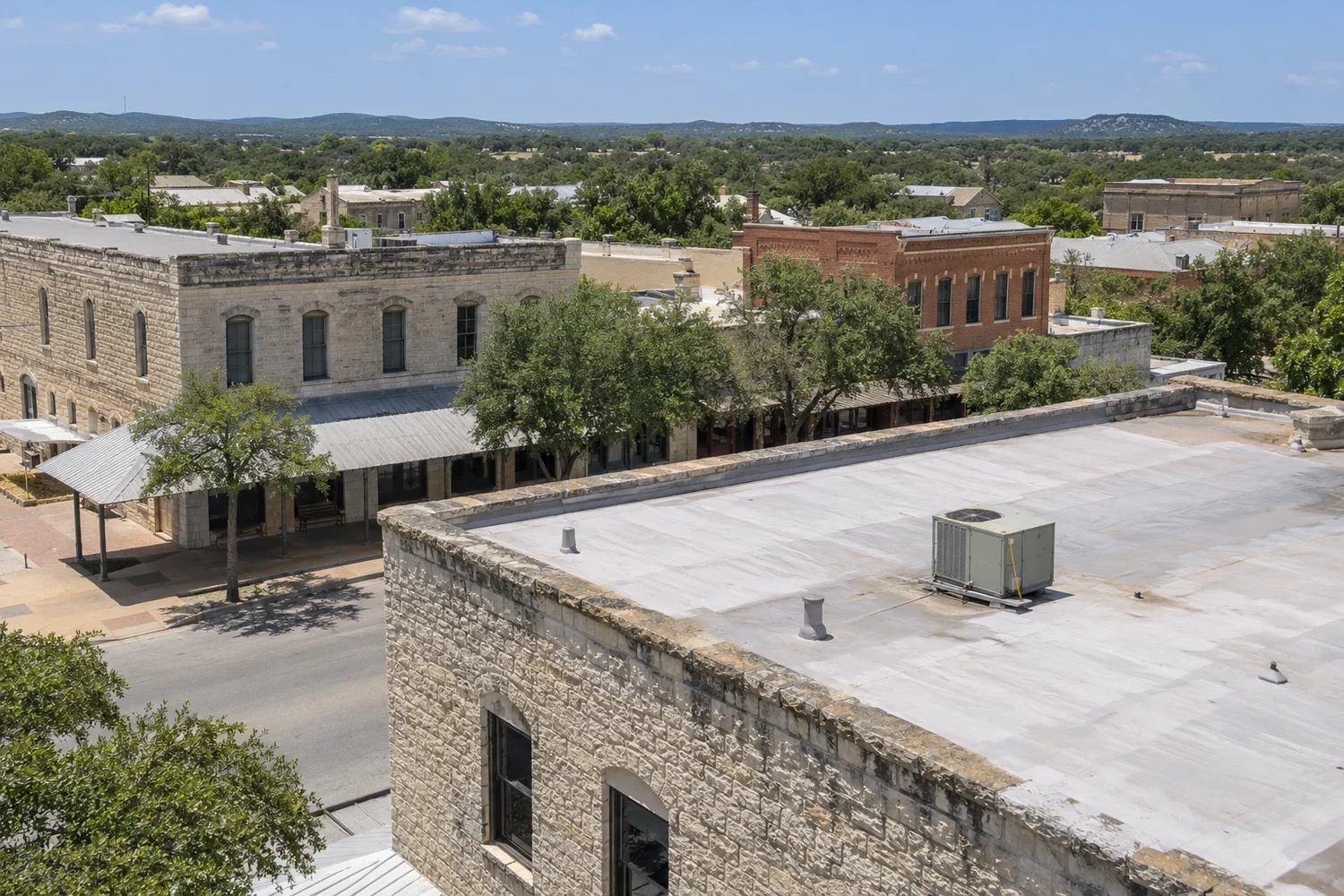
The perimeter is where a roof meets the weather, and the building class decides how much perimeter there is. A long fulfillment building has hundreds of feet of dock-side edge. A campus building has parapets of mixed height. A courthouse square asks for an edge that respects the building it sits on. What the edge does to a budget year is out of proportion to its cost. A loose piece of edge metal costs little to fix and a lot to ignore, because wind gets under the membrane at the perimeter first and a failed edge lets water behind the roof. We treat the edge as part of the roof inventory and give it its own line in the report.
What the edge is made of

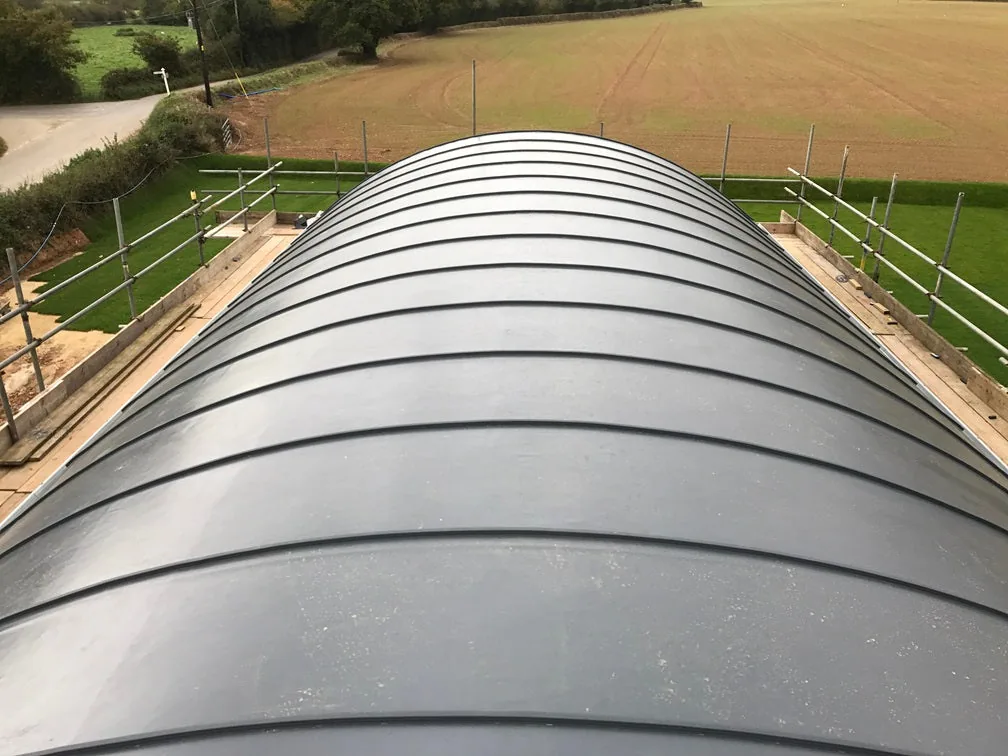
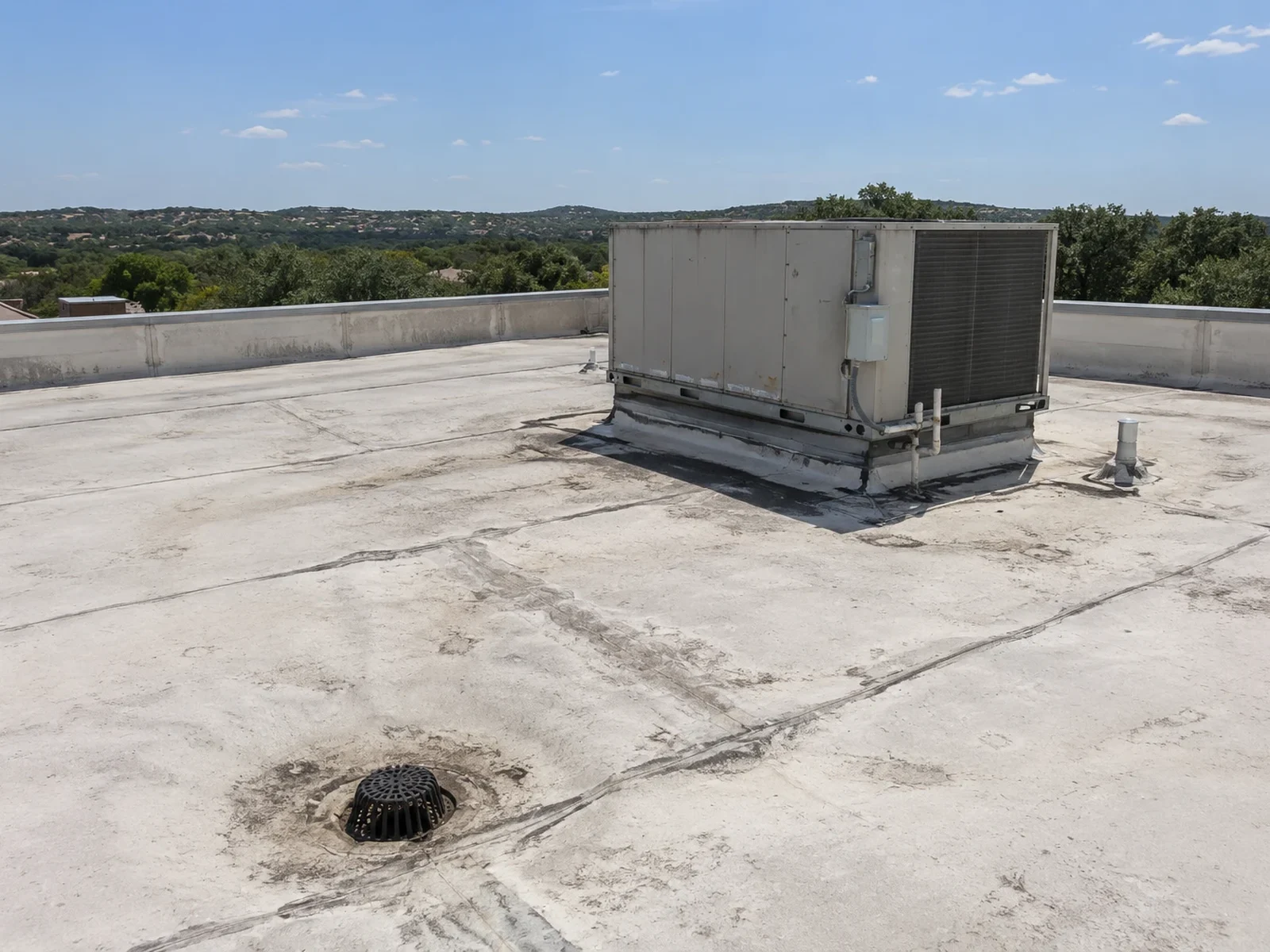
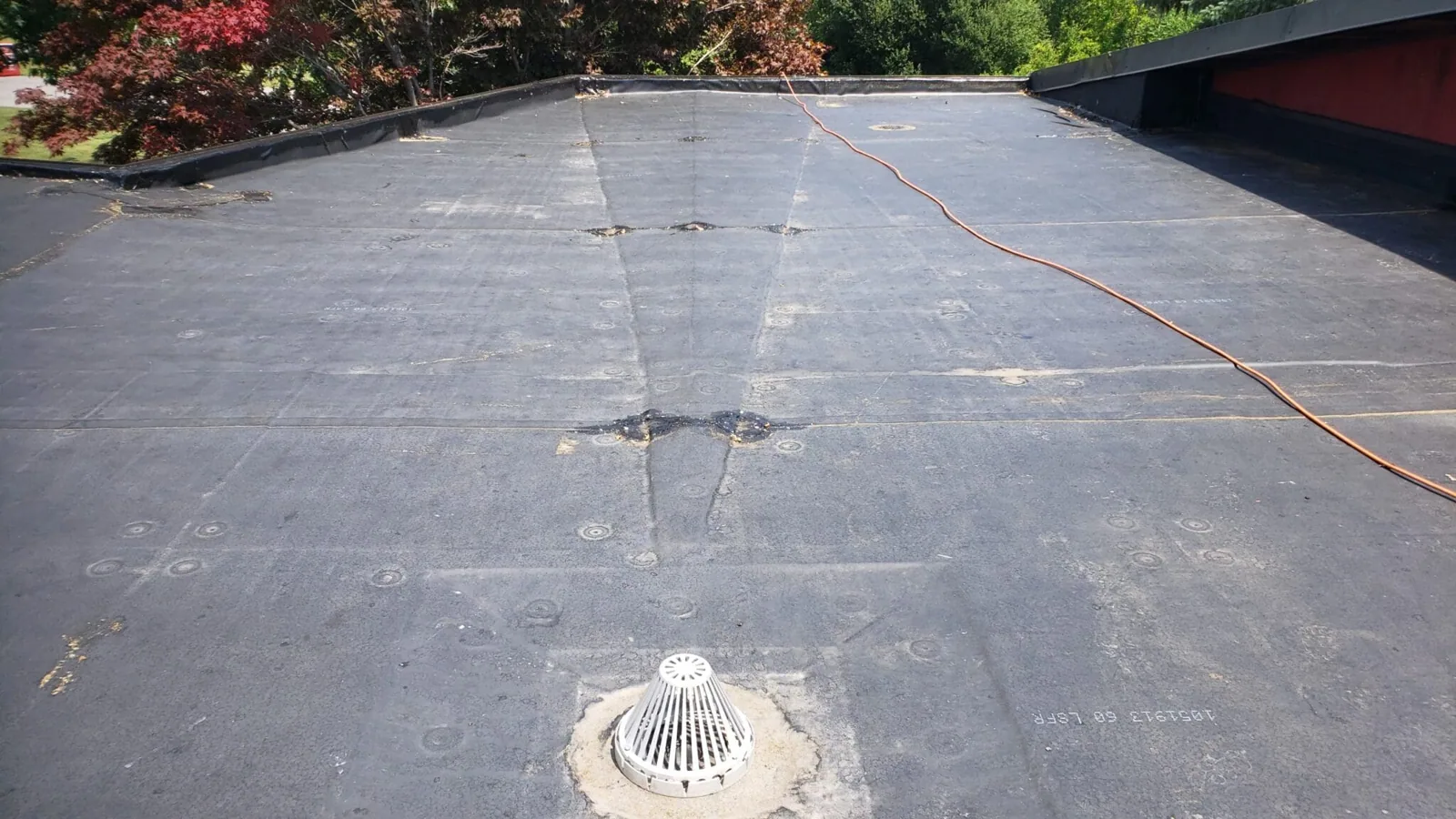
Edge metal is a family of parts. Drip edge or fascia trim finishes a roof that ends at an open edge. Coping caps a parapet wall and keeps water out of the wall top. Gutters and downspouts collect and carry water on sloped or low-slope roofs with perimeter drainage. Each part is formed from steel, aluminum or another metal, fastened with cleats or clips and sealed at the joints. The membrane runs under or behind the metal and is held by it. Good detailing lets the metal expand and contract without tearing the seal. Poor detailing, such as short laps, exposed fasteners or missing end dams, lets water in at every joint.

Material choice follows exposure. Prefinished steel gives a clean line and good strength at a moderate price. Aluminum resists rust but dents more readily, and it moves more with heat. Stainless and copper appear on historic or high-visibility buildings where the budget allows. Metal that touches dissimilar metal, such as steel fasteners in aluminum trim, can corrode at the contact point, so fastener material is part of the specification and not an afterthought.

Edge Metal, Coping and Gutters

What wears first

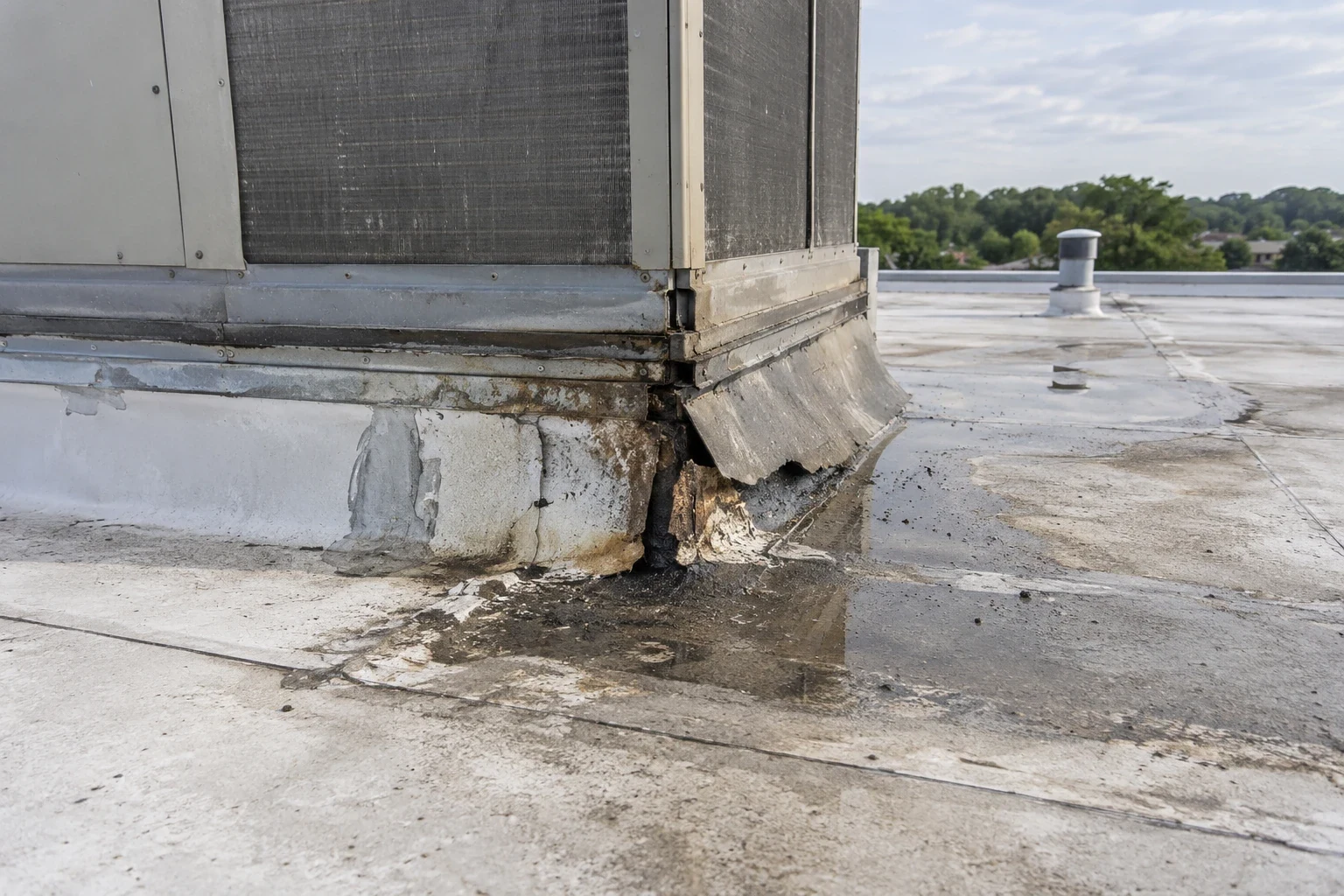
Joints go first. Sealant between coping sections dries and splits, laps open as the metal moves with heat, and fasteners back out as thermal cycles loosen them. Next come the cleats and clips that hold the metal to the building, which corrode or pull from soft substrates. Finally the metal itself fails: dents from hail, bends from wind, rust at cut edges. Gutters clog, sag from the weight of debris and water, and pull away from the fascia. Heat adds to the movement. A summer afternoon near 98 F in the air, the August normal at Austin Camp Mabry, means finished metal on a south wall runs well above that, and sealant joints cycle with every sunrise.

The record of wear is simple to keep. We photograph every run of edge from the roof and from the ground, note lifted sections and open joints, and mark the footage on a sketch. The next visit compares against the last, and the pattern shows which runs are failing fastest. On a long dock-side edge, that pattern often points to one corner or one wall that takes the most wind.

Wind and the perimeter

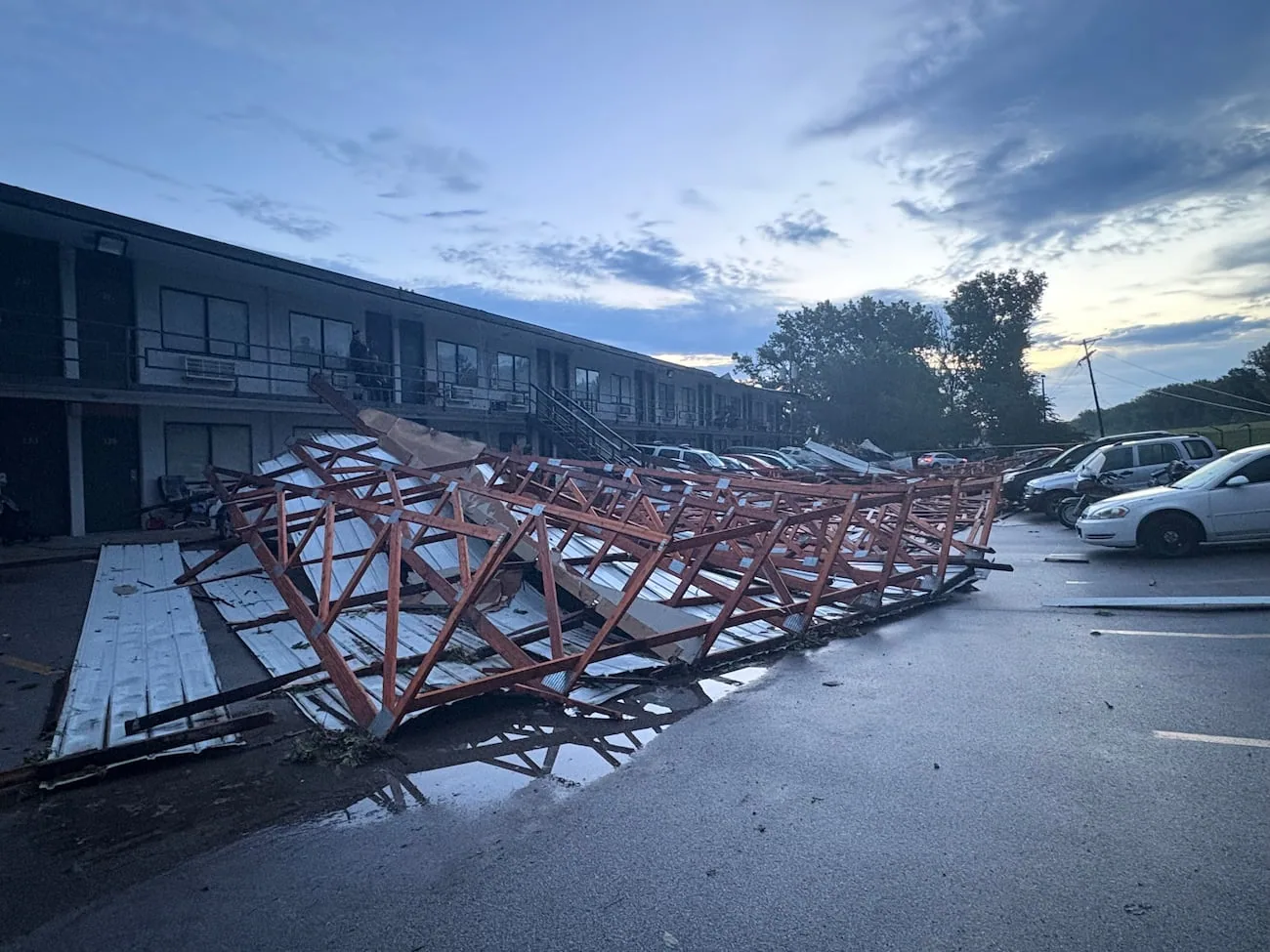
Uplift peaks at corners and edges, which is why the perimeter takes the worst of any wind event. On May 9, 2024 high winds toppled trees onto fences and homes across several blocks of northwest San Marcos, and a tornado warning was issued for downtown that evening. A regional storm does not prove anything about a given building, but it does explain why owners ask for an edge review afterward. We check every run of metal for lifted sections, open joints and loose fasteners. Where metal has peeled, we restore it and re-secure the first few feet of membrane beneath. A wind-damaged roof that loses its edge can lose the field next, so the perimeter is done first.

Details that make the edge hold

The details matter more than the metal. We specify continuous cleats on the face so the metal is held along its full length. Joint covers or butyl-sealed laps keep water out of the seams. End dams stop water at the ends of coping. Fastener spacing tightens near corners, where uplift is higher. Counterflashing laps over base flashing so water sheds outward. Where the edge meets a wall, a flashing failure is the likely entry, and the repair addresses both pieces. We match metal gauge and finish to the building, and we note the panel colors so repairs do not stand out. Cost drivers are linear footage, height, access, metal type and the condition of the substrate.

Edge height and exposure change the detail. A low-slope roof with a tall parapet needs coping and a through-wall path for water. A roof with an open edge needs a drip edge that kicks water clear of the fascia. A building near the I-35 frontage, such as Building A of the San Marcos Business Park planned at 204,460 square feet, is highly visible, so a clean, straight edge also serves appearance. We set the line with a string and check the cleat alignment before the metal goes on.

Edge Metal, Coping and Gutters

Historic and mixed-height edges

Some edges cannot simply be replaced. The Hays County Courthouse on the San Marcos Public Square was built in 1908, is individually listed on the National Register of Historic Places and is a contributing building in the Hays County Courthouse Historic District designated in 1992. Work around the Downtown San Marcos Square asks for a careful hand: flashing set cleanly into the wall, sheet metal that respects the profile and a plan that avoids damage to historic fabric. Campus buildings add their own variety. The Texas State main campus covers about 517 acres with roughly 250 buildings on hilly land beside the San Marcos River, so a college campus program has many edge types to track and sort.

Edge Metal, Coping and Gutters

Gutters, downspouts and the budget year

Gutters are cheap to maintain and easy to forget. We clear them with each visit, check hangers, reseal joints and confirm that downspouts discharge away from the foundation and walkways. Where gutters have rusted through, replacing a run costs less than the wall and fascia damage a failed one causes. For parapet roofs, the work links to drains and scuppers, since both control where water leaves. Building owners with a government building or a large retail shell can fold edge work into a staged plan, doing the worst runs in one budget year and the rest in the next. A small repair now is also the cheapest form of commercial roof repair.

Downspout discharge deserves a second look. Water that lands against a wall or on a walkway leaves stains, undermines paving and can freeze into a slip hazard in cold weather. Extensions or splash blocks move the water away. Where a downspout ties into underground pipe, we confirm the connection is open and not buried under silt, because a blocked underground line backs water up into the gutter and over the edge.

Commercial Roofing Questions

Why does the edge fail before the rest of the roof?

Wind uplift peaks at corners and edges, and the metal there moves with every temperature swing. Joints and fasteners tire long before the field membrane does.

Can edge metal be replaced without replacing the roof?

Yes, in many cases. If the membrane under it is sound, we replace the metal, re-secure the membrane edge and test the flashing. If the membrane is wet or torn, the scope grows.

What is the difference between coping and fascia?

Coping caps the top of a parapet wall. Fascia or drip edge finishes a roof edge that has no parapet. Both shed water away from the wall and the membrane.

How often should gutters be cleaned?

At least twice a year, plus after storms that drop heavy debris. Roofs near trees or construction sites need more frequent visits.

Do edge repairs affect the warranty?

Some membrane warranties set edge metal requirements. We check the terms before work and document the repair so the file shows the details met them.

Send the Building List and Edge Photos

Send the building list and any past reports or photographs of loose metal, and we will sort the perimeters into replace, repair and watch groups before the next budget year. Use the contact form.

Request a Roof Assessment

Related Roofing Work

ServicesRoof SystemsIndustriesProperty TypesService AreasRoof Damage RepairCapabilitiesManufacturersAboutContactRequest a Roof Assessment555-555-5555
Call555-555-5555