555-555-5555

Government Building Roofing

Public buildings come with a paper trail, which means every roof decision has to be explained: a roof choice must survive a procurement review, a council vote and an audit. A county or city facilities manager in San Marcos, TX works to a public calendar, and the roof plan has to fit inside it.

Hays County and the City of San Marcos are both on the list of the city's larger employers, at about 885 and 870 people, and the buildings behind those numbers can range from a historic courthouse to service yards and offices. Each needs its own place in the roof inventory, and each needs a record a reviewer can follow.

Public owners also face a timing problem that private owners do not. Funds arrive on a calendar, a bid window has to be open for a set period and a contract needs approval at a meeting, so a leak found in November may not be fixed under contract until spring. A temporary dry-in carries the building through that gap, and the make-safe note says how long it should hold.
An Inventory That Survives Audit

We build the inventory so a stranger could pick it up: building name, address, roof sections, system types, areas, ages, repair history, warranty status and photographs. Each row has a date and a name. When a facilities manager retires or a department moves, the file still reads.

The same file supports budget requests. A line in the capital plan can point to a roof section with a score, a photograph and a price. A roof asset management program keeps the scores current, and a public agency can see which roofs are ahead of schedule and which are behind.

Buildings outside the center need a place in the file as well: maintenance yards, fire stations, libraries, parks buildings and offices along I-35 and the roads that feed it. Each one gets the same row layout, so a manager can sort by age, by system or by area and see where the money should go first.

Government Building Roofing

Caring for the Historic Courthouse Class

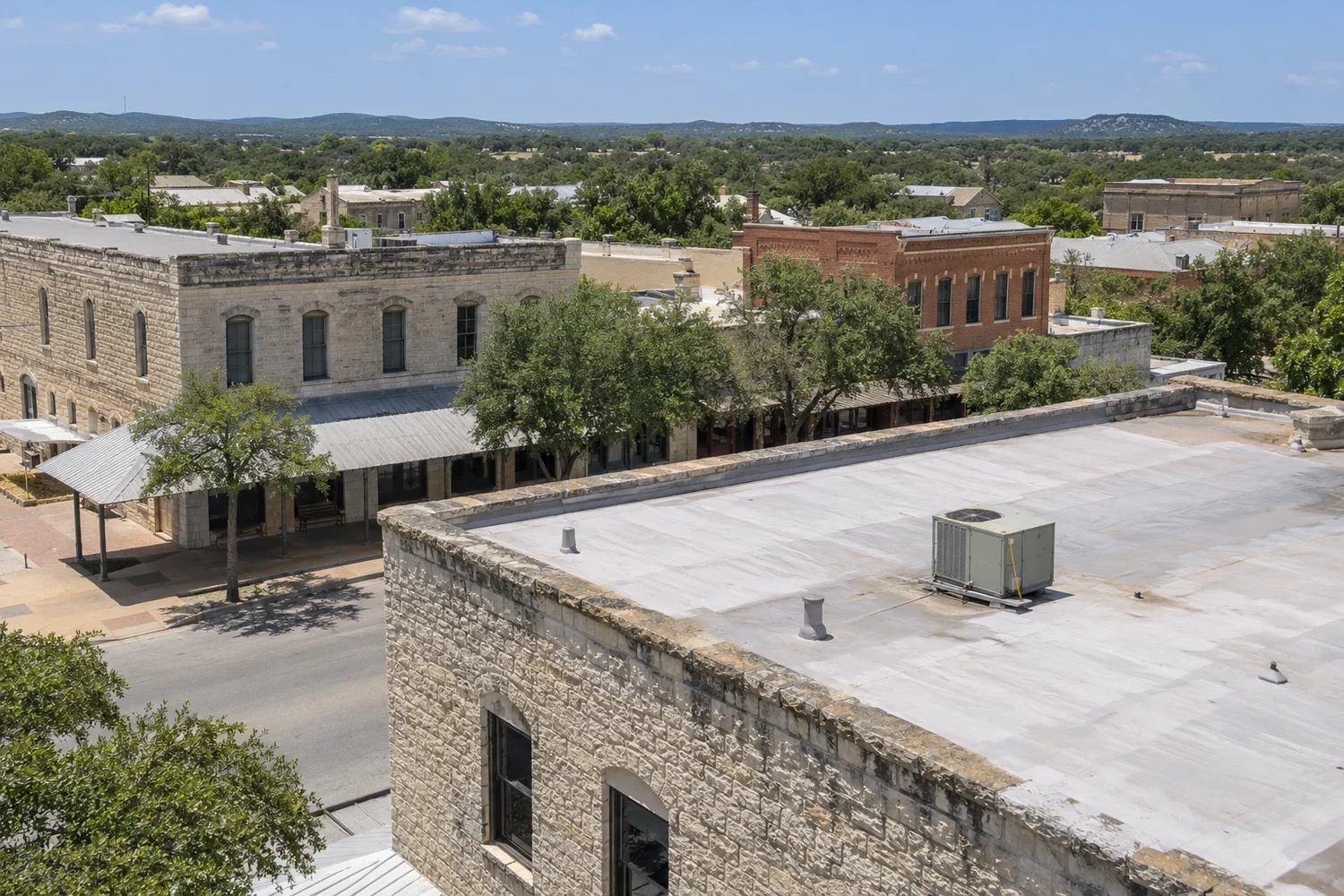
Built in 1908, the Hays County Courthouse on the Public Square is listed individually on the National Register of Historic Places and contributes to the historic district designated around it in 1992. A building with that status calls for care, records and approvals before any roof work.

Roofing on a historic public building follows a different path. The scope identifies original material, the method that avoids damage to it and any review that applies before work. Substitutions are listed so the reviewer can see them. For any historic building, we read the layers by core, check the deck and framing and photograph everything before touching it. The downtown San Marcos square is where this care shows most.

Scopes Written for Procurement

A public scope has to be comparable. Each line has a quantity, a unit and a price. Alternates sit beside the base option. Assumptions are written plainly, such as the allowance for wet insulation found after tear-off and the unit price for extra work. A reviewer can compare two bids line by line without a call.

We also keep the documents a public owner needs after award: a submittal list, a schedule with milestones, daily photographs and a closeout package with warranty documents. A commercial roof inspection before the bid sets the baseline, so the scope reflects the roof as it stands and not as the drawings show it.

Substitutions deserve a line of their own. If a bidder proposes a different membrane or insulation, the reviewer needs to see how it compares on thickness, attachment and warranty term. We list those comparisons plainly and flag any change that affects the roof's service life or the code basis.

Keeping Public Service Running

Courts, permit counters, clinics and dispatch rooms do not close for a roof. We ask which functions are sensitive, which areas hold records or equipment and when public hours run, then plan the work around them. Staging goes away from public entrances, walkways under work get overhead protection and the plan names a department contact who can stop the crew.

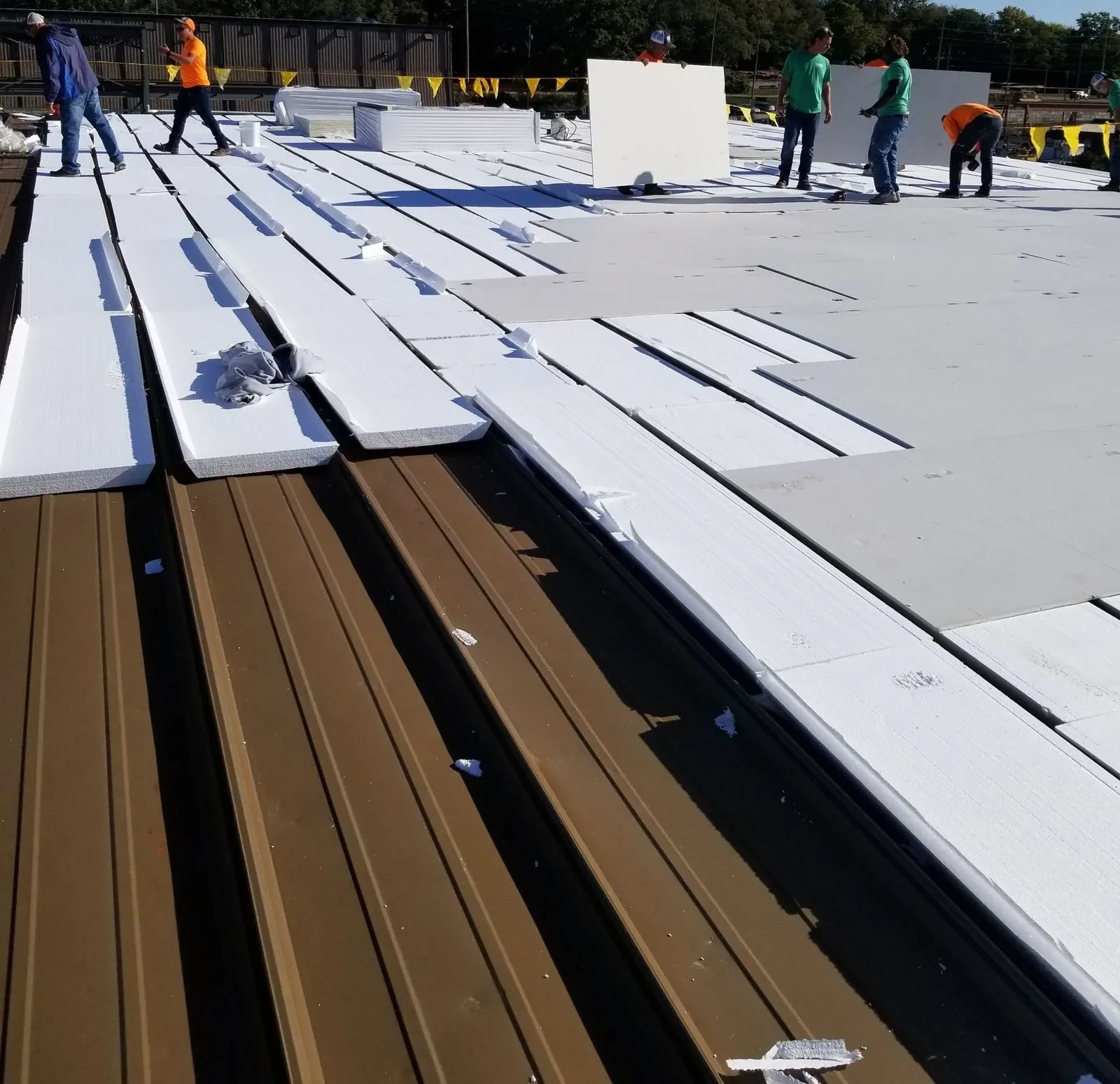
An occupied building reroofing plan states the hours, access route and protection for each area, and the roof is dried in daily. For buildings with security screening, we agree on credentials and escort rules before the crew arrives.

Weekend and after-hours work is an option when public hours are fixed. The plan states the hours, the extra cost and the noise rules the neighborhood expects, and the building contact signs off before the crew arrives.

Funding sources shape the sequence as well. A roof paid from a capital budget follows one approval path, while an emergency repair paid from maintenance funds follows another, and a scope that mixes the two slows both. We label each line of the estimate as capital, repair or emergency so the finance office can route it without rewriting the document. Where a grant or a bond requires a condition report, the same inspection record serves that purpose, and the dates on the photographs show the report was prepared from the roof as it stood.

Government Building Roofing

Storms and the Emergency Record

Johnson City recorded hail up to half a foot across on May 9, 2024; the same storm then reached San Marcos. For a public owner, that kind of event creates a record need: dated photographs of the roof, a scan for wet insulation and a list of damage tied to the storm date.

We separate storm damage from age so the claim and the declaration paperwork match. Hail scoping under hail damage roof repair lists each affected section by building. San Marcos CISD delayed school so staff could inspect buildings for damage, and a public roof program can follow the same habit: inspect before reoccupying.

For the courthouse district and other buildings around the San Marcos Public Square, a post-storm walk starts at street level with binoculars and ends on the roof when safe. Roofs on historic buildings show storm damage differently from low-slope commercial roofs, and a trained eye catches lifted flashing, displaced units and loose trim early.

Government Building Roofing

Budget Cycle and Code

For a San Marcos address, the 2021 International Building Code applies, together with the matching energy code, since April 1, 2023. Heat and about 36.55 inches of yearly rain drive the wear.

A roof capital planning report sets the replacement queue by fiscal year, with a price and a reason for each building. The same layout supports school roofing and senior living roofing when a public owner holds both.

Commercial Roofing Questions

What makes a roof scope procurement-ready?

Quantities, units, prices, alternates and written assumptions. A reviewer should be able to compare two bids line by line. We add a submittal list and a schedule.

How do you handle a historic public building?

We read the layers by core, check the deck and photograph everything first. The scope identifies original material and any approvals that apply before work.

Can roof work happen while the building is open?

Yes. We protect public entrances, cover walkways and dry in daily. A department contact can stop the crew, and the plan covers security and escort rules.

What records help after a storm?

Dated photographs, a moisture scan, a damage list tied to the storm date and quantities. They support insurance and any declaration paperwork.

How is a replacement queue funded over years?

Each roof gets a price, a reason and a year. The queue spreads cost across budget cycles, and repairs hold watch roofs in service until their turn.

Send the building list

Send the building list and any past roof reports. We will sort the roofs into replace, repair and watch groups before the next budget year.

Request a Roof Assessment

Related Roofing Work

ServicesRoof SystemsIndustriesProperty TypesService AreasRoof Damage RepairCapabilitiesManufacturersAboutContactRequest a Roof Assessment555-555-5555
Call555-555-5555