555-555-5555

Cool Roof Installation

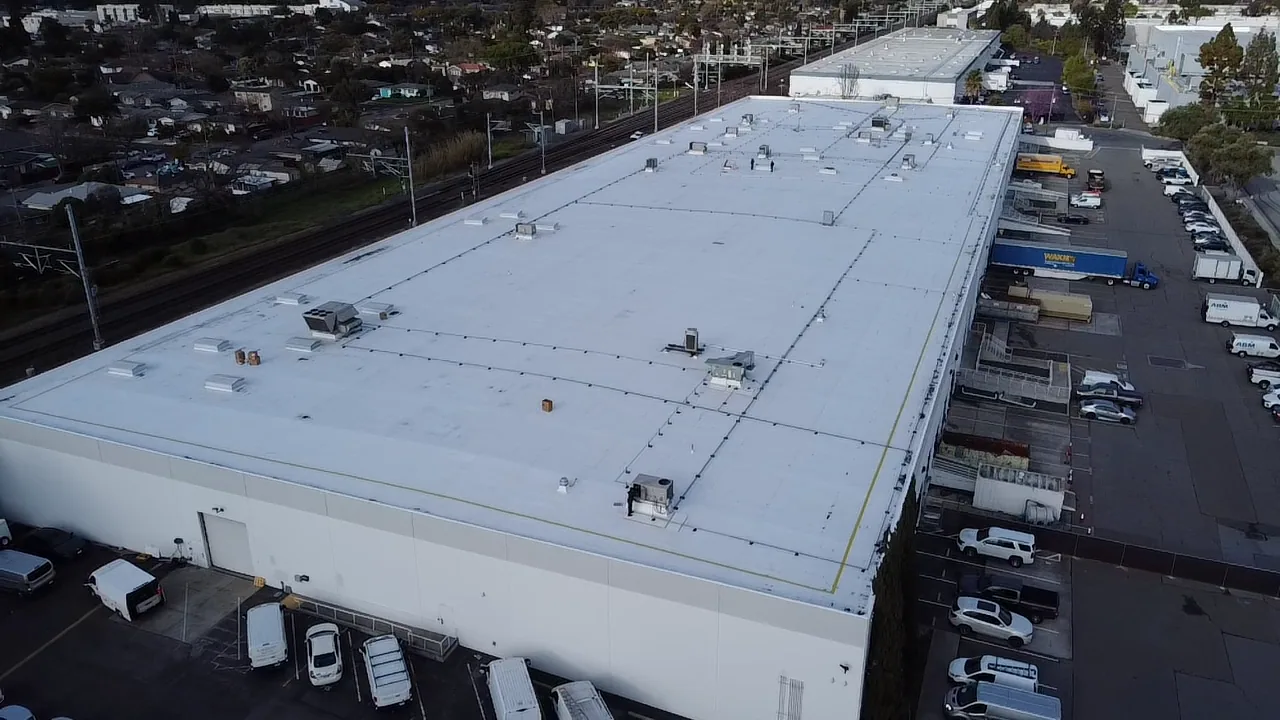
Large, flat buildings take the sun on a very big surface, and that is the building class where a cool roof earns its keep. A fulfillment shell, a big-box store or a business park building spreads one wide membrane under a Central Texas summer sky, and a dark one absorbs heat all afternoon. What a reflective roof does for a budget year is modest and real: it lowers the roof surface temperature, slows the daily stretch in the membrane and trims the cooling load on the units under it. It is not a miracle and it is not a line item to specify without thought. We install cool roofs where the building, the use and the existing roof make them pay.
What heat does to a roof

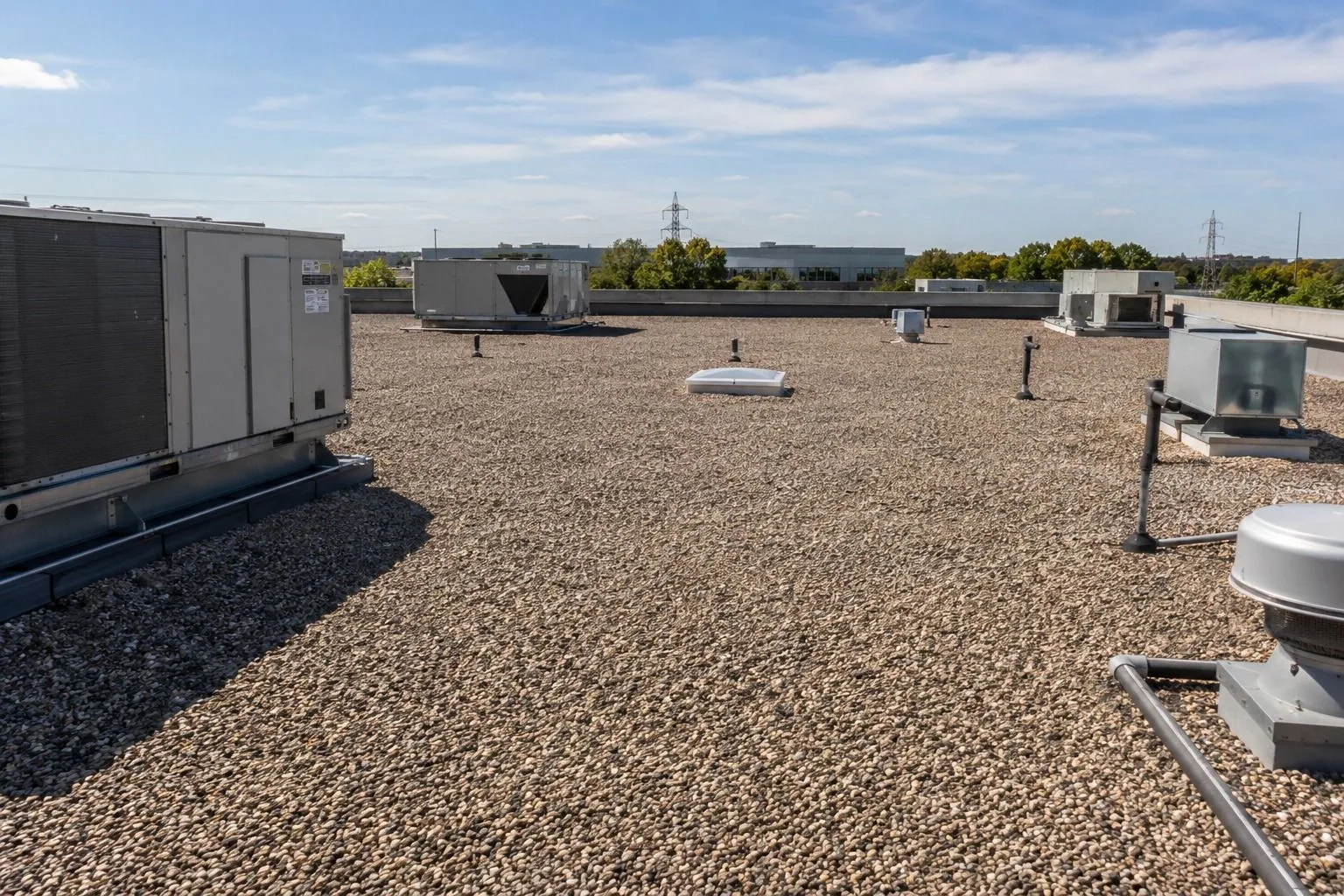
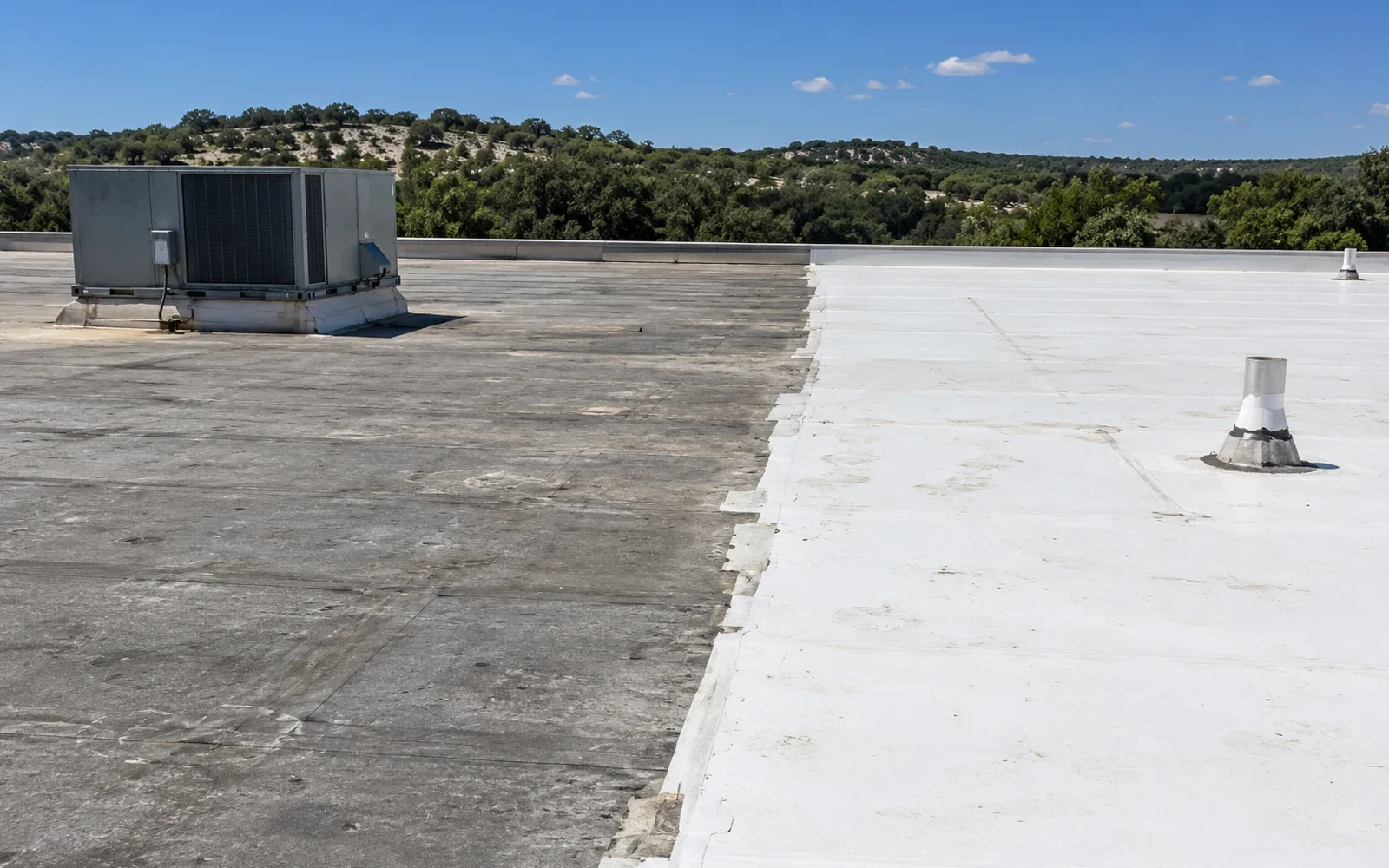
A dark membrane in direct summer sun can run far hotter than the air above it. That heat drives thermal movement: the sheet expands by day and contracts at night, and each cycle works the seams, the flashings and the fasteners. Heat also accelerates the aging of the membrane itself. Plasticizers leave the sheet, asphalt oxidizes and coatings chalk. The nearest long-running NWS station, Austin Camp Mabry, gives a 1991-2020 normal August average high of 97.8 F, a regional indicator and not a San Marcos measurement, and the roof surface sits well above that number. A reflective surface sends much of the sunlight back before it becomes heat, and the membrane sees a smaller swing.

Edge and detail temperatures matter too. Flashings at dark walls and metal curbs reach high temperatures, and sealant at those joints ages quickly. A reflective field lowers the heat the details see only a little, so we choose detail materials for heat resistance as well. A cool roof is a system, and its life depends on the weakest joint.

Cool Roof Installation

The ways to cool a roof

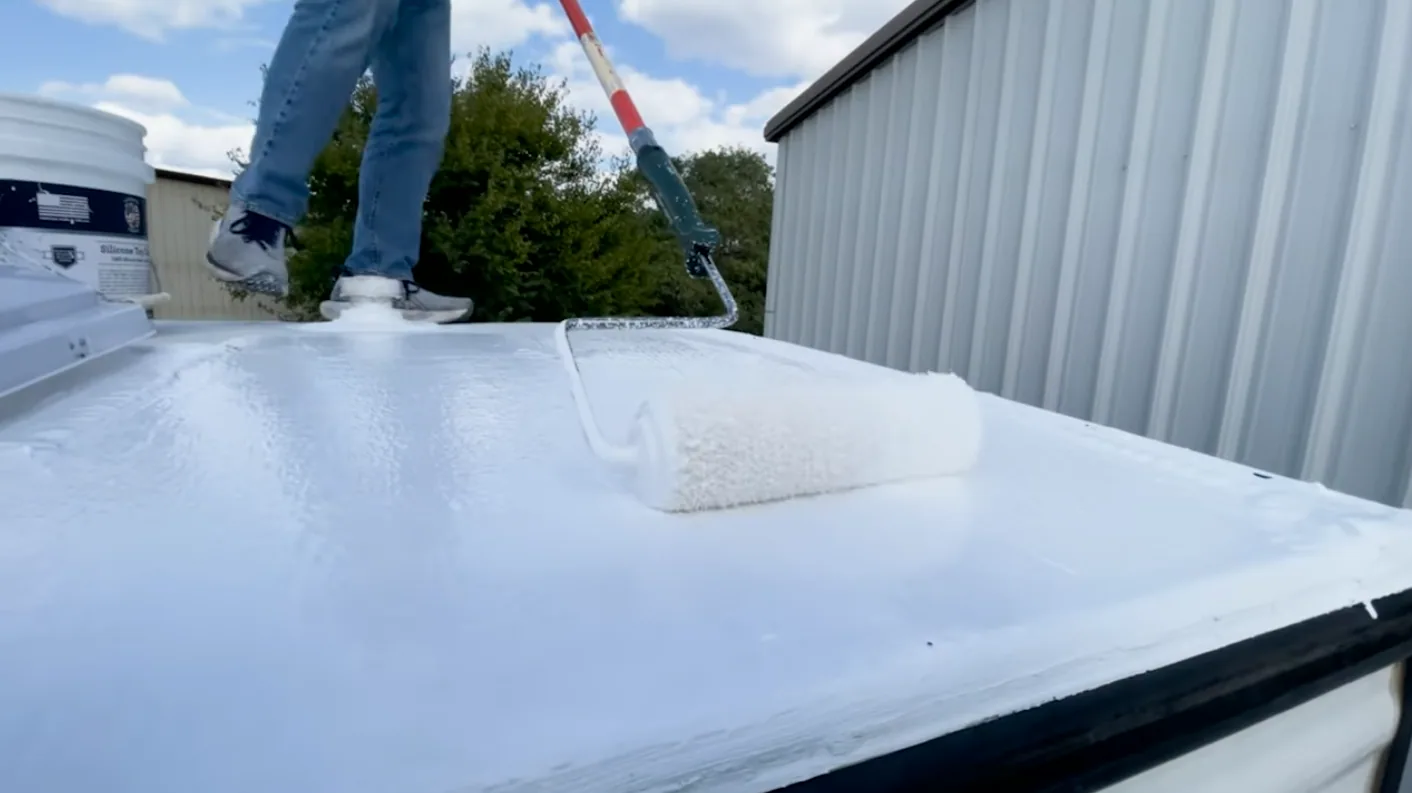
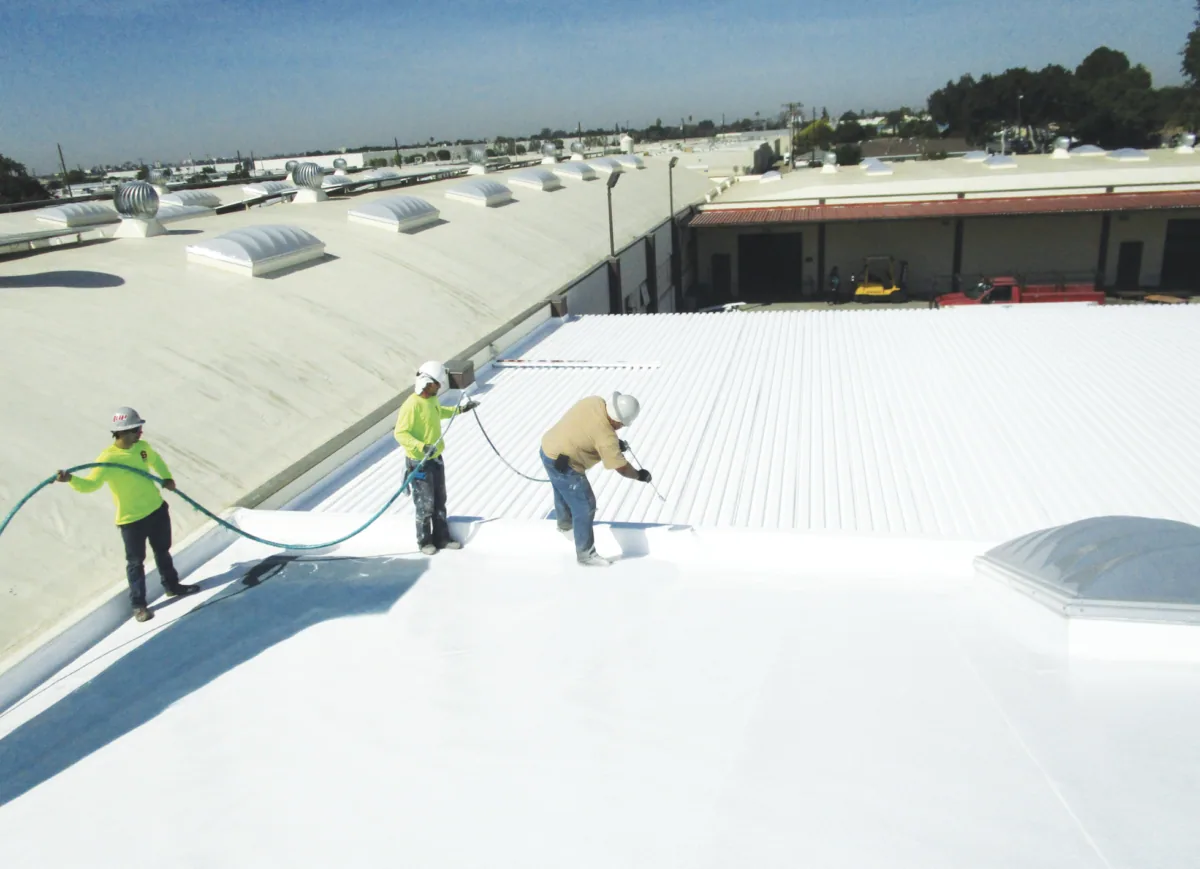
There are three paths. A white or light reflective single-ply membrane, such as TPO or PVC, is installed in a replacement or recover and is reflective from day one. A reflective coating goes over a sound existing roof and changes the surface without a tear-off. Silicone roof coatings and acrylics are the common choices. Metal roofs can be factory-finished in reflective colors or coated in the field. Each path has its own cost, its own warranty terms and its own response to dirt. We compare them against the roof in front of us, and we show the owner the choices before the scope is written.

What a cool roof does and does not do

A cool roof lowers surface temperature and reduces heat gain through the roof. It does not set an energy bill figure in advance, because savings depend on the insulation, the climate, the equipment efficiency and how the building is used. A warehouse with little cooling gets less from it than an office or a retail store with full air conditioning. Reflectivity also fades. Dirt, mildew and weathering lower the initial value over time, and cleaning restores part of it. We explain this up front. The City of San Marcos adopted the 2021 International Energy Conservation Code under Ordinance 2023-09, in effect as of April 1, 2023, and any reroof should be checked against the energy provisions that apply to the building.

A second claim deserves care: that a cool roof extends roof life. Lower surface temperatures do reduce thermal stress, and that tends to help seams and flashings. It does not fix poor drainage, wet insulation or bad details. We treat it as one factor among several and do not assign a number of added years.

Where it fits best

The strongest cases are low-slope roofs with high cooling loads and a membrane that needs replacement or recoating anyway. Large retail buildings with full air conditioning fit that profile. The San Marcos outlet malls east of I-35 draw about 14 million visitors a year, and retail buildings that take that traffic run their air conditioning through the summer under roofs that face the same sun. Distribution buildings with refrigerated or climate-controlled zones also benefit. Amazon operates an 855,000 square foot fulfillment center in San Marcos, and a building of that footprint is worth a cooling-zone question before any membrane is chosen. The Fortuna Road and Yarrington Road industrial area holds an Amazon facility of over one million square feet on 70 acres, and whatever the operator, a roof over conditioned space gains more from reflectivity than one over bare storage. For a distribution center, the choice often follows the cooling zones.

The weakest cases are small roofs, shaded roofs, roofs over unconditioned storage and roofs that will soon carry a full solar array. In those, the money is better spent on drainage, insulation or detail repair. We say so when the numbers point that way.

Cool Roof Installation

How the installation goes

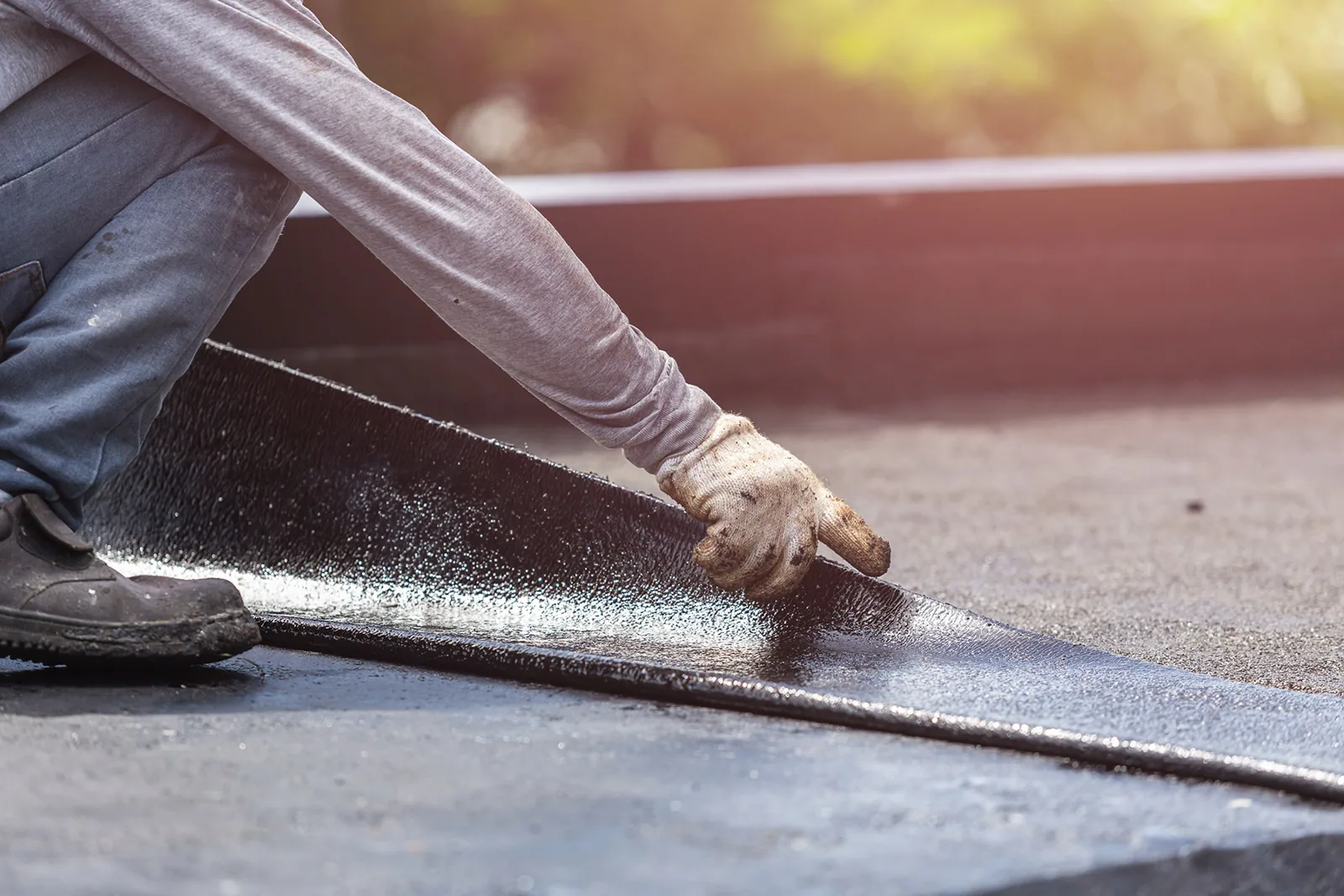
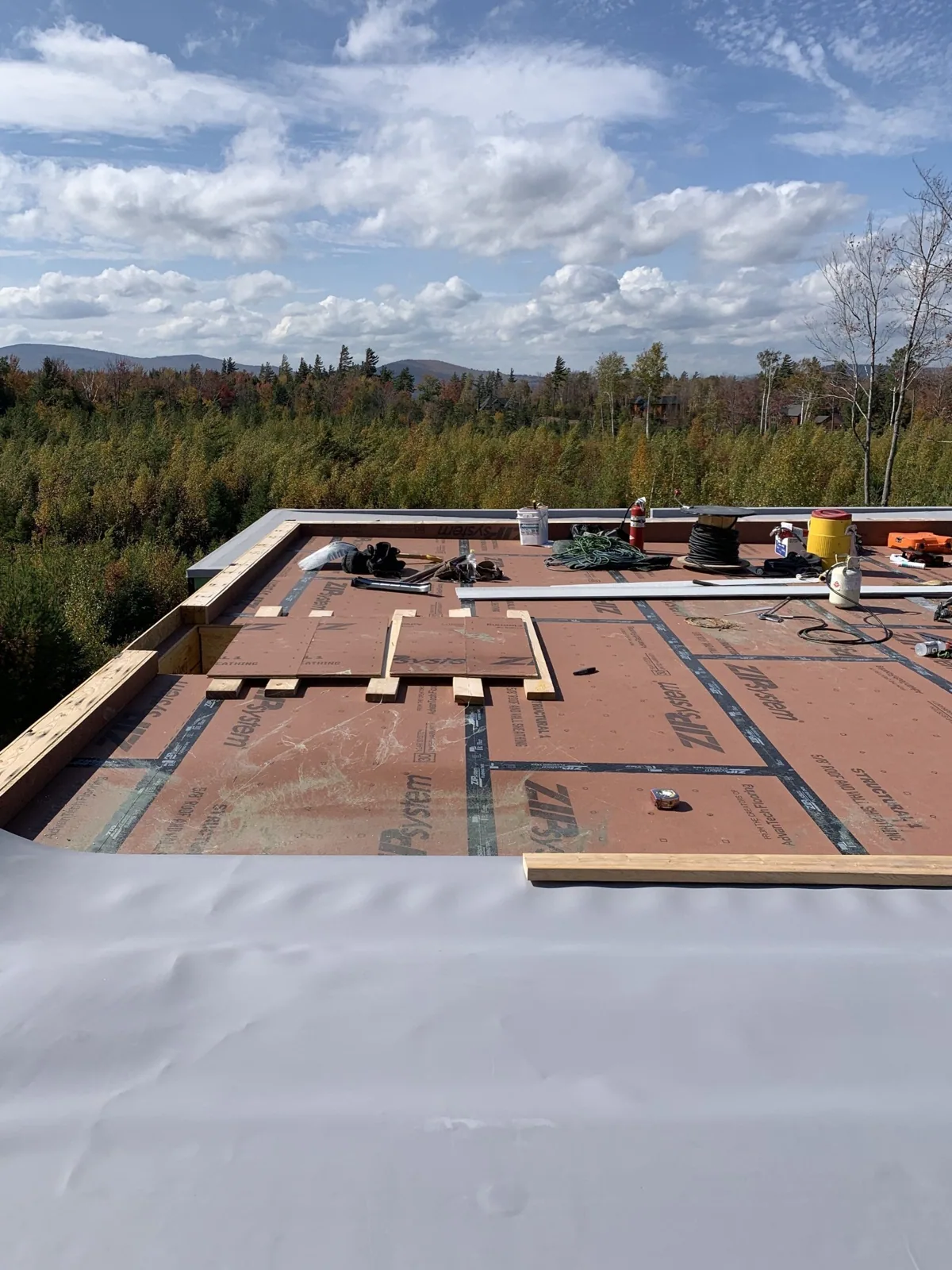
For a membrane, we remove or recover the existing roof, install insulation and cover board, then fully adhere or mechanically attach the white sheet and weld the seams. For a coating, we test for moisture, repair splits, clean and prime, then apply the coating in measured coats. Details are the same in both cases: flashings at walls and curbs, edge metal, drains and penetrations get attention first. A roof coating and restoration scope and a membrane replacement each include an inspection of the insulation, since heat gain through the roof depends on it. Where insulation is thin or wet, the insulation and cover board work comes before the surface.

Weather windows are short for coatings. Silicone and acrylic both need a dry surface, and a storm cell during cure ruins a day's work. For membranes, rain stops installation and open edges are closed in each evening. We schedule the work for the stretches when forecasts are stable, and we phase large roofs so no section is left open to weather.

Cool Roof Installation

The budget-year decision

A cool surface should be justified by the building, not by a brochure. We state the cost drivers: area, prep, substrate condition, membrane or coating type, flashing detail and the number of coats or the thickness of the sheet. We also state the maintenance: periodic washing to keep reflectivity up and a recoat date for coatings. Owners planning solar can coordinate with the solar-ready roofing layout, since arrays shade the roof they sit over and change the benefit. If the existing roof is near its end, a reflective membrane in the replacement costs little more than a dark one, and it is often the easy choice. If the roof is mid-life, a coating may be the better route. The director gets both numbers on one page.

Commercial Roofing Questions

Will a cool roof lower my cooling bill?

Often, but the amount depends on the insulation, the equipment and the building use. Conditioned spaces with large roof areas see more benefit than lightly cooled ones. We do not promise a figure.

Does a cool roof lose reflectivity over time?

Yes. Dirt, mildew and weathering lower it. Washing restores part of the original value, and the maintenance plan includes a cleaning schedule.

Can I put a reflective coating on any roof?

Only on a roof that is dry, attached and sound enough to coat. We test for moisture and adhesion first. A wet or failing roof needs repair or replacement.

Is a white membrane harder to maintain?

It shows dirt more easily, so cleaning matters more. Welded seams and a smooth surface make washing straightforward, and the plan sets a schedule.

How does a cool roof affect winter?

It gives up a little winter heat gain, but winters here are generally mild to cool, so the summer benefit usually outweighs it.

Send the Roof List and Cooling Details

Send the building list, the roof ages and a note on which spaces are air conditioned, and we will sort the roofs into cool-now, cool-at-replacement and not-worth-it groups before the next budget year. Use the contact form.

Request a Roof Assessment

Related Roofing Work

ServicesRoof SystemsIndustriesProperty TypesService AreasRoof Damage RepairCapabilitiesManufacturersAboutContactRequest a Roof Assessment555-555-5555
Call555-555-5555