555-555-5555

Cold Storage Roofing

A cold storage building is a roof with a refrigerator under it, and the one thing that class does to a roof is pull moisture toward it. Warm, humid Central Texas air pushes water vapor through any gap into the cold interior, and where that vapor meets a cold surface it condenses, then freezes. Over time the insulation fills with ice, the deck rusts and a roof that never leaked from the top fails from the bottom. In San Marcos, TX, where I-35 carries freight between Austin and San Antonio and more than 250 supply-chain businesses operate across Hays and Caldwell counties, any owner of a temperature-controlled building has this problem to manage.

For a facility director, the question is whether the roof's vapor control still works and how much of the insulation is still dry. The answer sets the budget year, because wet insulation in a freezer roof cannot be repaired in place.
The building class

Cold storage buildings include freezers, coolers, produce rooms, food-distribution warehouses and ultra-low-temperature rooms. Their roofs share traits: thick insulation, a vapor retarder placed to keep moist air out of the assembly, and few penetrations. Each penetration, such as a refrigeration line, a vent or a pipe, is a potential path for vapor.

Which buildings along the corridor run cold is the owner's information. When one does, we ask for the setpoint, the age of the refrigeration system and any history of ice or drips.

Related classes share parts of the problem. A dry warehouse has the same wide field without the vapor load, and a grocery store carries cold cases and rooftop refrigeration in a smaller footprint. The vapor logic is the same in all of them: keep moist air from reaching cold surfaces, and keep the insulation dry.

Cold Storage Roofing

What wears first

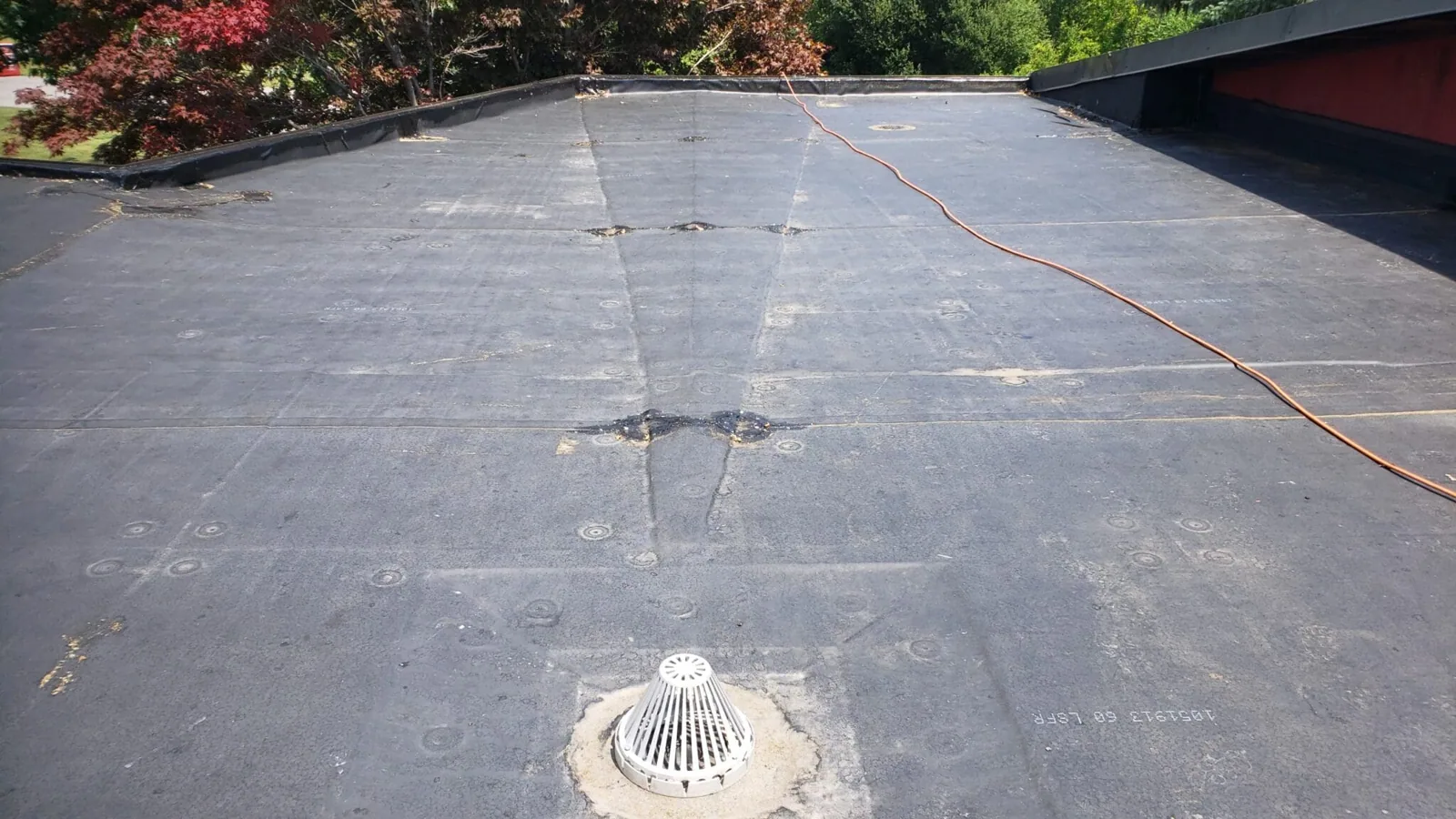
The first wear in a cold roof is at the vapor path. Cracked sealant around a penetration, a torn vapor retarder at a wall joint or a gap at a deck edge lets humid air in. Frost then appears on the underside, and during defrost cycles it melts and drips. Condensation drips can look like roof leaks, so we scan before we blame the membrane.

Heat is the other stressor. August highs near 98 F at Austin Camp Mabry mark the summer load, and a roof over a freezer sees a very large temperature difference between its top and bottom surfaces, and that difference works at every joint. We examine roof edges, curbs and pipe boots where thermal stress concentrates.

Slab and structure are part of the story too. Ice that forms in an insulated roof deck can corrode steel and deform wood, and moisture in a wall assembly can follow the vapor path down to the floor. A building with persistent ice on the interior ceiling or frost at wall tops is telling us the vapor control has failed somewhere. We document the pattern from inside and out, with photographs dated and tied to the roof plan.

Finding wet insulation

A moisture scan is the main tool. Infrared and capacitance surveys can show cold, wet zones in the insulation, but on a cold roof the temperature pattern is different from an ordinary roof, so results need careful reading. Cores confirm. A core shows whether the insulation is dry, damp or iced, and it shows the condition of the vapor retarder.

If the insulation is wet, repair is limited. Wet foam or fibrous insulation under a freezer roof must be removed and replaced, and the vapor retarder rebuilt, because simply patching the top will not fix the cause. We therefore set the scope after the readings, not before, and we write out the cost drivers: area of wet insulation, deck condition, access and the impact on temperature-controlled operations.

Timing helps the scan. Readings taken in early morning, after a clear night, show wet zones more distinctly than readings in midday sun. We choose conditions that reveal the pattern, record them and repeat the scan after repairs, so the owner can see that the area is dry. On cold roofs, a repeat scan after a defrost cycle is often the most useful check of all.

Timing around defrost cycles can matter as much as the weather. Refrigeration plants cycle through defrost on schedules the operator controls, and a scan taken just after one shows moisture patterns that a scan taken mid-cycle misses. We ask the engineering team for the cycle times and book the scan to match, then repeat it the same way next year so the two maps compare cleanly.

Hail and storm checks

Regional storms add risk. The weather service put the largest hail of the May 9, 2024 storm at six inches across, in Johnson City, before the storm hit San Marcos. A hail bruise on a cold roof is serious because a small crack lets humid air reach cold insulation. After a storm we scan for moisture, check rooftop refrigeration equipment for damage and inspect every penetration.

We also look for wind damage to condenser units and exhaust. A bent coil or loosened mount affects the refrigeration system as well as the roof, so our report names both and routes the equipment issue to the right trade.

Cold Storage Roofing

Repair, restore or replace

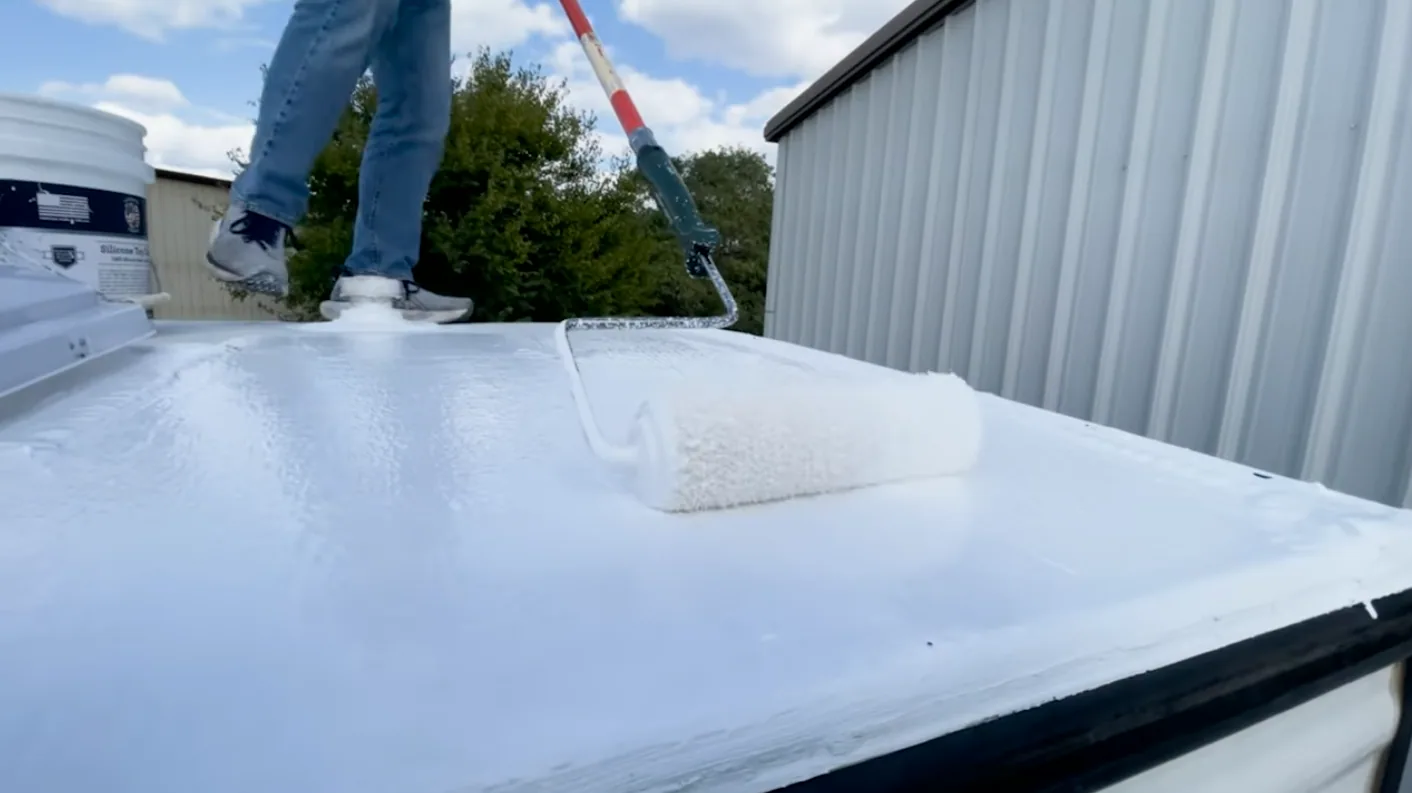
Repair is practical when damage is local and the insulation is dry: reseal penetrations, repair the membrane and restore the vapor path. Restoration with a reflective coating, such as acrylic, can lower heat load on a roof that is otherwise sound. Spray foam is another common choice on cold roofs, since a continuous foam layer reduces joints where vapor can enter.

Replacement is the answer when insulation is wet across wide areas or the vapor retarder has failed. The work is complex: the roof is opened in sections, the building's refrigeration load is protected, and each section is closed in before the next begins. Our wider work on distribution center roofing follows the same sectional method.

Scheduling a cold-roof project requires planning with the refrigeration contractor. Rooftop condensers and piping must be disconnected or supported, product must be protected and the building envelope must be closed in at the end of every shift. We build the sequence with the owner's operations staff, and the written scope lists each shutdown, each protected zone and each inspection point.

Cold Storage Roofing

The budget-year decision

The result is a replacement queue ranked by remaining service, with notes on vapor control and equipment. Wet insulation, failed vapor retarders and recurring ice move a roof up; dry readings, tight penetrations and stable temperatures hold it down. Costs depend on insulation type and thickness, deck condition, access and the cost of protecting product. For buildings in the Kyle logistics corridor and elsewhere, we price after the readings and schedule around operations.

Commercial Roofing Questions

Why does a freezer roof leak from the inside?

Warm humid air enters through gaps, condenses on cold surfaces and freezes. Defrost cycles then melt it into drips.

Can wet insulation in a cold roof be dried in place?

Rarely. Wet insulation is usually removed and replaced, and the vapor retarder is rebuilt.

How do I tell condensation from a roof leak?

Timing, weather and location help. Scans and cores separate the two before any repair.

Does roof work affect product storage?

It can. Work is staged by section, with the refrigeration load protected and openings closed daily.

What penetrations matter most?

Refrigeration lines, vents and pipe boots. Each is a path for vapor if sealing fails.

Send the building list

Send the building list and any past reports, and we will sort the roofs into replace, repair and watch groups before your next budget year.

Request a Roof Assessment

Related Roofing Work

ServicesRoof SystemsIndustriesProperty TypesService AreasRoof Damage RepairCapabilitiesManufacturersAboutContactRequest a Roof Assessment555-555-5555
Call555-555-5555