555-555-5555

Grocery Store Roofing

A grocery store puts its machinery on the roof, and the one thing that class does to a roof is weigh on it: refrigeration condensers, rack equipment, make-up air units, kitchen exhaust and long refrigerant lines all stand on a membrane that was laid to shed rain. A retail operator in San Marcos, TX has to decide how much more of that load the roof can carry and whether the curbs, supports and flashing beneath it still hold.

Food retail also cannot close for a roof. Coolers, freezers and produce cases run around the clock, so water, dust and odor on the inside carry a cost beyond the repair itself. The plan starts with what must be protected, then moves to the roof.

Fire and food-safety rules add a layer. Hot work on a roof above a food store needs a fire watch, a clear zone around vents and a plan for covering intakes, and a health inspector can ask what was done near produce and prep areas. The written scope lists those controls so the store manager has an answer ready.
Machinery on a Soft Surface

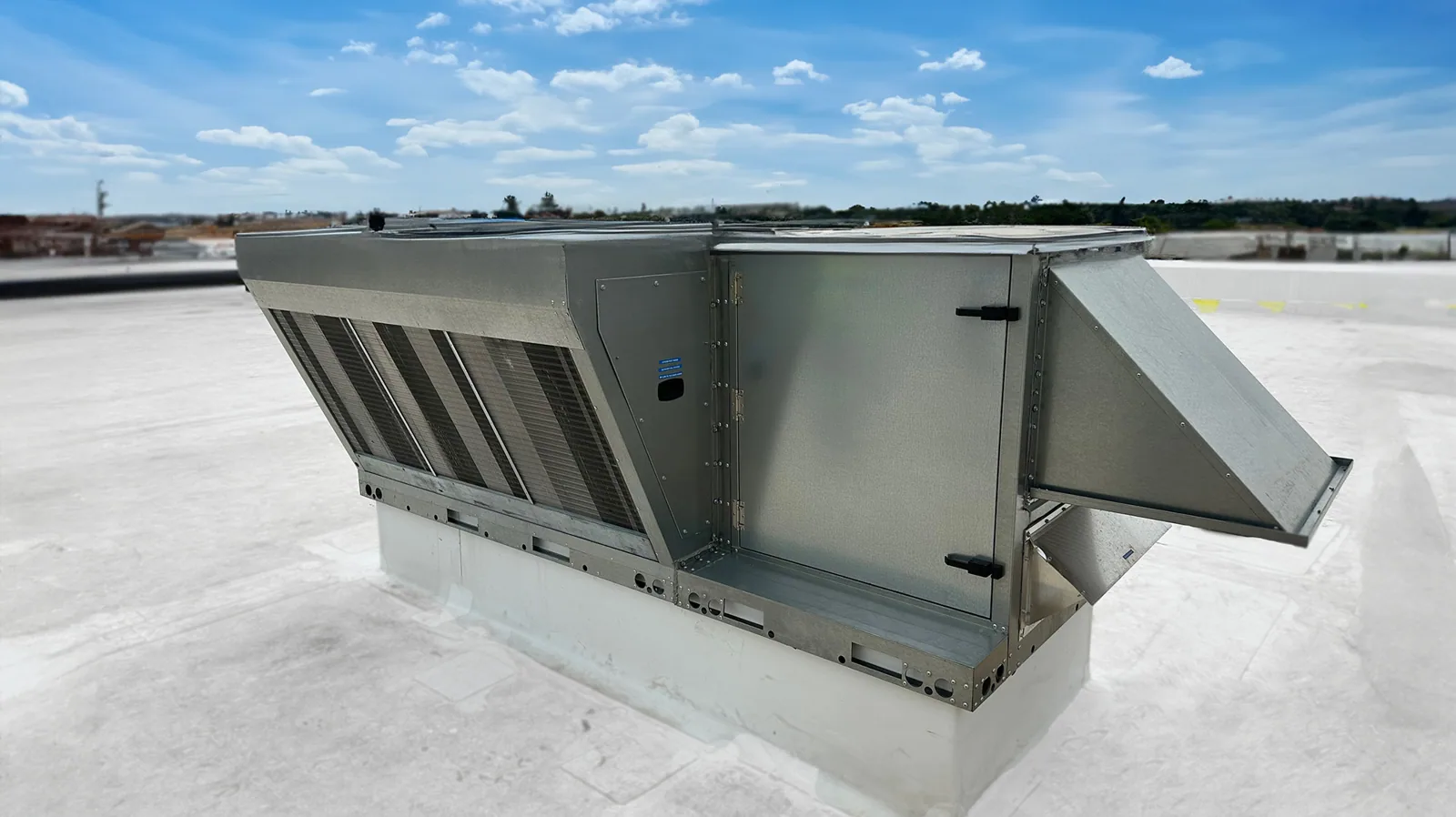
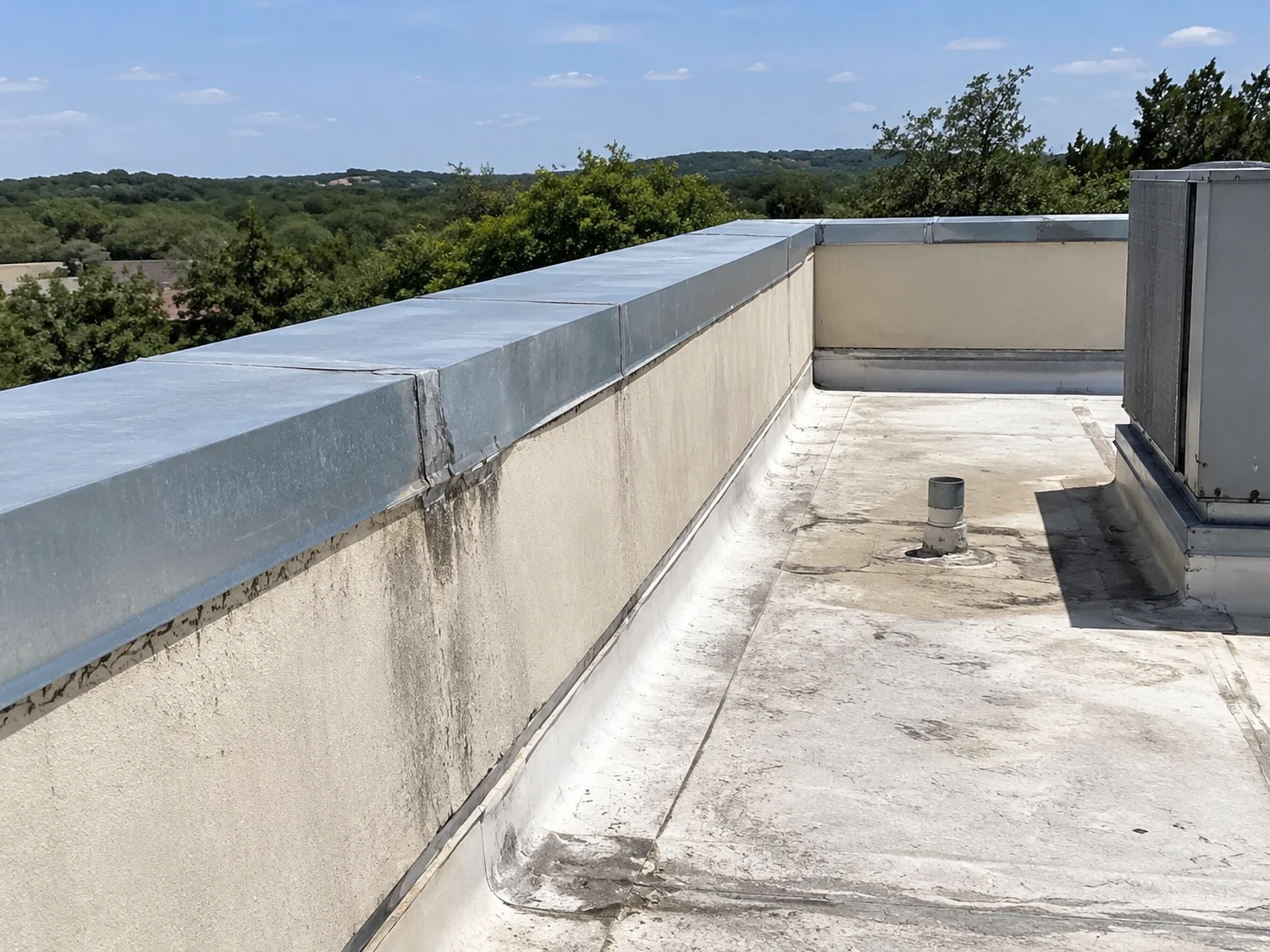
Condensers and rack equipment are heavy, and they vibrate. Each stands on curbs or rails fixed to the structure, with flashing around every leg and line. We walk the equipment field and check rails, supports and the membrane under them. A support that has settled into the roof leaves a depression that holds water, and a rail that moves wears through flashing.

Service routes matter as much as the units. Refrigeration technicians cross the roof often, so walk pads protect the path and get replaced before the membrane under them wears through. When refrigerant-line boots fail or a curb sits low, a curb and support repair fixes them, and every change is logged by unit and date.

Kitchen exhaust brings grease. A store with a deli or bakery sends greasy air up through fans and curbs, and the film that settles on the membrane softens some single-ply sheets and attracts debris. Swelling and blisters downwind of each fan get noted, grease containment gets checked and a protective detail is recommended where the roof shows damage. The report ranks these spots with the equipment items so one visit covers both.

Grocery Store Roofing

Condensate, Vapor and Cold Rooms

Cold rooms create a vapor-drive problem. Cold interior air under a warm roof deck can pull moisture through gaps in the air barrier, and the vapor condenses inside the assembly. The result is wet insulation with no breach in the membrane, and a stain on a ceiling that looks like a leak but is not one.

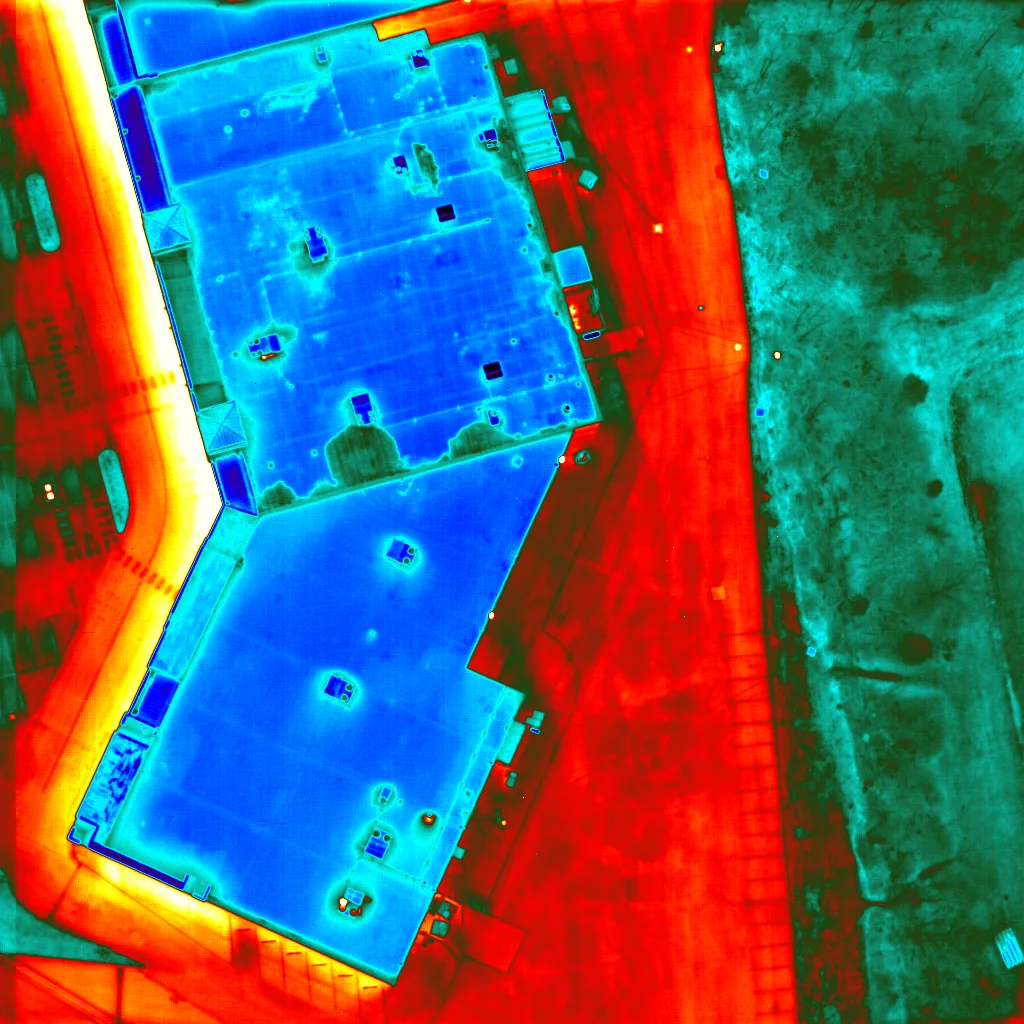
We separate the two by pattern and by test. A core sample shows whether the water sits at the top or the bottom of the insulation, and an infrared moisture survey maps the wet zones across the store. Condensate lines that discharge onto the roof surface are a smaller version of the same issue: they keep a patch of membrane wet and wear it down. We route them to a drain or add a splash pad.

Core samples settle the question quickly. We cut a small round sample, read each layer, test the insulation for moisture and patch the hole the same day. The log lists each core by location so a later survey can compare. If a vapor retarder is missing or damaged, replacement scope includes a new one, and a coating or recover over wet insulation is ruled out.

Work That Respects the Stock

Roof work above a food store is planned around the stock first. We ask where the coolers and freezers sit, which aisles hold produce and bakery and where deliveries arrive. Open roof areas are dried in each shift, dust and odor from adhesives and hot work are kept away from air intakes and the plan names a person at the store who can stop work.

Night work is a common choice for the loudest tasks, with an occupied building reroofing plan stating the hours, the access route and the lighting. Customer entries stay protected during the day, and debris nets go over any path where material moves. A magnet sweep of the lot closes each shift.

Timing matters in the weather as well. Adhesives and sealants need dry surfaces and mild temperatures, so night work in a wet season can stall. We keep a backup week on the calendar and a temporary dry-in ready for any section left open, so the store is protected whatever the forecast does.

Heat, Hail and Humidity

Summers in San Marcos are hot and humid, annual rain runs about 36.55 inches and snow is effectively absent. Heat is the standing load: Austin's Camp Mabry reads close to 98 F for an August normal. Roofs carrying refrigeration work harder in that heat, since condensers reject more heat to the air above the membrane.

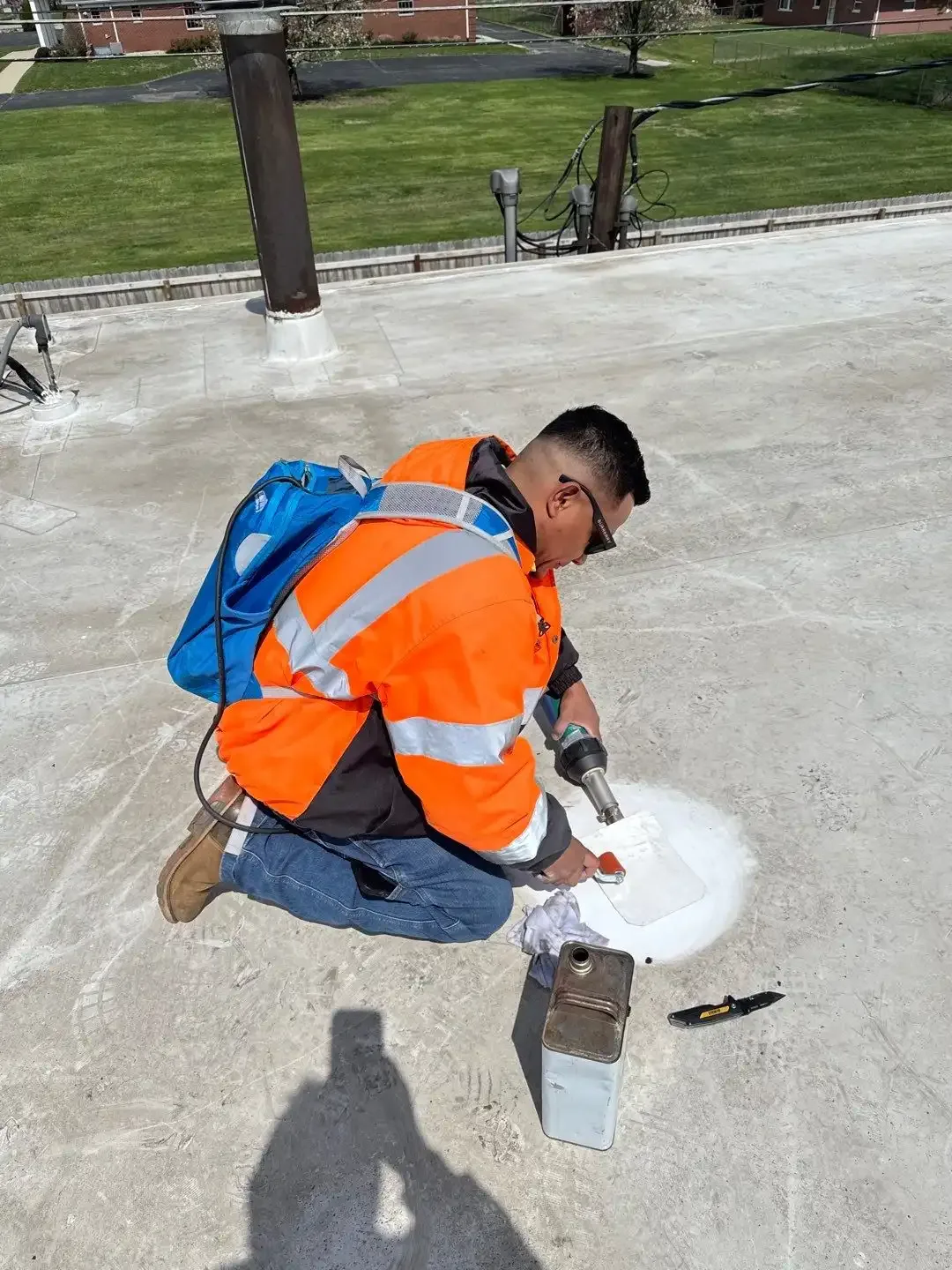
Reports of hail up to six inches across came out of Johnson City on May 9, 2024, ahead of the storm's passage through San Marcos. After a storm like it, a field review records bruised areas and tests wet ones. A hail damage roof repair scope lists each affected area with a location and a photograph.

Wind and debris get a check after storms too. Trees toppled across northwest San Marcos on the evening of the May storm, and loose branches and trash can puncture a membrane in high wind. A membrane puncture repair patches each hole and records its size and location.

Grocery Store Roofing

Stores and the Supply Chain Behind Them

The H-E-B distribution center, with about 750 jobs, is one of San Marcos's larger employers, and Hays and Caldwell counties together host over 250 supply-chain businesses. Those facilities sit upstream of the store. A grocery operator with both retail and warehouse space can keep one record format for each, using distribution center roofing for the back end and the same walk for the front.

The retail side has its own neighbors along I-35, including the I-35 outlet and retail corridor, and the same ranking approach applies: replace, repair or watch, with a price beside each store.

Grocery Store Roofing

The Budget-Year Decision

A project inside San Marcos is reviewed against the 2021 International Building Code and its energy counterpart. Operators see the cost of the roof and the cost of the rules in separate rows.

A roof capital planning report puts each store's replacement in a budget year, and a shopping center roofing record covers any center with a grocery tenant that the operator owns.

Commercial Roofing Questions

Why does a ceiling stain in a cooler not always mean a leak?

Cold rooms pull moisture through gaps and condense it inside the roof. A core shows where the water sits, and the stain pattern shows whether it follows rain or temperature. The fix depends on which one it is.

Can roof work happen without disturbing food storage?

Yes, with planning. We dry in each shift, keep dust and odor away from air intakes and agree on stock protection before work starts. Loud tasks move to night hours.

What do you check around refrigeration equipment?

Rails, supports, flashing, refrigerant line boots and the membrane beneath them. We also check condensate lines and walk pads. Each item is logged by unit and date.

Does heat shorten a grocery roof's life?

It can, since condensers add heat above the membrane and summer highs in the region run near 98 F. Sealants dry and seams move. A walk each year catches early wear.

How do you sort several stores?

Every roof lands in replace, repair or watch with a price and a reason, and that list becomes the replacement queue by budget year.

Send the store list

Send the building list and any past roof reports. We will sort the stores into replace, repair and watch groups before the next budget year.

Request a Roof Assessment

Related Roofing Work

ServicesRoof SystemsIndustriesProperty TypesService AreasRoof Damage RepairCapabilitiesManufacturersAboutContactRequest a Roof Assessment555-555-5555
Call555-555-5555