555-555-5555

Commercial Roof Repair

A planned repair is a budget tool before it is a roofing task. Every building in a portfolio carries some roof area that is spent, some that has years left and some that is simply broken in a way that a few hours of skilled work can correct. Planned repair in San Marcos, TX is how a facility director holds the middle group steady while the spent areas wait their turn in the replacement queue. The skill is in drawing the boundary: what to repair, what to leave alone and what to stop repairing altogether.

We scope repair by building class and by remaining service, because the same split seam means one thing on a three-year-old membrane and something else on one near the end of its life.

That record follows the building from year to year, so a repair made this spring informs the capital conversation next budget cycle instead of vanishing into an invoice folder.
Repair Starts With the Roof Inventory

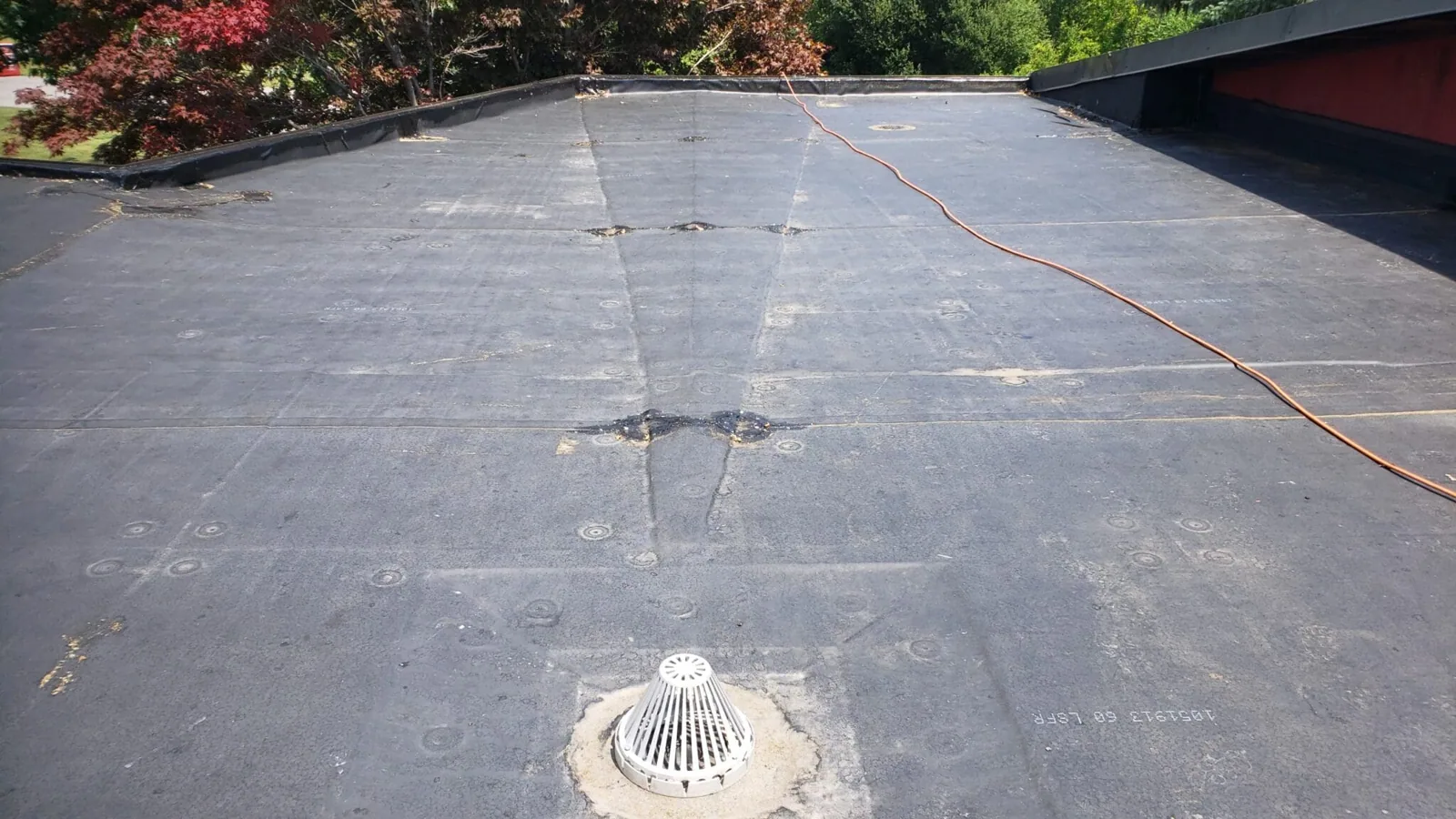
Before any patch is priced we walk the roof and log what is there: membrane type and age, seam condition, flashing heights, drain bowls, scupper lines, curbs and penetrations, and the evidence of earlier repairs. Overlapping patches, mismatched materials and crowds of sealant at one detail all show where the roof has been failing. That log lets us sort deficiencies into those worth repairing and those that signal the field is wearing out.

For a director who manages several properties along the I-35 corridor, the log also becomes a comparison tool. When one building has twelve open seams and another has two, the numbers support the decision about which roof gets the next dollar.

Commercial Roof Repair

Membrane and Seam Work

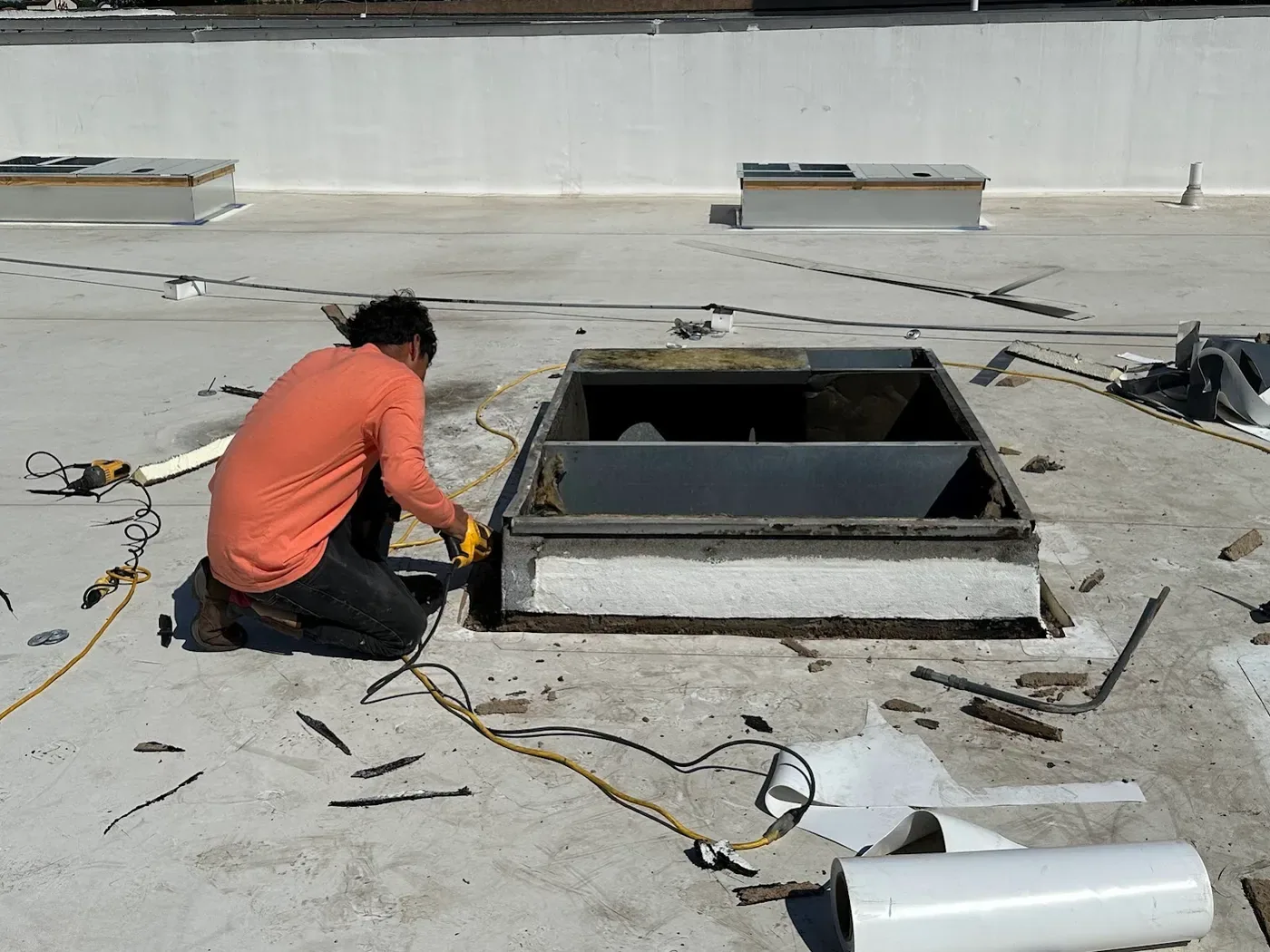
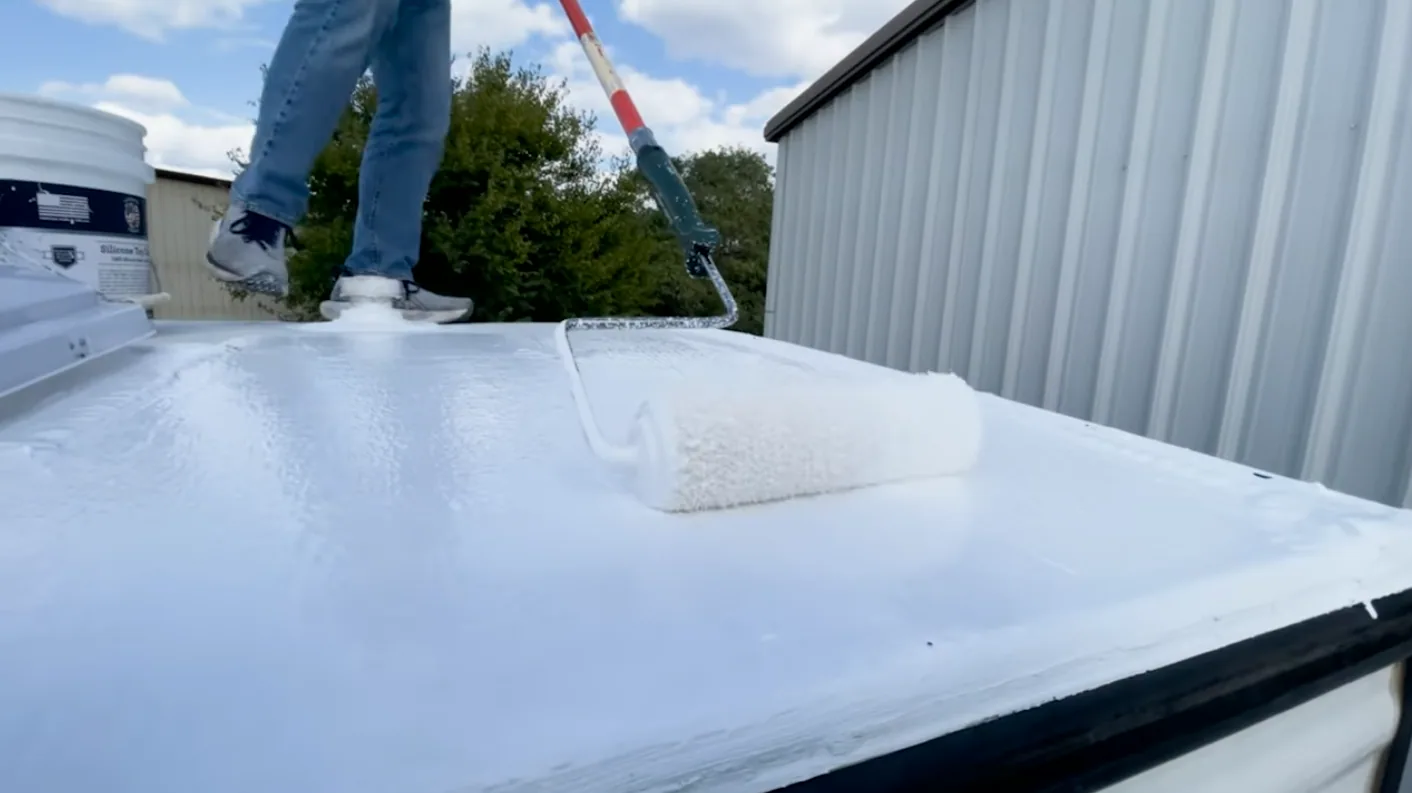
Membrane repairs depend on the material. Thermoplastic membranes such as TPO and PVC are repaired with heat-welded patches, which only bond when the surface is clean and the original sheet has not aged too far. EPDM uses primers and tapes or liquid-applied systems, and modified bitumen is repaired with compatible cap sheet patches or torch or cold-applied details, depending on the occupancy and the code. Each material has a threshold below which patching is no longer sound, usually when the sheet will not accept a weld or has lost flexibility.

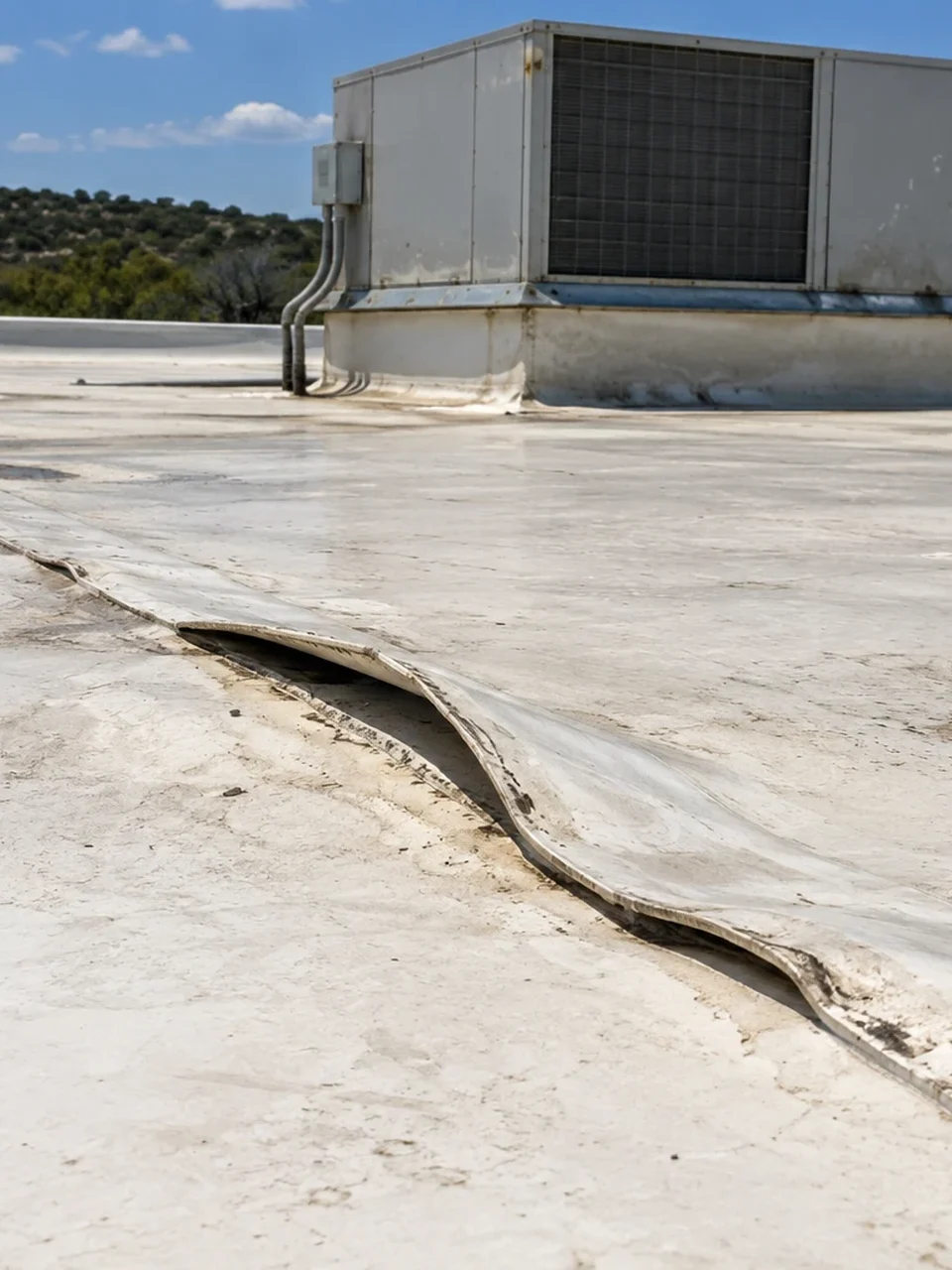
Open seams get special attention. A seam that has opened once often opens again beside the repair if the membrane has shrunk, so we test the adjoining laps before closing the one that is visible.

Flashing Fails Before the Field Does

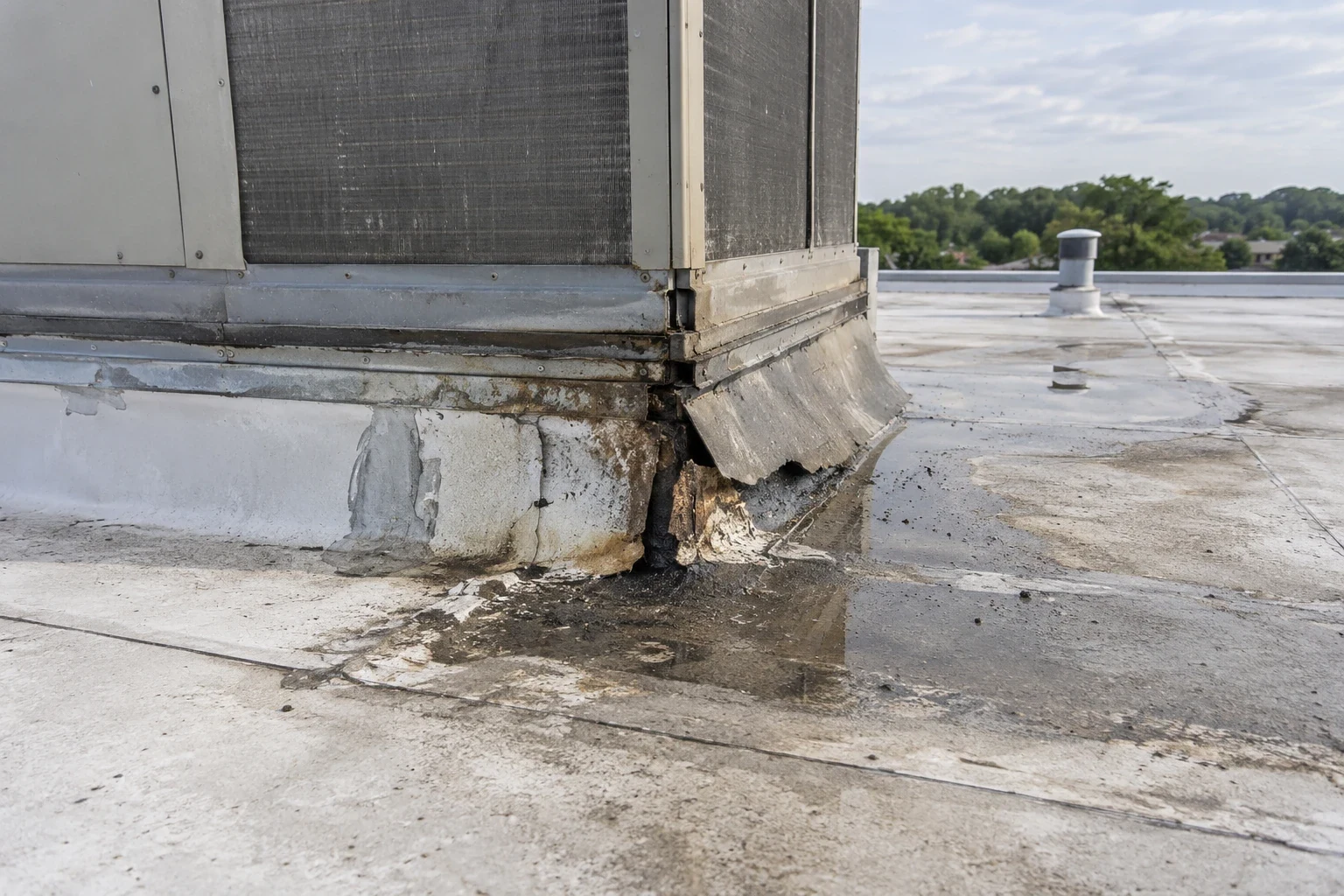
Most repairs we perform are at the details, not the open field. Base flashings pull away from walls, curb corners split, pitch pockets dry out, counterflashing lifts, and the sealant at penetrations hardens in the sun. Central Texas summers are long and hot, and sealants, mastics and thermoplastic laps age quickly under that load.

We rebuild failed flashings with new reinforcement and proper terminations rather than adding another layer of mastic, because mastic alone buys only a season or two on a detail that is moving.

Storm Damage Is a Separate Scope

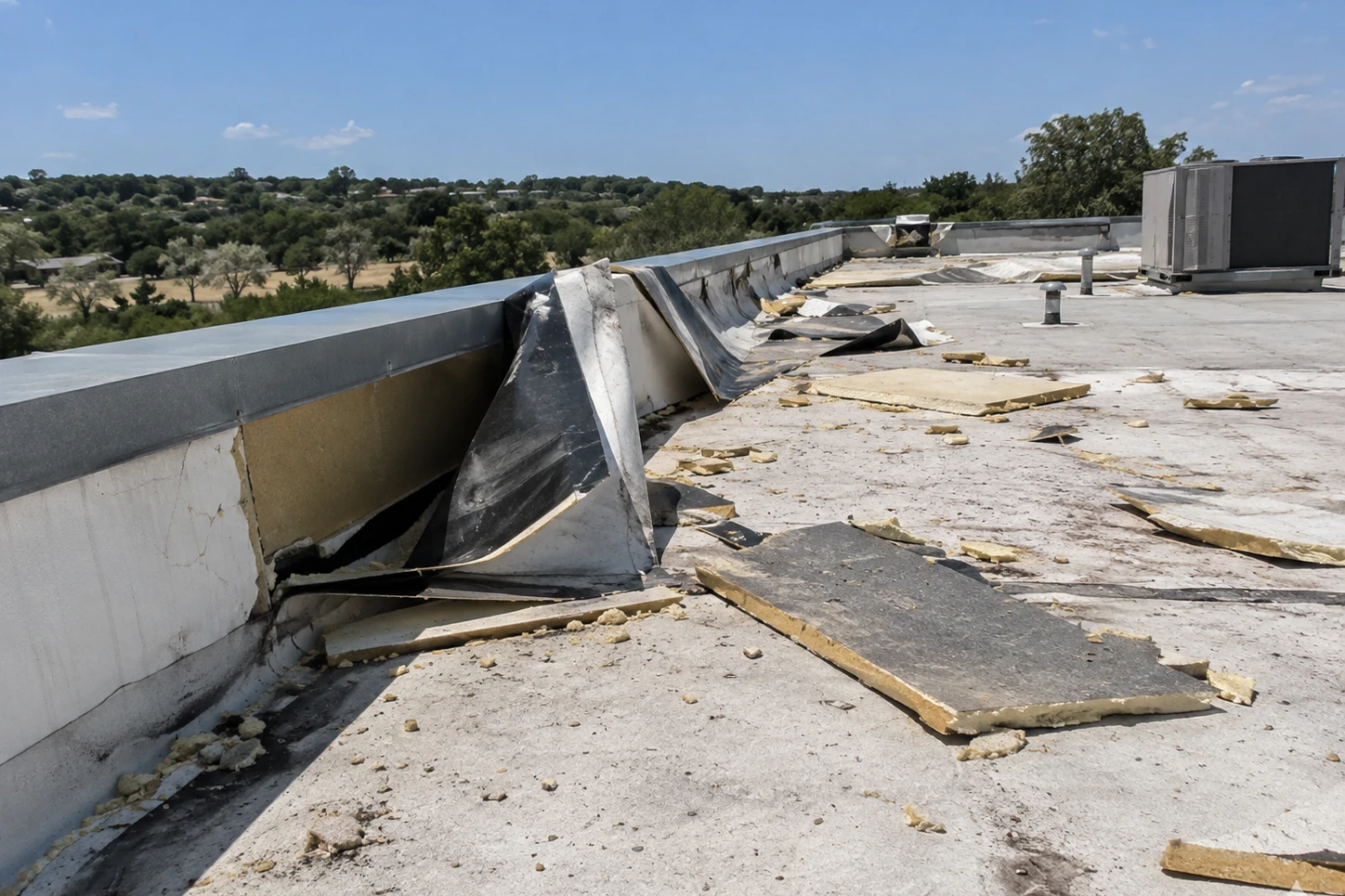
Wind and hail repairs belong in a different column from wear repairs. The May 9, 2024 storm brought hail reported up to six inches across in Johnson City and wind that put trees onto fences and homes in northwest San Marcos. After that kind of event, we separate storm-related damage from preexisting wear and photograph both, because an insurer will want that distinction and the owner needs it for budgeting.

Isolated punctures and displaced metal are repairable, and we complete them quickly. Widespread bruising of the membrane across a field is another matter, and we say so in the report so the owner can consider storm repair and claim documentation together.

Commercial Roof Repair

Know the Repair Threshold

Every roof has a point where repair spending outruns replacement value. We define that threshold with the owner: how many open details per thousand square feet, how much wet insulation, how many repairs in the last two years. Once a building crosses the line, the recommendation is to stop buying patches and plan the replacement. Below the line, a repair program with a scheduled inspection keeps the roof earning its remaining service.

We keep the repair record by roof section, so the next director who inherits the building can see what was done, where and why.

Commercial Roof Repair

What Drives the Repair Number

Repair pricing rises and falls with a handful of factors that a director can check in the proposal. Access comes first: a roof reached by a fixed ladder and a hatch costs less to work than one needing a lift or crane. Material compatibility is next, since a repair on a thermoplastic sheet that has aged needs more surface preparation than one on a newer sheet. The number of separate locations matters as well, because each one carries setup, cleaning and documentation time whether the patch is small or large.

Moisture also changes the work. Where a leak has wetted the insulation below, cutting out and replacing that board is a more durable repair than sealing over it, and we price the cut-out as its own line so the owner can see what it adds. Weather windows count too, since adhesives and welds need dry surfaces, and a Central Texas summer afternoon can open and close quickly. We schedule repairs for the part of the day when the surface is dry and the temperature is workable.

Work Around the Operation

Repairs happen on working buildings. At a fulfillment building we coordinate with dock schedules and equipment shutdowns, in a medical corridor like the one along FM 1626 in Kyle we plan around noise and air intakes, and on a campus we keep the crew away from entries during class changes. We confirm access, roof hatch locations, fall protection needs and hours with the facility director before the first truck arrives.

On a roof shared by several tenants, we also post notices to each tenant's contact before we start and report back to the property manager when the area is dry and clean, so that no one finds an unexplained crew on the roof.

Commercial Roofing Questions

How do you decide whether a leak is worth patching?

Remaining service and moisture extent decide it. A single failed detail on a membrane with years left is a good repair, while a leak that reflects wet insulation across a large area usually points toward replacement.

Why do some repairs fail within a season?

Usually because the base material could not accept the repair. A weld will not hold on chalked or aged thermoplastic, and sealant will not bond on a moving detail. We test the surface first and tell the owner when patching will not last.

Will repair work void my existing warranty?

It can if the work is done outside the manufacturer's requirements, so we review the warranty terms first and use compatible materials and methods. The proposal states which repairs fit within the existing terms.

Can you repair a roof after hail without replacing it?

Yes, when the damage is limited to punctures, displaced metal or isolated spots. Widespread bruising across the field is evaluated against replacement, using photos and core samples to show the extent.

What records do you hand back after a repair?

A dated summary by roof section, with before and after photos, the location of each repair and the materials used. Directors use it to track repair frequency across buildings and to set replacement priorities.

Get a Repair Scope by Section

Send the roof address, age and any recent leak reports, and we will return a repair scope sorted by section with a stated repair threshold.

Request a Roof Assessment

Related Roofing Work

ServicesRoof SystemsIndustriesProperty TypesService AreasRoof Damage RepairCapabilitiesManufacturersAboutContactRequest a Roof Assessment555-555-5555
Call555-555-5555