555-555-5555

Public Agencies

A public building portfolio can mix a historic courthouse, a maintenance yard, a library, an airport hangar and a fire station, and one small budget has to stretch across all those different buildings. A city or county facility director in San Marcos, TX cannot treat these alike, and cannot fund them all in one year. The roof inventory has to show what each building needs, in what order, at what price, so the budget year carries the right projects and the governing body sees the reasoning. We walk the roofs, sort them into replace, repair and watch groups, and hand back a queue that can be taken to a council or a commissioners court.

Public money asks for documentation, and the roof file is built to supply it.

Inventory by Department and Building

Public owners hold buildings across departments, and each has its own caretaker. Hays County and the City of San Marcos appear among the area's larger employers, with about 885 and 870 jobs, and each runs buildings that range from offices to field facilities. Roof area and type come from the walk.

The inventory lists every building and every roof section, with its department, age, system, drainage and condition. It records who maintains it and which budget line pays for it. A building shared between two departments gets a note about who is responsible for what. This removes a common delay, where a leak report bounces between offices before anyone acts. With one list, the facility director sees all roofs together and can set priorities across departments.

Work orders matter in a public portfolio. Every leak report, repair and inspection gets a record with a date, a building and a section number, so a council member asking about a roof gets an answer from the file and not from memory. When the person who knew a building's roof history retires, the record stays. We deliver the inventory in a format the agency can update and share across departments without special software.

Public meetings add their own rhythm. A roof recommendation may need to be explained in a work session, summarized for a council packet and defended later at a bid opening, so the same findings are written at three levels: a one-page summary, a section-by-section table and the photographs behind them. Staff turnover is the other reason for detail. An agency that can hand a new facilities manager a complete roof file has not lost its institutional memory when someone retires, and we format the file so that a person who has never seen the building can find any roof section and its history in a few minutes.

Public Agencies
Public Agencies

Care for Historic Roofs

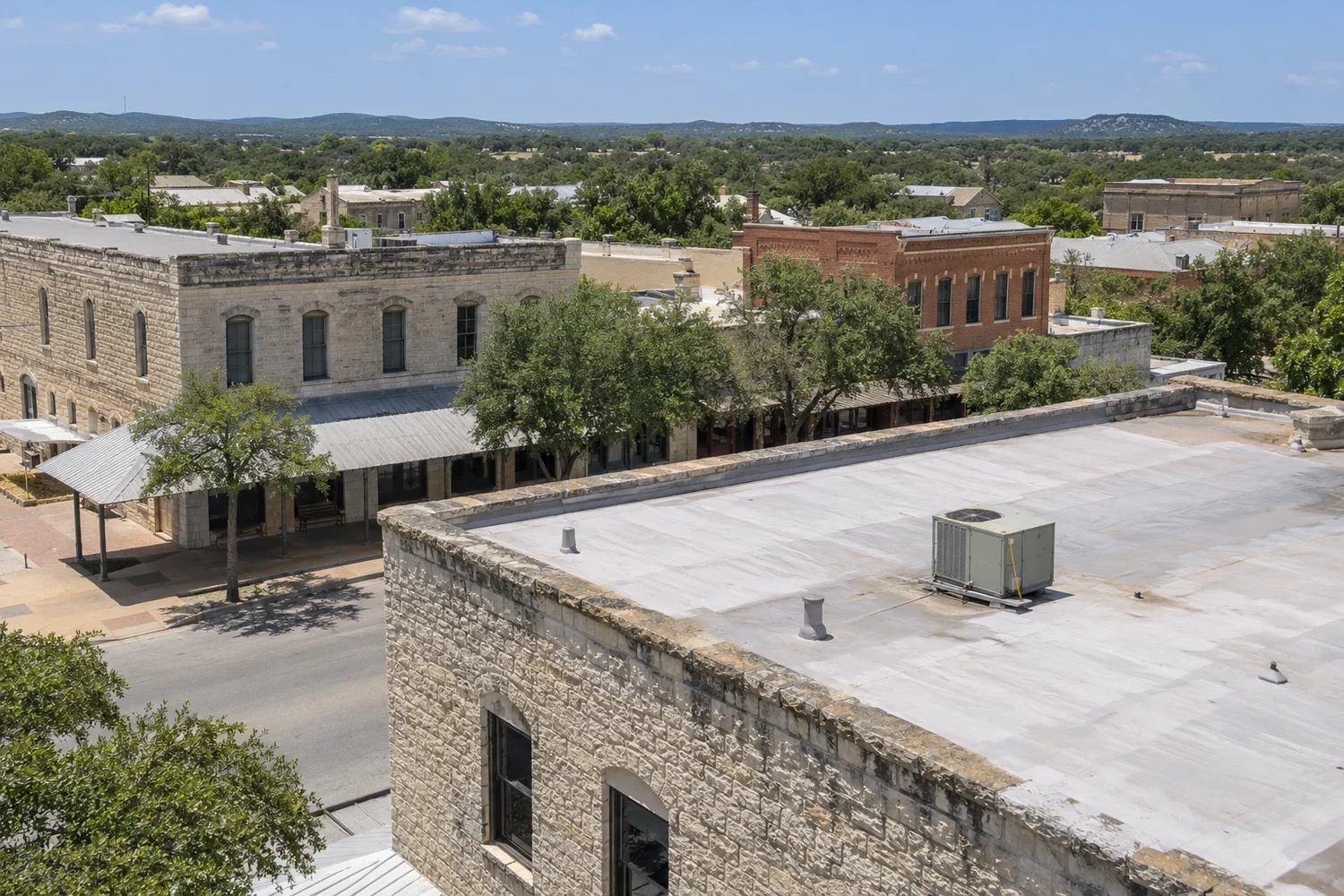
The courthouse dates to 1908; it carries its own National Register listing and also sits within the historic district designated in 1992. A building with that standing brings review steps and material choices that an ordinary office does not. The first step is always a walk to learn the system and its condition.

For historic buildings generally, repairs follow the approach of the least change that works. Original materials are kept where sound, replacement parts match in appearance, and any new work is documented in the file. The downtown San Marcos square area has older commercial and public buildings whose roofs deserve the same patient treatment. Reviews by the appropriate preservation body are the owner's to arrange, and our scope gives them the roof facts they need.

Access to a historic roof raises its own questions. Steep or ornamental roofs may need scaffolding or lifts, and fasteners and sealants should not harm original fabric. We plan the access route, protect adjacent surfaces and photograph every step. The record shows what was done to the roof and why, which is the documentation a preservation reviewer wants to see.

Write Scopes for Procurement

Public work follows procurement rules. Bids, quotes and approvals each have thresholds, and a clear scope moves a project through them faster. We write scopes by section with quantities, materials, attachment, flashing details, edge metal, warranties and phasing. Each item can be priced from the document, which reduces change orders.

The scope states the code basis. As of April 1, 2023, the city's roof requirements come from the 2021 International code editions. Documentation matters afterward as well: dated photos, daily logs and a closeout record of what was installed. A roof condition report before the bid fixes the starting point, which protects the agency if conditions are questioned later.

Contractors who work alongside the agency need the same facts. A general contractor managing a renovation can take the roof section of the scope and coordinate it with other trades, and the roof record shows which areas are already scheduled. Warranty paperwork is collected at closeout and filed by building, so the next facility director can find it.

Handle Airport and Maintenance Buildings

The city owns San Marcos Regional Airport, a general aviation field roughly four nautical miles east of downtown, with three asphalt runways and 91,849 operations in the year ending June 2023. City ownership of an airport can put hangars, terminals and maintenance buildings in the same portfolio as city offices. The Hunter Road and airport area is where the airport sits.

Hangars and maintenance shops can bring long spans and large doors. The walk covers edges, door heads, fasteners and drains, and the report lists the findings by section. Work near active aircraft areas follows the airport's rules for access, equipment height and debris control, and the schedule is fitted to them.

Public Agencies

Respond to Storms and Declarations

Public buildings carry the added role of shelter and service, so storm response has a higher bar. The May 9, 2024 storm ended with a Hays County disaster declaration, after a tornado warning for downtown San Marcos and a school delay so San Marcos CISD staff could inspect buildings. The weather service had reported hail up to six inches across in Johnson City.

For a public owner, the first need is knowing which buildings are essential and which roofs sit over them. We walk those first, make leaks safe and record conditions with dated photos. A claim documentation file helps with insurance and, where it applies, with disaster-related reimbursement paperwork. The file separates new damage from age, which is what reviewers ask for.

Public Agencies

Set the Budget Year

At budget time the agency gets the replacement queue, with cost ranges for repair, restoration and replacement alongside the cost of waiting. Public owners also need a defensible reason for each line, so the queue explains it: remaining service, defect pattern, what sits below and what a failure would cost in service.

The same file supports multi-year planning, bond discussions and grant applications. The approach matches the one used for school districts, which also face fixed budgets and set calendars, and with the government building roof checks used on offices and service buildings. Updated each year, it gives the governing body a running record of roof spending and results.

Commercial Roofing Questions

What decides which public building comes first?

Service importance and remaining roof life together. A leaking roof over an essential function moves up.

Can you work with preservation review?

We supply the roof facts the review needs. The owner arranges the review itself.

How are scopes written for competitive bids?

By section, with quantities, materials, details and phasing, so every bidder prices the same work.

What records help after a declared storm?

Dated photos, condition notes and a roof file that shows what existed before the storm.

Do hangars need a different approach?

Yes. Long spans, large doors and airfield rules change the access and the inspection.

Send the Building List

Send the building list and any past roof reports, and we will sort the roofs into replace, repair and watch groups before your next budget year. Start from the contact form.

Request a Roof Assessment

Related Roofing Work

ServicesRoof SystemsIndustriesProperty TypesService AreasRoof Damage RepairCapabilitiesManufacturersAboutContactRequest a Roof Assessment555-555-5555
Call555-555-5555