555-555-5555

School Districts

A school campus is a set of roofs built at different times by different programs, and the one thing the class does to a roof is hand its work a deadline. Replacement has to land in a summer break of a few weeks, and anything that slips into the school year puts a crew above classrooms. For a district in San Marcos, TX, the roof inventory is therefore a calendar before it is a list, and the budget year has to carry both the money and the dates. We start from the campus list, walk every roof, and return a replacement queue ranked by remaining service, with each project fitted to a break.

A district that knows its queue can present it to a board with confidence and without surprises.
Inventory Every Campus Roof

A campus is rarely one roof. A main building, a gym, a cafeteria, a library wing, portable buildings and covered walkways each carry their own section, with their own age and system. Additions from different decades meet at tie-ins that are common leak points. The inventory records every section by campus and building, with age, system, drainage, rooftop equipment and condition.

San Marcos CISD appears among the city's largest employers at about 1,400 jobs. The roof count and types come from the walk. Each campus on the district's list gets walked, with seams probed, flashings and drains checked and a moisture scan wherever the surface raises a question. The resulting file gives the district a section-by-section record that a facilities director can update each year.

Higher education sits nearby and follows its own calendar. Texas State University runs roughly 250 buildings on a main campus of about 517 acres, and the Texas State University district shows what a large multi-building owner has to track. A school district tracks fewer buildings, but the discipline is the same: every section on the list, every year, with a rating and a date.

Portable classrooms and covered walkways are easy to leave off the list. Each gets its own entry with age, system and condition so it does not drop out of the capital plan.

School Districts
School Districts

Fit Projects to the Break

Summer is the working window. Students and staff are gone, access is easy and noise limits relax. The window is short, and a roof project that starts late in the break can collide with the first day of school. We build the schedule backward from the return date, with a buffer for weather, and divide large roofs into phases that can each be completed and made watertight.

Material lead times matter too. Membrane, insulation and metal can take weeks to arrive, so approvals have to come early. The queue lists the projects for the coming summer with their approval dates, bid dates and start dates. A district that approves in spring can mobilize in June. One that approves in June often watches the window close. The occupied building reroofing approach also covers the rare case when work must proceed during the school year, with protected walkways and quiet hours.

Respond After Storms

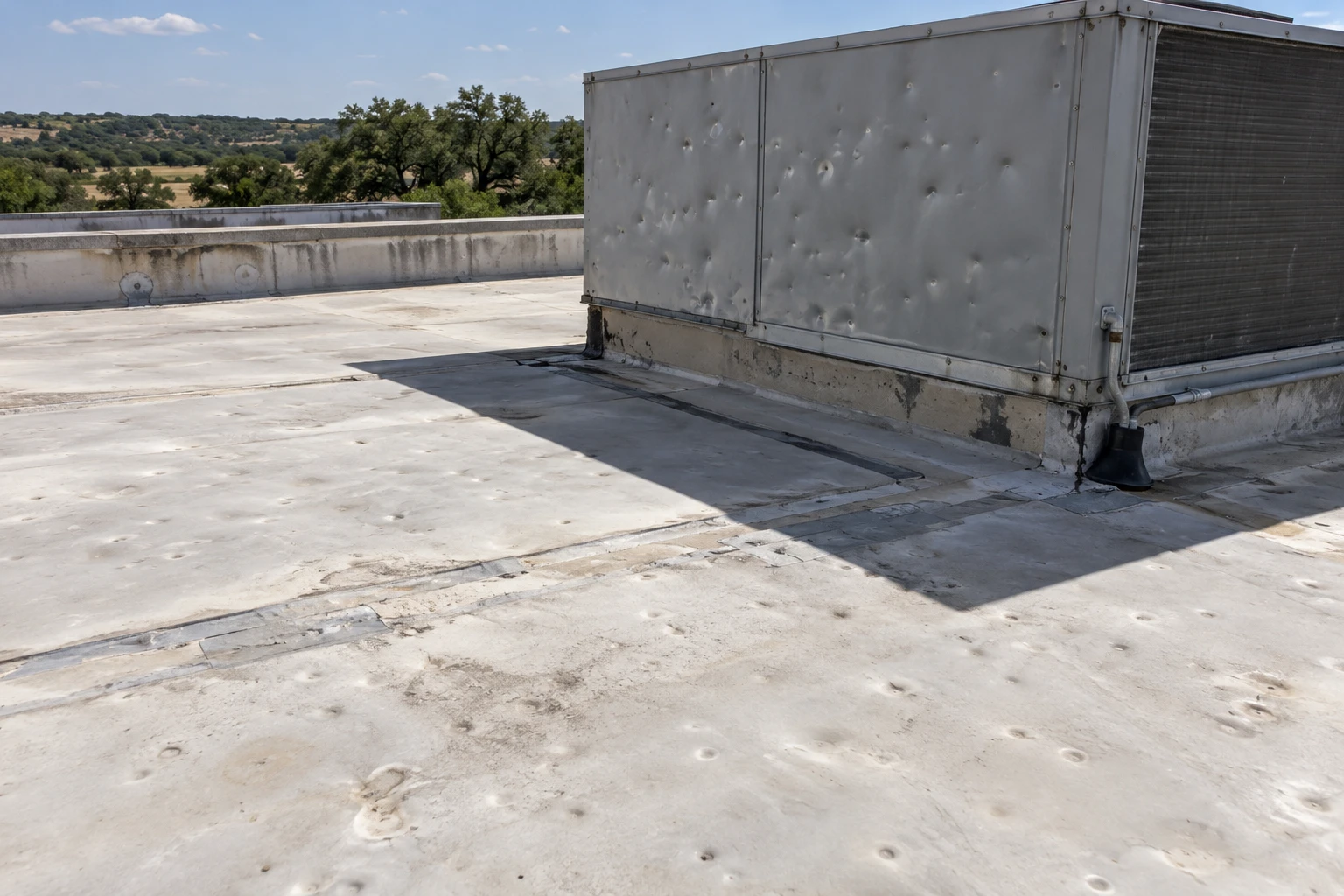
Hail is the shared regional risk. A hail size of six inches across turned up in weather service reports from Johnson City on May 9, 2024, before the storm moved to San Marcos. Events like that make roof condition a safety question as well as a budget one.

After a storm, the first need is a fast check of the highest-risk sections: roofs over classrooms, gyms and assembly spaces. We walk those first, make anything leaking safe and photograph conditions for the file. A hail damage review separates new bruising from age, and the dated record supports claim documentation if the district files with its carrier. A field review answers what a news report cannot: what happened on a given deck.

Know What Wears First

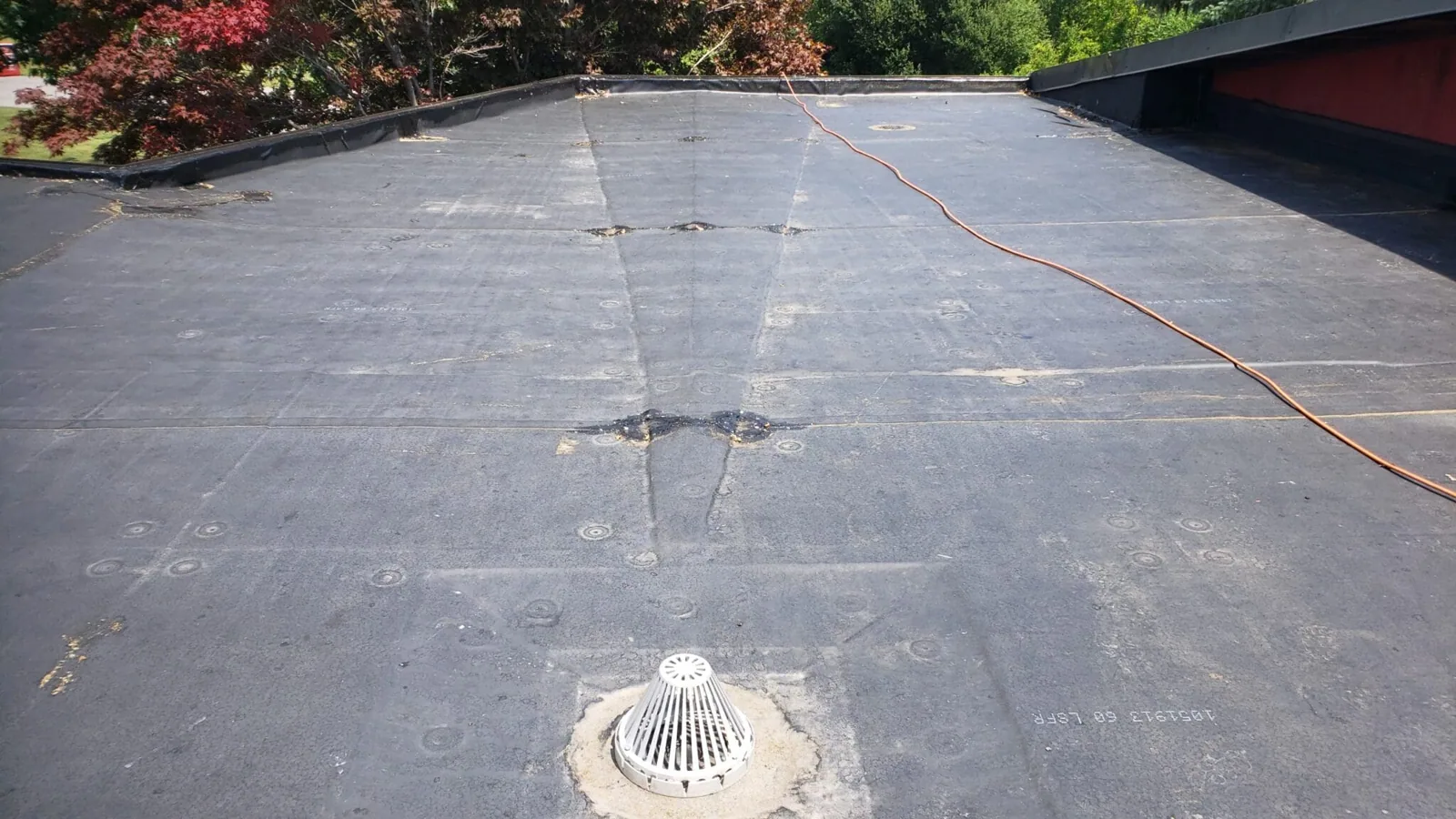
School roofs wear in familiar places. Rooftop units serving classrooms bring technicians and foot traffic. Drains near trees clog with leaves. Roof edges at gym walls and tall volumes take wind. Flashing at the junction of a one-story wing and a taller wall loosens with movement. We check those spots every visit.

Heat adds stress through the long summer. August highs near 98 F at Austin Camp Mabry set the load. A preventive maintenance visit before the school year and another after the first cold front catches seam lift and sealant cracks early. The log goes into the same file, so the facilities team sees the history without chasing paper.

Water behavior on school roofs also depends on the interior. Gym and cafeteria volumes have tall walls whose flashings are long and exposed, and a leak there drops into a room that cannot be closed easily. Locker rooms and kitchens add humidity that can push moisture upward. We note the use under each section on the plan, so a stain in a kitchen is read differently from a stain in a hallway.

School Districts

Repair, Restore or Replace

Schools often face tight capital budgets, so the choices need clear prices. A roof with years of service left and a few defects gets repaired. A sound membrane with dry insulation can be restored with a coating that adds service life. A roof with wet insulation or widespread seam failure is replaced. We price all three and show the cost of waiting.

Roof insulation and attachment inside San Marcos are checked against the 2021 International codes. Those editions shape insulation, wind and fire details in a replacement, and public projects often add procurement rules. We state the code basis in the scope, so the board and the architect read the same assumptions. A school roof scope lists each building and phase on its own line.

School Districts

Prepare the Queue for the Board

The board-ready product is a ranked list with cost ranges, a map of campuses and a one-page summary for each. The summary says what the roof is, how much service it has left, what it costs to repair or replace and what happens if the district waits. A facilities director can walk the board through it in minutes.

The same record helps with bond planning, with insurance and with maintenance budgets. It also lines up with the approach used for public agencies, which often share procurement steps, and it can feed a roof capital plan that spans several budget years. Updated each summer, the file becomes a running history of the district's roofs.

Healthcare systems plan roofs around clinical risk; a school plans around the first day of class. Districts that line projects up with the break have fewer surprises. The record we hand over also lists the warranty documents located during the walk, the age indicators found in cores and any area where records are missing, so the district can fill gaps over time.

Commercial Roofing Questions

What decides which campus roof goes first?

Remaining service weighted by what sits below. A leaking roof over classrooms moves ahead of a dry roof over storage.

How far ahead should approvals happen?

Early enough for material lead times and bidding. Spring approvals give a June start.

Can the district use a coating instead of replacement?

When the membrane is sound and the insulation is dry. Moisture scans decide.

What if a storm hits during the school year?

We check roofs over occupied spaces first, make leaks safe and record the findings for the district.

How are portable buildings handled?

They are in the inventory as their own sections, with their own age and condition.

Send the Campus List

Send the building list and any past roof reports, and we will sort the roofs into replace, repair and watch groups before your next budget year. Start from the contact form.

Request a Roof Assessment

Related Roofing Work

ServicesRoof SystemsIndustriesProperty TypesService AreasRoof Damage RepairCapabilitiesManufacturersAboutContactRequest a Roof Assessment555-555-5555
Call555-555-5555