555-555-5555

Skylight and Penetration Flashing

Every hole in a roof is a decision, and flashing is the price of that decision. A skylight, a hatch, a plumbing vent, a conduit, a gas line or an exhaust stack all interrupt the membrane, and each interruption needs its own seal. The building class sets how many holes there are. A medical or institutional building carries dozens of vents, stacks and lines. A retail or outlet building carries signage mounts, antennas and a field of units. A warehouse carries few, but each matters. What these details do to a budget year is steady: they account for most roof leaks, while the field membrane often outlives them. We therefore inventory the penetrations first and repair them as a group.
Counting the penetrations

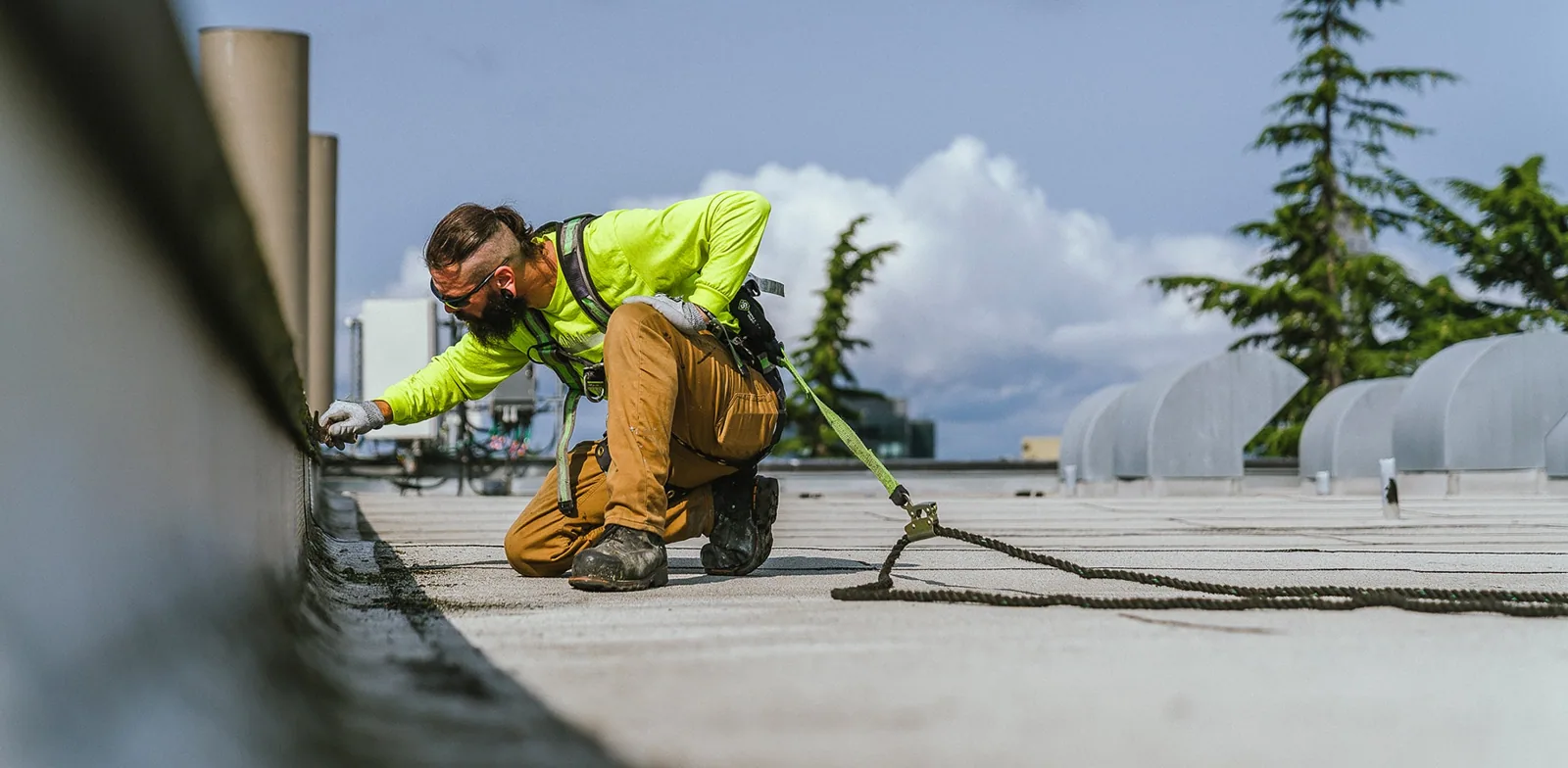
The roof inventory starts with a count. We walk the roof and mark every skylight, curb, pipe, vent, hatch, conduit and support on a sketch, then photograph each one and grade the flashing. Many roofs hold abandoned penetrations too, such as capped pipes from tenants who left or equipment that was removed, and those are common leak sources because nobody owns them. We note the type of seal at each: pitch pan, boot, welded flange, sealant, counterflashing or custom metal. The sketch becomes the working list for repairs and a map for later trades. When a mechanical contractor adds a line, the roof file shows where it goes and what the seal should be.

The count also reveals risk by cluster. A corner of the roof with six penetrations in a tight group has six seals and little room to work, and one leak there is hard to trace. Grouped penetrations may be better served by a single built-up curb or a custom metal hood than by six separate boots, and the saving shows in the long run as fewer joints to maintain.

Skylight and Penetration Flashing

Why skylights leak

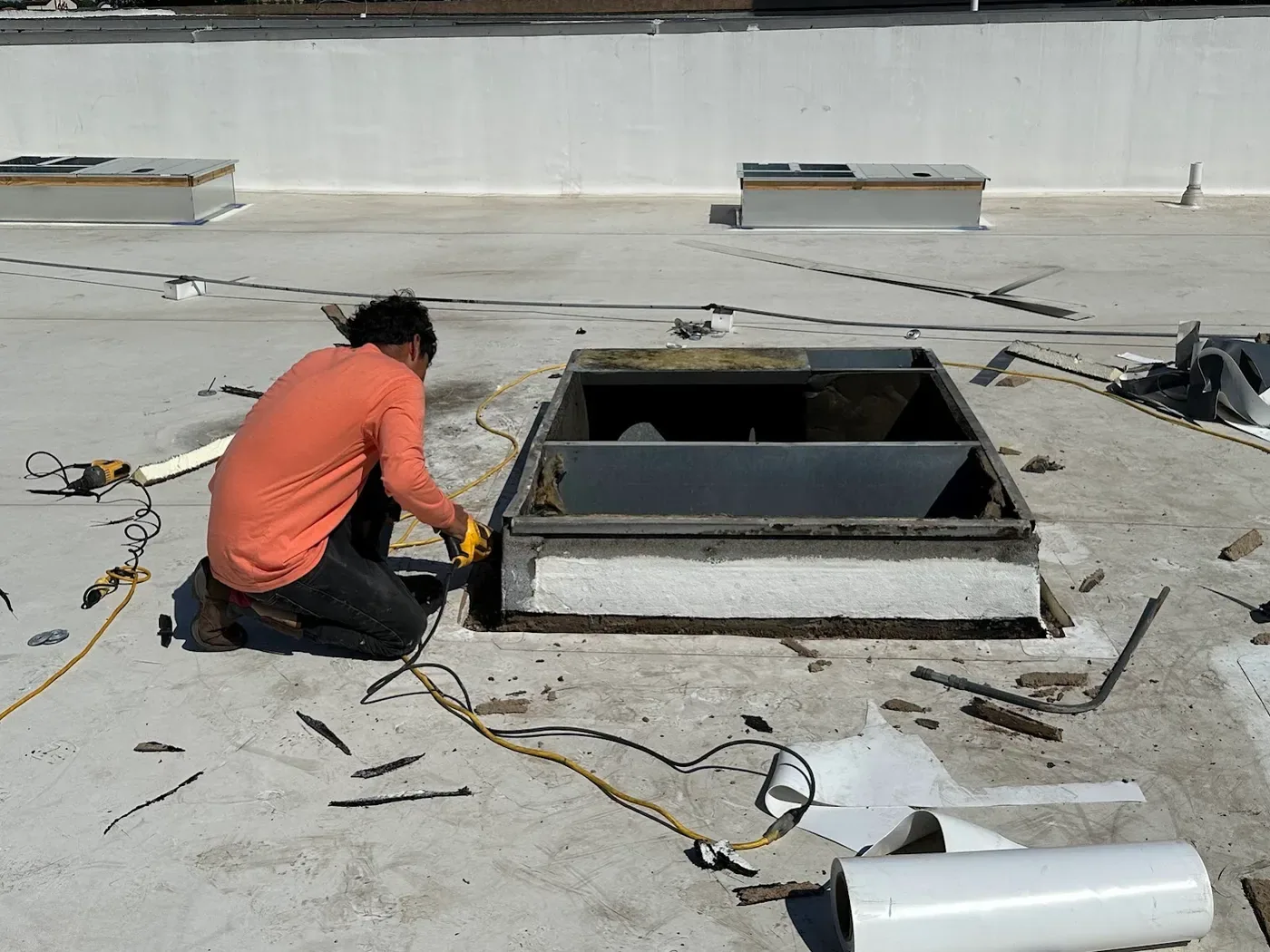
A skylight is a curb, a frame, a glazing unit and a flashing, and each piece moves differently. The curb is attached to the roof, the frame rides on the curb and the glazing sits in a gasket. Thermal cycles open the gasket and crack the sealant. Settling or wind loads twist the frame. The flashing, if it was set with a short upturn, lets water wick under the edge. Condensation inside the unit gets mistaken for a leak. We distinguish between them by testing: water on the curb flashing, a moisture scan at the base and a look at the glazing seal. Repairs run from resealing and re-flashing to replacing the whole unit when the frame or glazing has failed.

Placement adds risk. A skylight set at the low end of a slope, or just upslope of a wall, collects water against its upper curb edge and needs a cricket to divert it. A hatch left open in a rainstorm can flood a stairwell, and the hatch curb flashing is often shorter than it should be. We check curb heights against the roof's likely water depth and raise them where the numbers do not work.

Pipes, vents and conduit

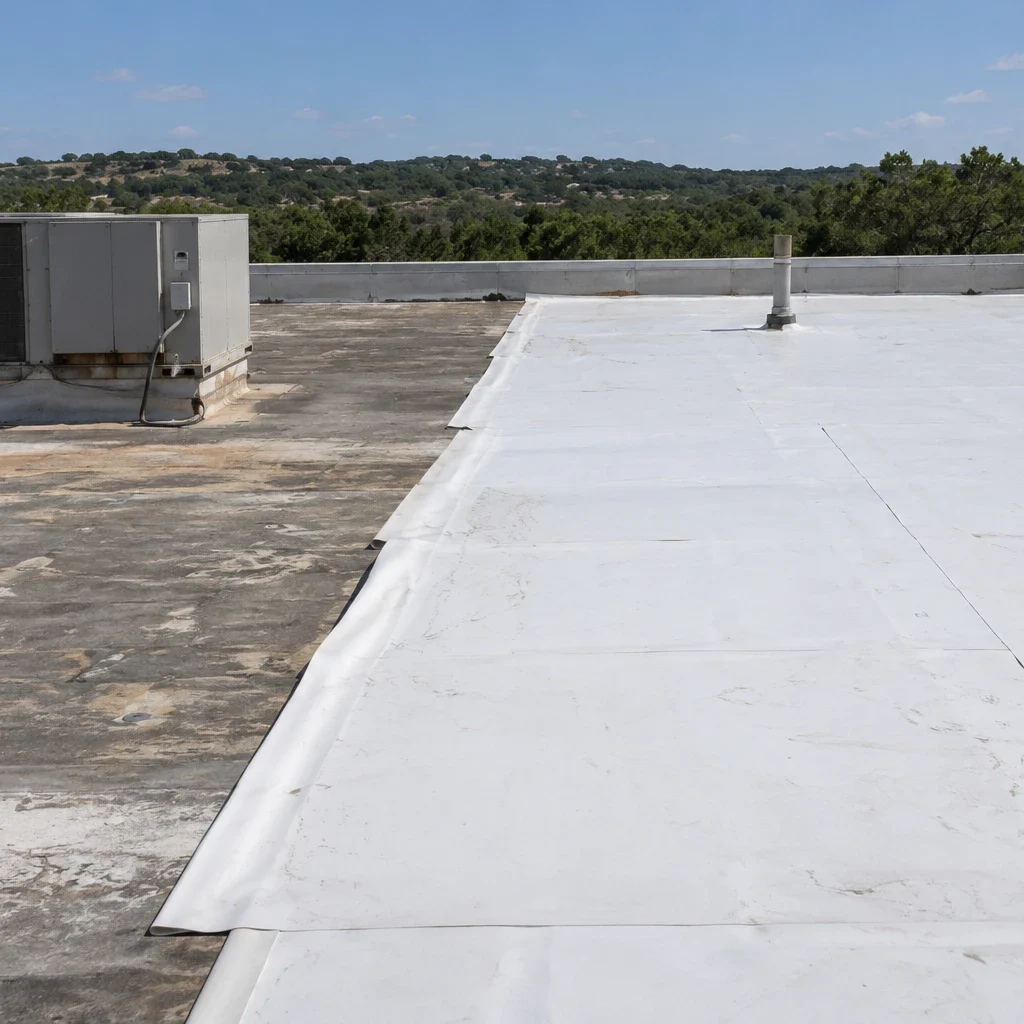
Round penetrations use boots or pitch pans. Rubber and neoprene boots dry out and split, usually within a limited number of seasons, and they sit at the sun-exposed high point of the roof. Pitch pans collect water and break down as the filler shrinks. Larger or clustered penetrations get built-up curbs with counterflashing and a cap. Welded membrane flashings work best on thermoplastic roofs because they are fused to the sheet, but they need clean surfaces and correct prep. Each type has a failure signature, and we match the repair to it. A boot gets replaced, a pan gets rebuilt as a flashed curb and a split sealant line gets cut out and redone. Most commercial roof leak repair calls end at one of these details.

Medical, campus and retail roofs

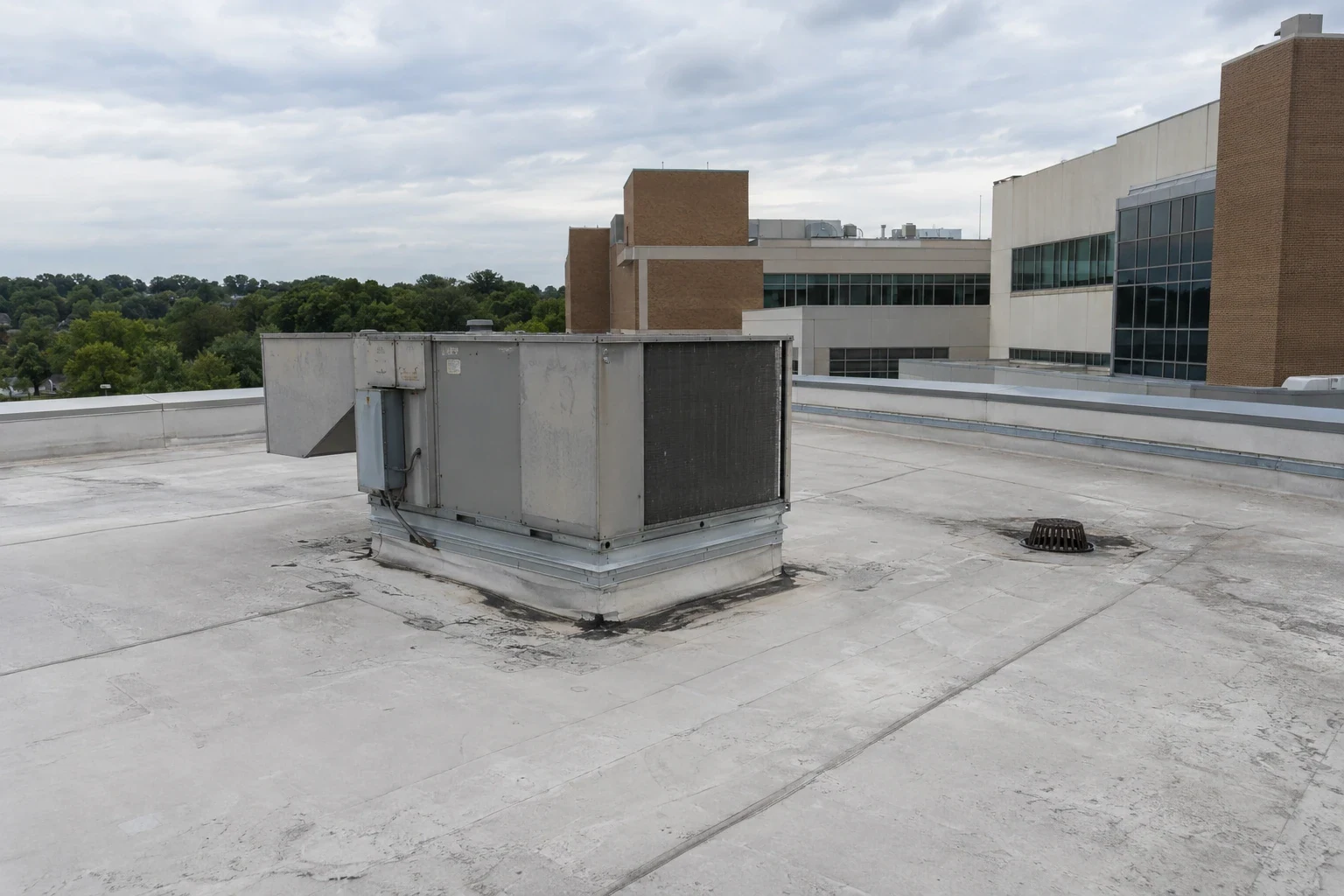
Different building classes bring different penetration loads. Christus Santa Rosa Hospital-San Marcos is one of the hospitals in the city, and Central Texas Medical Center is among its top employers with 675 jobs. A hospital roof typically concentrates exhaust stacks, air handlers, medical gas lines and communications gear, and it cannot leak over clinical space. Across a campus with roughly 250 buildings, as at Texas State, roofs can add skylights over atriums and labs. Retail and outlet buildings east of I-35 bring signage mounts and unit curbs. Each class needs its own flashing standard and its own schedule, and we write them separately.

Skylight and Penetration Flashing

How we repair a penetration

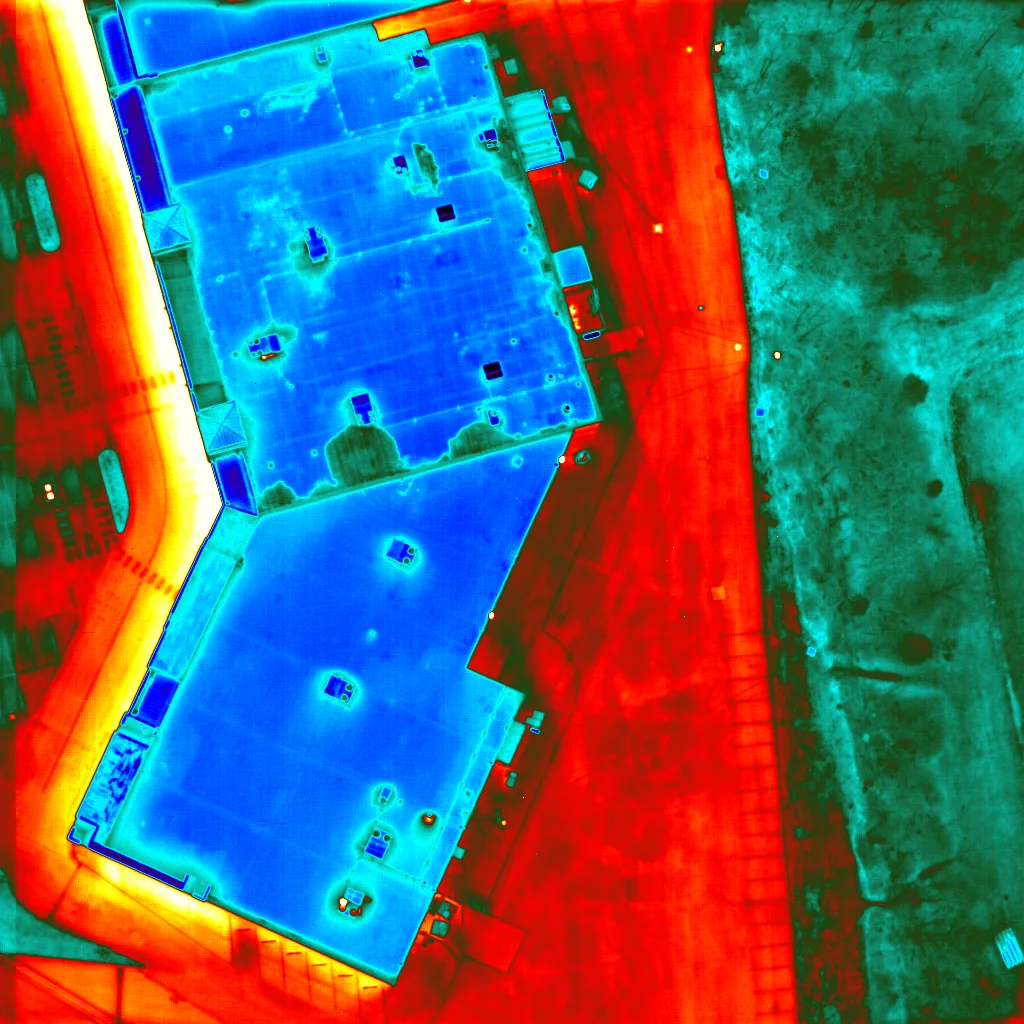
The repair follows a fixed order. We clean the area to a sound surface, remove failed sealant and loose flashing, and test the substrate for moisture. Wet insulation around a penetration is cut out and replaced. The new flashing is formed to the profile, fastened and sealed, and counterflashing laps over it so water sheds outward. We choose the flashing method to match the roof system: heat-welded flashing on thermoplastic membranes, hot or cold applied membranes on modified bitumen, and liquid-applied resin where geometry is complex. The leak history tells us where to look, and an infrared moisture survey confirms how far the water traveled. Failed details elsewhere on the roof show up in the flashing failure pattern.

Testing closes the repair. After the flashing is set we flood-test where the geometry allows, with a controlled stream of water, and watch the interior for moisture. A detail that passes a water test is far more likely to survive a storm. We photograph the test and add it to the roof file with the date.

Skylight and Penetration Flashing

The budget-year decision

Penetration work is cheaper when it is planned. Grouping repairs on one roof saves mobilization, and doing them before a coating or recover avoids having to open the new surface later. A director with several buildings can rank them by leak history and flashing grade, and put the worst first. Where the roof will carry new equipment, the curb and support work should be done once, with the flashing, and where solar is planned, the solar-ready roofing layout decides where new penetrations may and may not go. For historic roofs around the Downtown San Marcos Square, we match flashing metals to the building's character.

Records keep the savings. After each job we update the roof sketch with the new seals, the dates and the product used at each location, so the next trade can see what was done. Over a few years the sketch shows which kinds of details hold in this climate and which need frequent attention, and the director can specify the better ones on later work.

Commercial Roofing Questions

How can you tell a skylight leak from condensation?

We test. Water on the curb flashing shows a leak, a moisture scan at the base shows where it went and a look at the glazing seal shows whether condensation is forming inside the unit.

Can a skylight be re-flashed without replacing it?

If the frame and glazing are sound, yes. We rebuild the curb flashing, reseal the frame and test. If the frame is twisted or the glazing is cracked, replacement is the better value.

What happens to abandoned pipes and curbs?

We cap them with welded or metal-flashed covers or remove them and patch the deck. Left alone, they become leak points that no one owns.

How long do pipe boots last?

Rubber and neoprene boots dry out in the sun, so they are among the first details to fail. We replace them on a schedule during maintenance visits, before they split.

Do penetration repairs need permits?

Usually not for flashing repairs, but adding or moving a penetration can. We check with the building owner and the local code office when the scope calls for it.

Send the Building List and Leak Locations

Send the building list and any past reports that mark where leaks have appeared, and we will sort the penetrations into rebuild, reseal and watch groups before the next budget year. Use the contact form.

Request a Roof Assessment

Related Roofing Work

ServicesRoof SystemsIndustriesProperty TypesService AreasRoof Damage RepairCapabilitiesManufacturersAboutContactRequest a Roof Assessment555-555-5555
Call555-555-5555