555-555-5555

Niederwald

Commercial roofs in a small, growing town usually fall into a few repeating building classes: metal-paneled shops and service buildings, small low-slope retail or office shells, and storage structures with long, simple roofs. Niederwald lies in eastern Hays County and northern Caldwell County on SH 21, about 15 miles northeast of San Marcos, and its population rose to 668 in 2020 with a 2025 Census estimate of 1,168. Here is what each class does to a roof and what a facility director should have in the file before the budget year closes: a grade, a photo record and a short list of what will fail first.
Metal roofs and what fastens them

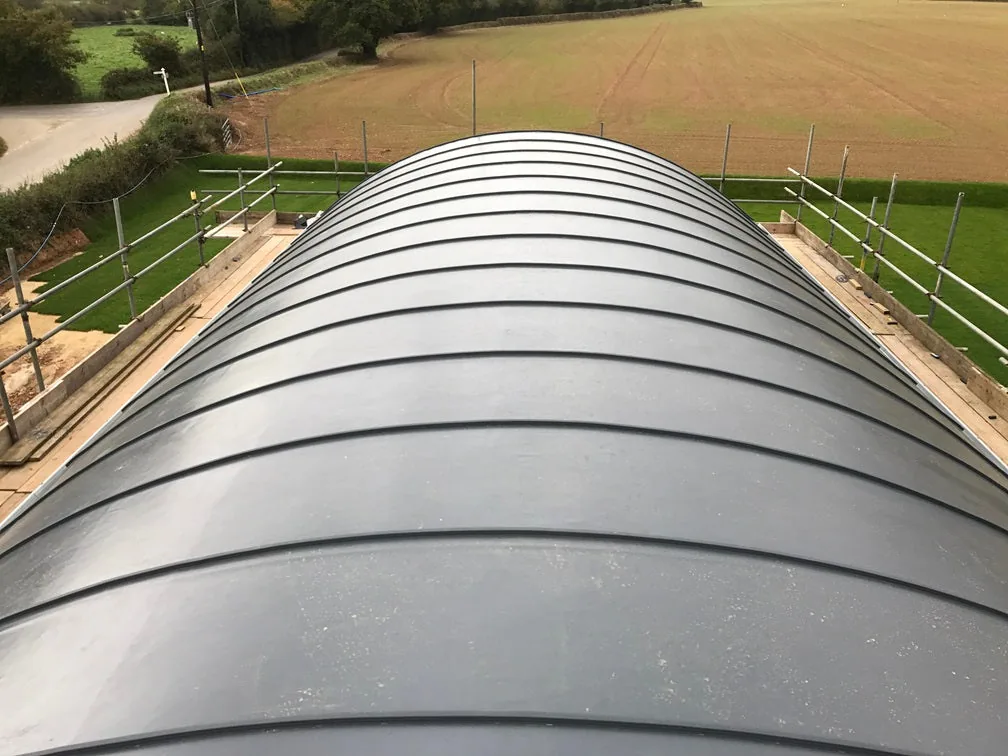
A metal roof is a set of panels held by fasteners or clips, and the panels move. Heat stretches them by day, cold pulls them back at night, and every cycle works the screws loose or wears the clip. Exposed-fastener panels leak first at the screw heads, where the rubber washer cracks or the hole elongates. Standing seam panels leak at the seam ends, at clip penetrations and at flashings. On our first walk of a metal roof we check the screw pattern, the washers, the laps, the ridge cap and the edge trim, and we walk the lower few feet of each run, where water sits longest. Rust starts at cut edges and fastener holes. We mark it before it spreads.

Condensation is the quiet cousin of a leak. A metal roof over a conditioned space can drip on a cool morning when the underside of the panel falls below the dew point, and the drip looks exactly like a leak. We check the insulation facing, the vapor retarder and the ventilation before cutting into a roof that may be sound. Where condensation is the cause, the fix is in the assembly, with better insulation contact or air sealing at the eave, and a patch on the roof would do nothing.

Niederwald
Niederwald

Low-slope shells and their drains

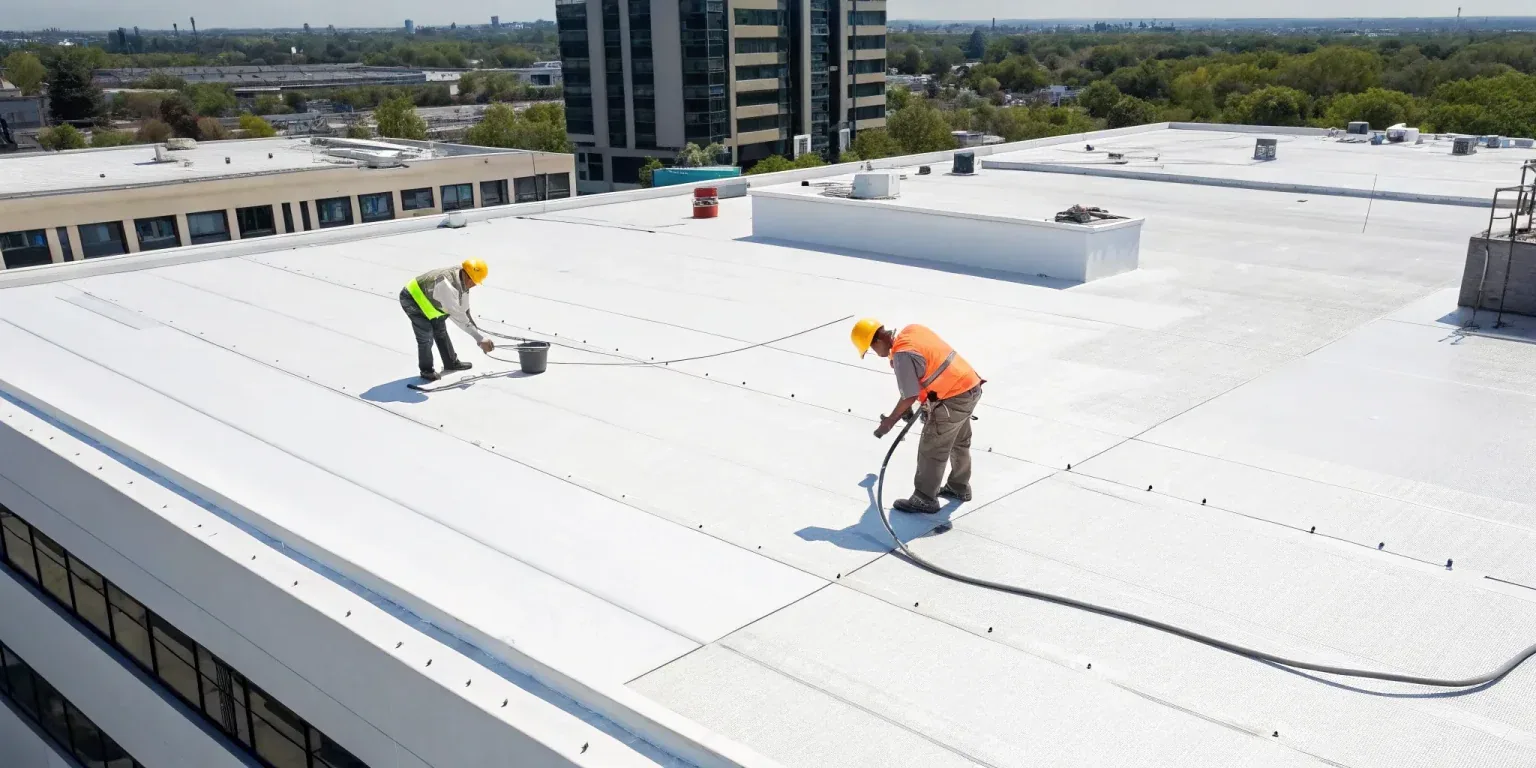
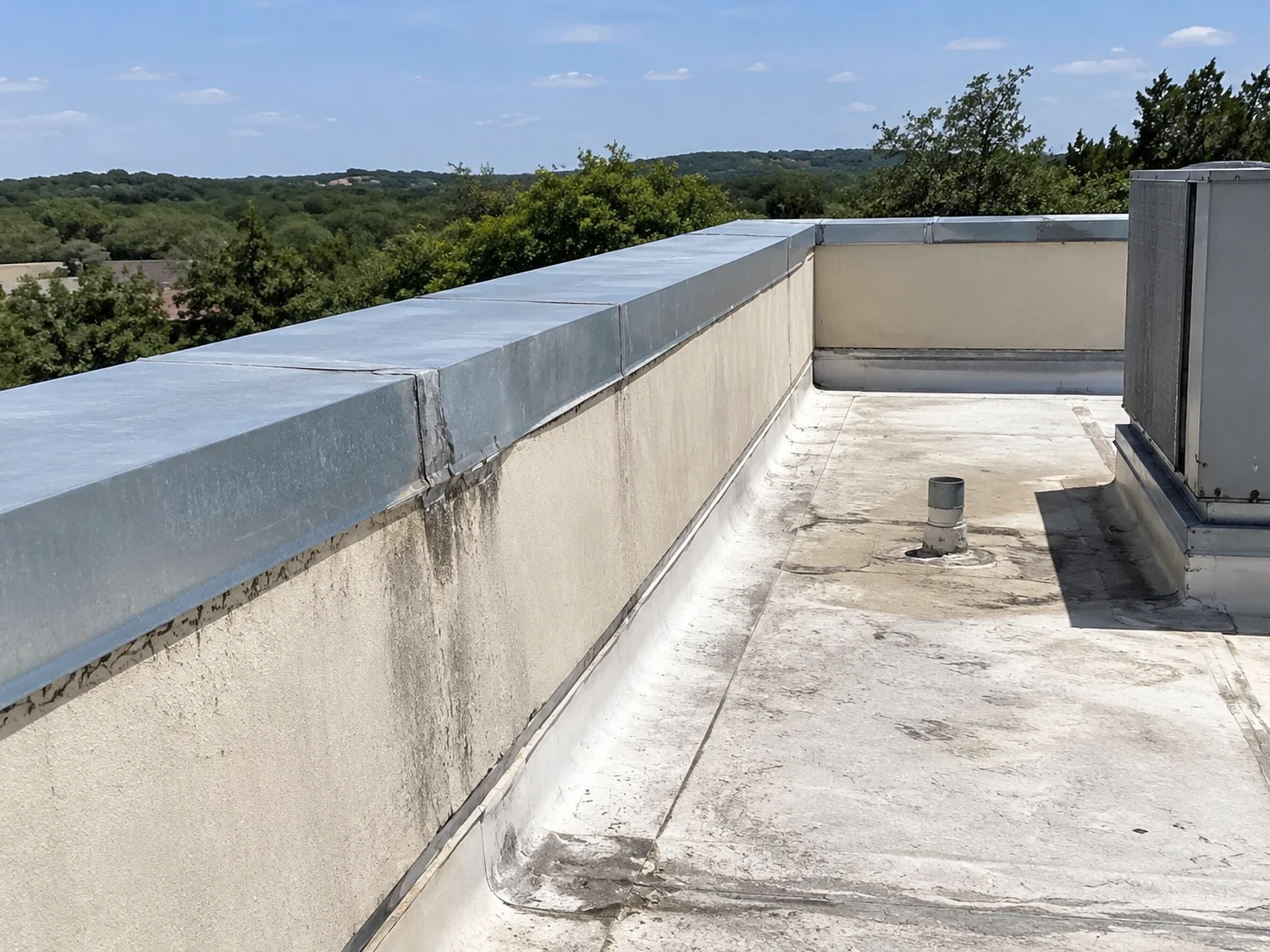
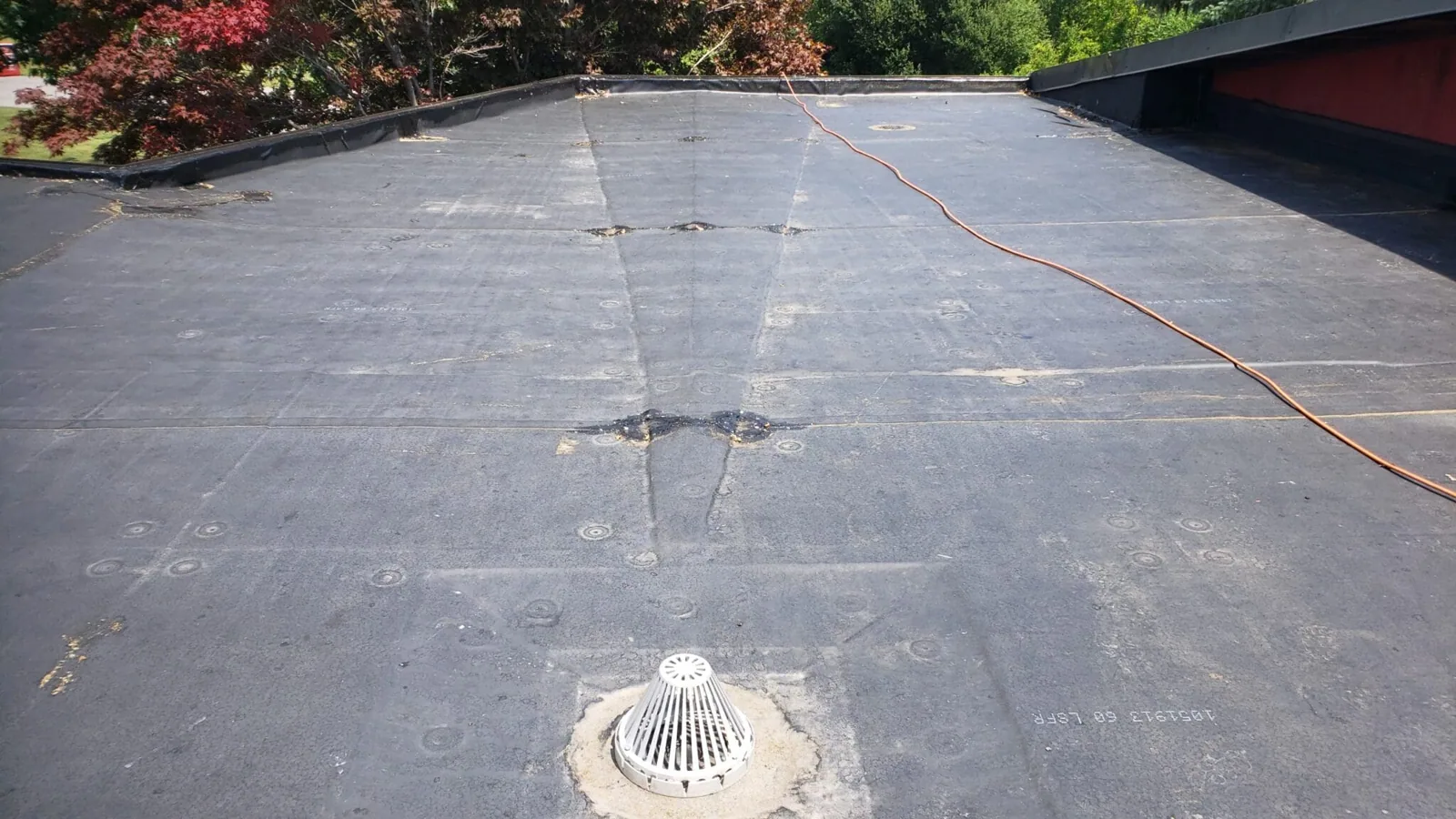
A small office or retail shell with a low-slope membrane roof has a different set of weak points. The membrane meets parapet walls at base flashings, passes through the deck at roof drains and vents, and wraps rooftop units at curbs. Drains clog, flashings dry out and seams open under heat cycling. The drain check comes first on any low-slope roof, because ponding water accelerates every other kind of failure. A drain and scupper review includes the strainers, the bowls, the overflow openings and the slope around each outlet. We test with water, photograph the result and note any pond that lingers more than a day after rain.

Rooftop units deserve their own pass. Even a small shell may carry one or two packaged units, each on a curb with flashing that moves as the unit vibrates. Refrigerant and condensate lines cross the membrane on blocks, and technicians walk the same path each visit. We check the curb corners, the sealant under the unit skirt and the support blocks, and we lay pads where the walk path crosses the field. A short repair here prevents the most common recurring leak on small commercial roofs.

Open ground and the perimeter

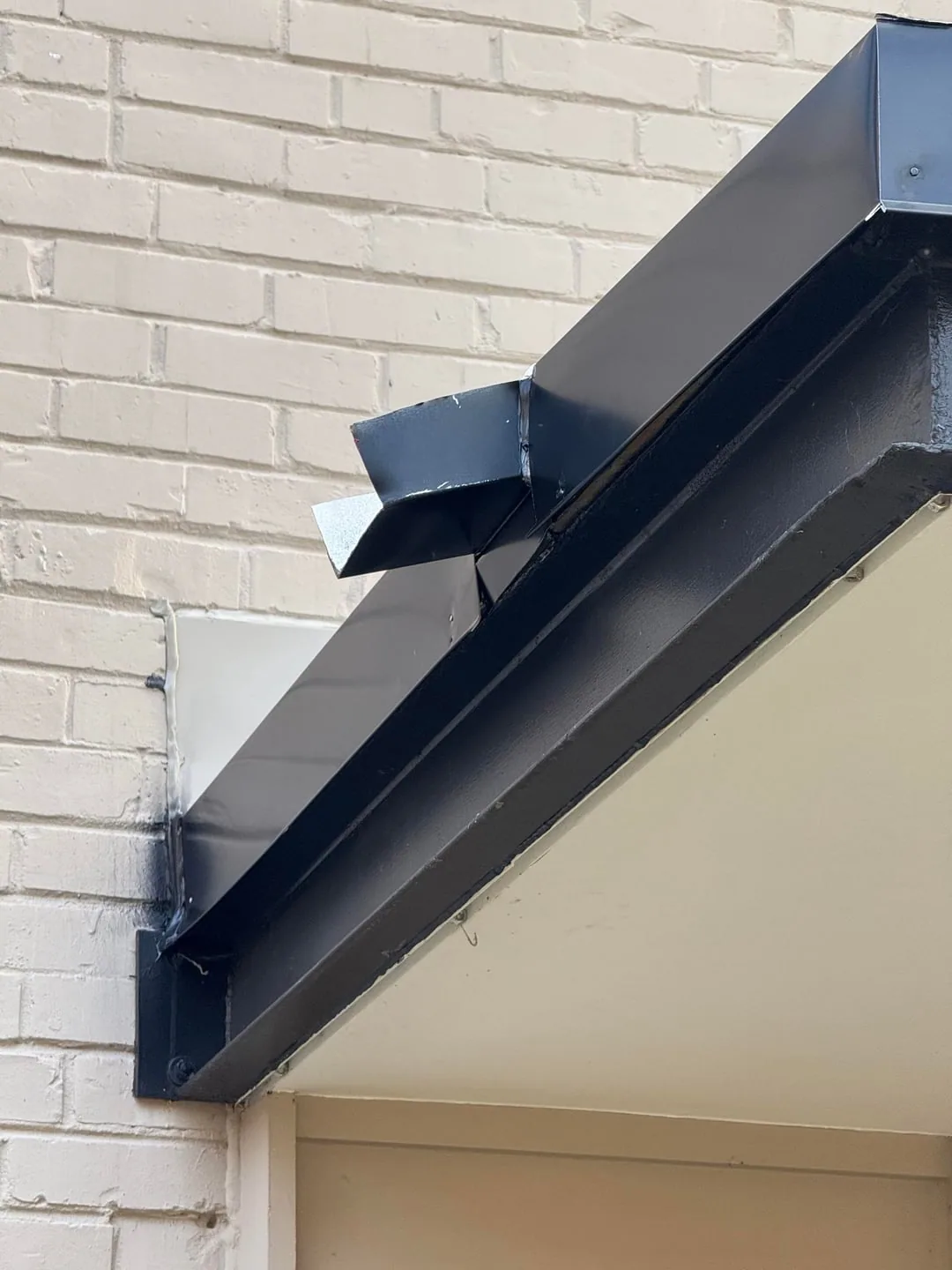
A building on open ground meets wind with little to break it. The perimeter takes the load first, so edge metal, coping and gutters get a close look. Austin is about 24 miles north, and Niederwald covers 3.67 square miles, incorporated in 1987, a small footprint in which one storm path can cross many properties. On May 9, 2024 a tornado warning covered downtown San Marcos and high winds toppled trees across northwest San Marcos. A regional event does not prove anything about a given roof here, but it explains why we check the perimeter after any wind event. Our edge metal, coping and gutters work restores loose runs and re-secures the membrane edge.

Hail and the record

Hill Country hail is the shared risk. Weather service reports place six-inch hail in Johnson City on May 9, 2024, with the storm continuing on to San Marcos. That is context, not damage to any roof near SH 21. A review means impact marks counted in test squares, metal checked for dents at seams and ribs, coatings checked for cracks and a scan for wet insulation. Dents on the flat of a panel are mostly cosmetic. Dents at a lap, a rib or a clip can open a path for water. The written record separates storm damage from older wear, which helps with a claim and shortens the discussion.

Records pay off when the roof is old enough that a carrier asks about prior condition. A dated photo file from before the storm, with seams, fasteners and edges visible, lets the adjuster see what changed. Owners who do not have one can still build a useful record after the fact by documenting the roof thoroughly and noting areas of older wear next to the new marks.

Niederwald

Repair, restore or replace

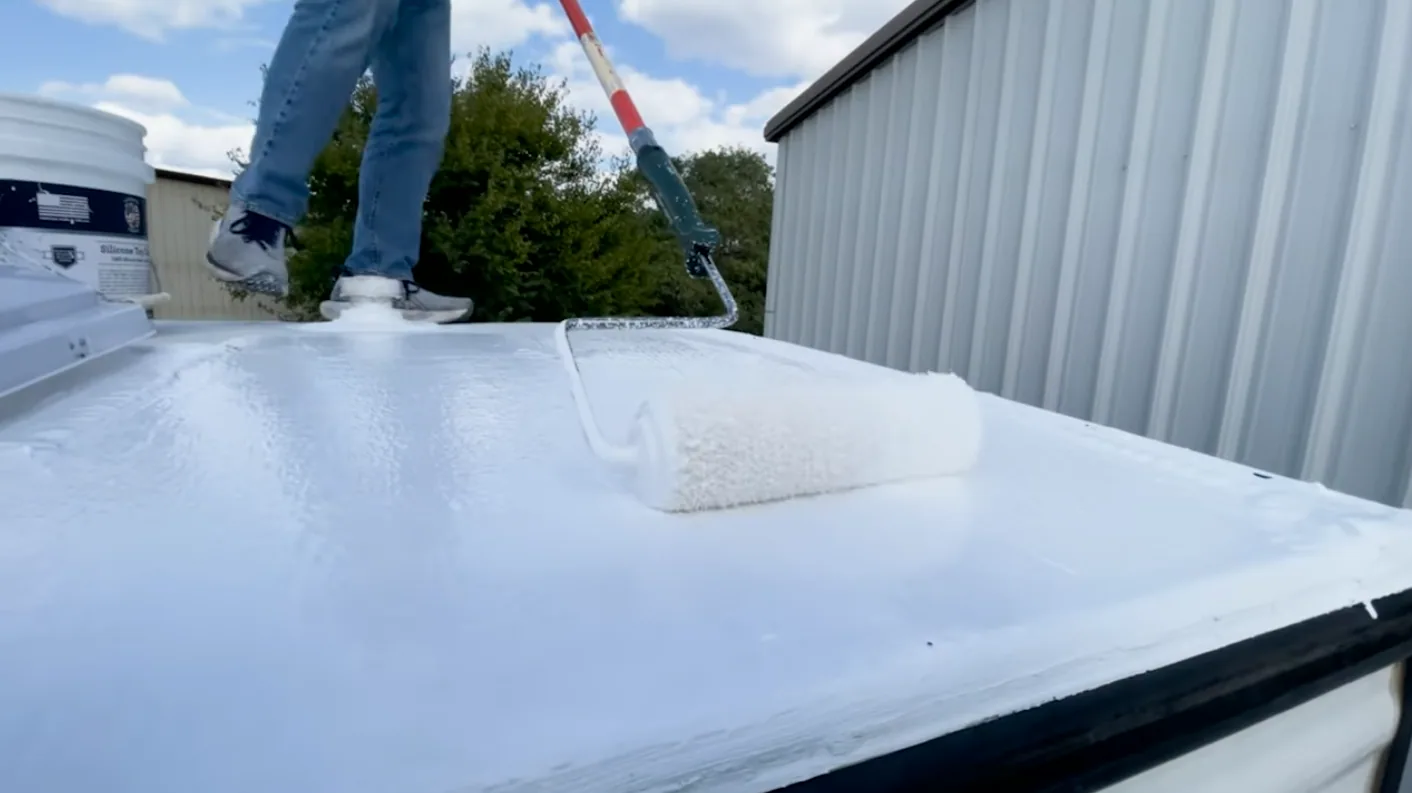
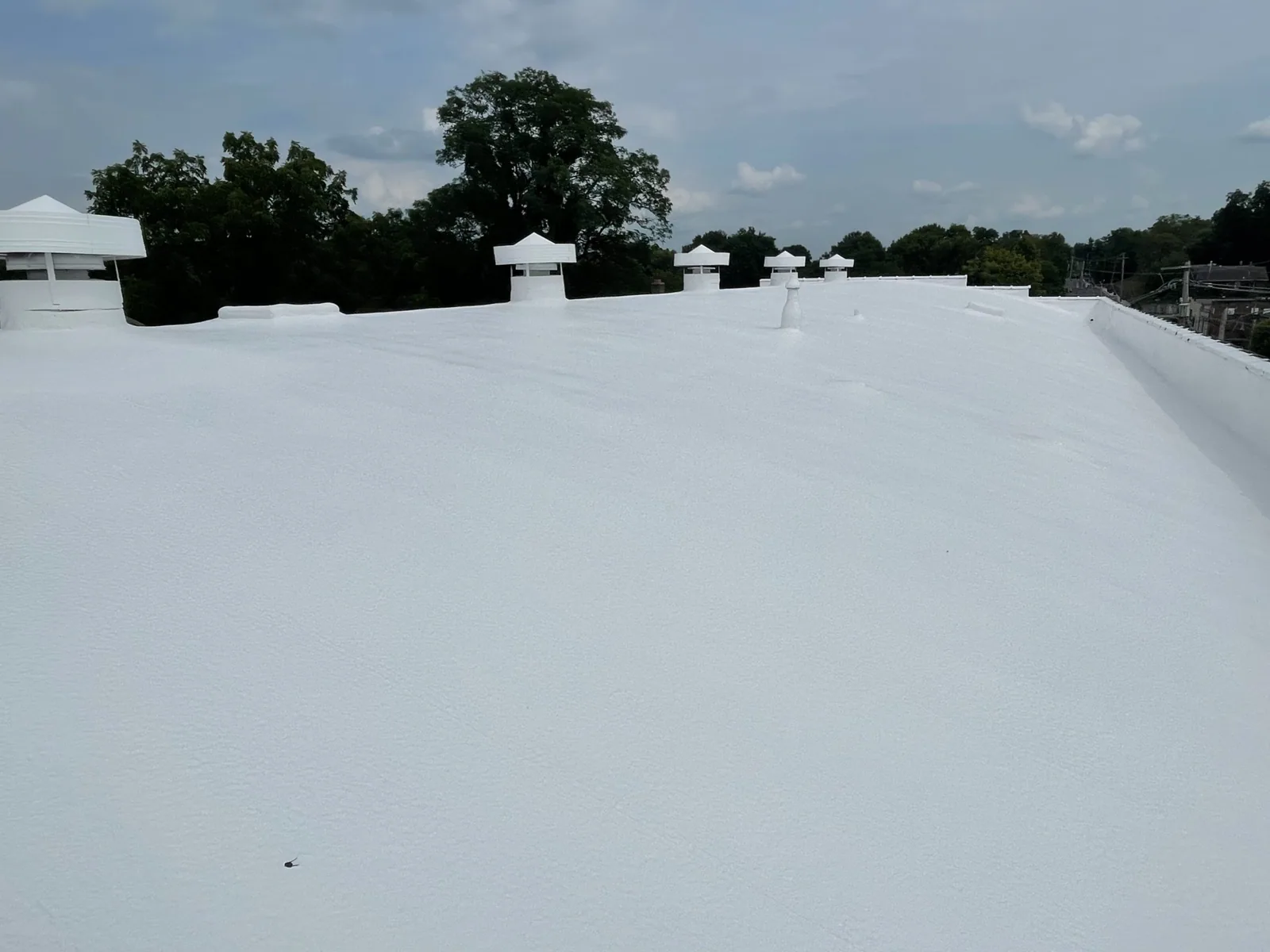
The options follow condition. A metal roof with sound panels and worn fasteners needs a fastener reset, new washers and resealed laps. A metal roof with good steel and a chalked finish may take a silicone coating that seals fasteners and seams together. A roof with rusted-through panels may suit a metal roof retrofit over the old panels. A low-slope roof with wet insulation needs section replacement or a full commercial roof replacement. We cut samples, measure steel thickness and take moisture readings, then give the owner the options with cost drivers named: area, panel gauge, access, insulation and the number of penetrations.

Timing is the other lever. Coatings and retrofits need dry weather windows and, for a metal retrofit, lead time on panels and trim. A repair can wait for a convenient week. A replacement planned a year ahead is cheaper than one forced by a collapse of the old roof, because materials can be ordered early and the crew booked for a quiet season.

Niederwald

Scheduling and the budget year

A small-town owner usually wants one point of contact and a clear price. We keep the schedule short, stage materials where they do not block the lot and clean the site each day. Owners with property in neighboring towns such as Uhland, also on SH 21, can book a single visit across both. Martindale in Caldwell County is another stop for a combined route. Niederwald's own jurisdiction sets its code edition, which we confirm before any replacement is priced; the 2021 International Building Code applies in San Marcos itself. A yearly walk, timed before storm season, keeps the file current.

Commercial Roofing Questions

How do you tell a failing metal roof from a worn one?

We measure. Steel thickness, rust at cut edges and fastener holes, and the state of the washers separate a roof that needs resealing from one that needs a retrofit.

Can a screw-down metal roof be sealed rather than replaced?

Often. Resetting fasteners, replacing washers and coating the surface can close the gaps if the steel is sound. A thin or rusted panel needs more.

What does a first walk of a low-slope roof include?

Drains, seams, flashings, curbs and penetrations, with probes at soft spots and photographs of every item. We also look at the ceilings below for stains.

Should hail dents on a metal roof be repaired?

Dents on the flat are mostly cosmetic. Dents that crack the coating or deform a seam, rib or clip let water in and need repair.

What should I send to start?

Send the address, the roof type and age where known, warranty papers if any and photographs of stains. A walk and a written report follow.

Send the Building Details and Photos

Send the building address, the roof type and age if known, and any photographs of stains or loose metal, and we will sort the roof into replace, repair and watch groups before the next budget year. Use the contact form.

Request a Roof Assessment

Related Roofing Work

ServicesRoof SystemsIndustriesProperty TypesService AreasRoof Damage RepairCapabilitiesManufacturersAboutContactRequest a Roof Assessment555-555-5555
Call555-555-5555