555-555-5555

Heat and UV Roof Damage Repair

A large industrial or retail roof spends its life facing the sun, and the one thing that class does to a budget is wear the surface away so slowly that nobody notices until the sheet is thin. Ultraviolet light breaks down the top of a membrane, heat softens and stretches it by day, and cool nights pull it tight again. For an owner in San Marcos, TX, where summers run hot and humid, that cycle repeats thousands of times over a roof's service life. The damage is not an event. It is a measured loss, and the budget year depends on how much of the roof's thickness and flexibility remains. We take that measurement and rank the buildings by what is left.

A roof can look intact and still have little service life behind it.
What Sun Does to the Surface

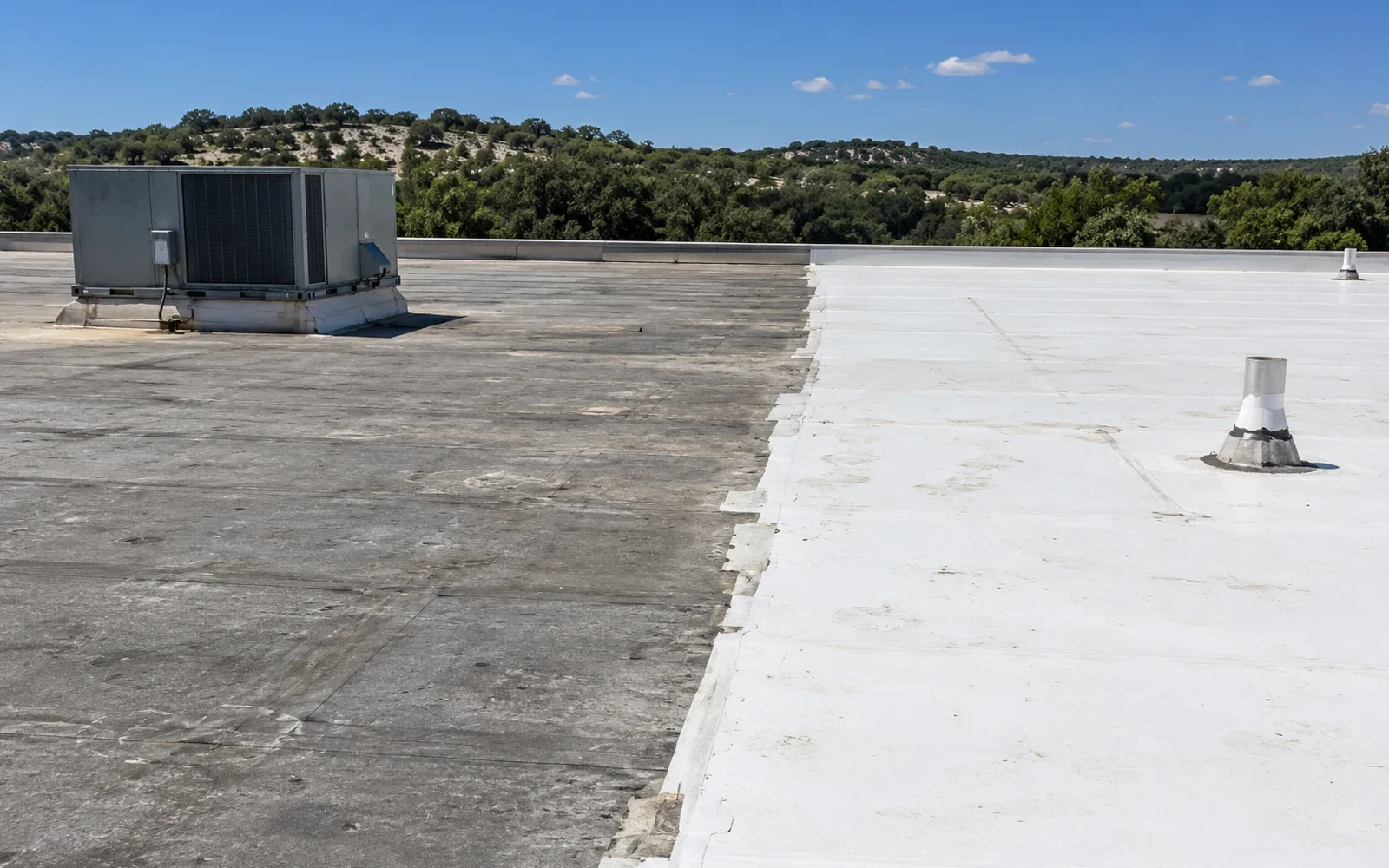
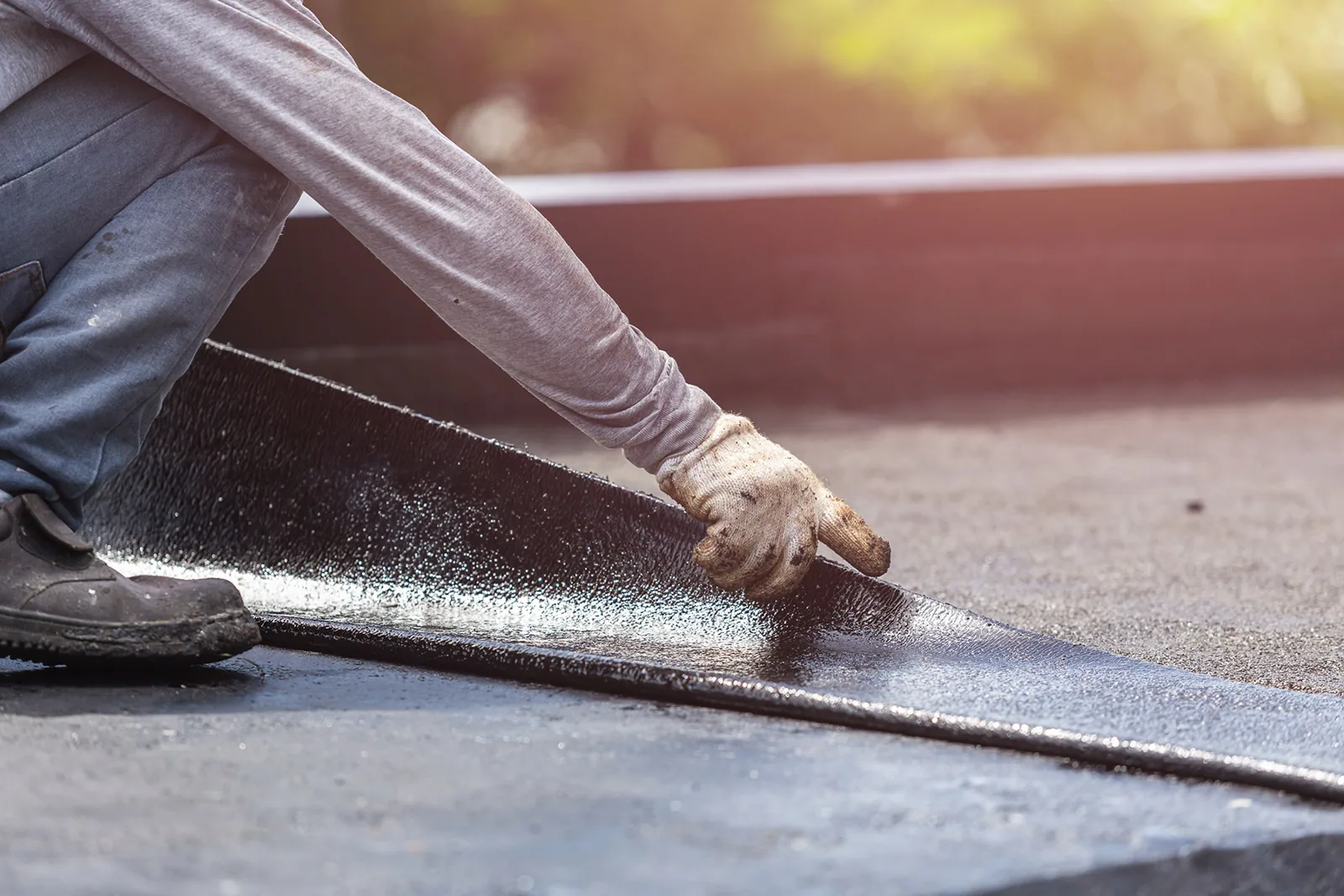
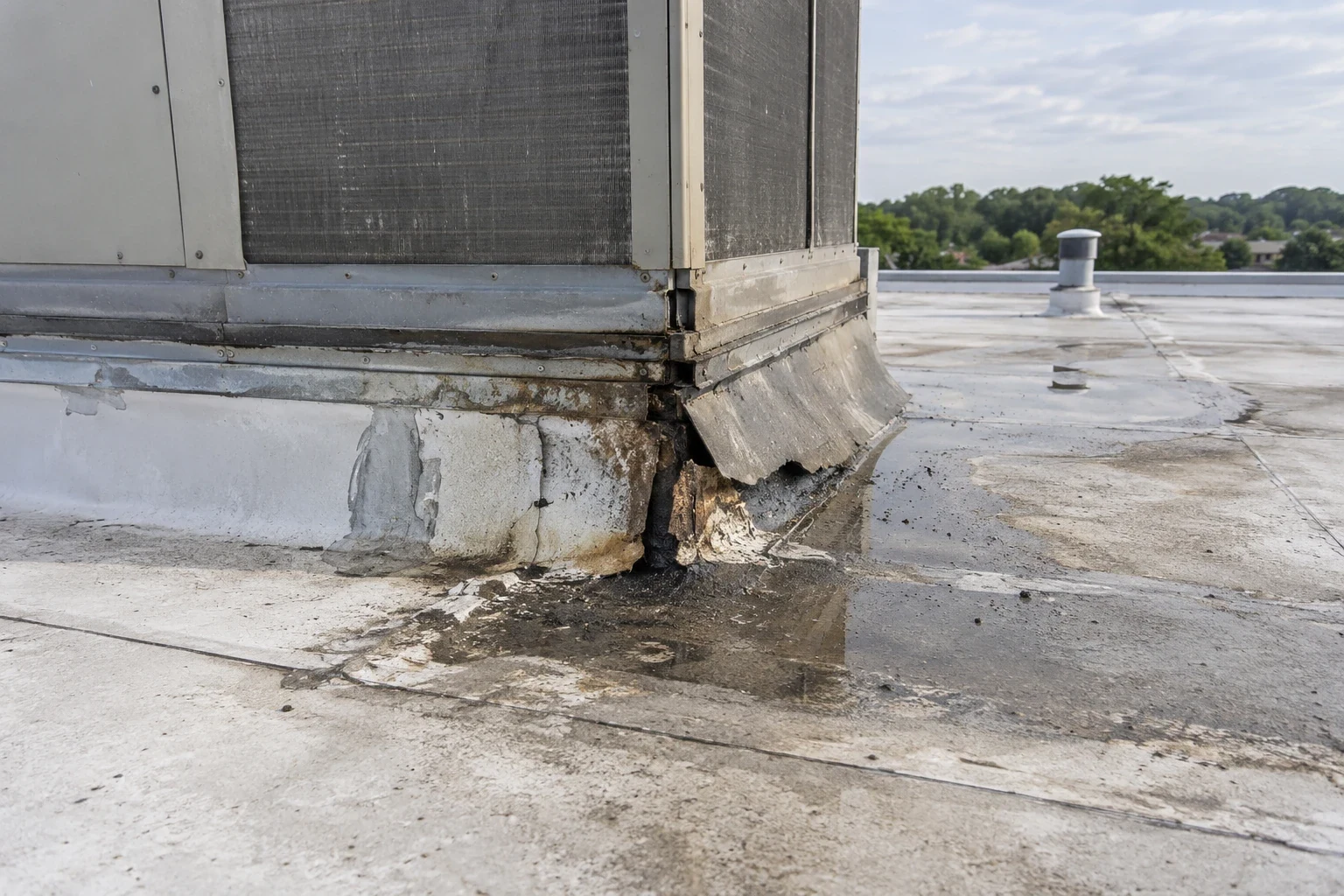
UV attacks the exposed layer first. On thermoplastic sheets, it can strip the protective top and expose the reinforcement, which shows as a rough, pale, sometimes fibrous surface. On rubber sheets, the surface dulls and may show fine cracks at folds and corners. On modified bitumen, mineral granules wear away and the asphalt hardens and crazes. On coatings, the film chalks and thins.

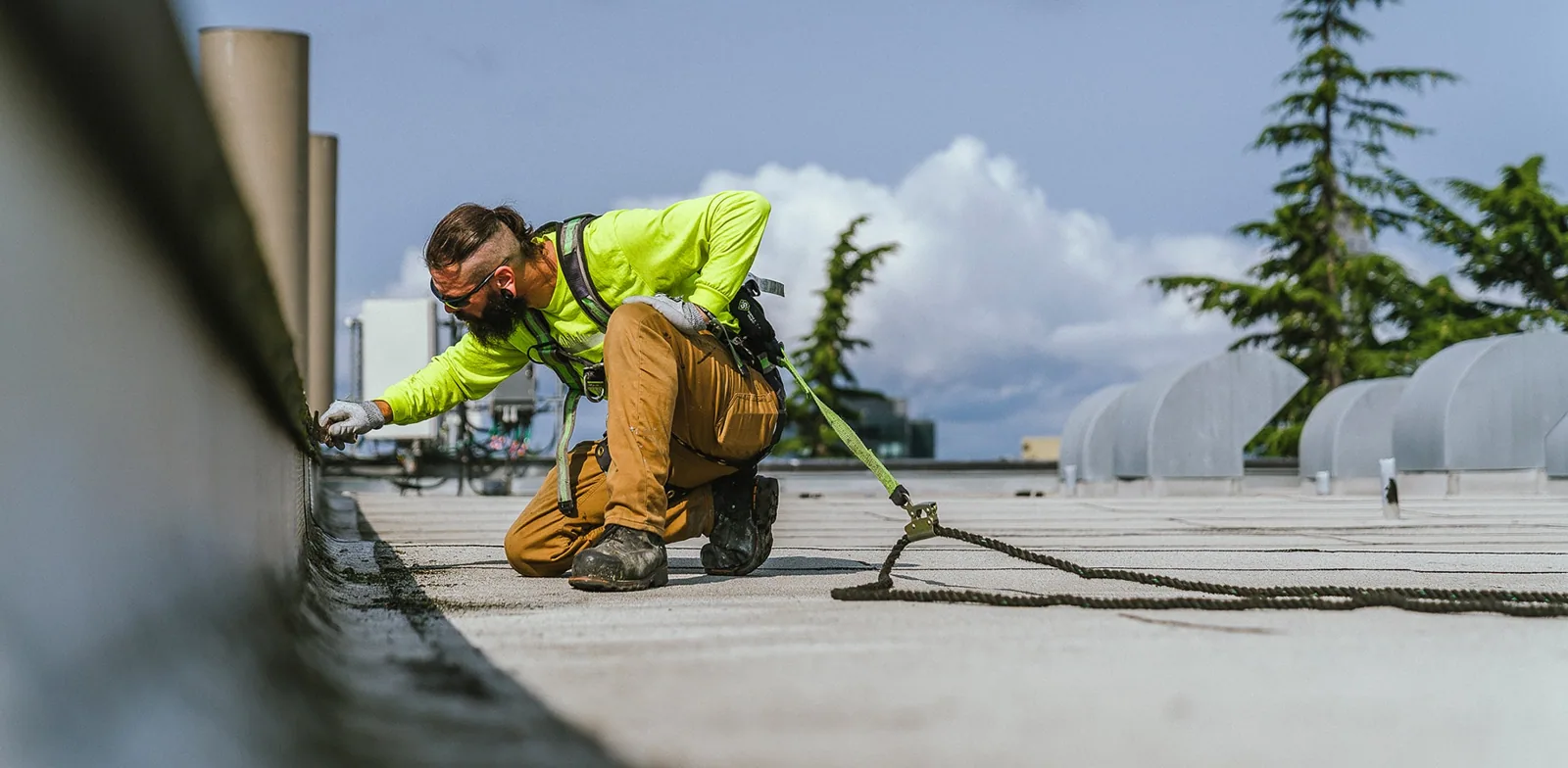
We check by hand and by eye. A chalky residue on a glove means loss. Color change means loss. Exposed reinforcement means serious loss. We compare a sunlit area with a shaded area, such as the lee of a parapet or the underside of a unit's skirt, because the contrast shows how much material the sun has taken. A core sample at one or two spots measures what is left. The thickness goes on the plan, and the plan sorts roofs by remaining service.

Humidity adds a second wear path. Moisture and algae settle on shaded or low areas, hold water against the surface and break down the top layer faster than sun alone. We look for dark staining and growth near drains and along north-facing walls, clean a test patch to see whether the damage is in the film or in the sheet, and photograph the result. A surface that cleans up has lost nothing; one that stays rough has.

Heat and UV Roof Damage Repair

Thermal Movement at Seams and Details

A roof expands in the afternoon and contracts overnight. August highs average near 98 F at Austin Camp Mabry. Under that load, a roof surface can run far hotter than the air. The movement is greatest at fixed points: curbs, pipes, parapets and the ends of laps.

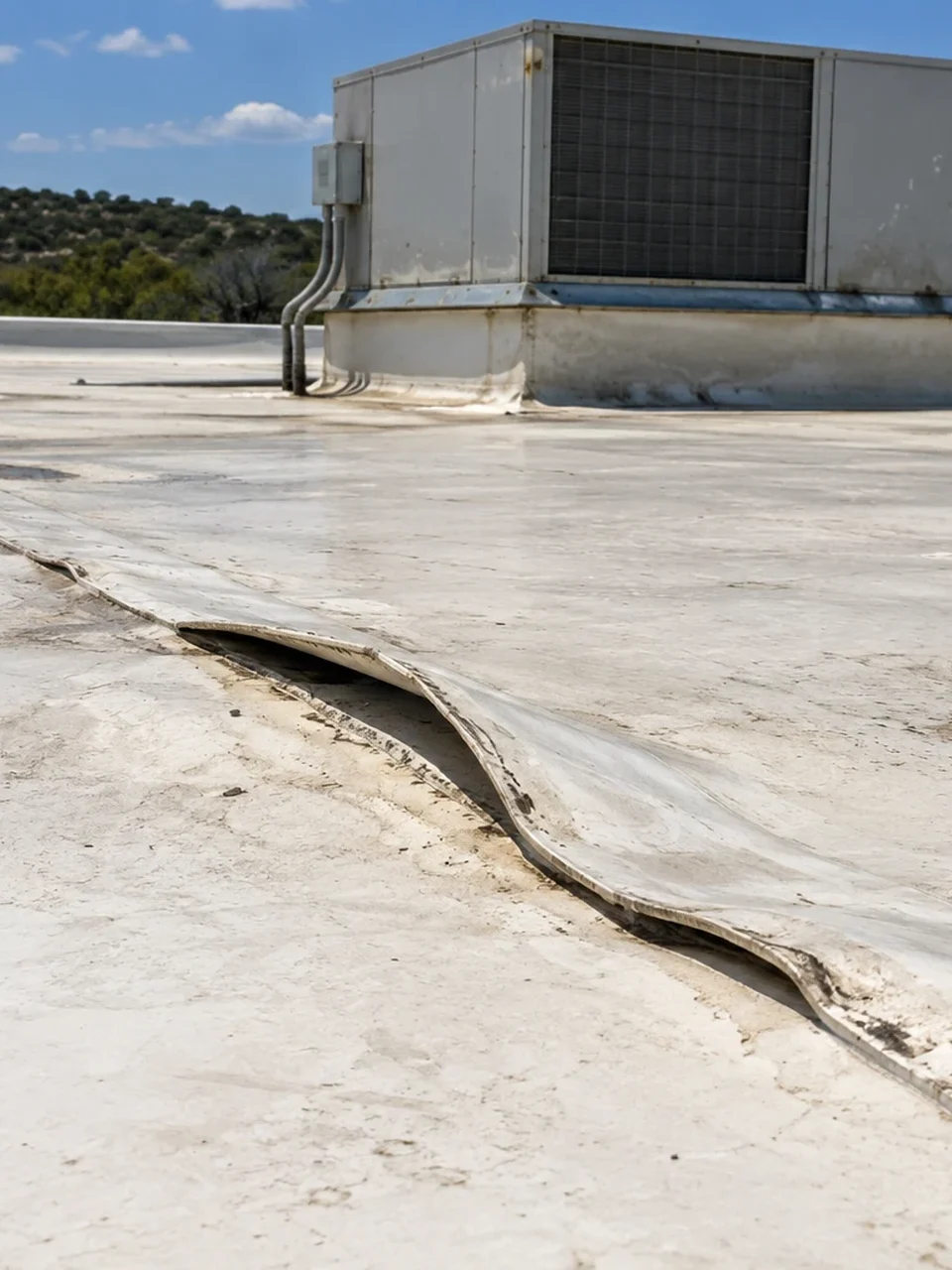
Repeated cycling stretches sealants, pulls seams at their ends and fatigues flashing metal. Heat damage often shows up first in those places, and the repairs follow the same steps as seam failure repair and flashing failure repair: clean, remove the failed material, rebuild the joint and record it. A hairline crack at a curb corner takes minutes to fix when found in dry weather, and a long investigation when found as a ceiling stain.

Rooftop Units Concentrate Heat and Traffic

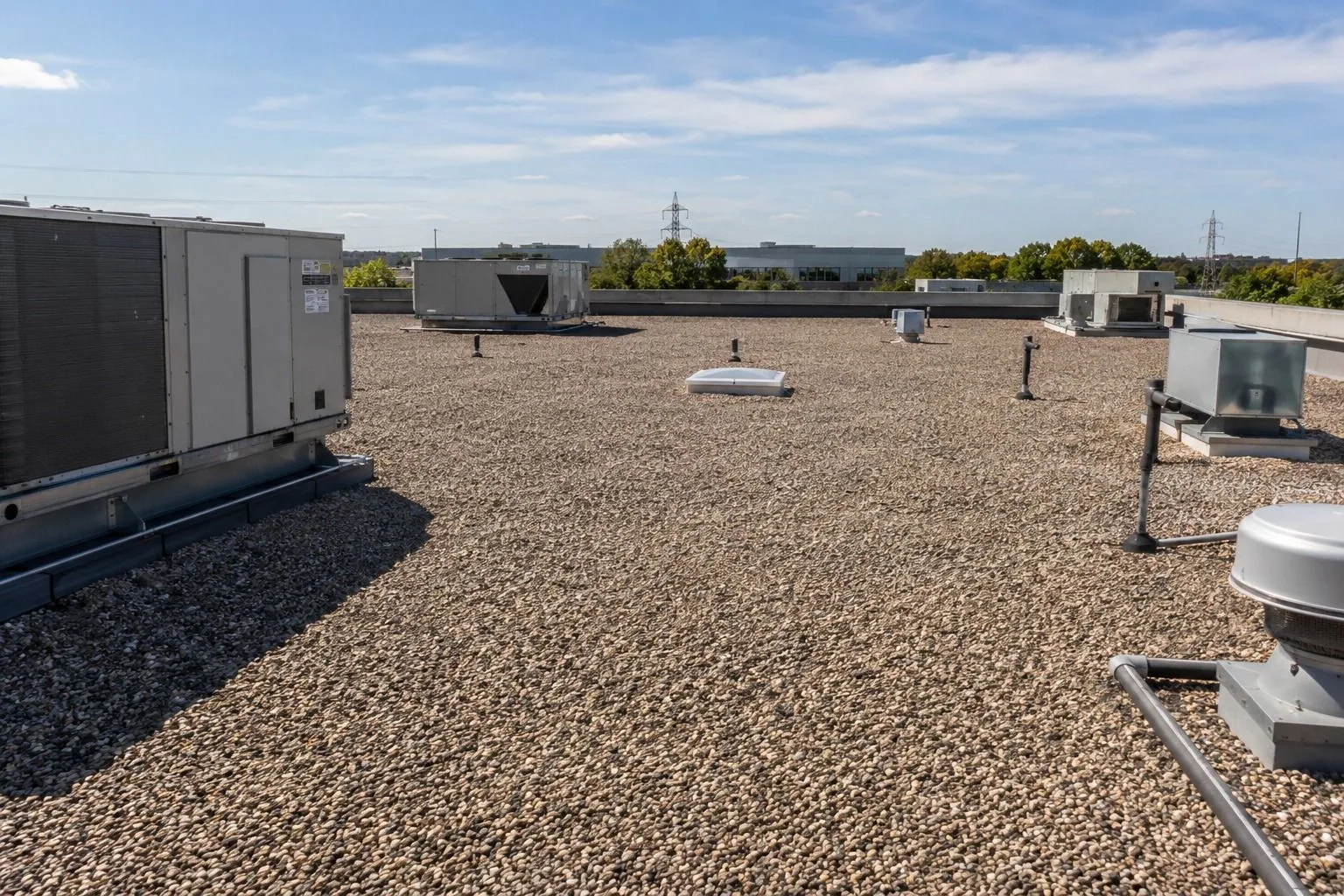
Equipment adds to the load. Condensers and exhaust fans blow warm air across the membrane. Metal housings radiate heat. Service routes carry foot traffic on a surface that softens in the afternoon, and a softened sheet scuffs and thins quickly under repeated steps. Around the units, the roof ages faster than in the open field.

We map the routes, measure the surface around each unit and compare it with open areas. Where wear is clear, we recommend walk pads and a protective layer on the worst spots. A preventive maintenance visit before summer and another after the heat breaks catches early loss and logs it. At a distribution center roof or any building with many units, that log tells us which routes are wearing and how fast.

Restore With a Coating, or Replace

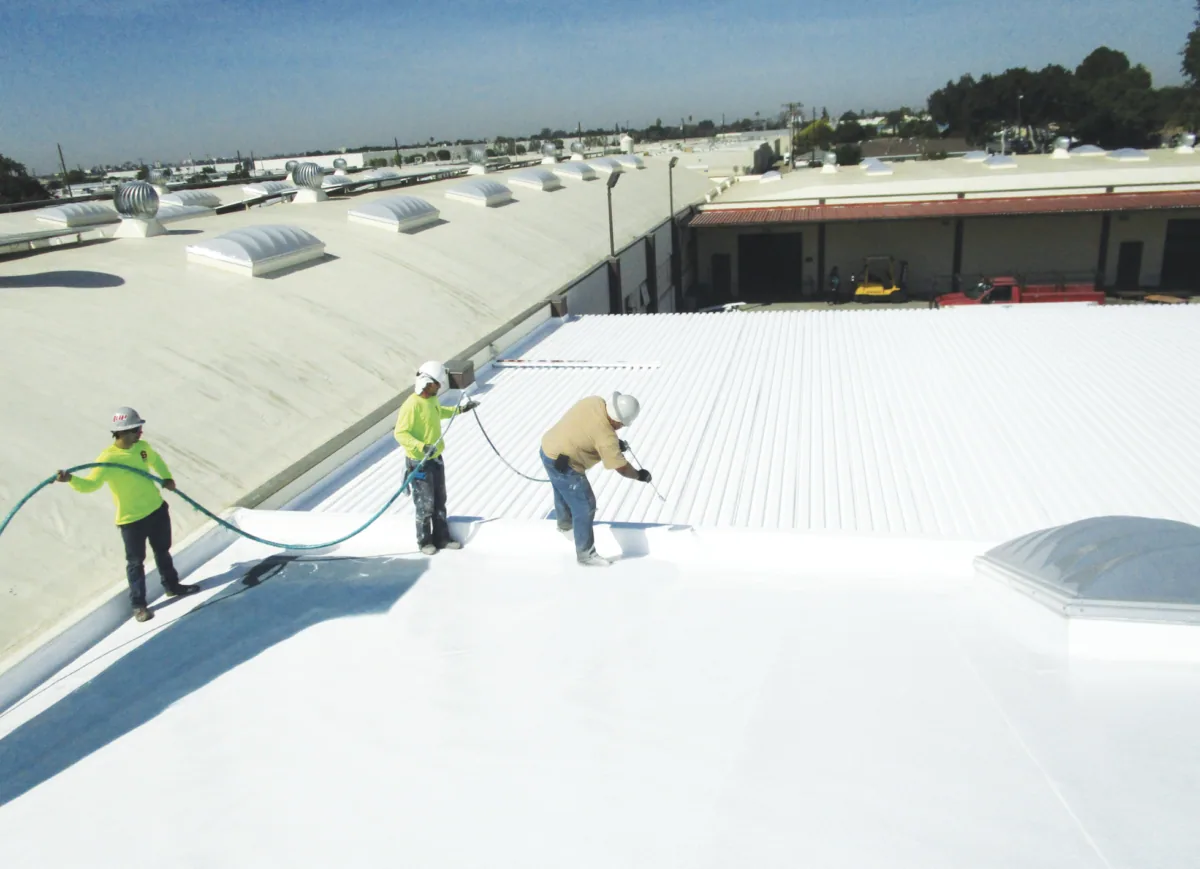
When a membrane has lost surface but still has thickness, dry insulation and sound seams, a roof coating restoration can add years. The roof is cleaned, defects repaired, seams and flashings reinforced and a liquid-applied coating rolled or sprayed over the surface. A silicone coating tolerates ponded water, and an acrylic coating suits roofs that drain freely. The choice follows the existing membrane and the drainage.

Coating is not a rescue. It does not fix wet insulation, open seams across a field or a brittle sheet that cracks when flexed. We test moisture first, probe seams and check flexibility. If the roof qualifies, the scope states the years gained and the cost. If it does not, replacement is the better value, and the scope shows both numbers side by side so the owner chooses with the full picture.

Prep decides how long a coating lasts. Dirt, chalk and algae must come off, seams and flashings must be sound, and the surface must be dry. We test adhesion on a small area before coating the roof, and we record the temperature and humidity on the day. A coating applied in the wrong conditions can fail early, so we wait for a suitable window and say so in the schedule.

Heat and UV Roof Damage Repair

Reflective Surfaces and Energy Code

A reflective roof runs cooler, which slows some aging and lowers cooling load. A cool roof installation uses a light membrane or a reflective coating to reduce the heat the surface absorbs. In a climate with hot, humid summers and effectively no snowfall, the benefit comes mainly from summer.

San Marcos works from the 2021 International Energy Conservation Code and the 2021 International Building Code. Insulation levels and roof reflectance requirements in a replacement follow the editions that apply, and we confirm them before pricing. Dirt buildup lowers reflectivity over time, so a wash can recover some performance. Areas near the I-35 business park corridor and across the city get the same check.

Heat and UV Roof Damage Repair

Rank by Remaining Thickness

Heat and UV damage is gradual, so the record matters more than any single repair. We photograph surface condition in set positions, log core thickness, rate each section and repeat each year. The comparison shows how fast the surface is wearing.

With that record, an owner can plan. A section with years left goes on a maintenance schedule with checks before and after summer. A section near the end of its service life goes on the replacement queue with a date range and a cost range. The cost of waiting is shown next to each line. Over time the file shows which buildings age fastest and why, which helps decide where a coating pays back and where replacement is the sensible choice. Either way, the schedule is known, and a leak does not set it.

Records of this kind also help a seller. A buyer's inspector will test the same thickness and wear, and a file that already shows the numbers shortens the conversation. It also supports warranty work, since the wear pattern shows whether a failure came from age or from something else.

Commercial Roofing Questions

How do I know if UV has damaged my membrane?

Look for chalky residue, color change, exposed reinforcement and fine cracks. A core measures what remains.

Can a coating fix a heat-damaged roof?

If the membrane is flexible and the insulation is dry, yes. Wet insulation or brittle sheet rules it out.

Why do seams open in summer?

Heat cycling stresses the weakest laps first. Probing shows which ones are opening.

Do walk pads help against heat wear?

Yes. A softened surface scuffs easily, and pads take the wear.

Is a white roof worth the cost?

It lowers surface temperature and cooling load. The scope compares cost and years gained.

Send the Building List and the Last Roof Report

Send the building list and the most recent roof report, and a superintendent will walk the most exposed sections first and return a ranked condition summary. Start from the contact form.

Request a Roof Assessment

Related Roofing Work

ServicesRoof SystemsIndustriesProperty TypesService AreasRoof Damage RepairCapabilitiesManufacturersAboutContactRequest a Roof Assessment555-555-5555
Call555-555-5555