555-555-5555

Bear Creek

A village with few buildings has an odd effect on a roof budget: every roof counts for more. Bear Creek, TX is a village in northern Hays County that borders Austin, about 16 miles by road southwest of downtown, with FM 1826 as its eastern border and the Travis County line to the north. It had 397 residents in 2020 and sits at an elevation of 991 feet. An owner of one or two commercial buildings there does not need a portfolio program; they need to know whether the roof they have will make it through the next budget year and what it will cost if it does not.

We read the roofs of small owners the way we read large ones, with a walk, a moisture check and a plain grade for each section.
Read the Small Roof as a System

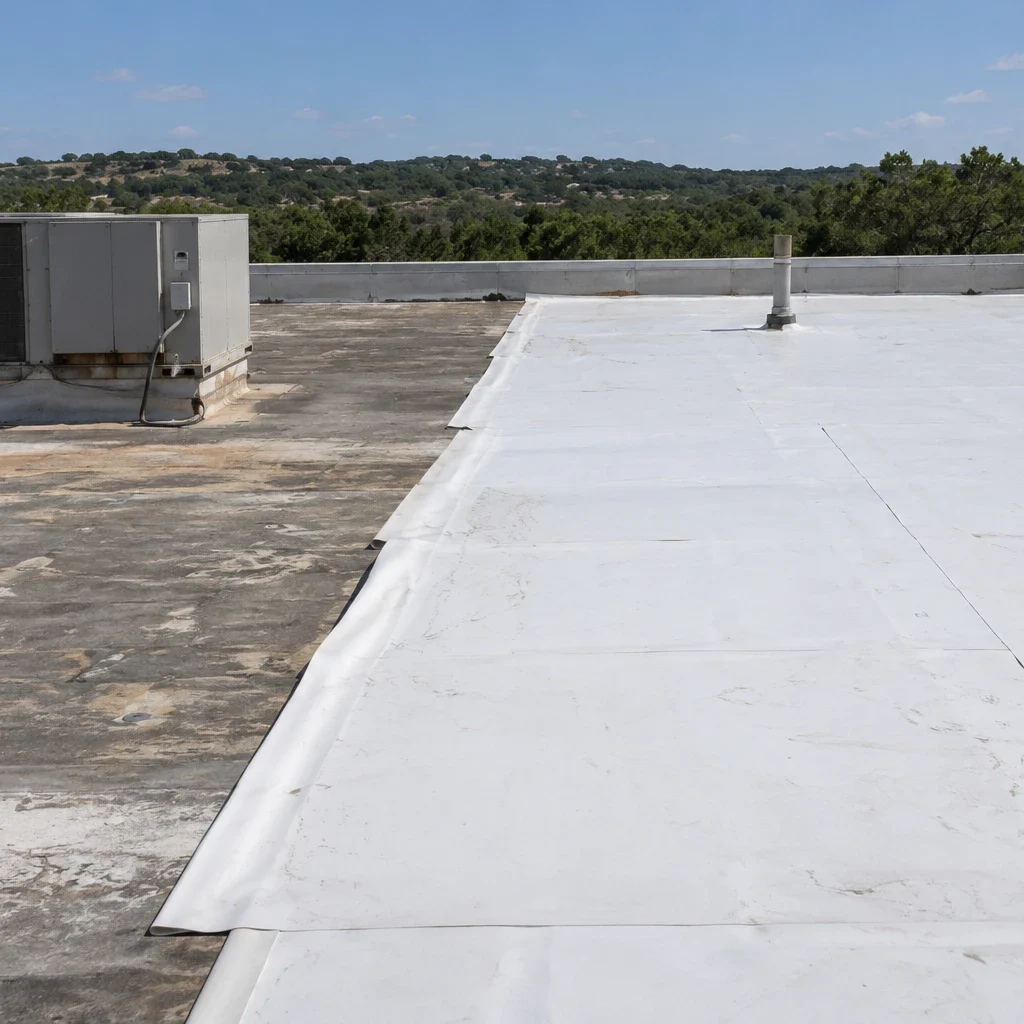
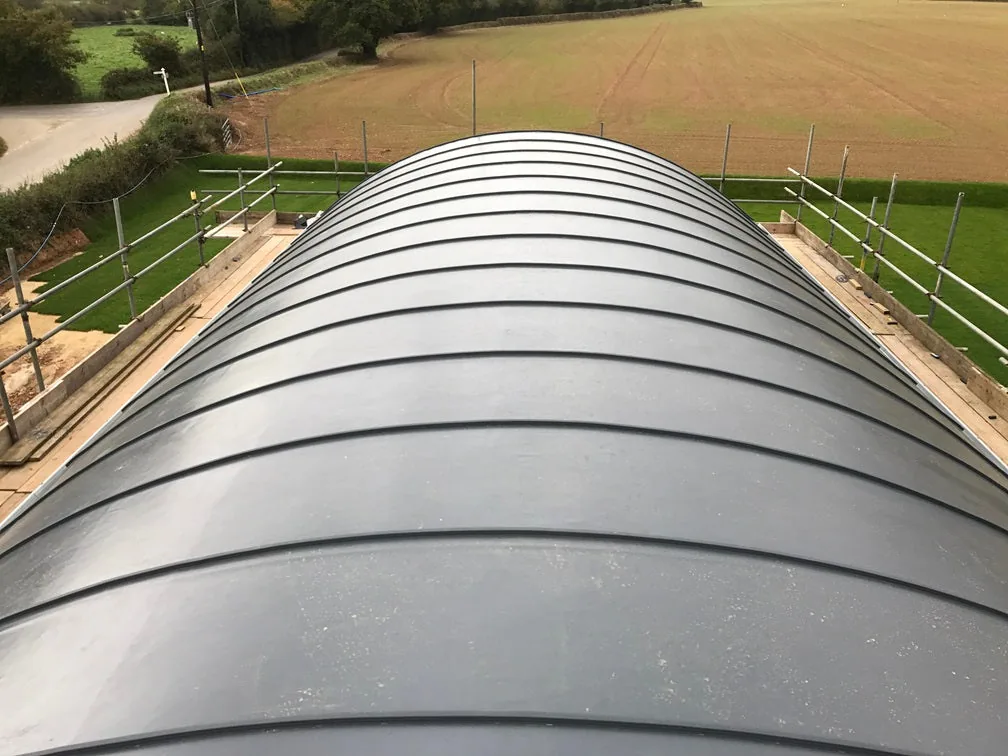
Even a small roof is a system: a deck, insulation, a membrane or panels, flashings, edge metal and drainage. The weak point is usually where two parts meet. A pipe boot, a wall base or a curb is where most small roofs fail first.

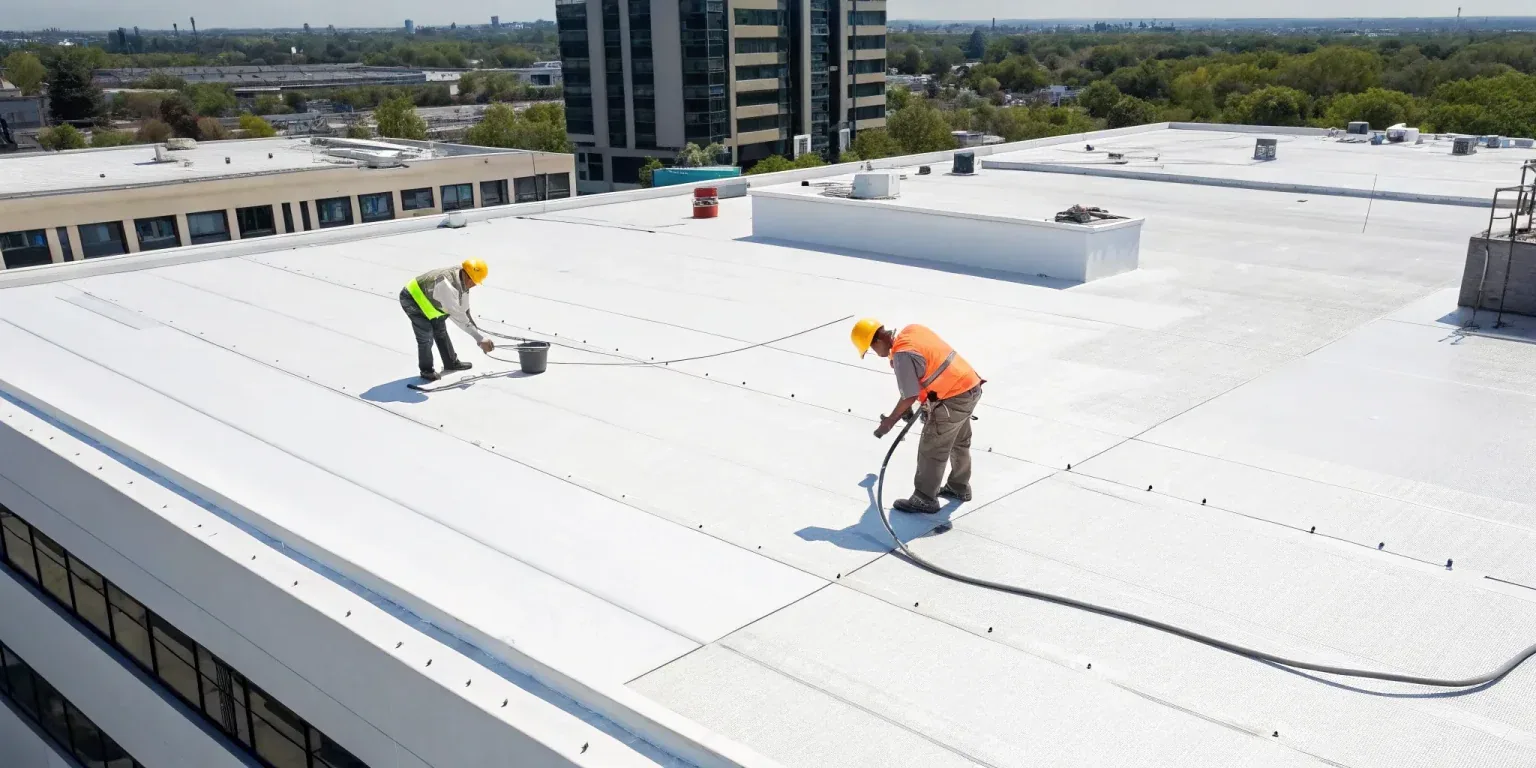
We start at the drains, gutters and scuppers, because standing water tells us about slope and about debris. We then walk the seams and laps, check the edge metal and probe the flashings at walls and penetrations. We press on soft spots and look at the ceiling below for stains.

The walk takes less time on a small roof, but it covers the same ground. A short report with photographs gives the owner a record that a larger owner would pay a program to keep.

Access is part of the system. A single hatch or fixed ladder may be the only way up, and its condition sets how safely a crew can work. We check the ladder, the hatch curb and the route from the hatch to the nearest unit, and we mark the route on the sketch so the next visitor, whether a roofer or a mechanical technician, uses the same path.

Bear Creek
Bear Creek

Find the Water Path First

Water enters at one point and shows up at another. A stain on a ceiling tile tells us where it came out, not where it went in. We map every interior stain, then compare the map with the roof plan to find the likely entry points.

A moisture scan from above narrows the search. We use infrared or a meter to find wet insulation, and we cut a core at the edge of any wet zone to confirm. The core shows the layers, the thickness of the insulation and how wet it is. A commercial roof leak repair aimed at the right spot costs far less than a patch applied where the stain shows.

If the roof is dry and the stain persists, the cause may be condensation or a mechanical leak. We look at air handlers, drain pans and plumbing before we call it a roof problem.

Drainage is the second thing a small roof needs to get right. A scupper set a little high or a gutter that has pulled away from the fascia can hold a pond or send water behind the wall. We measure slope with a level after rain, log any low spot and check each outlet for debris. Water that stays on a flat roof for two days wears the sheet and adds weight to the deck.

Check Edges and Fasteners Against Wind

Wind lifts an edge before it lifts a field. Coping, drip edge and fascia are the first to loosen, and once air gets under them the membrane or panel can follow. On a small building, edge metal makes up a large share of the roof's perimeter, so a loose run matters.

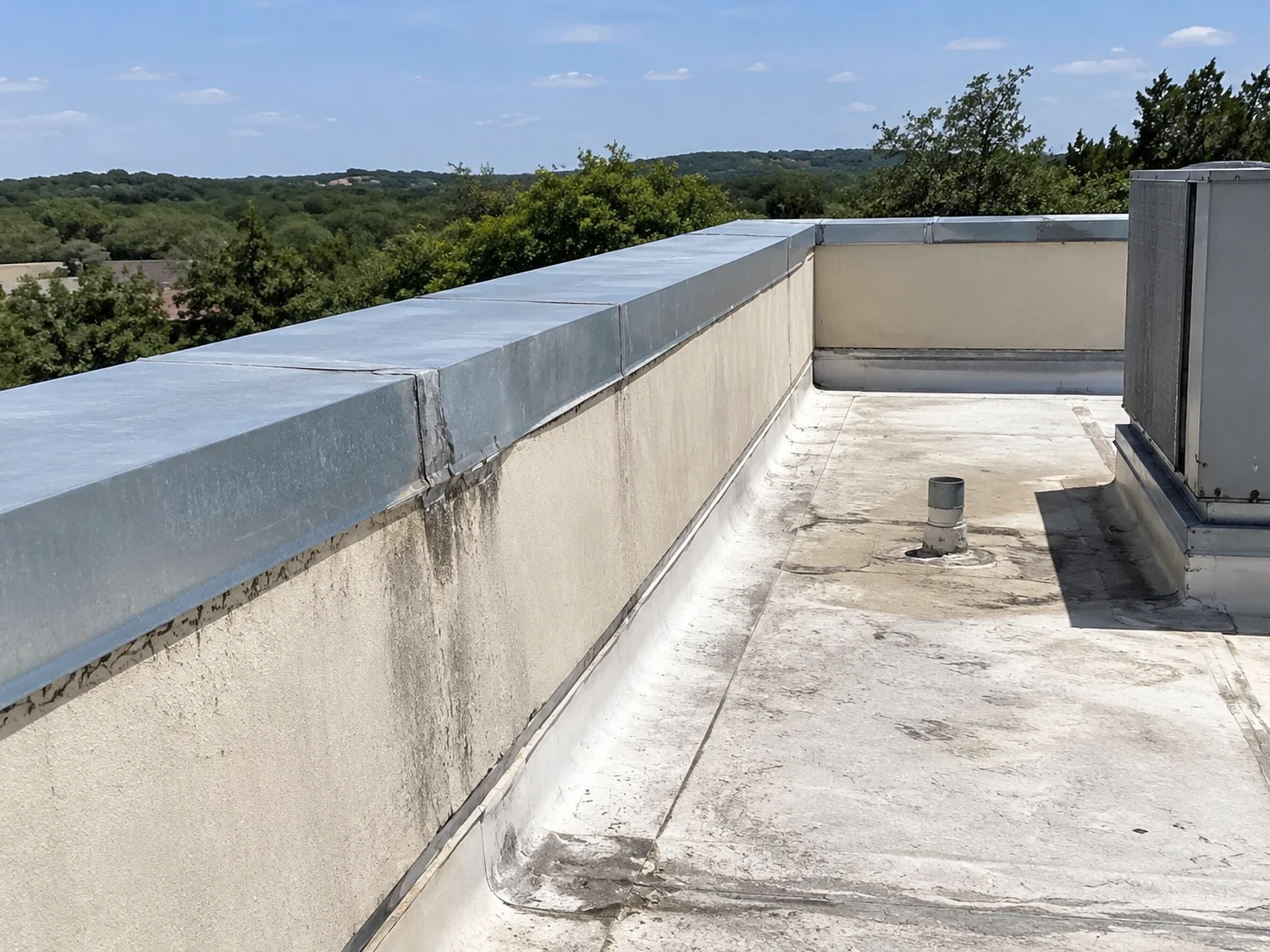
We tug-test edge metal, press sealant and check fastener spacing. On metal roofs we look for backed-out screws, cracked washers and rust rings. A coping and edge metal repair is cheap compared with a roof that peels in a storm.

Northwest San Marcos took the storm's wind damage in the form of toppled trees, which fell on fences and homes across several blocks. A limb over a roof is a hazard in its own right, and we note any we see.

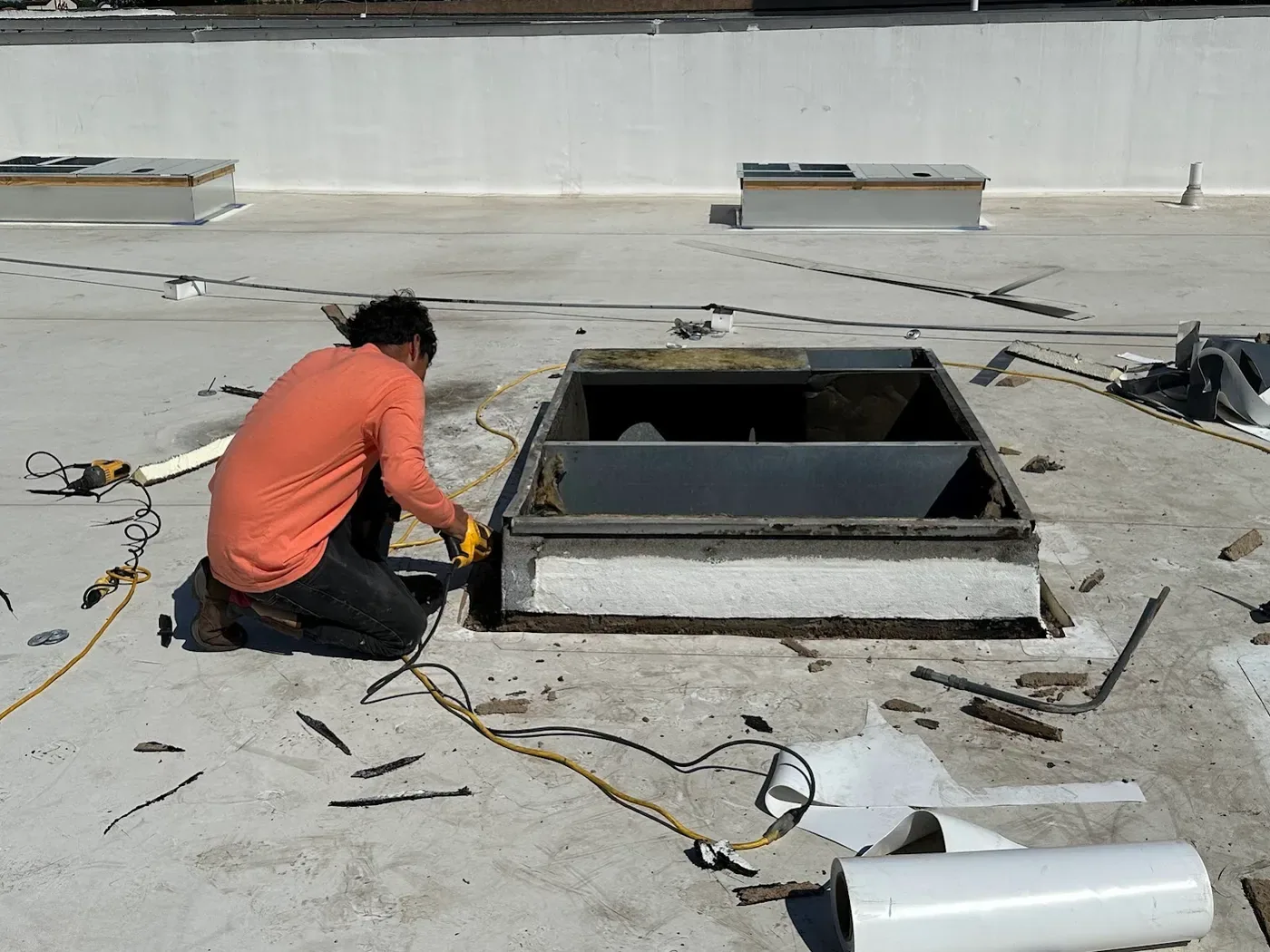
Rooftop equipment adds its own checks. Condensers, exhaust fans and vents sit on curbs or stands, and each one is a cut in the roof. We look at flashing corners, fastener tightness and sealant, and we follow condensate lines to see where they end. A line that dumps on the membrane wears a hole in a season.

Place Hail and Heat in Context

A hail report out of Johnson City on May 9, 2024, with stones up to six inches across, introduced the storm that would reach San Marcos. After a storm, we scan for bruised insulation and cut cores where the scan flags. Roofs that show nothing get a note saying so.

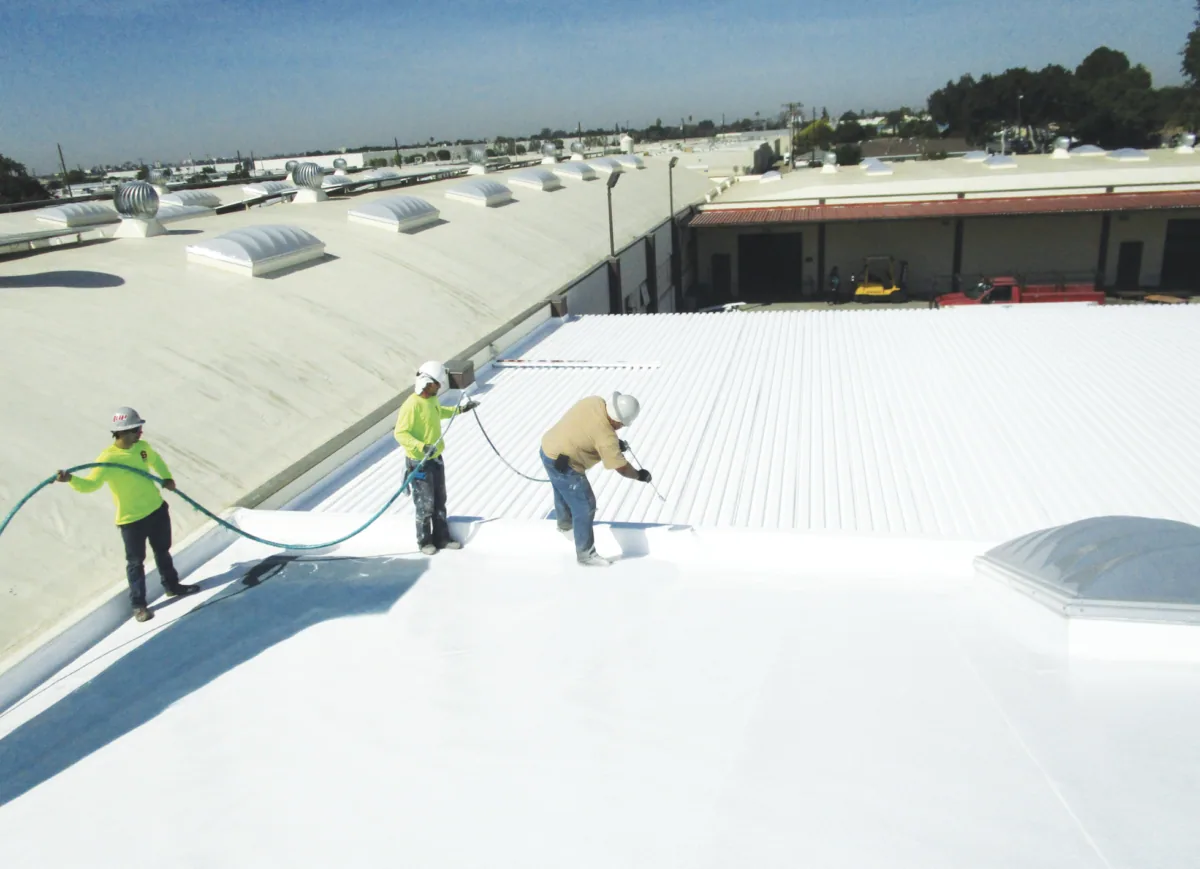
Heat is the slower load. August highs near 98 F at Camp Mabry in Austin set the summer load. Sealants, coatings and flashings age under it. A roof coating can lower surface heat on a sound membrane, and we price it next to replacement when the cores show dry insulation.

A hard freeze finds weak spots. Water in a small crack expands when it freezes and widens the gap. We seal visible cracks before the cold season and clear drains so melt has somewhere to go.

Bear Creek

Repair, Restore or Replace

The decision follows the evidence. Dry insulation and a sound membrane call for repair or coating. A tired sheet over a sound deck calls for a recover. Wet insulation or a damaged deck calls for removal. Cost follows wet area, penetrations, access and how much of the building stays in use.

The energy side of a San Marcos roof is governed by the 2021 International Energy Conservation Code, adopted in 2023. For a Bear Creek project we ask the permit office with jurisdiction which edition applies before pricing a replacement.

Whether to patch again is a common decision on a small roof. A third patch on the same spot usually means the surrounding material has failed, and the fourth costs more than a repair that addresses the area. We show the readings and the options in writing so the choice rests on evidence.

Bear Creek

Keep a File the Next Owner Can Read

A small owner can still keep a clean record: dated photographs, a sketch of drains and penetrations, the core results and a note of every repair. The file helps with insurance, with a sale and with the next roofer. It also shows the owner which roof sections are stable and which need attention again.

Owners with buildings in Bear Creek and in nearby Dripping Springs or Manchaca can keep them in one inventory, with a written condition report for each.

Commercial Roofing Questions

Does a very small owner need a roof program?

A simple file is enough: photographs, a sketch and a dated grade. It shows the roof declining before it fails.

How do you find a leak when the stain is far from the entry?

We map the stains and scan the roof. Wet insulation points to the path, and a core confirms it.

What should be checked after a windstorm?

Edge metal first, then rooftop units and loose flashings. Overhanging limbs get a note too.

Is coating a good choice for an older small roof?

When the insulation is dry and the membrane is sound, yes. Wet insulation rules it out.

Which permit office applies to a Bear Creek roof?

Whichever office holds jurisdiction over the property. We confirm the edition in force with it before pricing a replacement.

Send the Building Details and Past Reports

Send the building address, the roof age if known and any past reports, and we will sort the roof into replace, repair and watch groups before your next budget year.

Request a Roof Assessment

Related Roofing Work

ServicesRoof SystemsIndustriesProperty TypesService AreasRoof Damage RepairCapabilitiesManufacturersAboutContactRequest a Roof Assessment555-555-5555
Call555-555-5555