555-555-5555

Johns Manville Roofing

A campus is a roof inventory built in phases, and the phases are visible from above: one wing in a single-ply sheet, the next in a layered membrane, a third added later with a different insulation. The Texas State University main campus in San Marcos, TX spreads roughly 250 buildings across about 517 acres of hilly land beside the San Marcos River, and a facility director holding roofs on a property like that carries a different budget year from an owner of one warehouse. Johns Manville is a manufacturer whose roofing line spans membranes and insulation. What matters on the ground is what the assembly is, how old it is and what it is doing today.

The Assemblies in Question

A roofing manufacturer of this scale typically offers single-ply membranes, built-up systems and insulation boards. TPO, PVC and EPDM sheets fall in the first group. Layers of felts and asphalt fall in the second, and the built-up roofing family has a long record on institutional buildings. The third group, insulation, is where much of the thermal performance of a low-slope roof lives.

Insulation carries a large part of the assembly's value. Rigid boards laid under the membrane carry the roof's energy performance, and they carry it only while they are dry. Wet insulation loses value fast, sags and corrodes fasteners. A roof can have a sound surface and a failed assembly.

We find out what is on the roof by cutting cores. The cores show membrane, cover board, insulation type and thickness, deck and attachment.

Cover boards are the quiet upgrade. A dense board over the insulation takes foot traffic, spreads point loads from dropped tools and improves resistance to hail. On a campus where technicians walk the roof every week, the board protects the more expensive layers beneath.

Johns Manville Roofing

How Campus Roofs Differ

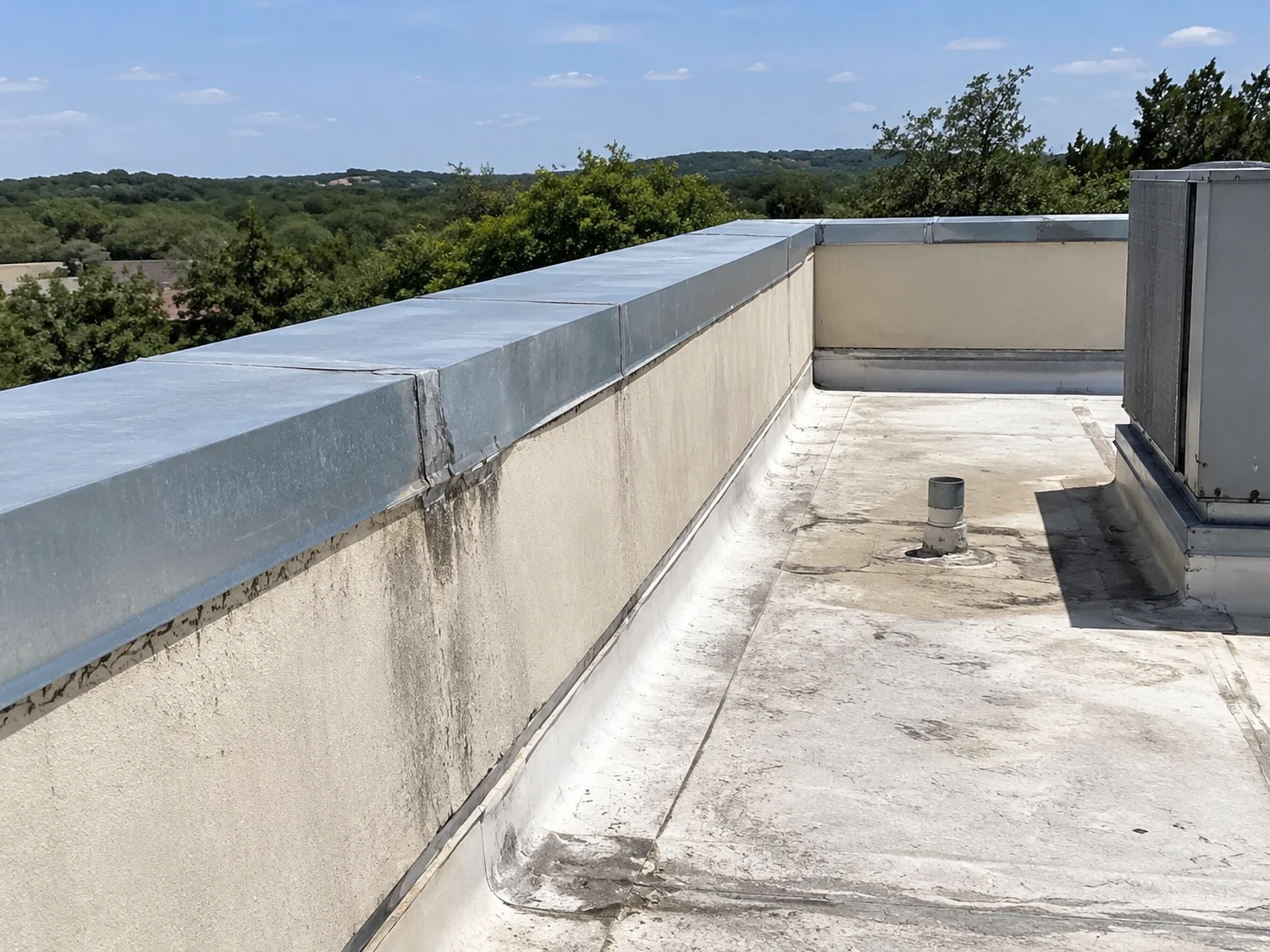
Campus buildings add wings in stages. Each wing arrives with its own roof, its own age and its own details. The joints between sections move more than the field and fail first. Mechanical rooms and labs add rooftop equipment that needs frequent service, and technicians wear paths into the membrane.

The calendar governs the work. Large reroofs fit summer and term breaks. Small repairs can run during classes, with staging kept away from entrances, walkways and lecture-hall exits. Bobcat Stadium was expanded to seat 30,000, a reminder that campus facilities hold large public assembly spaces whose roofs need coordination with event schedules.

Our college and university roofing work starts with a map of every roof section, each with its own age and system. The map keeps one wing's repair from being applied to another wing that needs something different.

Drainage across a campus roof needs steady attention. Leaves from mature trees collect at drains and scuppers, and a hilly site pushes water toward the low corners of buildings. We clear and photograph every outlet at each visit, and we log any pond that persists two days after rain.

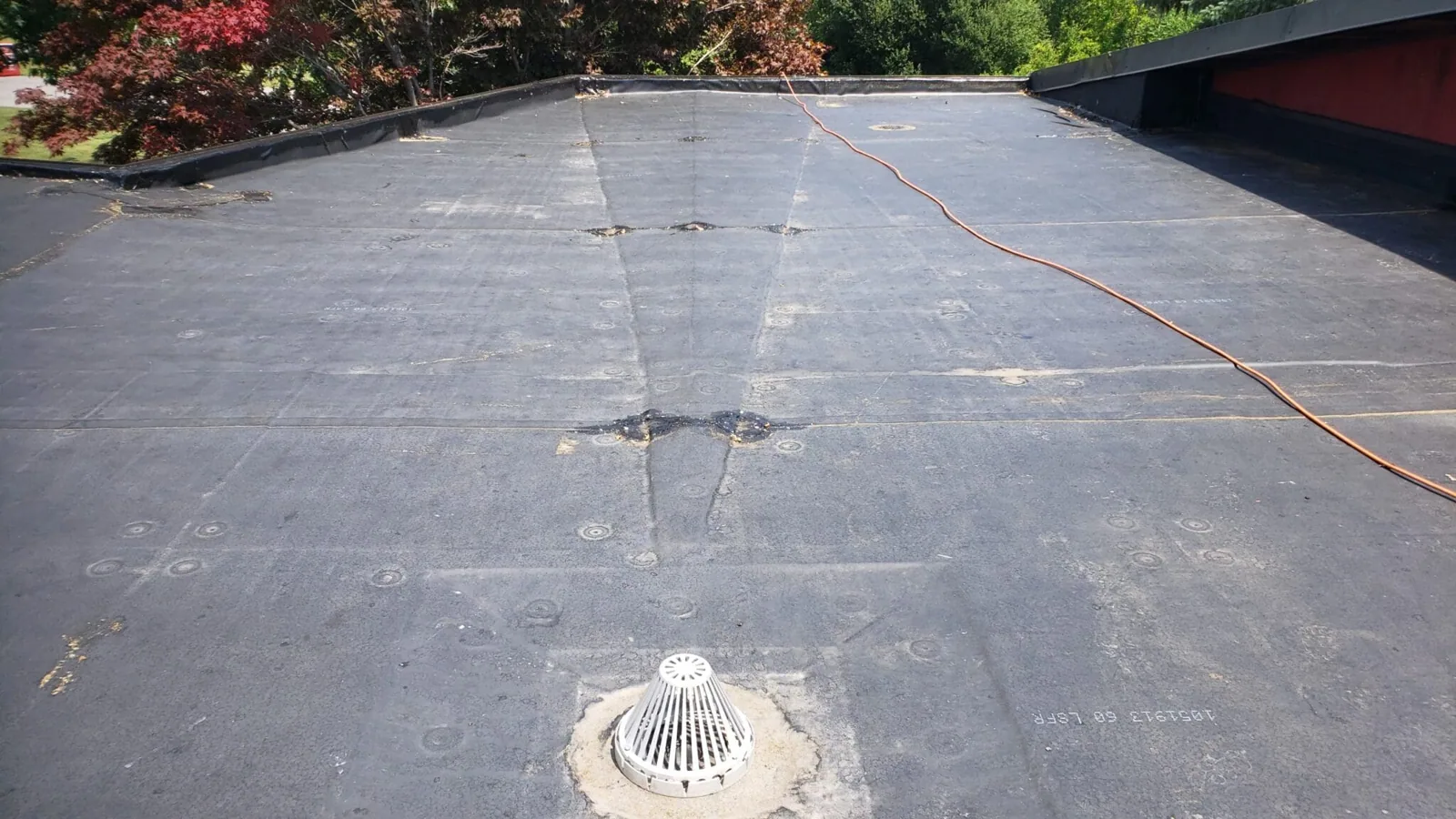
Roof drains on a hilly site collect runoff-borne grit, so the sumps get checked for sediment as well as leaves, and strainers are reseated after every cleaning. A clogged sump is easy to miss from the ladder and obvious in a photograph taken at the bowl.

How We Install and Repair

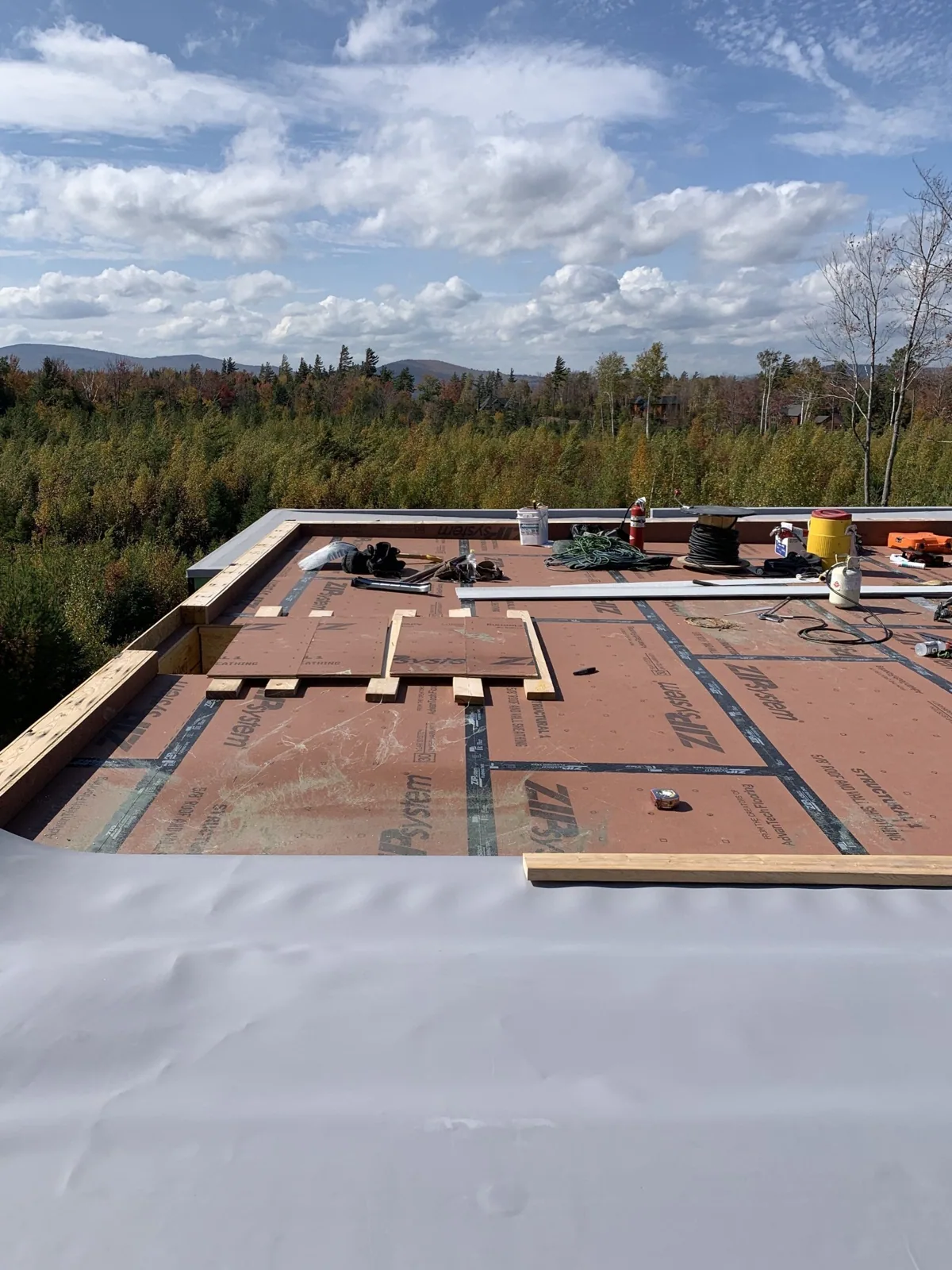
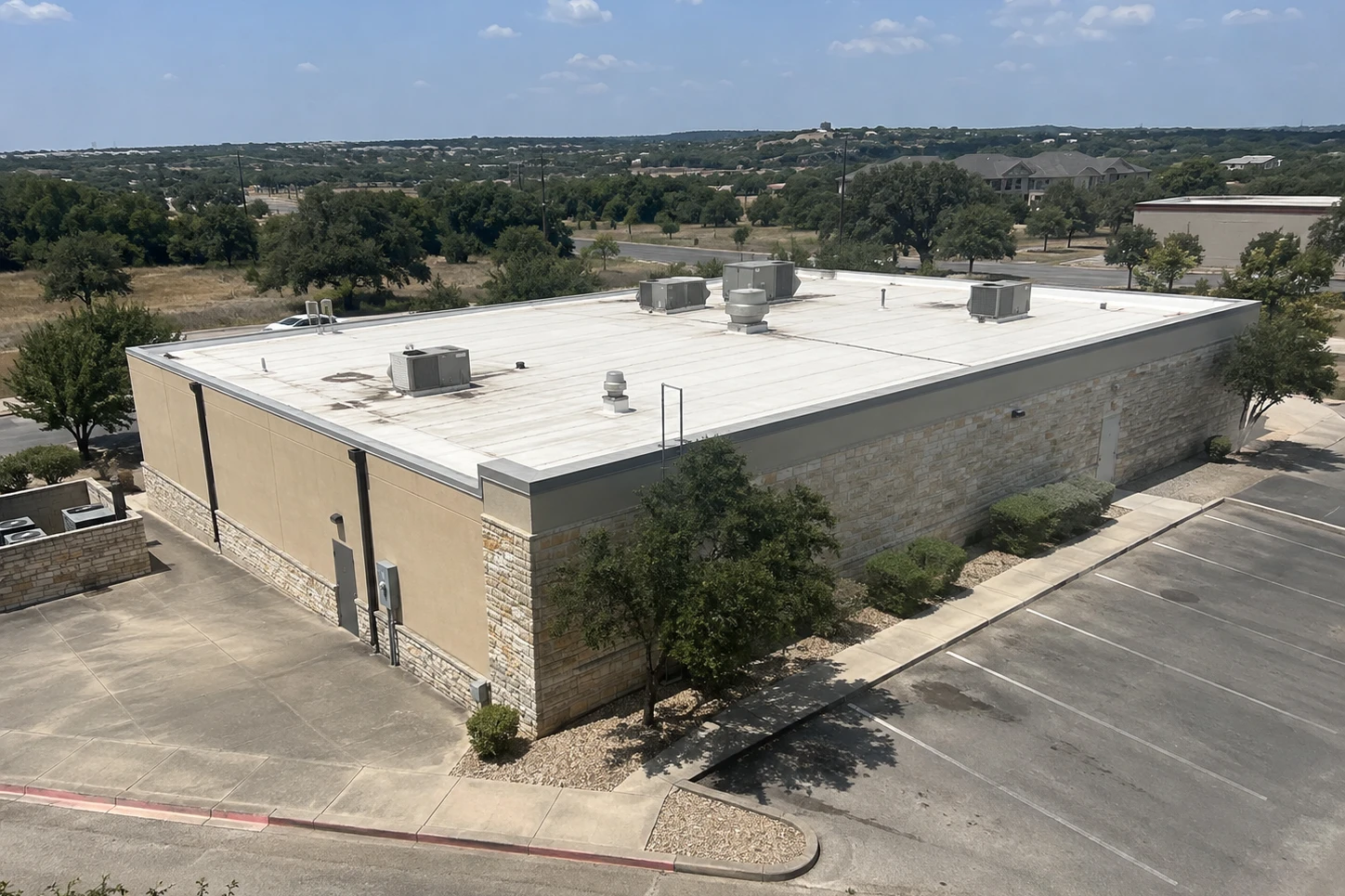
Work follows the published installation details for each assembly and the permit set. Decks are checked for damage and rust. Insulation is laid in staggered joints with board edges tight. Membranes are attached by the method the design calls for, and every wall, curb and drain is flashed to the manufacturer's detail.

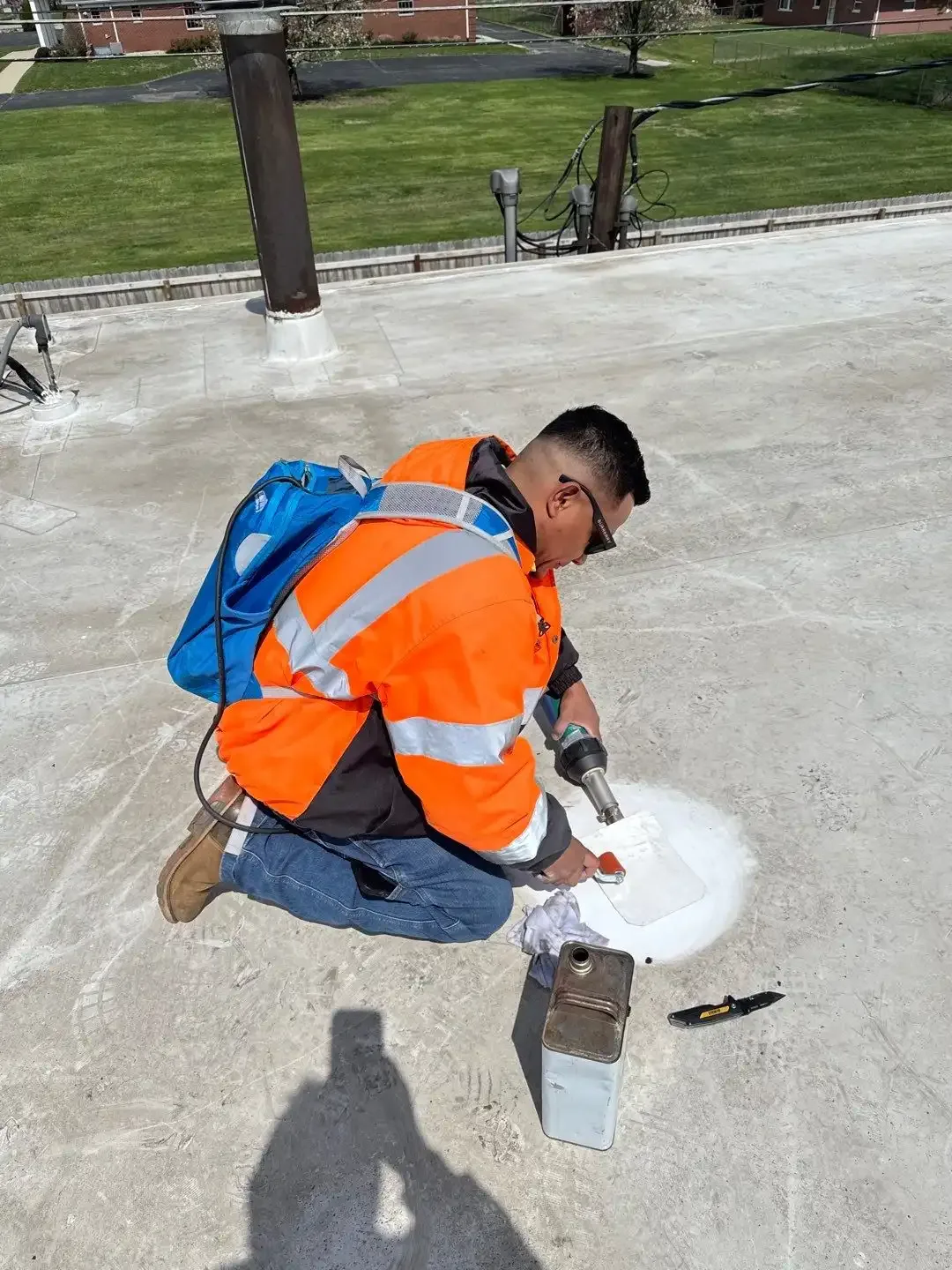
Repair begins with the cause. A split in a built-up membrane is cut out and rebuilt with new plies that overlap the old. A seam in a single-ply sheet is cleaned and re-welded or re-taped. Wet insulation is cut back to dry boundaries and replaced with matching board, then the repair is re-flashed and tested.

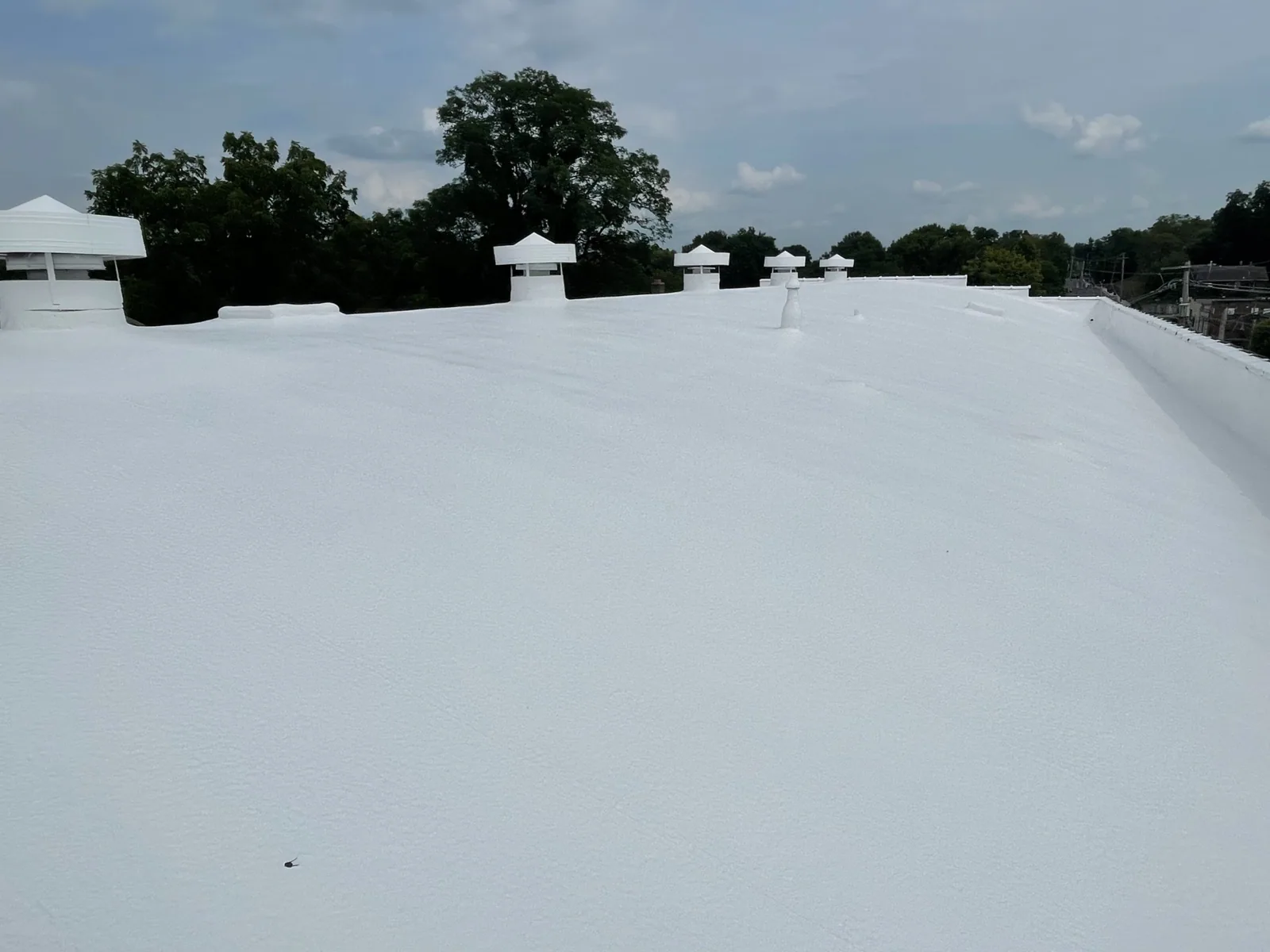
For roofs near the end of their life, a cover board and insulation upgrade during a recover can improve the energy performance and the impact resistance in one step.

Crews work under the calendar's limits. Hoisting happens before classes. Noisy steps move to the hours when lecture halls and labs below are empty. Walkways beneath the work zone get overhead protection, and the staging plan is shared with the campus facilities office in advance.

Energy Code and the Budget Year

A San Marcos roof permit is reviewed against 2021 International code editions for building and energy. A replacement on a campus building can trigger insulation requirements that change the scope, and the estimate should reflect them. When a roof reaches the funded years, the permit office confirms the edition in force.

Heat adds its own load. August highs near 98 F at Camp Mabry in Austin mark the summer load. Insulation, membrane color and ventilation all affect how that load reaches the rooms below.

Ventilation and vapor control belong in the same conversation. A tight, well-insulated roof over a humid lab or pool area can condense moisture inside the assembly, and the stain looks like a leak. We test for both causes before we recommend a scope, so the owner does not pay for a new membrane that leaves the real problem in place.

Johns Manville Roofing

Storm Review on a Large Property

Six inches across was the largest hail reported in Johnson City on May 9, 2024, and the same system followed on into San Marcos. A campus has many roofs to check after an event like.

We help by ranking sections for exposure and checking the most likely first: older membranes, roofs with unprotected insulation and sections with loose edge metal. A scan finds bruises, cores confirm them and photographs record the results. The hail damage repair file then supports both repair decisions and any insurance claim.

Dated photographs of undamaged roofs are as useful as photographs of damaged ones. They show a reviewer that a section was checked and found sound, which keeps the repair budget aimed at the sections that need it.

Johns Manville Roofing

Warranty and the Roof File

Manufacturer warranties carry conditions that the owner must meet. A penetration log, maintenance visits and prompt notice of leaks keep a roof within them. The manufacturer decides coverage; we supply the facts. The same record format serves roofs from Sika Sarnafil and Versico.

A campus-wide file holds each roof in one format. Owners near the Texas State University district can keep the file by building, wing and section, with moisture maps and photographs behind each entry.

Over several years the file shows which wings stay dry and which ask for attention again and again. That pattern shapes the capital plan better than age does.

Commercial Roofing Questions

Why does wet insulation matter if the membrane is sound?

Wet board loses its thermal value and holds water against the deck. It sags, rusts fasteners and shortens the life of the roof above it.

Can a campus roof be repaired during the term?

Small repairs, yes. Large work fits summer and breaks. Staging stays away from entrances and walkways.

What is the difference between a recover and a replacement?

A recover adds a new membrane over a dry, sound assembly. A replacement removes the old layers. Moisture in the insulation rules out a recover.

How does the energy code affect a reroof?

Adopted editions can require added insulation on replacement. Estimates should include them, and we confirm with the permit office.

Do older built-up roofs need replacement?

Not automatically. Dry insulation and sound plies can serve for years with repairs.

Send the Campus Roof List

Share the building list, roof ages and any prior reports, and we will sort the roofs into replace, repair and watch groups before your next budget year.

Request a Roof Assessment

Related Roofing Work

ServicesRoof SystemsIndustriesProperty TypesService AreasRoof Damage RepairCapabilitiesManufacturersAboutContactRequest a Roof Assessment555-555-5555
Call555-555-5555