555-555-5555

Sika Sarnafil Roofing

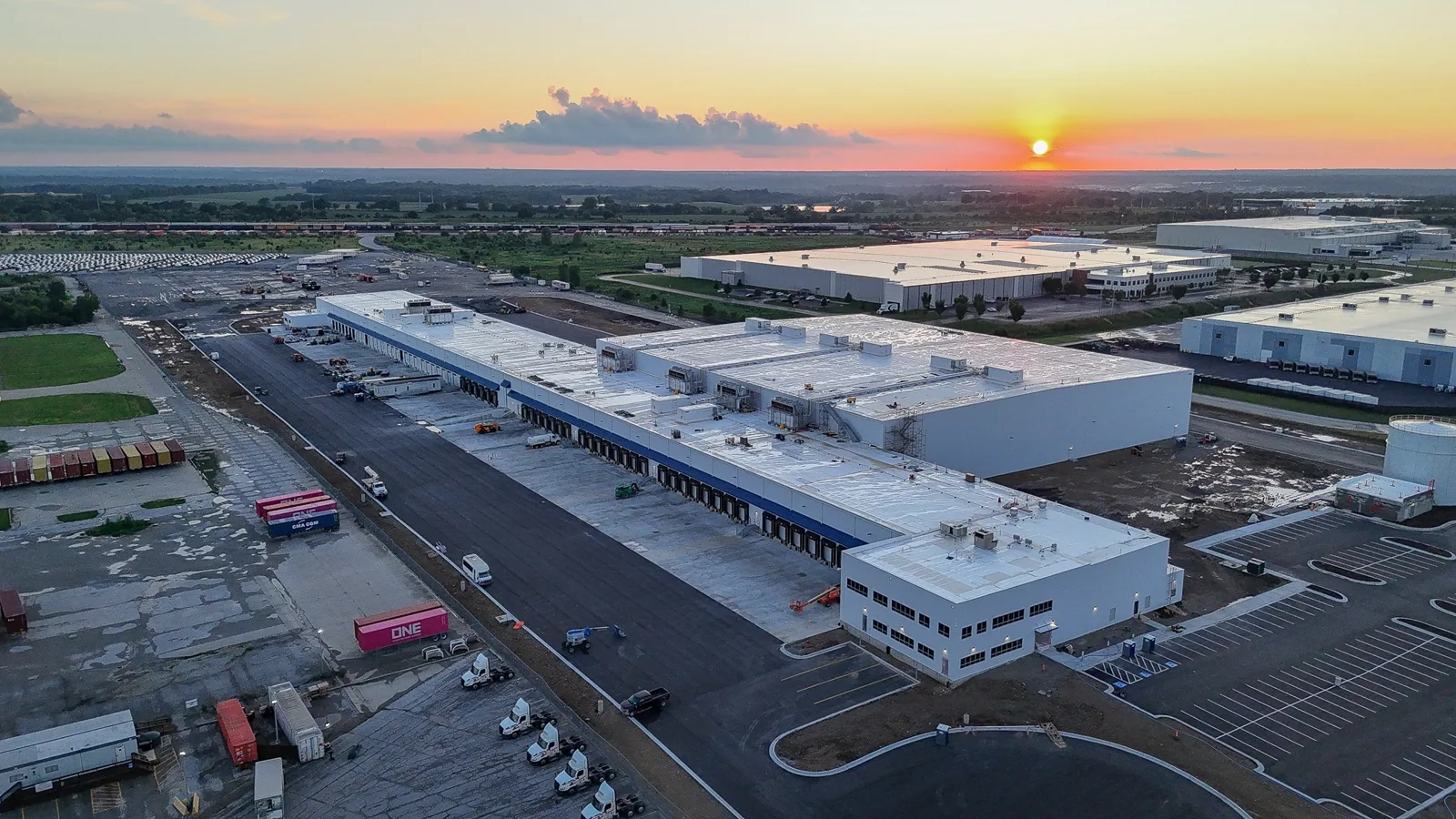
Food and grocery buildings put grease, steam and refrigerant exhaust on the roof, and a membrane that cannot take those exposures wears out around every vent. San Marcos, TX has an H-E-B distribution center among its top employers with about 750 jobs, and the supply-chain businesses across Hays and Caldwell counties include H-E-B, Berry Aviation and UPS. A facility director who holds a food or grocery roof built with Sika Sarnafil thermoplastic membranes needs to know how that kind of system ages beside an exhaust fan, where it fails and what the next budget year should include.

What the System Is

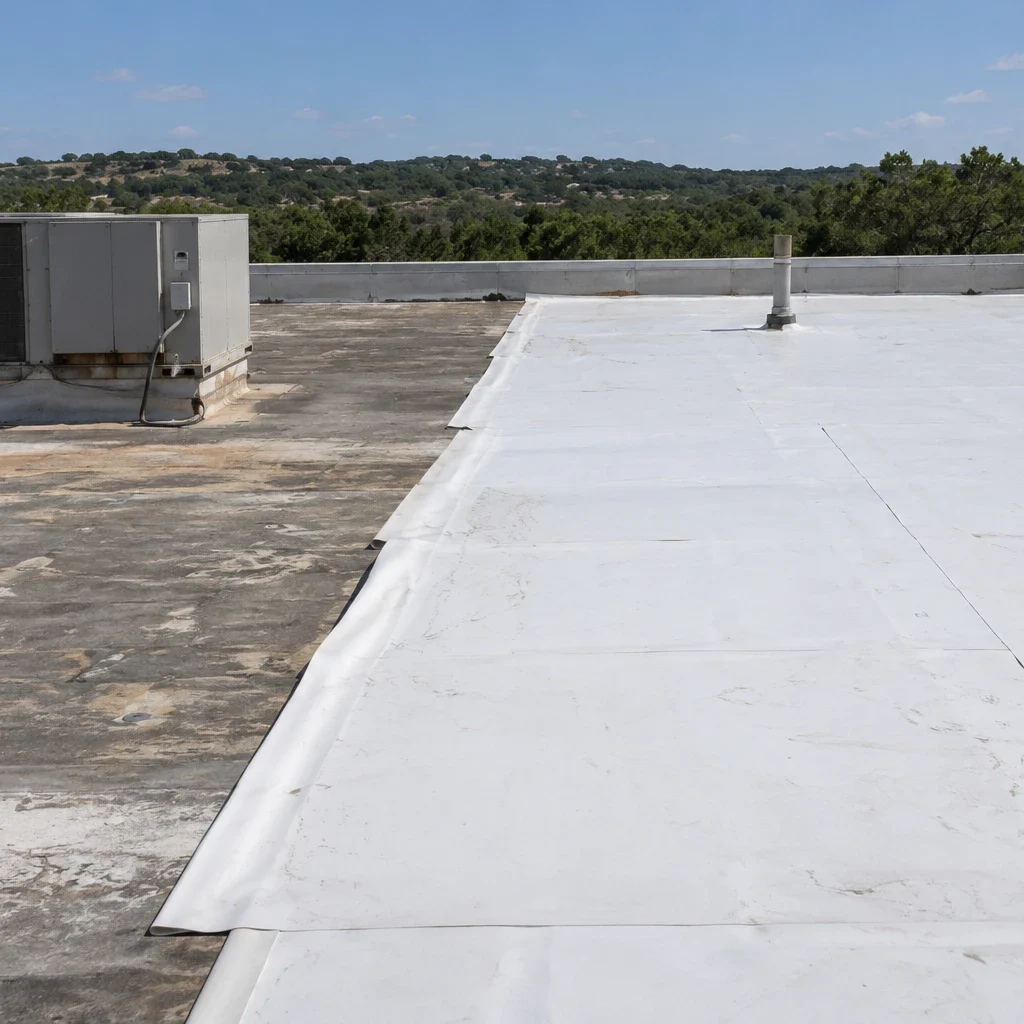
Sika Sarnafil is known for welded PVC single-ply membranes. The sheets are laid over insulation, attached by mechanical fasteners or adhesive, and joined at the seams with hot-air welding, which fuses two sheets into one continuous surface. Flashings use matching sheets, prefabricated corners and welded terminations, so a curb or a drain can be sealed without a field of caulk.

PVC has a property that matters on food roofs: it resists many fats, oils and chemicals that damage other membranes. That resistance is not unlimited, and the service life near a heavy exhaust still depends on how the unit is maintained and what the discharge contains.

The sheet looks the same across many conditions, so we cut cores and read the layers before we assume anything about attachment or insulation.

Attachment method changes how we repair. A mechanically attached sheet is held by fasteners and plates along the seams, so a lifted seam can mean a loose fastener row. A fully adhered sheet is bonded across the field, so a bubble means an adhesion failure. We read the pattern before we cut.

Sika Sarnafil Roofing

Where Exhaust Wears the Sheet

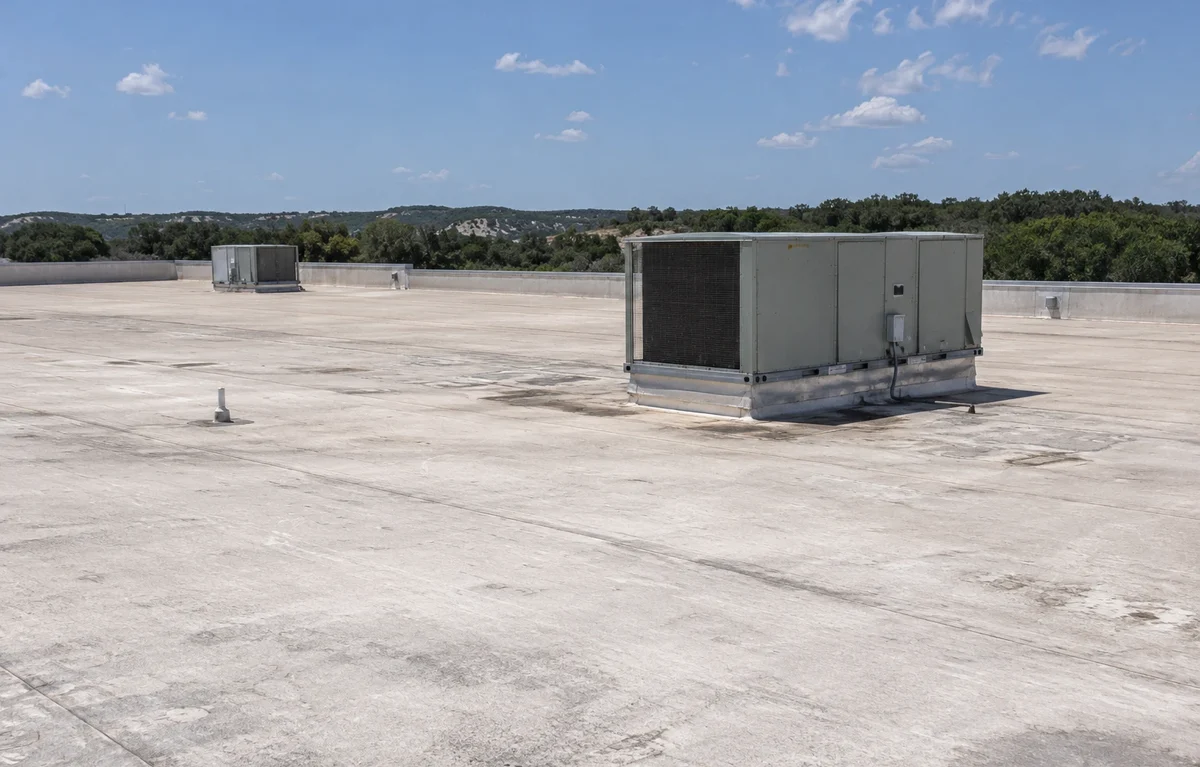
Grease-laden exhaust lands on the membrane near the fan. Over time it can soften the surface, stain it and, in poorly maintained units, run toward drains. Steam and heat add their own wear. Condensate from refrigeration units leaves streaks and, if it runs onto bare membrane, can wear a hole.

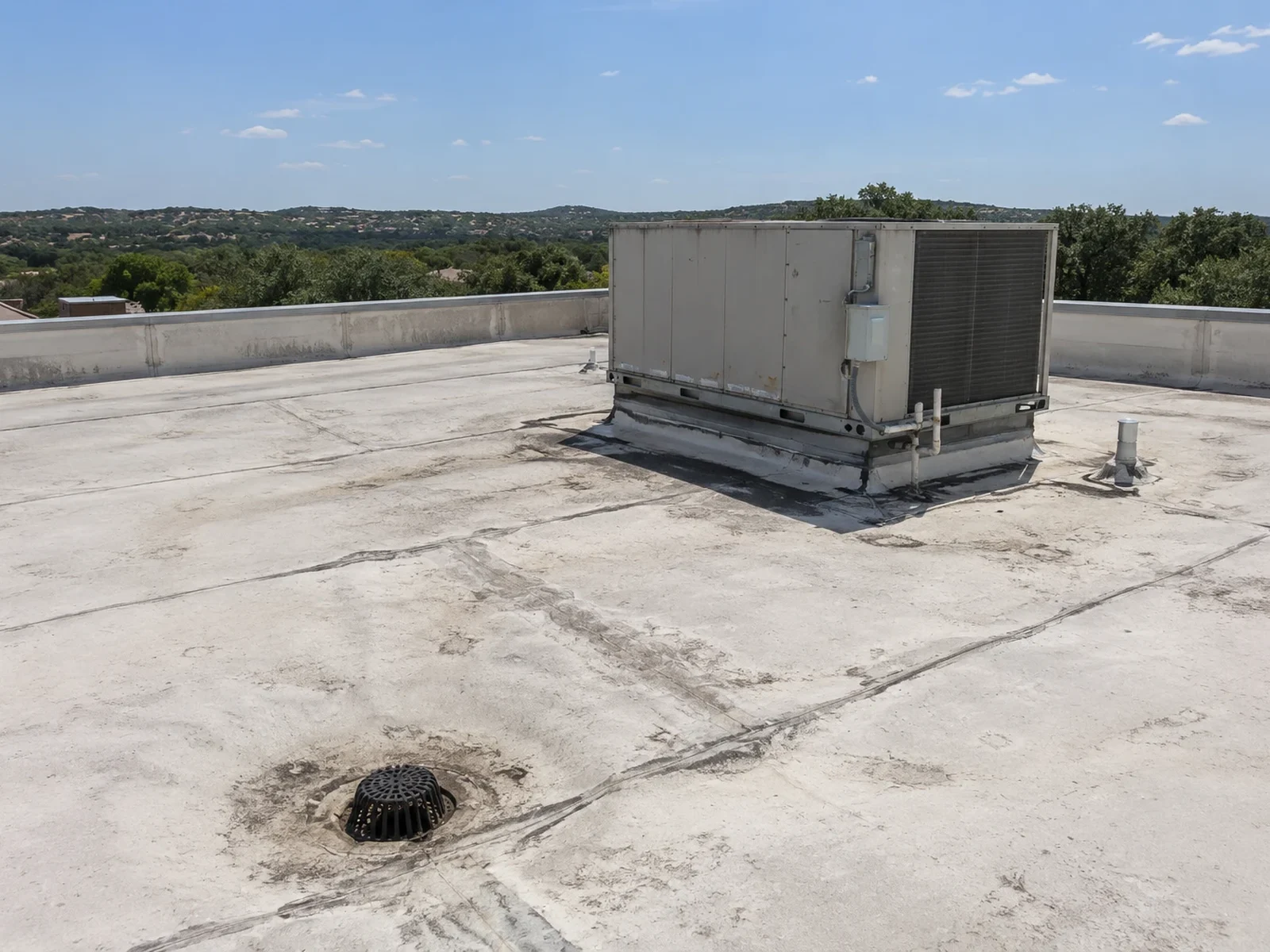
We check a ring of membrane around every exhaust fan, every makeup air intake and every condensing unit. We look for chalking, softening, blisters and pooled grease. A grease containment pan under a kitchen exhaust, emptied on a schedule, protects the sheet and costs little.

Walk paths matter as well. Technicians who service exhaust equipment cross the roof on a fixed route, and walkway pads along that route keep the membrane intact. We install them where wear shows.

Drain lines from kitchen and refrigeration equipment need a plan too. A line that ends in the middle of the field concentrates water and chemical residue in one spot. We extend lines to scuppers or add splash pads, which costs little compared with replacing a worn patch of sheet.

Walkway pads around exhaust equipment serve two purposes on a food roof: they spare the sheet from foot traffic and they give technicians a clean, grease-free route. We recommend pads along every route that crosses a drip zone and check them for grease buildup at each visit.

Welds, Seams and Flashings

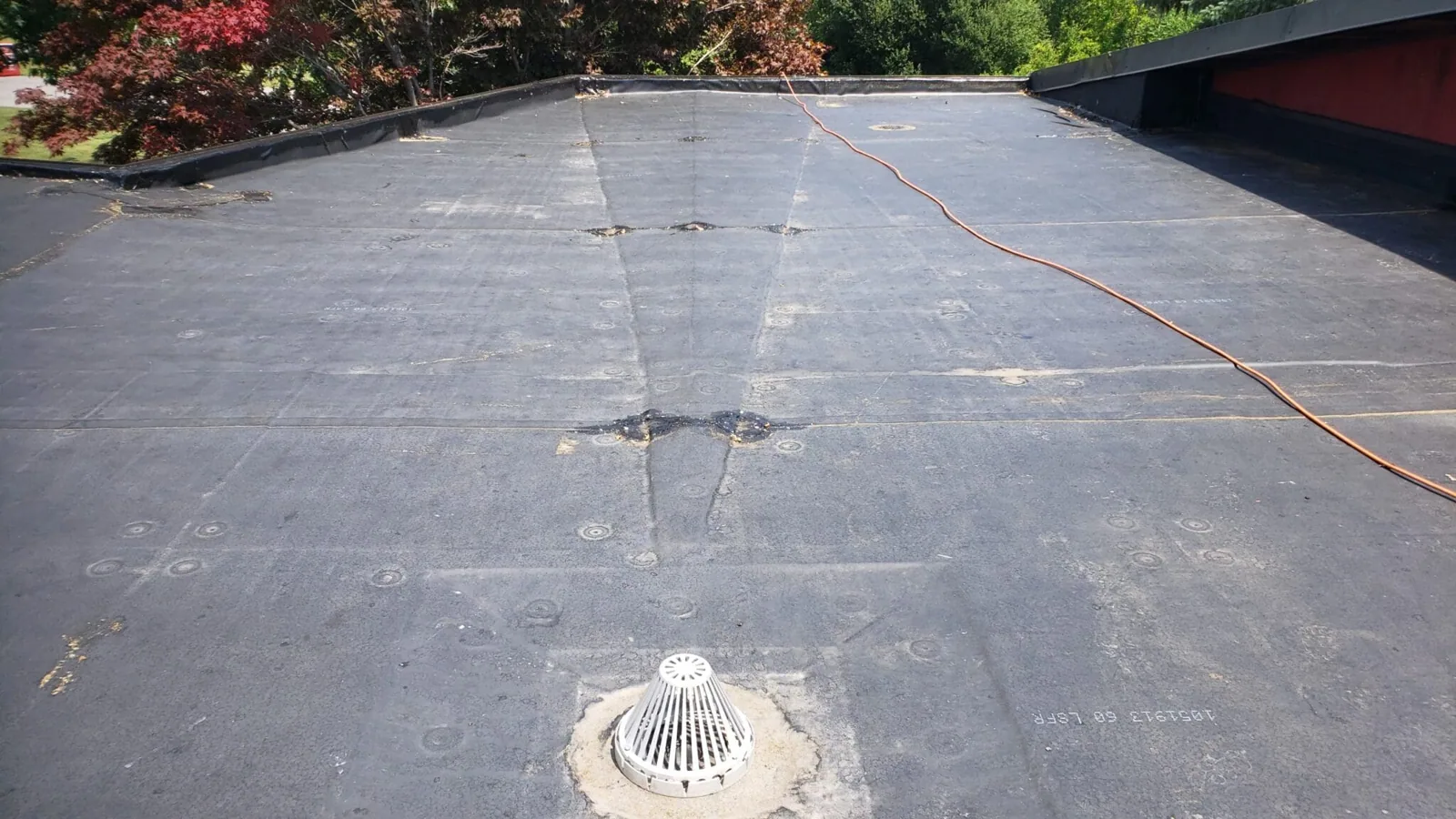
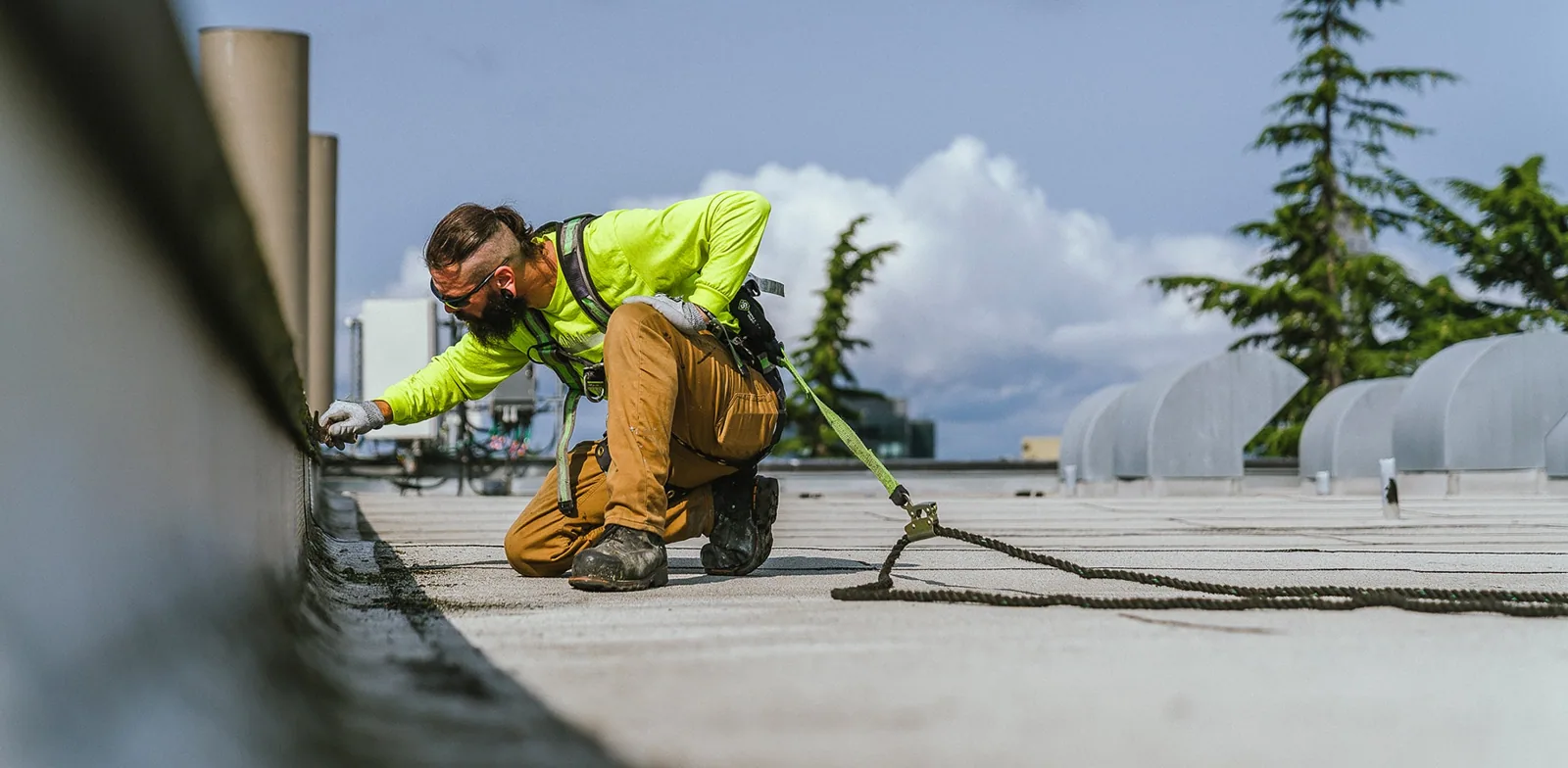
A welded seam is only as good as the weld. We probe seams with a tool along their full length and look for cold welds, voids and skipped sections. On older roofs the seams can lose plasticizer and become brittle, and the first signs appear at flashing corners where the sheet bends.

Repair begins with cleaning. PVC to PVC welds require clean surfaces, so we remove grease and dirt before welding. A split gets a rounded-corner patch lapped over sound sheet on every side. A failed flashing is rebuilt with a prefabricated corner and a welded termination. We then test the repair and photograph it.

Where chemical contact is likely, we choose compatible patches and sealants, since a non-compatible product can fail within a season.

Welding has weather limits. Wet surfaces, high wind and low temperatures change how a weld forms, and a weld rushed on a cold morning tends to be the one that fails in spring, so marginal conditions stop the work and open areas get temporary seals.

Distribution and Cold Storage Roofs

Distribution and cold-storage buildings add moisture risk. A cold interior pulls warm, damp air toward the roof deck, and condensation can wet the insulation without any roof leak. Cold storage roofs need a vapor retarder and careful attention to penetrations, because a hole that lets warm air in can freeze and build ice inside the assembly.

We scan roofs over cold space with infrared and cut cores to learn how wet the insulation is and where the moisture comes from. The fix depends on the source: a seam repair when water enters from above, a vapor control change when moisture comes from below. Our cold storage roofing work and grocery store roofing work begin with that distinction.

Dock doors and loading areas add their own edge. Forklift traffic and truck bumpers do not touch the roof, but the dock-side edge takes wind and water from the lot. We check coping, drip edge and flashing along that wall at every visit, and the same check applies to warehouse projects in the Buda industrial and logistics corridor.

Sika Sarnafil Roofing

Heat and Hail on a PVC Sheet

August highs near 98 F at Camp Mabry in Austin set the summer load. White PVC reflects much of that heat, which reduces thermal movement at seams and curbs, but sealants and flashings still age and need checks.

Hailstones near six inches across, reported at Johnson City on May 9, 2024, preceded the storm's passage over San Marcos. Large hail can puncture or bruise a PVC sheet and crush insulation under it. A scan and cores after an event find the damage, and photographs record sections that show none.

Reflective sheets still need maintenance. Dirt and algae dull the surface and reduce its reflectivity over time. A gentle wash restores much of the performance, and it also exposes seams and flaws that dirt hides.

Sika Sarnafil Roofing

Warranty, Records and Code

Manufacturer warranties carry conditions, and the manufacturer decides coverage. We keep the penetration log, maintenance entries and notice records that keep a roof within its terms, as part of roof warranty management. For comparison, a Duro-Last roof and a Versico roof can sit in the same file with the same format.

Permit reviewers in San Marcos work from the 2021 International Building Code and the matching 2021 energy conservation code.

After a season the file shows which sections stay dry and which need attention again. That pattern guides the next capital plan better than the age printed on a warranty certificate.

Commercial Roofing Questions

Does PVC resist kitchen grease better than other membranes?

Often, yes, because many fats and oils damage other sheets faster. A grease pan under the exhaust still matters, and we check the ring around every fan.

Why do cold storage roofs stain without leaking?

Warm air meets the cold deck and condenses. The insulation gets wet from below. A scan and cores find the source.

Can a welded seam be repaired in the field?

Yes. Clean the surfaces, weld a patch with rounded corners and probe the result. Weather limits apply.

What wears first around a rooftop fan?

The membrane in a ring around the opening. Heat, steam and grease break it down. Curb corners follow.

How do I confirm my roof is PVC?

Cut a core and read the layers. A simple heat test on a scrap can help, but a core is more reliable.

Send the Building List and Exhaust Notes

Share the addresses, roof ages and any prior reports, and we will sort the roofs into replace, repair and watch groups before your next budget year.

Request a Roof Assessment

Related Roofing Work

ServicesRoof SystemsIndustriesProperty TypesService AreasRoof Damage RepairCapabilitiesManufacturersAboutContactRequest a Roof Assessment555-555-5555
Call555-555-5555