555-555-5555

Aircraft Hangar Roofing

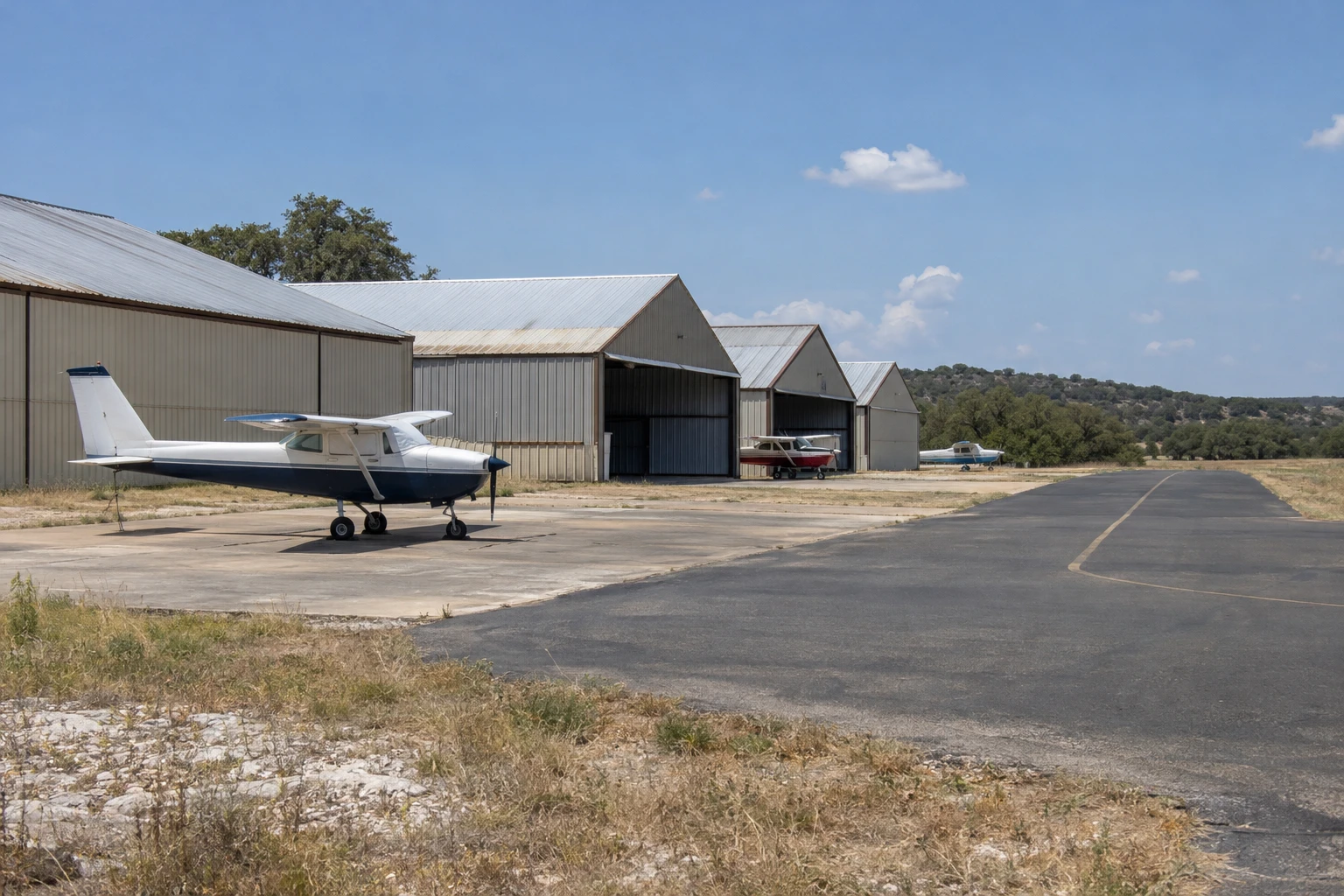
A hangar is a very large room with a very large door, and the one thing that class does to a roof is span: long clear trusses carry a wide roof with no interior columns, so a roof problem reaches a lot of floor and a lot of equipment at once. For an airport manager or a hangar owner in San Marcos, TX, the budget year is decided by what sits under the roof, which can be worth more than the building.

San Marcos Regional Airport is a city-owned general aviation airport about four nautical miles east of downtown. It has three asphalt runways and logged 91,849 aircraft operations in the 12 months ending June 2023. An airfield of that activity has buildings that cannot easily close, and roofs that have to be worked on while the field is working.

Insurance for a hangar covers the building and, separately, what is inside it. Underwriters want to see a roof record that shows condition and care, so the file we keep is built to answer that question: dated photographs, a repair log and a ranked replacement queue.
What Long Spans Do to a Roof

A clear-span roof moves. Trusses deflect under wind and the roof's own weight, and thermal movement works the panels and fasteners above them. In a hangar, the roof is also attached to a building with a door several times taller than a house, so wind pressure on the door transfers to the roof edge.

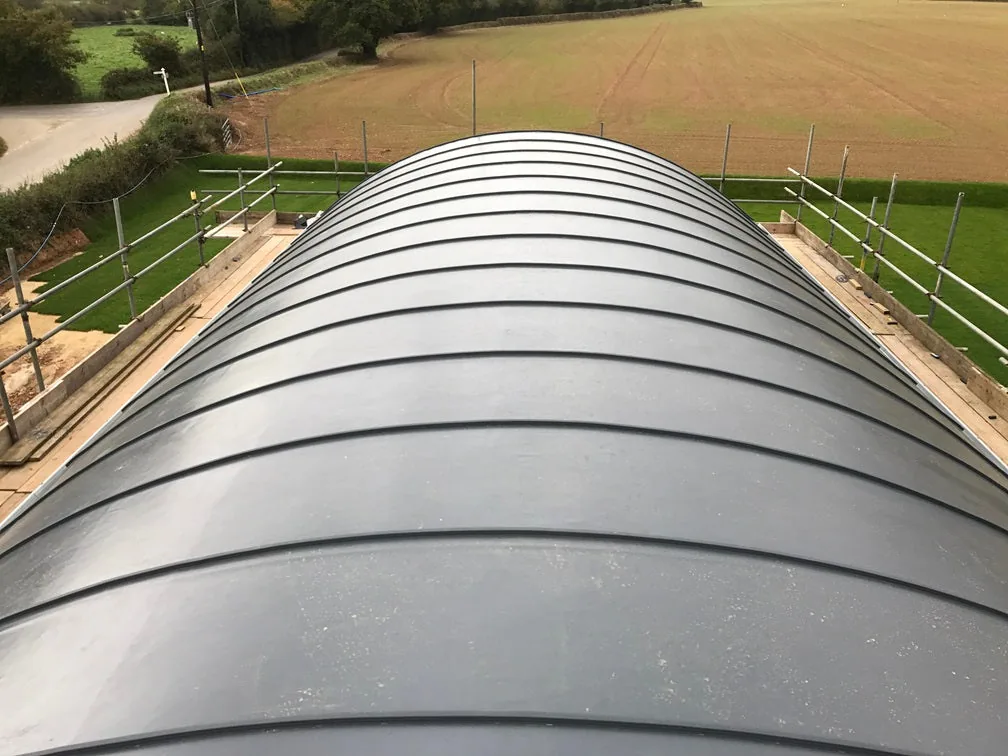
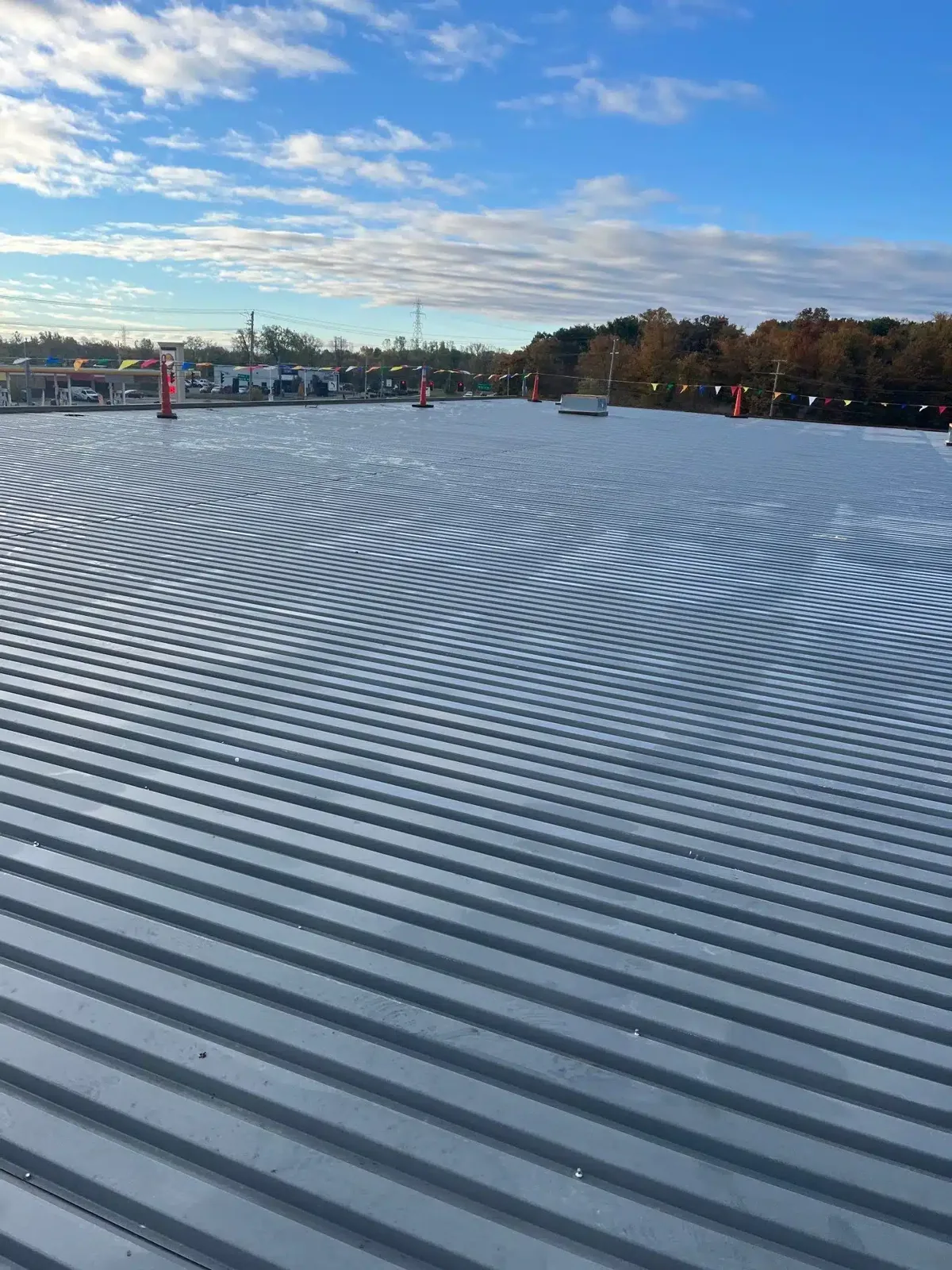
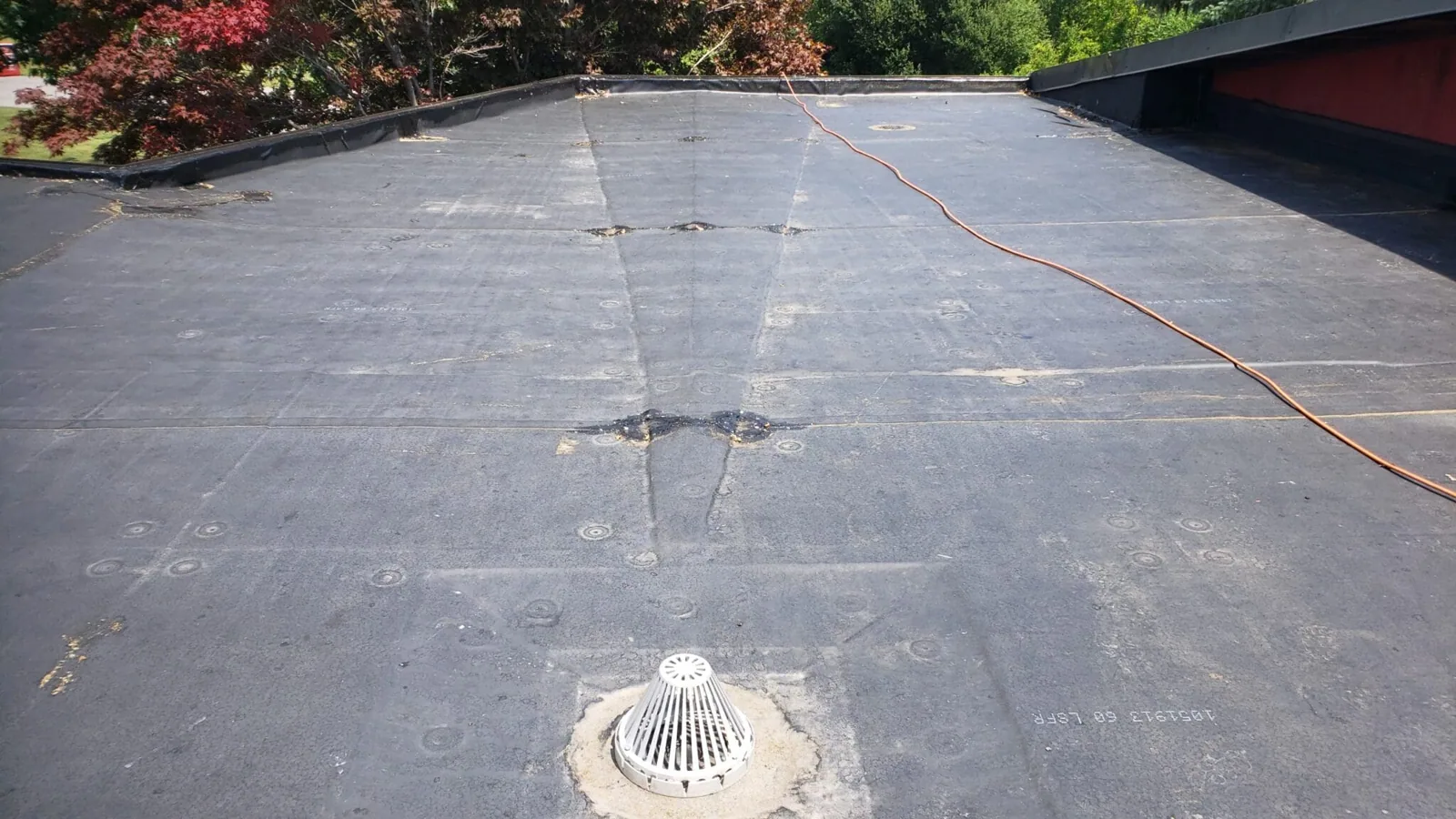
We walk the roof for the signs of that movement: loose fasteners, opened laps, buckled panels, ponding at mid-span and cracks around skylights or vents. Inside, we look at the truss bottom chords and purlins for water stains and corrosion. A standing seam metal roofing system suits long spans when the seams, clips and slope are right; a low-slope membrane suits others.

Door-end details get a close look. The head of a large door sees the highest wind pressure on the building, and flashing there moves with the door's header. We check the sealant, the fasteners and the trim, and we compare the roof edge at the door with the edge on the sides. A gap at the door end is the first place wind-driven rain gets in.

Skylights and translucent panels in hangar roofs let in light and let out water when gaskets age. Cracked panels and loose fasteners are easy to find from above and easy to miss from below, so we walk the roof and the catwalk both.

Aircraft Hangar Roofing

Protect What Sits Below

A leak over an aircraft is a large cost. Water on a wing, an avionics bay or an open panel can ground the plane and start a repair claim. So the first visit after a report is a make-safe visit: cover the aircraft or move it, catch the water and find the opening.

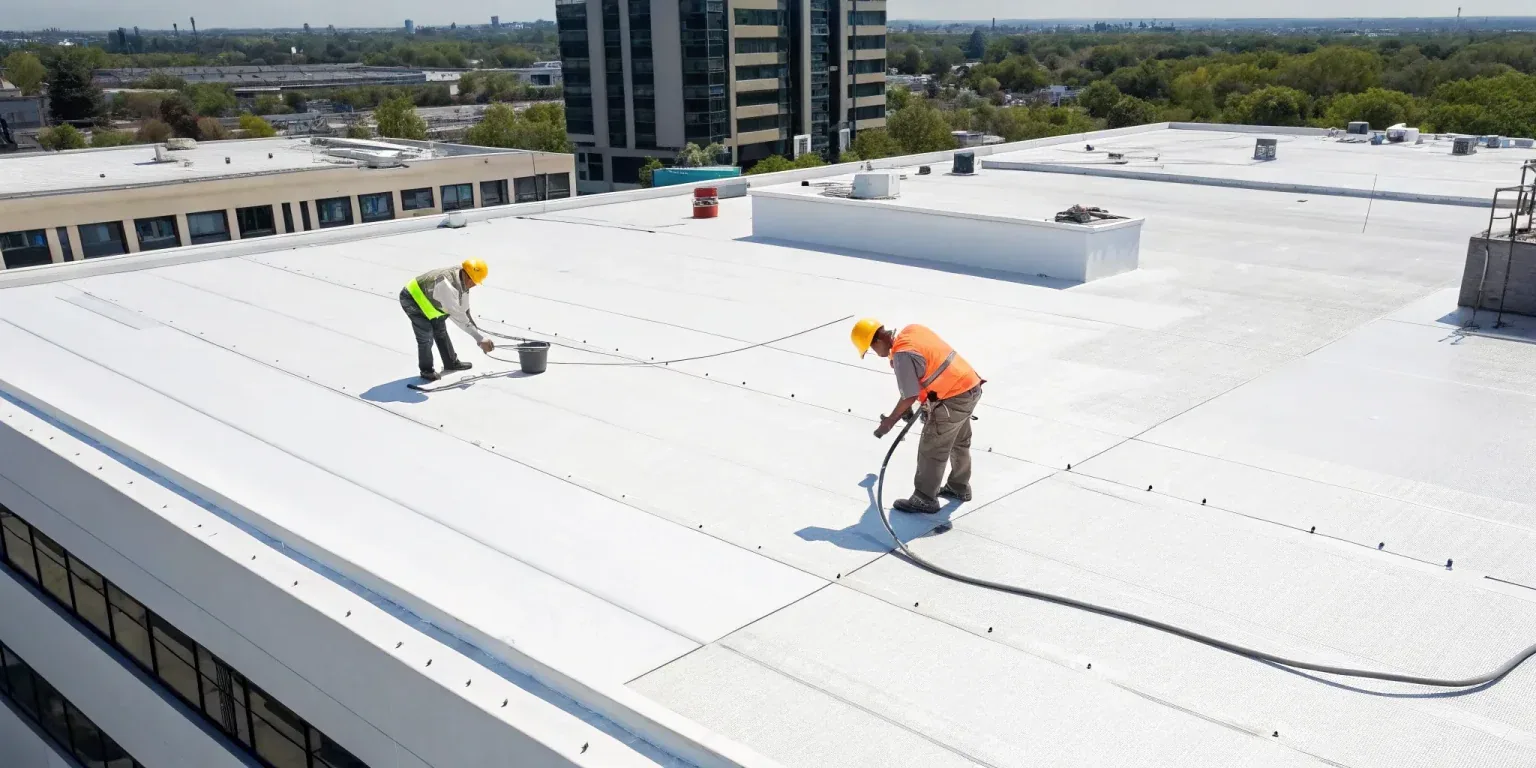
Planned work follows the same priority. The owner tells us which bays hold aircraft, tools and records, and when they can be cleared. We schedule open-roof work for the days those bays are empty, use temporary covers over active bays and dry in at the end of each shift. An occupied building reroofing plan lists the bays, the sequence and the person who can stop the crew.

Records of what sits below help the claim later. We ask the owner to photograph the aircraft and equipment before work begins, and we add our own photographs of the roof and the temporary covers. If a drop of water does reach something, the record shows when and how.

Lift Clearance and Airfield Rules

Roof work on an airfield brings height limits. A crane or boom lift near a runway can intrude on protected airspace, so the airport manager is told before any pick. We ask about restricted areas, escort rules and any notice the airport must give, and we plan the lift position and height to stay inside what is allowed.

Vehicle access is controlled too. Trucks cross taxiways only with permission, material is staged away from aircraft movement areas, and loose debris is controlled because stray objects on a ramp are a hazard to engines and tires. A written plan, approved by the airport manager, sits beside the scope. The Hunter Road and airport area is where that care applies most locally.

Weather affects lifts too. Wind limits for cranes and boom lifts are tight, and a hangar roof is a large sail. We set a limit with the operator, stop lifting when gusts pass it and keep the crew off the roof when lightning is near. The schedule carries float for those days.

Fire-Safe Methods

Hangars hold fuel, solvents and aircraft with fuel on board, and many have fire suppression systems with sensors or foam. Hot work on a roof above them needs a plan. We choose cold-applied adhesives or mechanically attached systems, keep flame away from the roof entirely where we can and agree with the owner on any suppression shutdown windows before the crew arrives.

Fire watch continues after the last heat. Extinguishers stand at each work point, and sprinkler heads and detection are protected from overspray and debris. The scope lists these controls so the airport and its insurer read the same plan.

Insulation and vapor control are part of a fire-safe plan too. Some roof insulations burn or give off smoke, and the choice affects the building's fire rating and its insurance. The scope lists the insulation by type and the fire classification, so the owner and the insurer can review the choice before ordering.

Aircraft Hangar Roofing

Related Aviation Buildings in the Region

Aviation roofs vary by owner. Berry Aviation appears among the supply-chain businesses in Hays and Caldwell counties, a reminder that aviation operators sit alongside logistics in the regional economy. Farther out, Randolph Air Force Base near San Antonio has hangars that share a Spanish Colonial Revival style, and Camp Mabry in Austin has maintenance shops and a parachute packing facility. Those installations follow federal specifications and access rules that are separate from a city airport.

An owner with a mixed set of buildings can use one record format across hangars, flex and light-industrial buildings and warehouses, so the replacement queue is comparable.

Aircraft Hangar Roofing

Weather, Heat and the Budget Year

On May 9, 2024 the same storm system that reached San Marcos had produced hail up to six inches across at Johnson City. A hangar door open at the wrong moment turns a wind event into a roof event. After a storm, we check the roof, the door tracks and the connection between them. A wind damage roof repair lists lifted panels, bent trim and displaced equipment with photographs.

Heat matters too, with August highs near 98 F at Camp Mabry in Austin as the regional gauge. San Marcos works under the 2021 International Building Code and Energy Conservation Code, so replacement scopes list code items separately. A roof capital planning report puts each hangar in a budget year.

Commercial Roofing Questions

What is the first step when a hangar roof leaks?

Protect the aircraft and equipment: cover or move them and catch the water. Then find the opening and make a temporary seal. A written scope follows.

How do you handle lift height near the runways?

We tell the airport manager before any pick and plan the position and height to stay within what is allowed. The plan is approved in writing.

Can work happen with aircraft in the building?

Sometimes, with temporary covers and daily dry-in, but open-roof work is best when bays are empty. We schedule around the owner's clearing days.

What systems suit a long-span hangar?

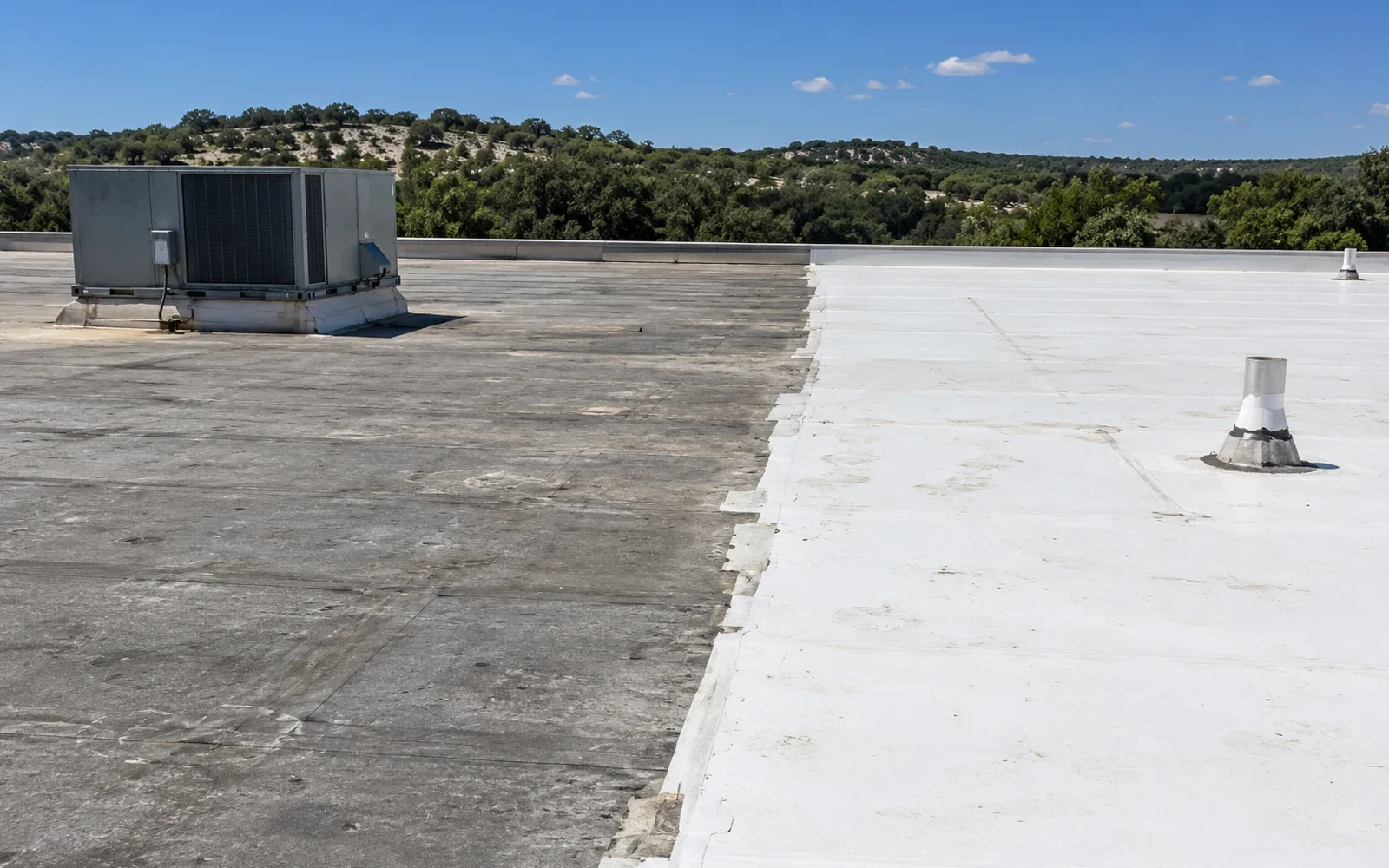
Standing seam metal and low-slope membranes both can. The deciding factors are slope, truss capacity, seam quality and the owner's budget.

How are fire risks handled on a hangar roof?

We use cold-applied or mechanically attached methods, keep a fire watch, protect sprinkler heads and agree on suppression shutdowns in advance.

Send the hangar list

Send the building list and any past roof reports. We will sort the roofs into replace, repair and watch groups before the next budget year.

Request a Roof Assessment

Related Roofing Work

ServicesRoof SystemsIndustriesProperty TypesService AreasRoof Damage RepairCapabilitiesManufacturersAboutContactRequest a Roof Assessment555-555-5555
Call555-555-5555