555-555-5555

Flex and Light-Industrial Roofing

Flex and light-industrial buildings are the middle of the commercial stock, and the one thing that class does to a roof is change tenants: the same shell can hold an office suite, a warehouse bay and a small shop under one low-slope roof, and each tenant brings its own equipment. An owner or asset manager in San Marcos, TX has to judge how many tenant changes the roof has absorbed and how many more it can take.

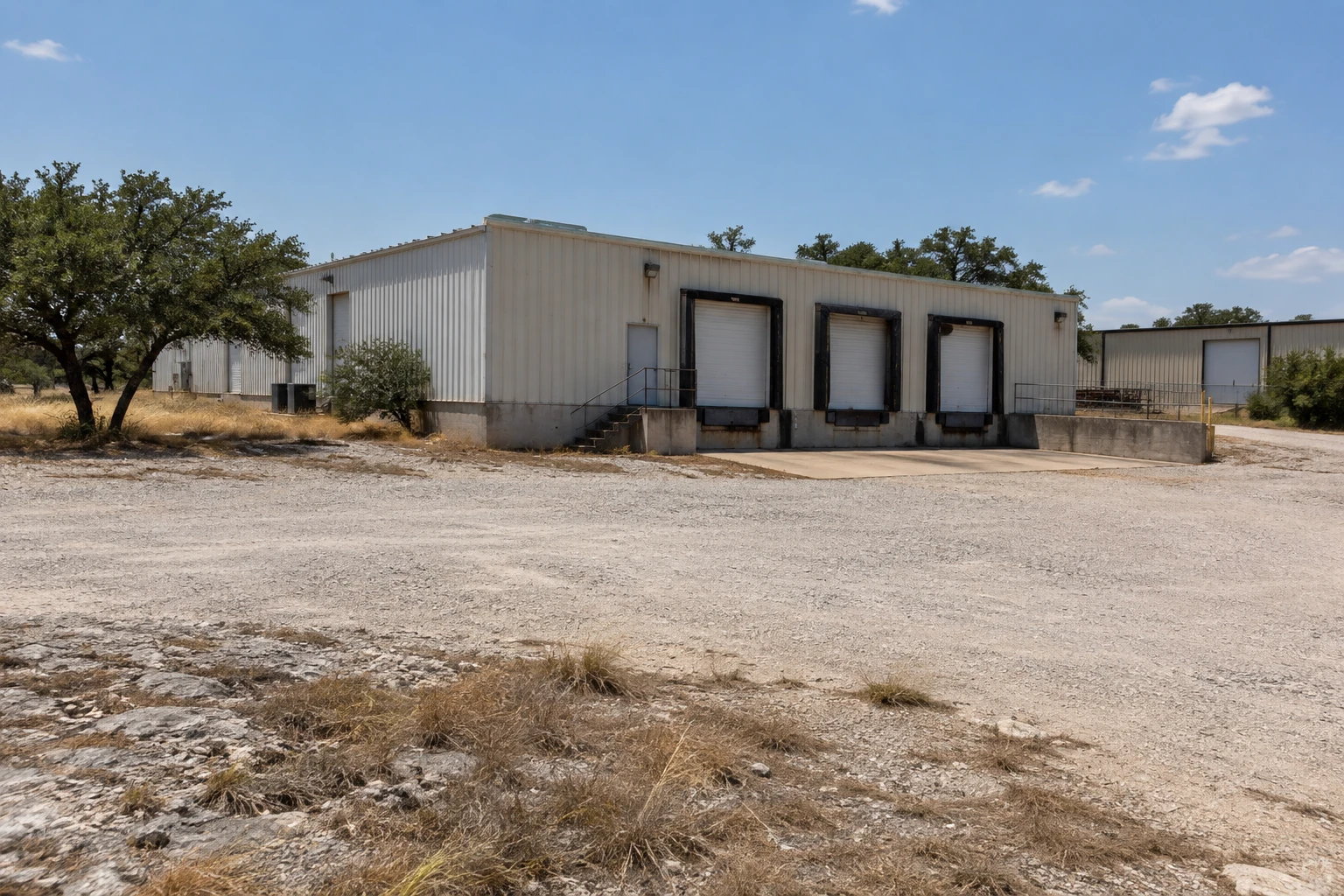
On the I-35 frontage, the San Marcos Business Park calls for three buildings (204,460, 84,000 and 377,000 square feet), with Building C going first. Those are floor areas, not roof conditions, so the first job is to learn what each roof actually is.

A shell that is leased in bays also splits responsibility. The owner holds the roof, the tenants hold the contents, and a leak sits between them. A roof record with dated photographs and a repair log settles most arguments about when a leak began and what was done.
The Tilt-Wall Shell

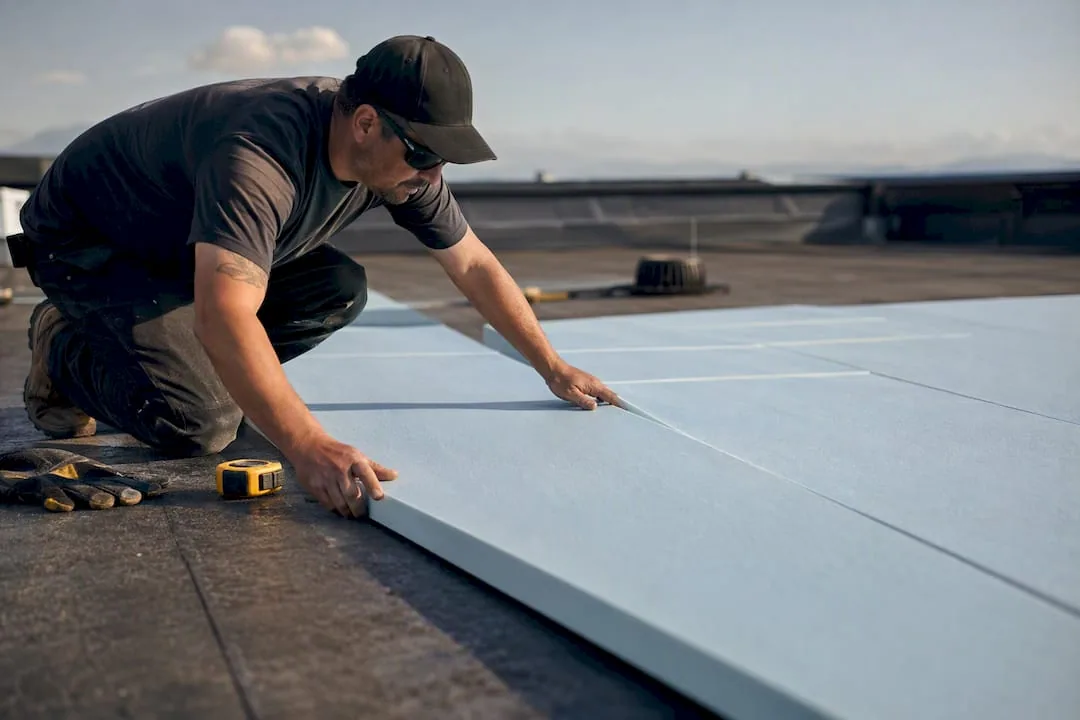
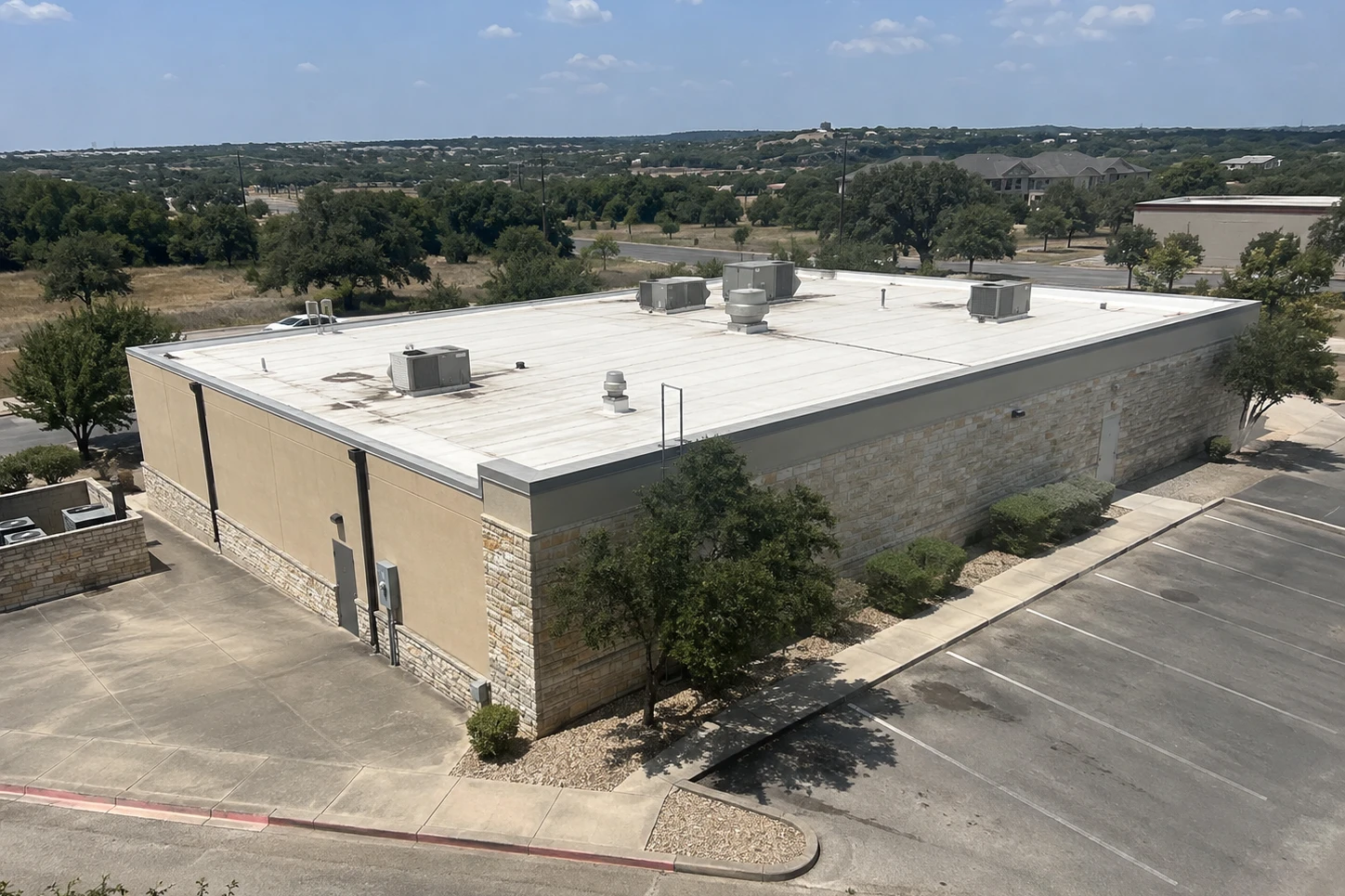
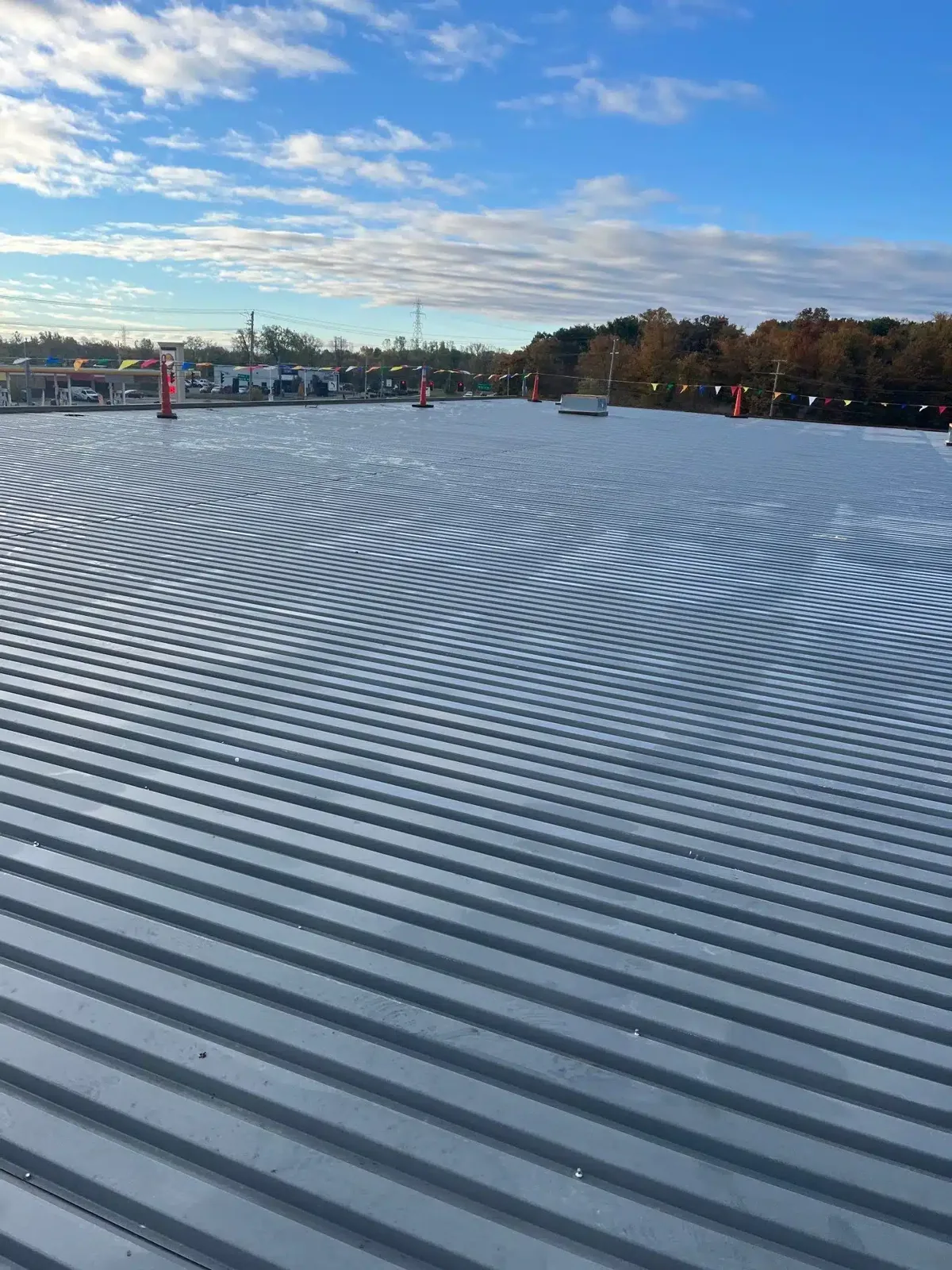
A tilt-wall shell is common in this class: concrete wall panels with a steel joist roof deck behind a parapet. The roof is a low-slope field, usually with a single-ply or built-up membrane, and drains that run through or alongside the parapet. The weak points are predictable: the parapet cap and wall flashing, scuppers through the wall, penetrations for unit heaters and exhaust and the seams along long runs.

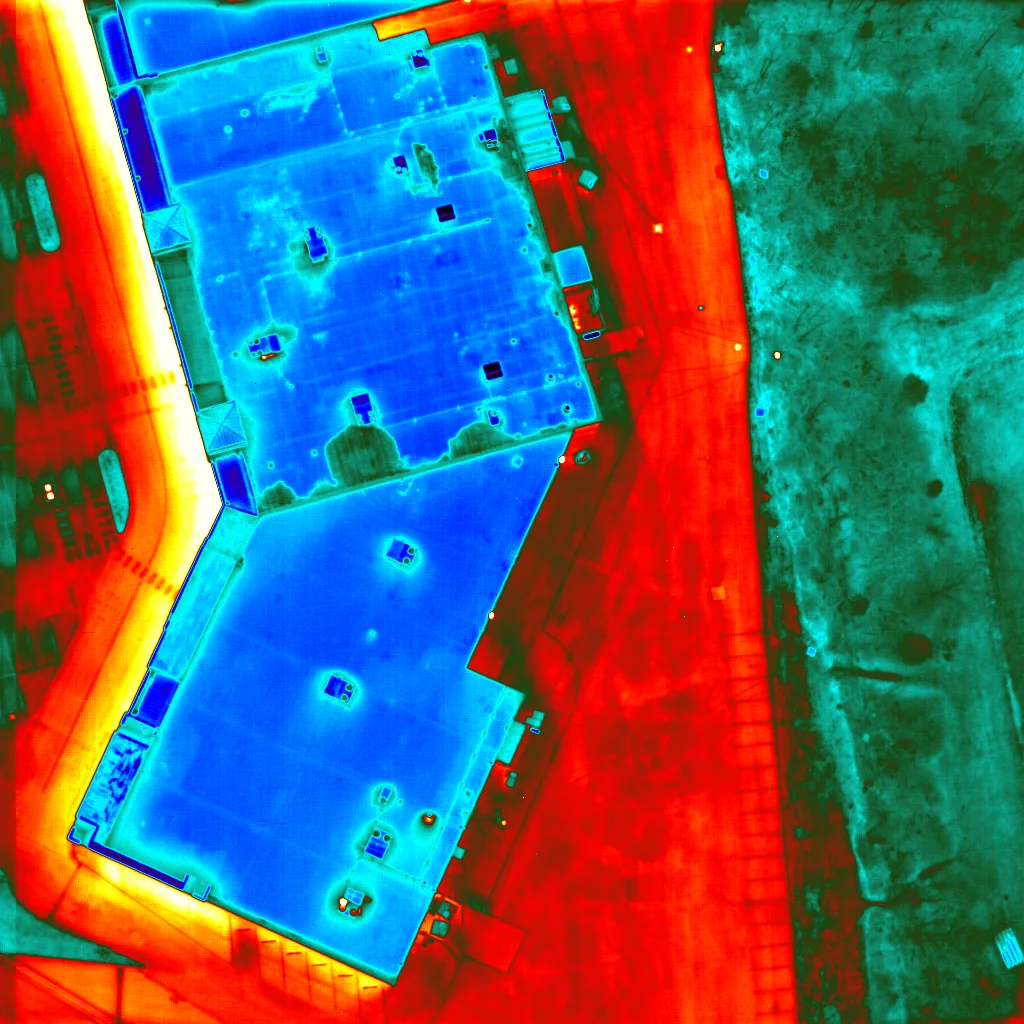
We walk the field in a grid, probe flashing along every wall, count penetrations and photograph each scupper from above and below. A moisture scan follows. An infrared moisture survey shows wet insulation across a large flat roof without opening it, which lets us price a partial repair against a full replacement before anyone cuts the membrane.

Scuppers deserve a note of their own. A scupper through a tilt-wall parapet is a hole in the wall with a liner, and it fails at the liner joint, the membrane tie-in or the downspout below. We look at all three and measure the height of the scupper opening against the roof surface. A scupper set too high leaves a permanent pond behind it.

Flex and Light-Industrial Roofing

Tenant Turnover Is a Roof Event

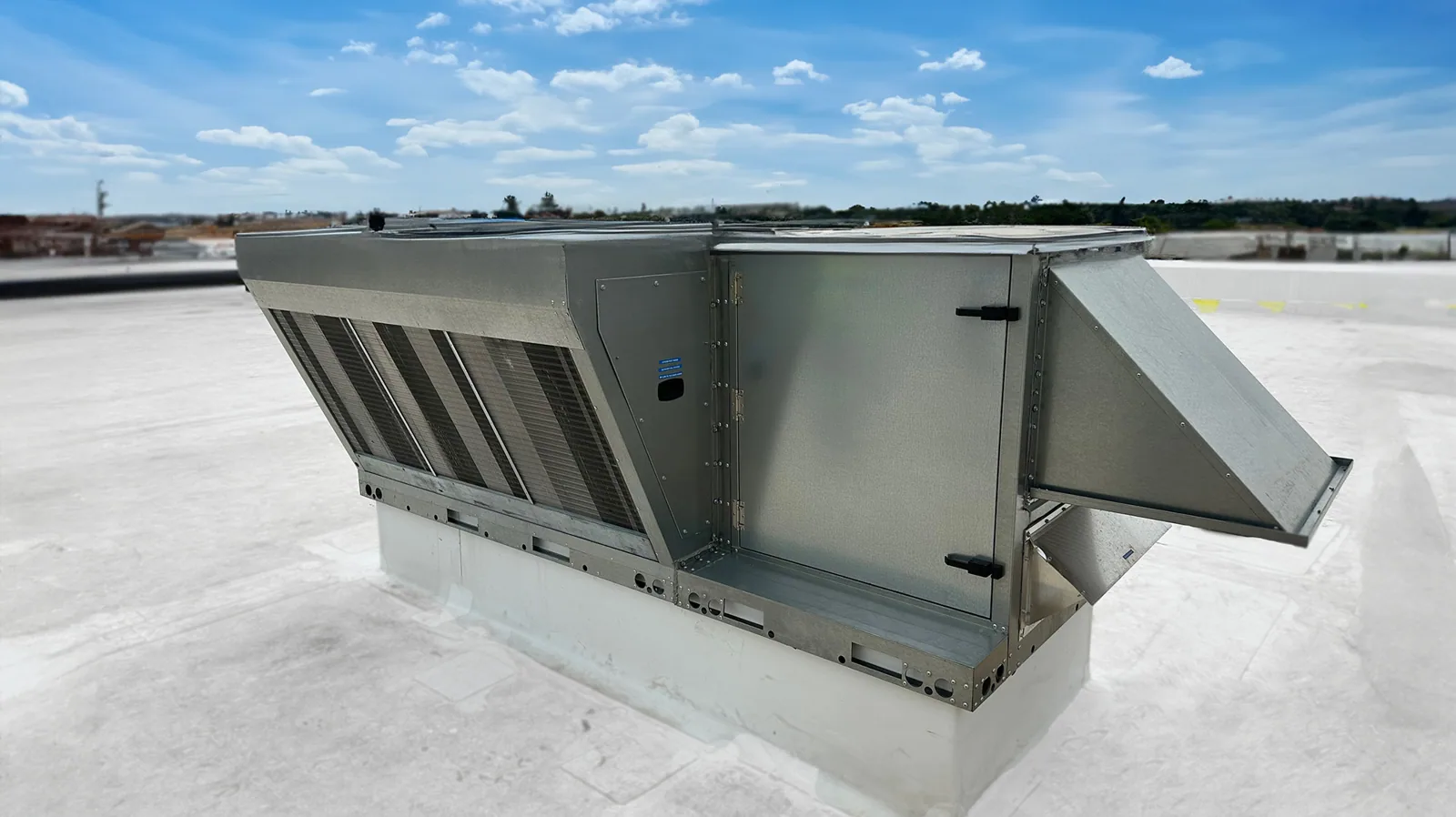
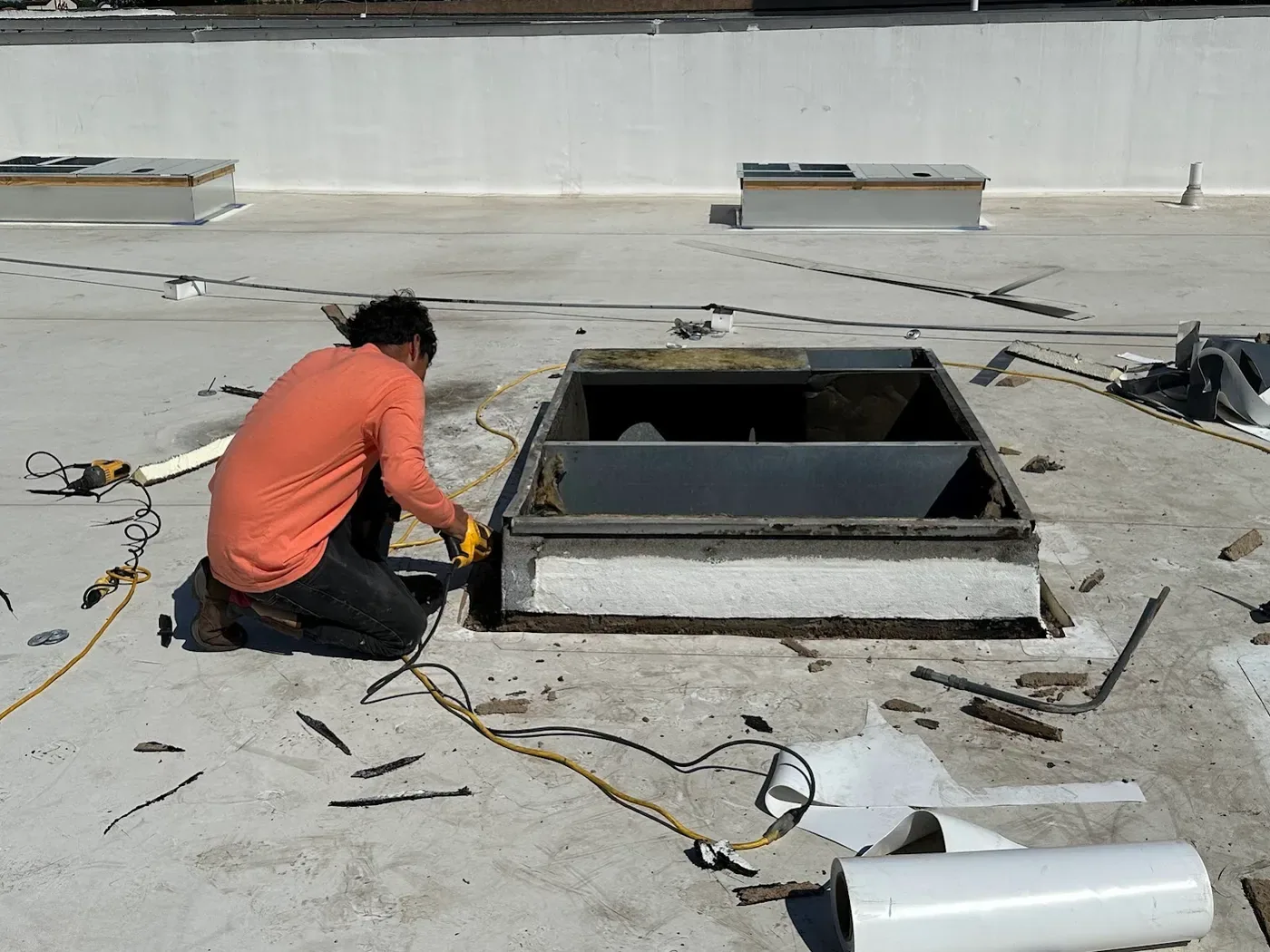
A new tenant often installs an exhaust fan, a make-up air unit or a rooftop condenser. Each addition cuts the membrane and adds a curb or a stand. If the work is done well, the penetration is flashed and sealed. If not, it becomes the next leak. We ask the property manager for a notice whenever a tenant plans rooftop work, and we walk the area before and after.

A running log lists every unit by bay, with curb type, flashing condition and the date of last service. When a unit has shifted or a curb has settled, a curb and support repair raises the flashing and resets the unit. When a tenant leaves, abandoned stubs get capped, flashed and logged.

Unit heaters and exhaust vents penetrate the roof at predictable heights, and their flashing is often a pre-made boot that dries out. We replace boots in groups per building, since the crew is already on the roof and the cost per boot drops. Each replacement gets a photograph and a line in the log.

The Dock-Side Edge

Loading docks put truck traffic and wind at the same edge. The parapet or edge metal above the dock takes vibration from trucks and wind pressure from the open side of the building. We pull-test fasteners, check coping joints and look for lifted laps and torn flashing there first.

Where coping has moved, the repair replaces it and seals the joints. Dock-side drains and scuppers matter as well, because a clogged outlet there floods an area where people work. We clear, flush and photograph each outlet and list the ones that need repair.

Roof access at a dock is usually by an exterior ladder or a roof hatch. We check the hatch seal, the ladder fall protection and the walking path to equipment, and we add walk pads where technicians cross the membrane. These are small items that prevent most foot-traffic damage.

Rooftop access for tenant technicians is usually through a single hatch or ladder, so the access log doubles as a record of who was on the roof. When a puncture turns up, the log narrows the list of visits that could have caused it and keeps the conversation with tenants short.

Where the Corridors Are Growing

The region around San Marcos is adding logistics space. An Amazon fulfillment center of about 855,000 square feet operates in San Marcos, a new facility expected to exceed one million square feet was being built on 70 acres near Fortuna Road and Yarrington Road, and Amazon has delivery and sortation buildings in Buda and Kyle. Hays and Caldwell counties together host more than 250 supply-chain businesses.

Those are named facilities in a growing market, and they help explain demand for flex and industrial space. They do not say what any given roof is. For owners in the Fortuna Road and Yarrington Road industrial area or the Kyle Hays Commerce Center and I-35 logistics corridor, we start from the roof and work out.

Flex and Light-Industrial Roofing

Hail and Heat on Flat Fields

A storm that hit Johnson City with six-inch hail on May 9, 2024 went on to reach San Marcos. A flat field catches hail across its whole area, and bruises hide from the ground. After a storm we walk the grid, scan for wet insulation and photograph soft or cracked spots. A hail damage roof repair scope separates storm damage from age.

August highs near 98 F at Camp Mabry in Austin set the heat load. Heat dries sealants and softens some membranes, so the yearly walk includes a press test at every curb and wall joint.

Wind finds loose edge metal on a flat roof first. A tilt-wall parapet protects the perimeter, but the cap and the flashing behind it take the pull. We test fasteners along every wall and mark the sections where the cap has lifted.

Flex and Light-Industrial Roofing

Budget Year and Code

The ranked list for a flex property sorts each building into replace, repair or watch, with a price beside it. The 2021 International Building Code governs roof work inside San Marcos, along with the 2021 International Energy Conservation Code.

A multi-site roof program keeps several properties in one file, and the same layout supports warehouse roofing and self-storage roofing. Owners in the I-35 business park corridor can run the same file across their buildings.

Commercial Roofing Questions

What are the first places to check on a tilt-wall roof?

Parapet caps, wall flashing, scuppers, penetrations and long seam runs. A moisture scan then shows wet insulation across the field.

How should a manager handle tenant rooftop work?

Require notice before work, then walk the area before and after. Each unit gets logged by bay, with curb type and flashing condition.

Does building size tell you the condition of the roof?

No. Floor area says little about the membrane, its age or its drainage. We learn those from the walk, the scan and a few cores.

What is a partial replacement?

It replaces the wet zones and ties new material into sound membrane. It fits a roof whose wet area is a small share of the field.

What records come with the work?

Bay-by-bay photographs, a moisture map, core logs and the scope sheet, dated and filed under each building.

Send the property list

Send the building list and any past roof reports. We will sort the roofs into replace, repair and watch groups before the next budget year.

Request a Roof Assessment

Related Roofing Work

ServicesRoof SystemsIndustriesProperty TypesService AreasRoof Damage RepairCapabilitiesManufacturersAboutContactRequest a Roof Assessment555-555-5555
Call555-555-5555