555-555-5555

Mountain City

The small commercial building is a class that suffers from attention gaps. A single-tenant office, a service shop or a small retail pad has one roof, one owner and no facility department, so nobody walks the roof until water shows up. What that does to the roof is let small defects run, and for an owner the budget year depends on a short triage before a defect turns into a replacement.

Mountain City lies between Kyle and Buda, about 20 miles southwest of Austin, and covers 0.53 square miles. It was incorporated in 1984 and had 622 residents in 2020. Hays CISD serves the city, and the railroad bypassed it in the early 1880s in favor of Buda and Kyle. Each roof there gets walked, and the readings decide what comes next.
Triage in One Visit

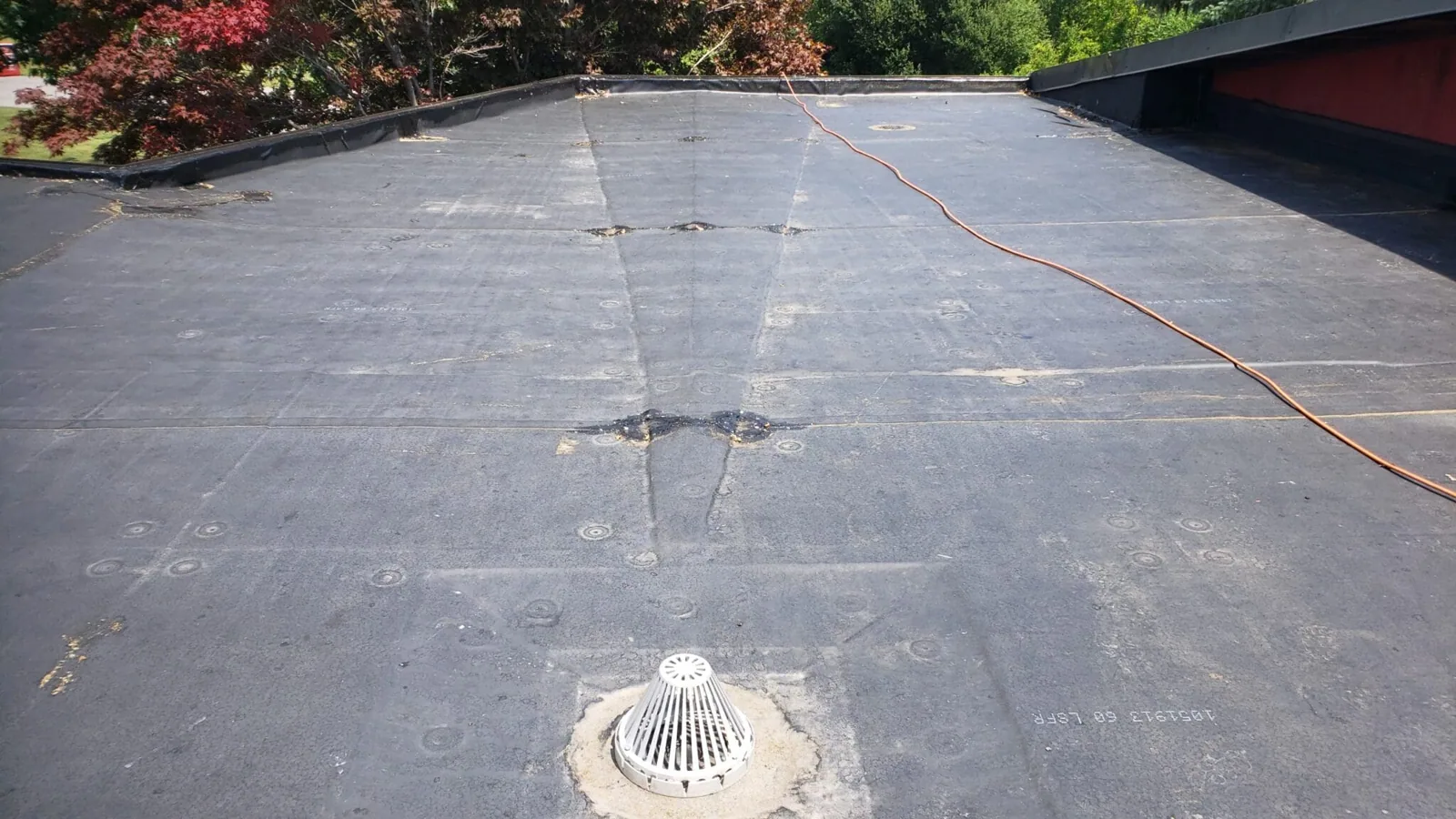
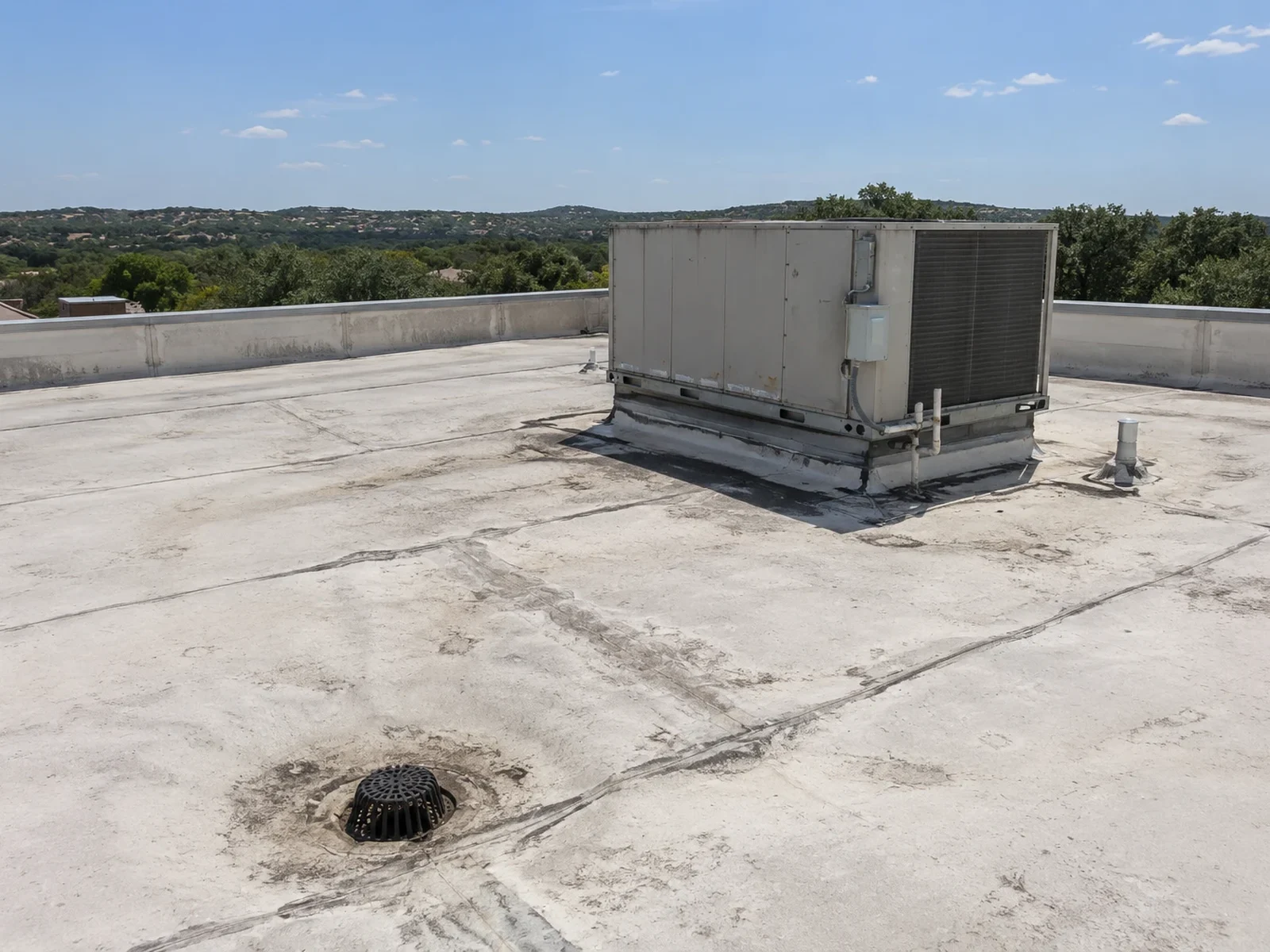
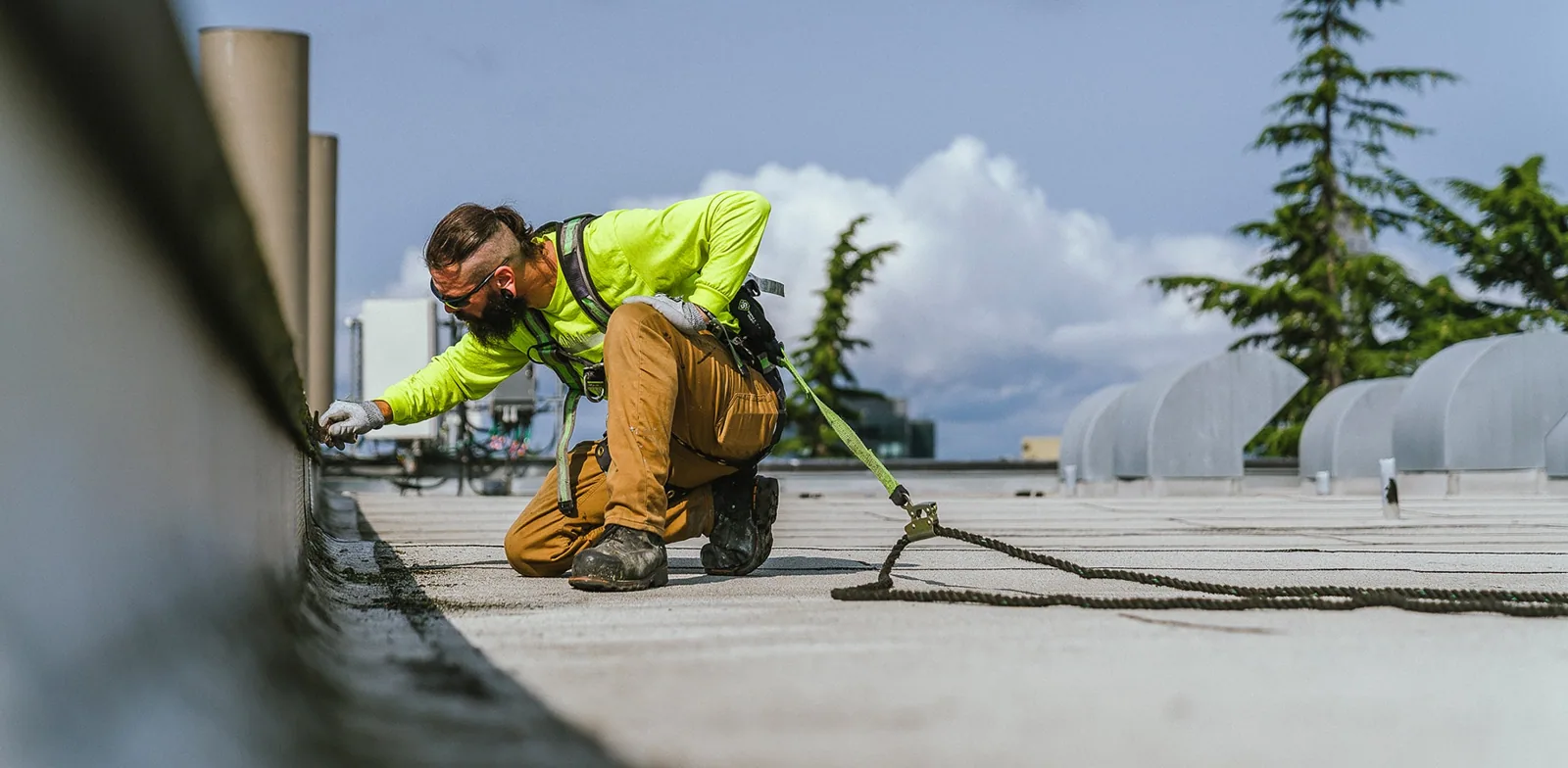
A small roof can be assessed in a single visit. We walk the perimeter, probe the flashings, check the drains and press the membrane. We scan the deck for wet insulation and take a core or two. The result is a one-page grade with photos.

The grade sorts the roof, and the sorting is written in plain terms an owner can act on. Wet insulation across most of a roof, or a membrane past repair, puts it in replace. A roof with one defined problem and dry board around it goes in repair. A sound roof goes in watch. For a small building, the sorting often shows that a modest repair removes most of the risk. An owner who learns that early saves a replacement budget for a roof that does not need one. A commercial roof inspection that ends in a clear grade is worth more than a long report nobody reads.

Mountain City
Mountain City

Find Where Water Enters

Water takes odd routes. It enters at a boot, travels along the deck and drops at a ceiling joint ten feet away. A tenant sees a stain and calls. A patch applied over the stain does nothing.

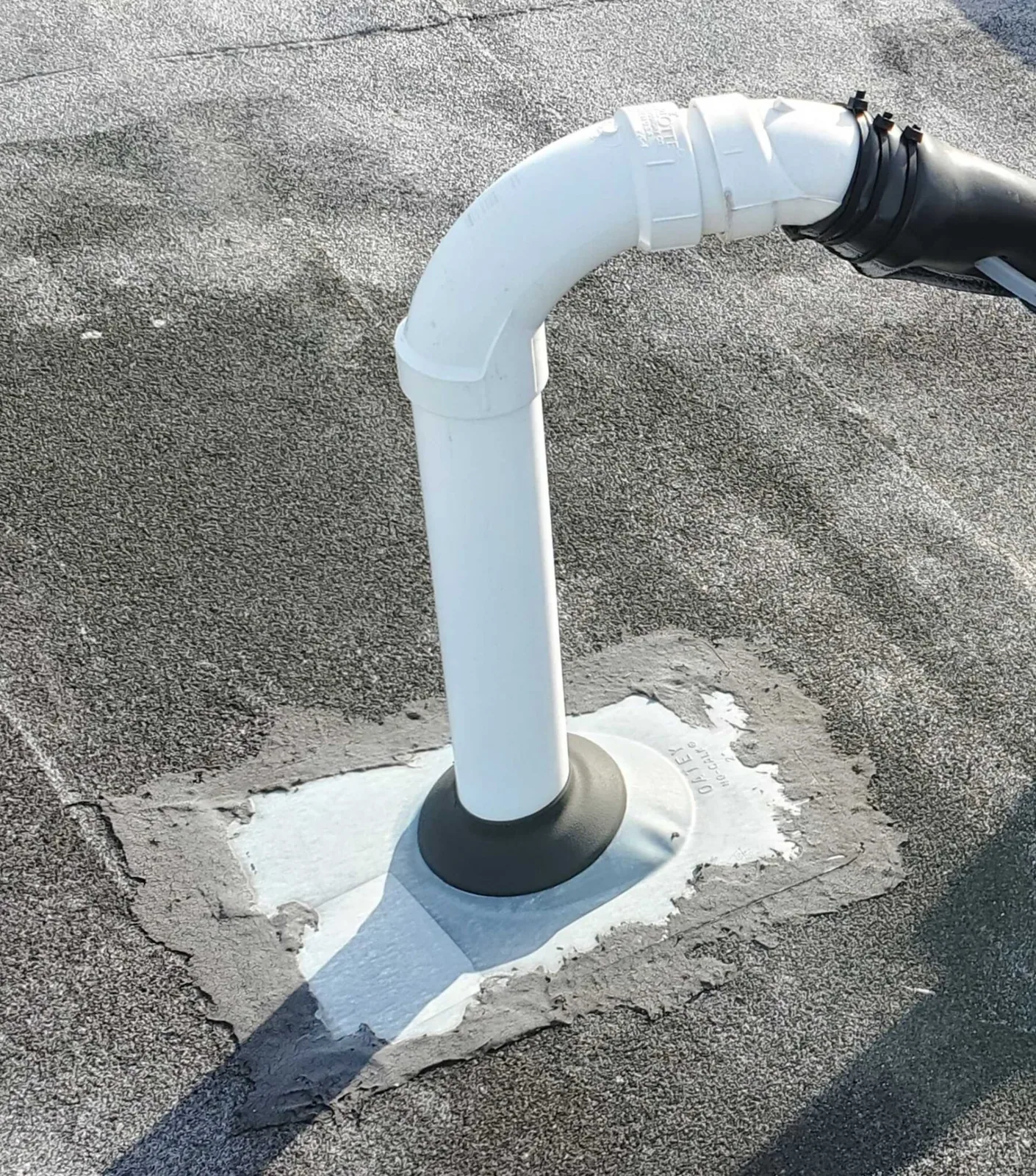
We start inside, note the stain, and then go up and check upslope. Pipe boots, vent flashings, wall terminations and seams are the usual suspects. A water test, run in sections from the low side up, confirms the entry. A commercial roof leak repair should name the entry point, show the fix and describe the test that proved it. On a small roof, tracing the path takes an hour and avoids a repair that has to be redone, which is the most common source of wasted roof money in this class.

Check Small Details First

Small roofs have the same details as large ones, in higher density. A single building may have a vent, a hatch, a rooftop unit, a skylight and a wall tie-in within a few feet of each other. Each is a joint, and each ages.

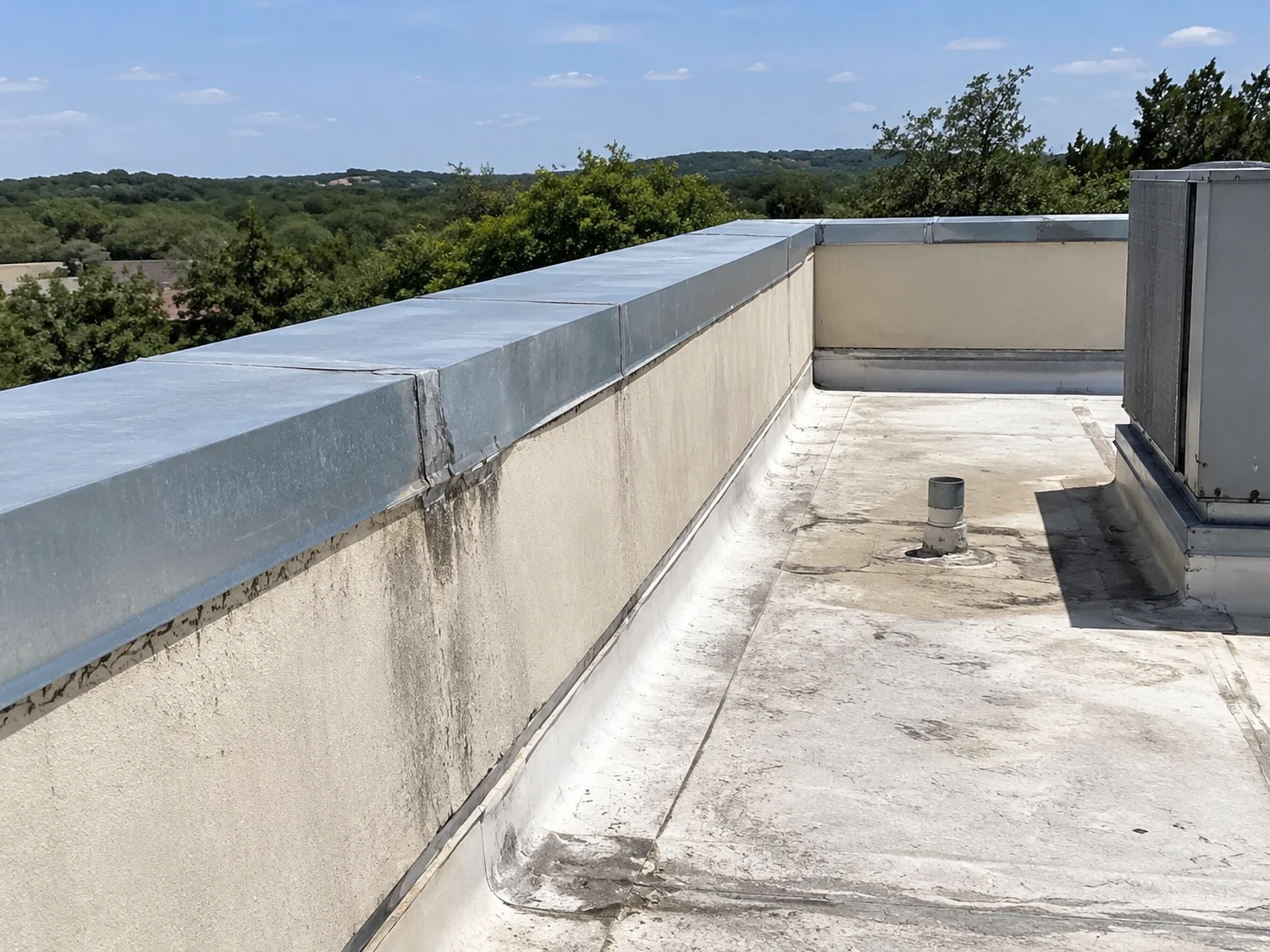
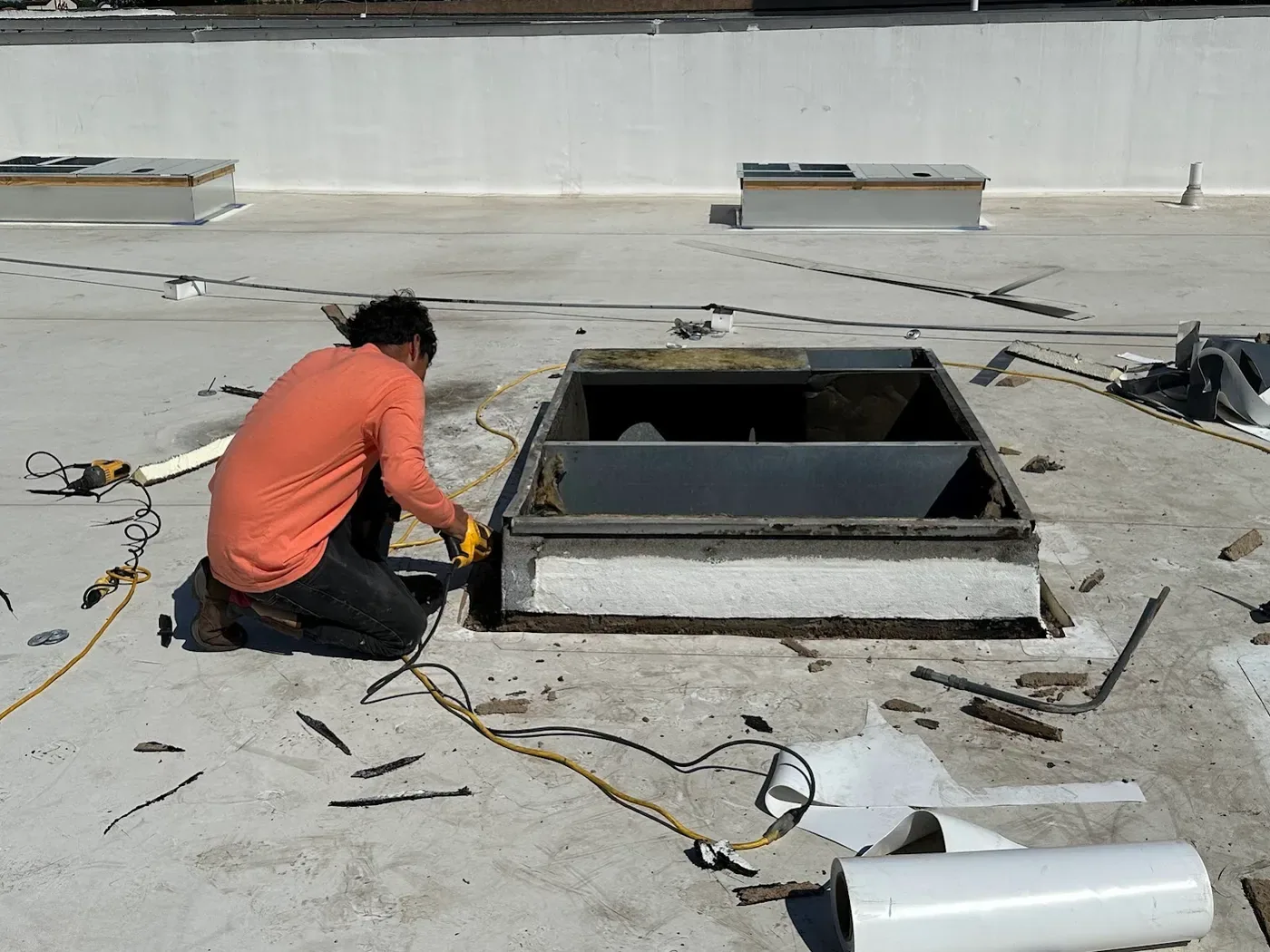
We check sealant at every joint, press flashing terminations and tug counterflashing. We probe the membrane near each curb. We look for the cracks that heat creates in rubberized sealant and the splits that cold creates in stiff boots. A skylight and penetration flashing repair on a small roof can rebuild all the details in a day, and it often costs less than a section replacement.

Read the Regional Storm Record

The regional storm record is the backdrop. The storm that reached San Marcos on May 9, 2024 first dropped hail up to six inches across on Johnson City. A severe thunderstorm warning covered Hays County on March 21, 2022, with a tornado warning for central Hays County, though no touchdown was surveyed in the county.

Those are regional events, and they are context. On a small roof the question after a storm is simple: did anything change. We press the membrane, scan the wet spots and compare against the last report. A hail damage repair scope records only the sections that changed. If nothing did, the report says so, and the owner has a baseline for the next storm. Camp Mabry in Austin, the nearest station with a long record, averages near 98 F in August.

Mountain City

Decide Repair, Recover or Replace

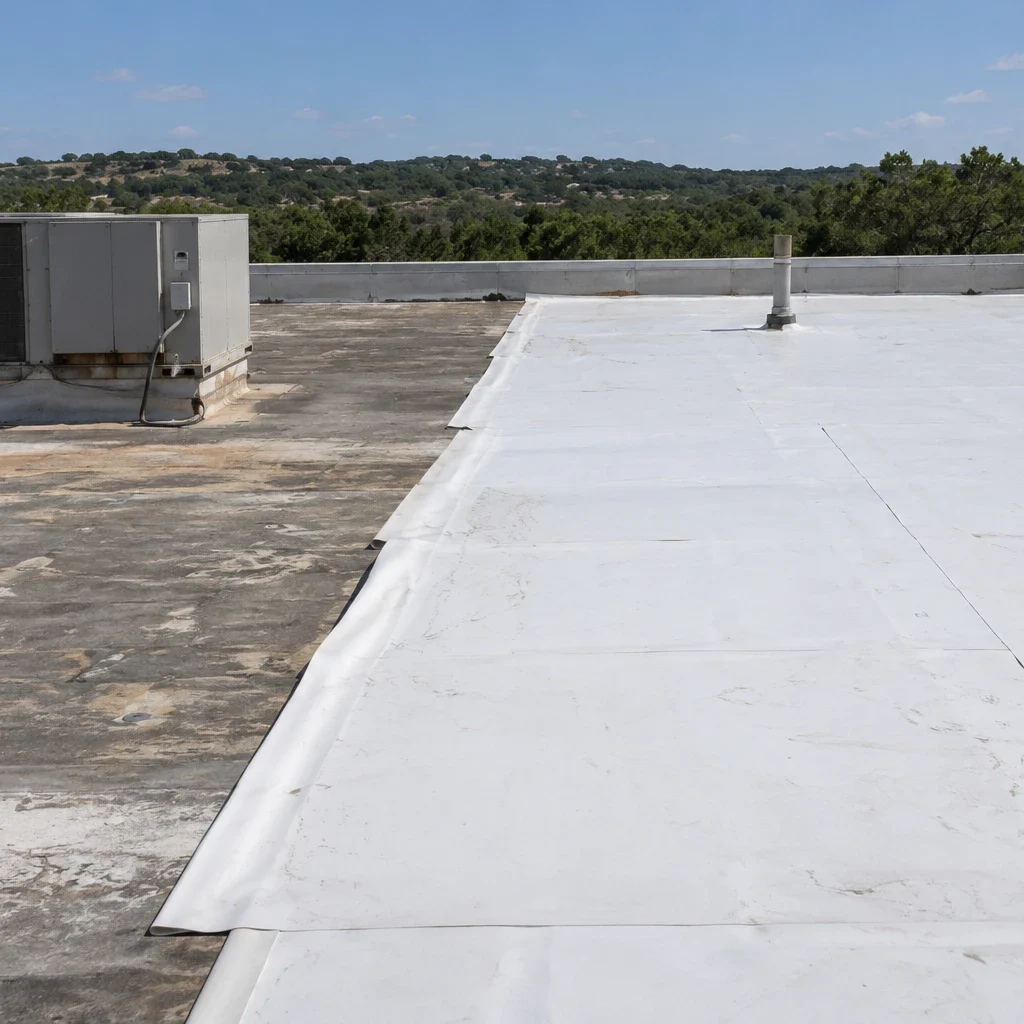
Three choices exist. A repair fixes a defined area. A roof recover adds a new membrane over a dry existing roof. A replacement removes the old system. Scans and cores decide.

Cost follows scope. Roof area, access, insulation depth, the number of details and the condition of the deck all matter. On a small roof the details can cost as much as the field, so we count them. We write each driver into the proposal, with the options side by side, so the owner can compare. Weekend leaks are not left waiting, since emergency response runs around the clock and a temporary seal can go on while the decision is made.

Nearby work includes Kyle and Buda.

Mountain City

Protect the Building During Work

Small commercial buildings often have staff and customers inside all day. A reroof must keep working around them. We agree on hours, entrances and parking before the crew arrives. Material stages away from doors. We cover the walkways under the work area. Noisy tasks happen at slow times.

Water control is the main rule. We open only as much roof as can be closed before the crew leaves. A stripped section is dried in the same day, and the forecast is checked each morning. If rain is likely, the crew holds. A tarp is not a roof, and we do not leave one as the plan.

Interiors get attention too. Ceiling tile below the work is checked, and equipment is covered. If the building holds inventory or records, we ask where they sit and protect that area first. The owner gets a short list of what we did, with photos, at the end of the job.

Keep a Simple Roof File

A small roof still deserves a file. It can be one folder: the plan, the dated photos, the scan, the core results and the repair log. The file helps a buyer, a lender, an insurer and the next contractor.

We build it from the first visit and add to it with each service call. A year later, a new scan can be laid over the old one, and any new wet area shows up. The file also helps with leases. A tenant who reports a leak gets a faster answer when the owner can pull up the roof history. A roof condition report gives the file its first page.

For owners with several small buildings, a multi-site roof program puts them on one calendar. One visit a year per building, a quick scan and a short list keep the whole set in view without a facility department.

Commercial Roofing Questions

What decides whether a small roof can be repaired?

Moisture decides it. If insulation is dry beyond the problem area, a repair holds. If it is wet across most of the roof, replacement is the likely answer.

How long does a triage visit take?

Usually an hour or two for a small building, plus time to write the grade.

Can a tenant call about a stain directly?

Yes. We ask for the stain location and then trace the path upslope.

Should an owner patch over a stain?

No. A patch over a stain hides the symptom and leaves the entry open.

What should I send first?

The address, the roof age if known and any earlier reports. The roof gets sorted into a group.

Send the building list and past reports

Share the addresses and any earlier reports, and we will sort the roofs into replace, repair and watch groups before your next budget year.

Request a Roof Assessment

Related Roofing Work

ServicesRoof SystemsIndustriesProperty TypesService AreasRoof Damage RepairCapabilitiesManufacturersAboutContactRequest a Roof Assessment555-555-5555
Call555-555-5555