555-555-5555

Auto Dealership Roofing

A dealership is a showroom, a service shop, a parts room and an open lot under one name, and the one thing that class does to a roof program is raise the stakes of hail: the same storm that dents a roof dents the inventory outside, so a hail night becomes a roof question and an insurance question at once. For a dealer principal or facilities manager in San Marcos, TX, the budget year is shaped by how fast a damaged roof can be documented and dried in.

The interstate corridor matters here. San Marcos sits on I-35, with exits 199 through 208, about 30 miles from Austin and 51 from San Antonio, and a dealership on that corridor is a visible building. A stained or patched roof shows in the first impression a customer forms.

Glass raises the cost of a leak. Showroom ceilings, display lighting, desks and carpets sit below the roof, and a single stain near a window wall can mean a damaged finish across a whole bay. We rank the roof sections above customer spaces first for that reason, and write the ranking into the scope.
Showroom, Service Bays and Canopy

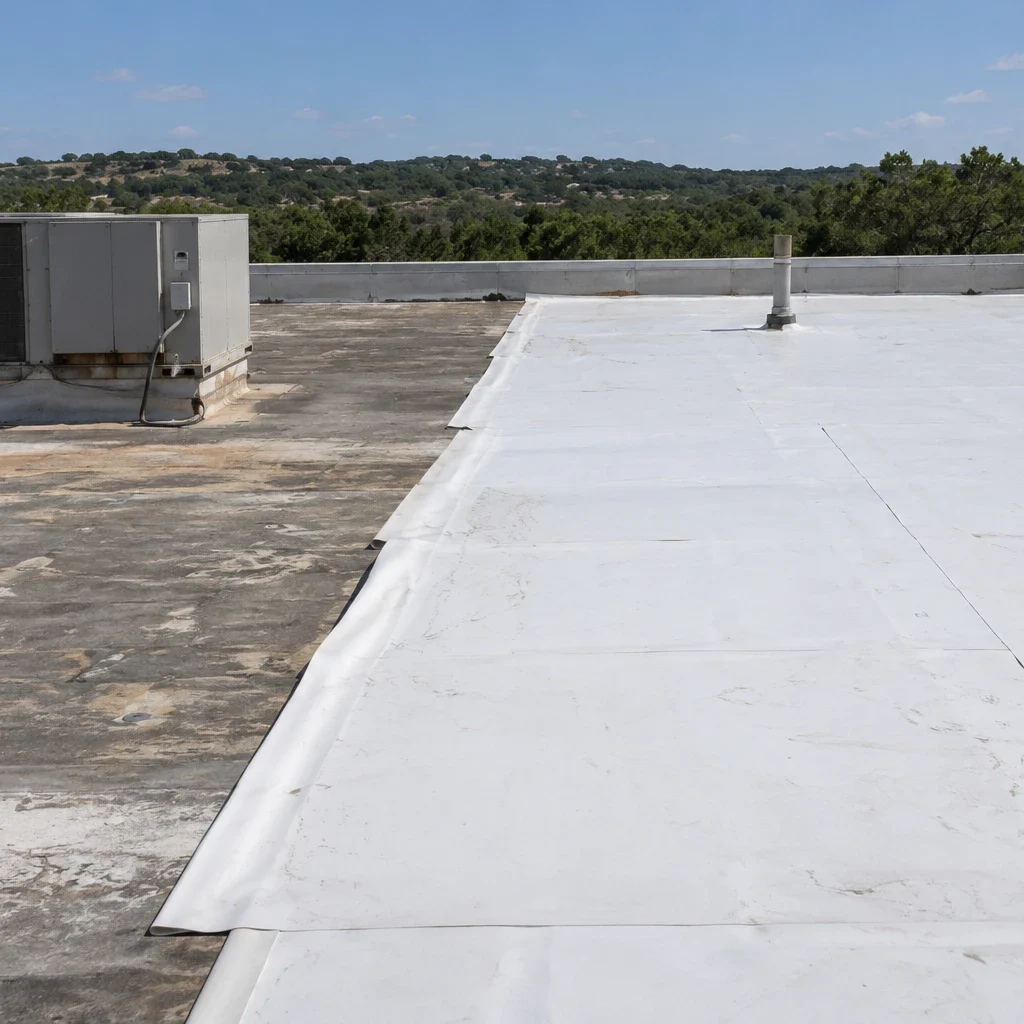
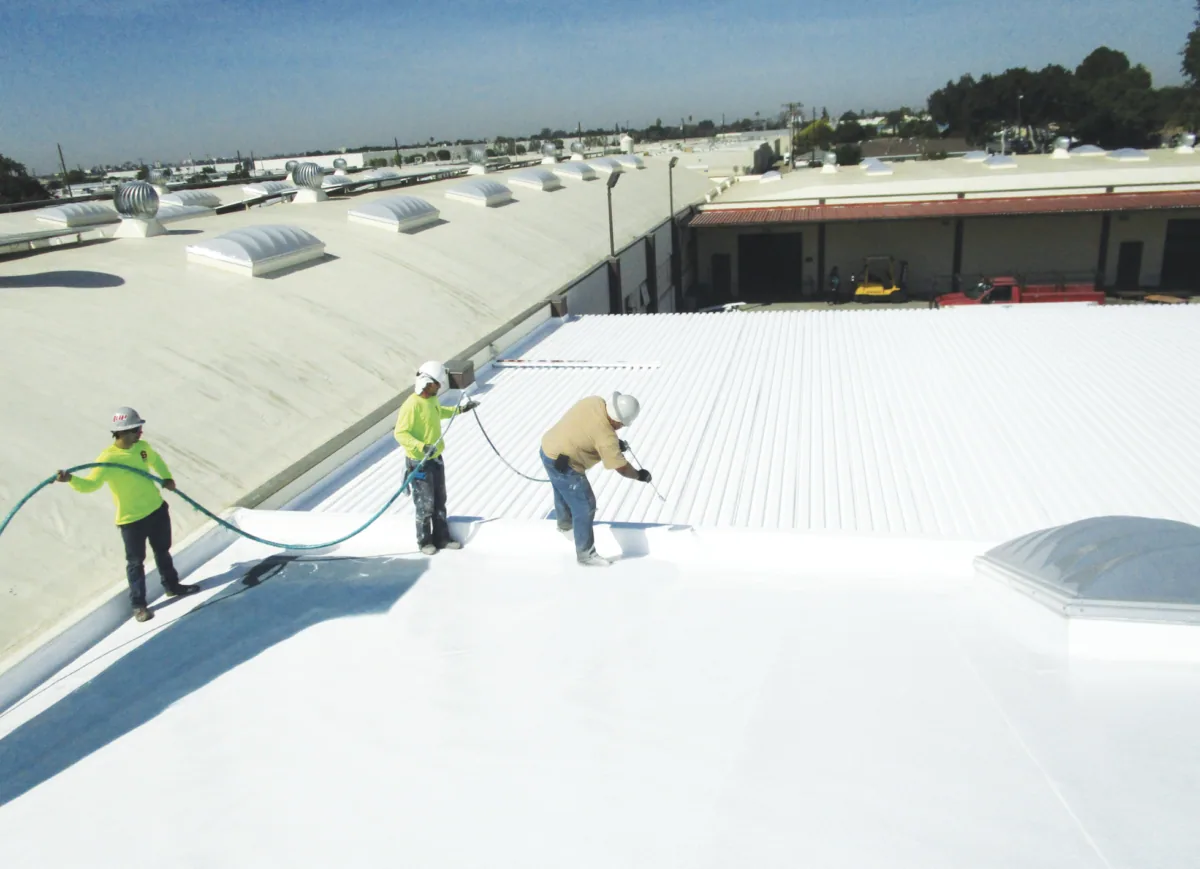
A dealership has at least three kinds of roof. The showroom often has a low-slope roof with a parapet and a lot of glass below it. The service building has a larger, simpler roof with exhaust fans, make-up air and sometimes a tall bay section. The canopy over the delivery or wash area is lighter and more exposed to wind. Each needs its own record.

We walk them in order of what they protect: the showroom first, then the parts room, then the bays. At each we note the system, the age, the drainage, the equipment and the repair history. A commercial roof inspection returns a ranked list with photographs and a price beside each section.

Parapets and glass-wall transitions get extra attention at the showroom. Water runs down a parapet face and meets the storefront head, so a failed coping joint or counterflashing there wets the glass line directly. We check every cap joint, the wall flashing and the sealant at the storefront, and we note the length of each defect so the repair is priced by the foot.

Auto Dealership Roofing

The Hail Night Sequence

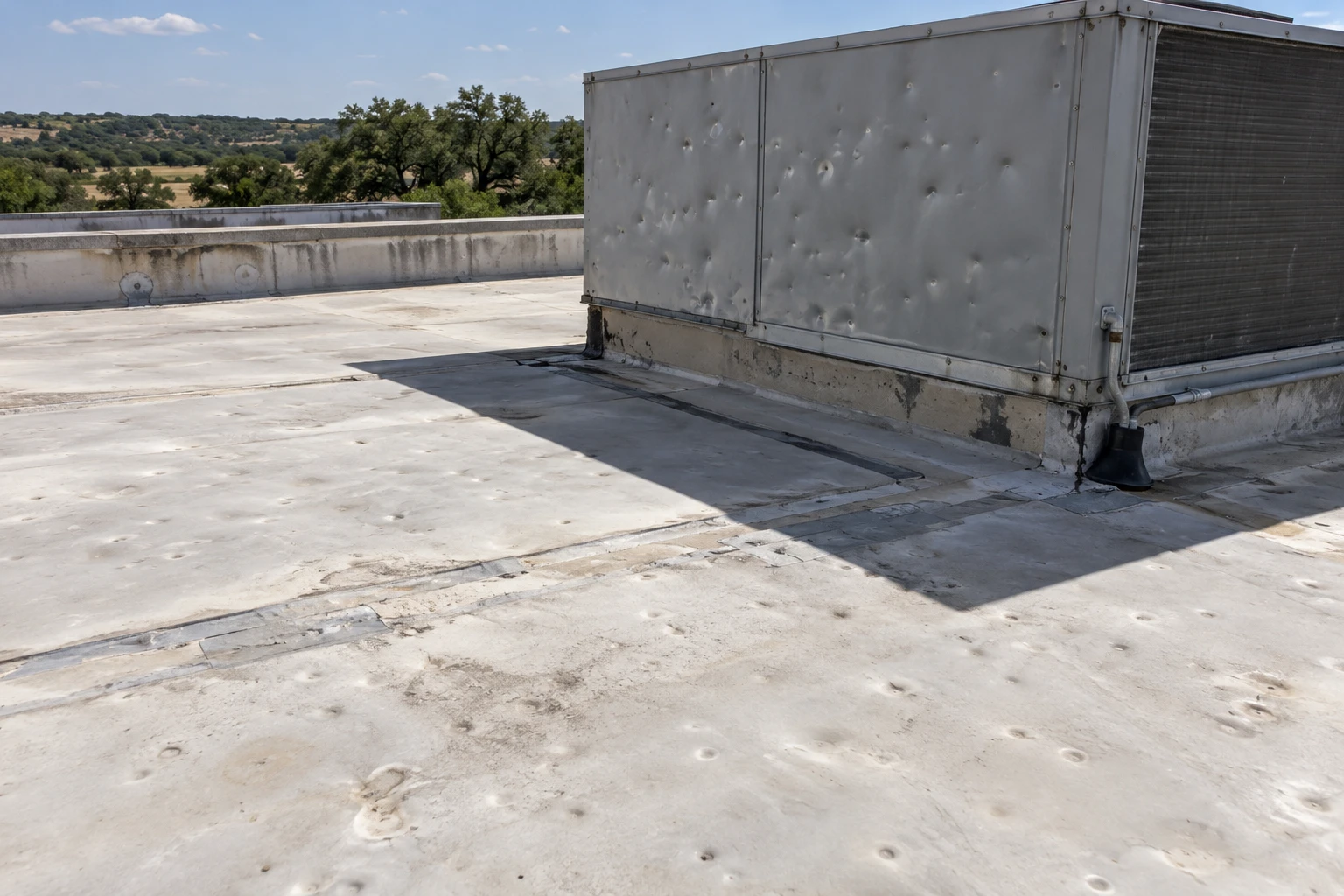
One storm on May 9, 2024 carried hail of up to six inches across through Johnson City and then arrived at San Marcos. The order of work on a dealership follows a set sequence.

First, count damage on the lot and the roof from the ground. Second, cover any open roof area so the showroom and shop stay dry. Third, walk the roof when it is safe and photograph bruised areas and displaced equipment. Fourth, scan for wet insulation. A hail damage roof repair scope lists each affected section with a location and a date, which supports the property claim and keeps it separate from vehicle claims.

Canopies take wind first. A wide, light roof over the delivery lane acts like a sail in a gust, and the connections to the building carry the load. We pull-test edge fasteners, check the attachment to the building and look at the fascia for movement. A canopy that has shifted after a storm goes in the scope with its own photograph.

The Service Roof Carries the Machinery

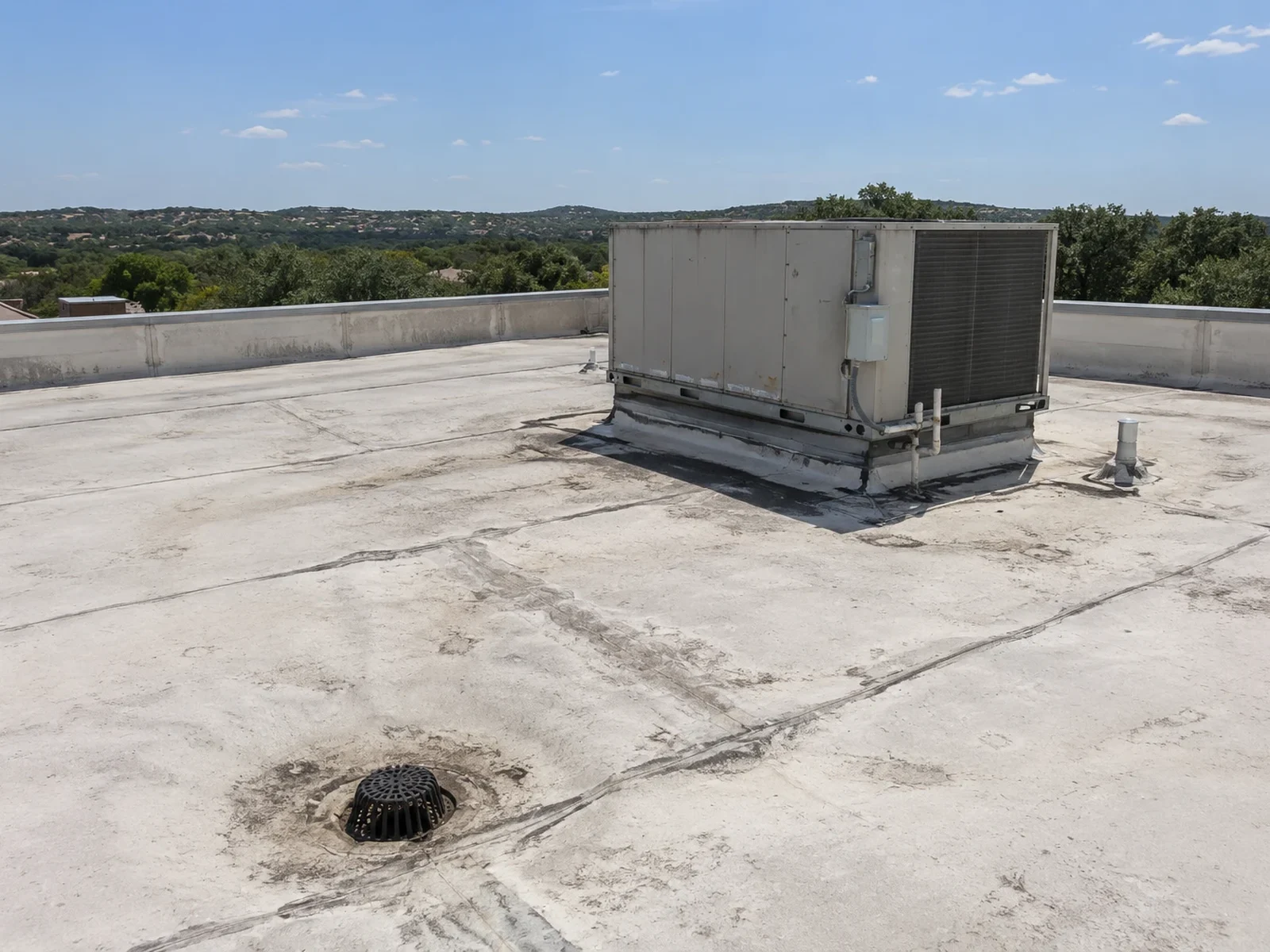
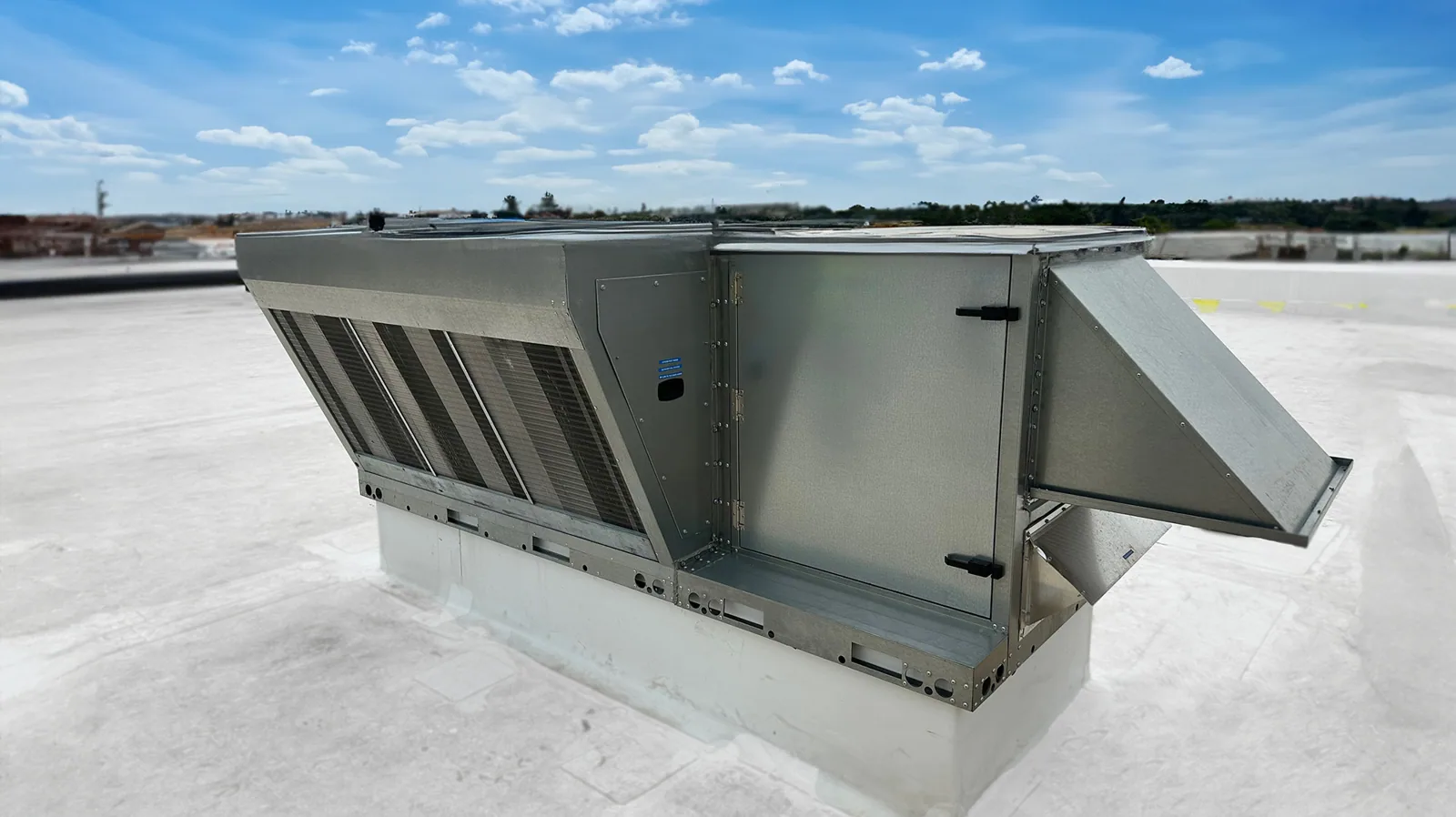
Service buildings hold exhaust fans, make-up air units, compressors and sometimes paint-booth ventilation. Each unit sits on a curb with flashing and sealant, and fumes and heat reach the membrane around it. Some exhaust carries oils, solvents or fine particulates that settle on the surface and can soften some membranes over time.

We check every fan and curb, probe sealant, look at the membrane near exhaust for softening or discoloration and clear drains of the grit that shops produce. A rooftop equipment curb and support repair raises low flashing, replaces boots and resets units. Where a paint booth vents through the roof, we record the stack and its flashing separately.

Paint-booth and body-shop vents deserve their own line in the record. They discharge through the roof with specific clearances, and the membrane around them may be exposed to overspray and heat. We note the stack, the flashing and the membrane condition, and we coordinate with the shop foreman before any work near an active vent.

Work Around Sales Hours

Customers walk into a showroom at the hours the dealer sets, and the service lane fills at the start of the day. We ask for those hours, the delivery times, the test-drive routes and the days when events are planned, then schedule the loud work around them. Staging goes at the rear or a side lot, away from the customer entrance and the front line of inventory.

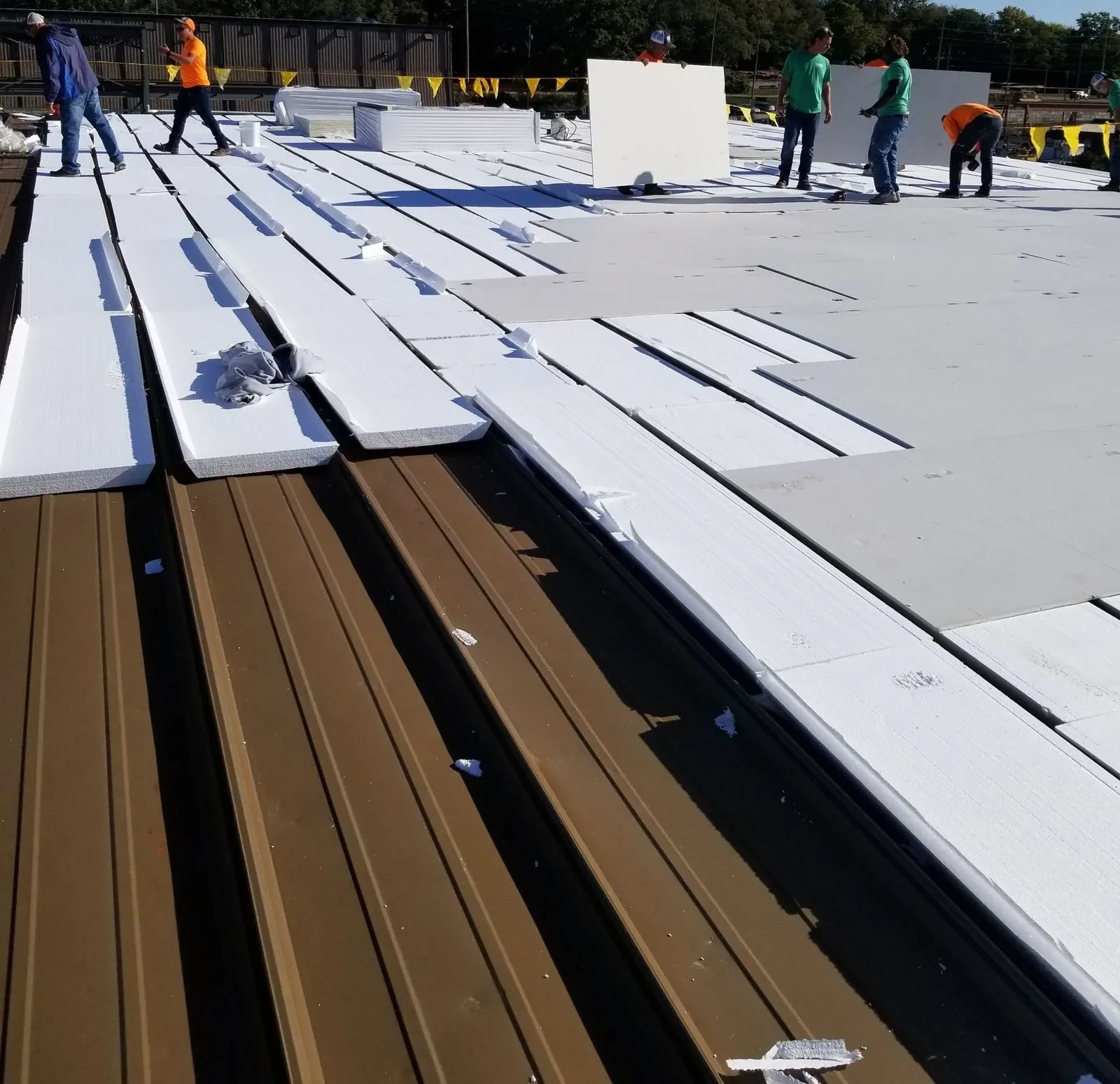
An occupied building reroofing plan lists the hours, the lift position and the person who can stop work. Inventory near the work area is moved by the dealer or covered, and we protect vehicles from debris with nets and tarps where the lot cannot be cleared. A magnet sweep ends each day, which matters on a lot where a stray fastener can flatten a tire.

New-vehicle deliveries arrive by truck at set times, and the lane has to stay open. We agree on the delivery windows, mark the lift position and keep material off the delivery route so a car hauler is never held up behind a roofing truck.

Auto Dealership Roofing

Heat, Water and Drains

Rain totals about 36.55 inches a year in San Marcos, and August afternoons near 98 F at Camp Mabry in Austin show the heat a low-slope roof absorbs. Heat dries sealant and softens some membranes, so the yearly walk checks both.

Drains on large showroom and service roofs collect leaves, grit and trash. A roof drain and scupper check before the wet season costs little against a flooded service bay. Ponding that remains after cleaning goes into the scope with a measured depth and a likely cause.

Auto Dealership Roofing

Budget Year, Brand Standards and Code

Where a dealer operates under a manufacturer's facility program, exterior condition can be part of a review. We keep the roof file ready for that: photographs, repair log and warranty status. Replacement scopes inside the city follow the 2021 International Building Code and Energy Conservation Code, and code items get their own lines.

A roof capital planning report puts each building in a budget year, and the same layout supports shopping center roofing and flex industrial roofing for a dealer who owns other real estate. A dealer with other storefront property on the I-35 outlet and retail corridor can use the same file layout.

Commercial Roofing Questions

What happens first after a hail night?

Count damage from the ground, cover open roof areas, then walk the roof when safe. Scan for wet insulation next. The record supports the property claim.

Can the roof be fixed while the showroom stays open?

Yes. We stage at the rear, protect entrances and dry in daily. Loud work moves to hours the dealer picks.

How do you protect inventory near the work?

The dealer moves or covers vehicles nearest the work. We add nets and tarps where the lot cannot be cleared, and sweep the lot with a magnet each day.

Does shop exhaust damage a roof?

It can. Oils, solvents and heat can soften some membranes near fans. We check those areas for softening and protect them where needed.

What documents help with a manufacturer facility review?

Photographs, a repair log and warranty status. We keep them together with dates so the roof history is easy to show.

Send the dealership building list

Send the building list and any past roof reports. We will sort the roofs into replace, repair and watch groups before the next budget year.

Request a Roof Assessment

Related Roofing Work

ServicesRoof SystemsIndustriesProperty TypesService AreasRoof Damage RepairCapabilitiesManufacturersAboutContactRequest a Roof Assessment555-555-5555
Call555-555-5555